REVIEW · TOKYO
Embrace the Samurai Way: Iaido Swordsmanship Experience in Tokyo
Book on Viator →Operated by YANESEN Tourist Information & Culture Center. · Bookable on Viator
Sword practice in Tokyo has a quiet power. This Iaido experience in Kudanshita pairs private lessons with a traditional dojo setting and supervised cutting practice, so it feels real instead of staged. You’ll also get the why behind the movements, with samurai philosophy explained in an accessible way.
What I love most is the personal instruction that adjusts to your level, rather than running everyone through the same checklist. I also like that you get the full ritual feel: you don a traditional Iaido uniform (the lesson includes an Iaido jacket and the relevant items), learn proper handling, and finish with a participation certification.
One thing to consider: this isn’t a casual, sit-and-watch activity. It’s not suitable for people with heart conditions, pregnant women, or anyone who needs wheelchair accessibility, and it depends on good weather.
In This Review
- Key highlights worth your attention
- Iaido in Tokyo: what you’re really learning
- Meeting at Starbucks Kudanshita: how to make the start smooth
- The first steps inside the dojo: uniform, rules, and safe handling
- Private instruction that actually adapts to you
- From kata basics to supervised cutting practice
- Samurai philosophy: why the talk is part of the training
- The certification moment and what you do with it after
- Price and value: does $154.37 make sense?
- Who should book (and who should skip)
- Practical expectations: what could trip you up
- Should you book this Iaido Samurai experience?
- FAQ
- How long is the Iaido swordsmanship experience in Tokyo?
- What does the price include?
- Do I need private transportation to get there?
- Where do we meet for the experience?
- Is this experience private or shared?
- What should I wear?
- Who should not participate?
Key highlights worth your attention
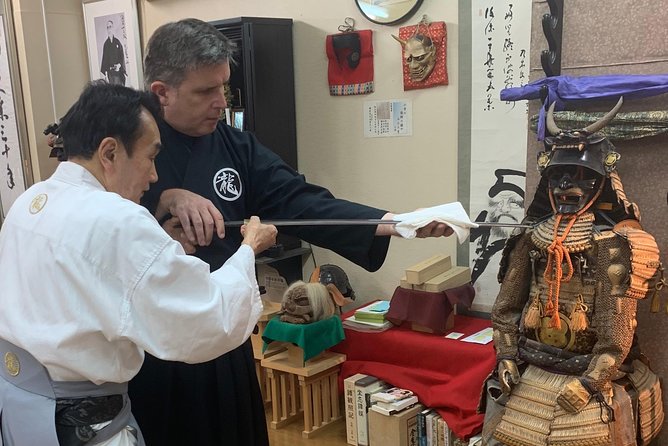
- Private, level-adjusted practice so you learn the basics without getting lost
- Traditional Iaido uniform provided to help you follow the form properly
- Supervised cutting practice with a real blade under guidance
- Samurai philosophy explained alongside technique so it makes sense in context
- Participation certification you can keep as a travel souvenir
- Easy-to-find meeting point near public transport at Starbucks Kudanshita
Iaido in Tokyo: what you’re really learning
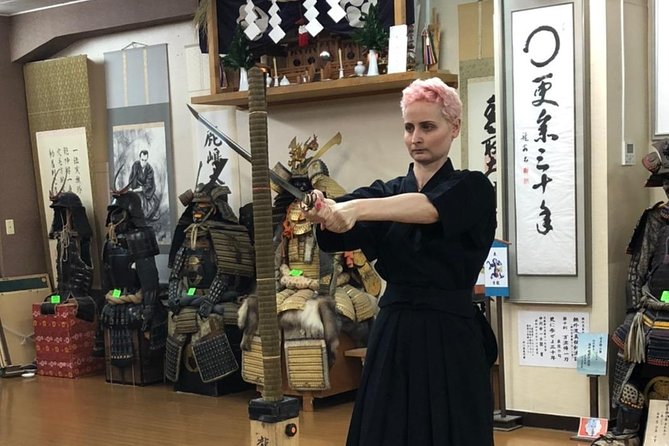
Iaido is often described as swordsmanship, but it’s more precise than that. You’re practicing the controlled movements and mindset for drawing, cutting, and handling the sword with discipline. In a dojo setting, that means you learn posture, timing, and calm focus, not just a few flashy moves.
This lesson is built for people who want more than a quick demo. You practice basics, then move toward real cutting practice with supervision. A key theme that comes through in the experience is that technique and philosophy are tied together: how you hold the sword connects to how you carry yourself.
If you’re coming to Tokyo looking for something hands-on and culturally specific, this fits that sweet spot. You leave with a clearer sense of how Iaido works in practice, not just what it looks like in a video.
You can also read our reviews of more tours and experiences in Tokyo.



Meeting at Starbucks Kudanshita: how to make the start smooth
Your meeting point is Starbucks Coffee – Kudanshita Japan, at 1-chōme 21 Kudankita, Chiyoda City (near public transportation). Plan to arrive about 10 minutes early. That buffer matters because you’re about to change into a traditional uniform, get briefed, and settle in before practice starts.
This experience is run by YANESEN Tourist Information & Culture Center, and you’ll have an English-speaking attendant with you. In plain terms, it helps you avoid the awkward feeling of standing there wondering what comes next.
Also, this runs as a private tour/activity. That means your group stays together in one lesson session, rather than mixing into a larger class where you can’t get personal attention.
The first steps inside the dojo: uniform, rules, and safe handling
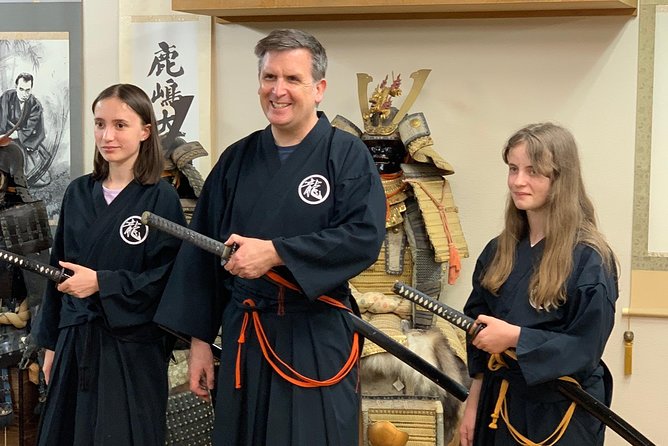
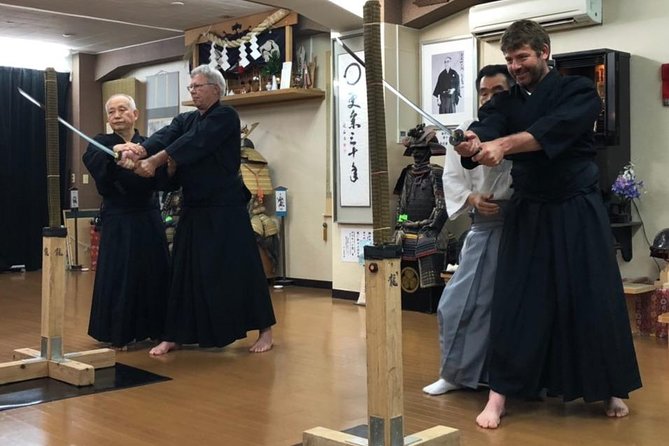
You start by putting on an Iaido uniform. The lesson includes an Iaido jacket and the needed items, so you’re not trying to source gear on your own. Wearing the uniform isn’t just costume. It helps you move correctly and reminds you that the practice has structure.
Once you’re dressed, you’ll cover the fundamentals: how the sword is handled, what your body is doing, and how your focus should be. This matters because Iaido is precision work. Small mistakes in posture and grip tend to show up immediately when you try to coordinate movement and timing.
You’ll also get the kind of instruction that prevents bad habits from forming. A few people in the feedback talked about detailed explanations in English and careful guidance on the nuances of what they were doing, which is exactly what you want in a first session.
Private instruction that actually adapts to you
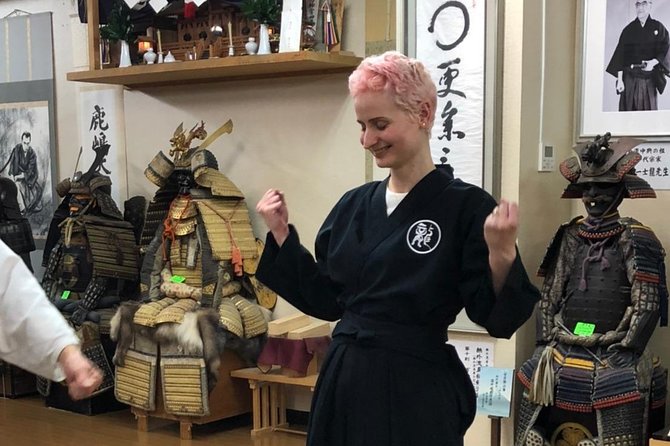
The big advantage here is that the lesson is private. Private doesn’t always mean better, but in this format it usually means you get attention where you need it. Your movements can be corrected on the spot, and the teacher can adjust pacing to your comfort level.
The instruction is described as personalized and adapted to your level. So if you’re a complete beginner, you’re not forced through “intermediate” expectations. If you already have some martial arts experience, you still get structure and corrections instead of generic instructions.
One more detail I appreciate: you’re not only doing movements. You’re also watching the master perform and then learning the reasoning behind it. That combination—demo, explanation, practice—helps technique click faster.
From kata basics to supervised cutting practice
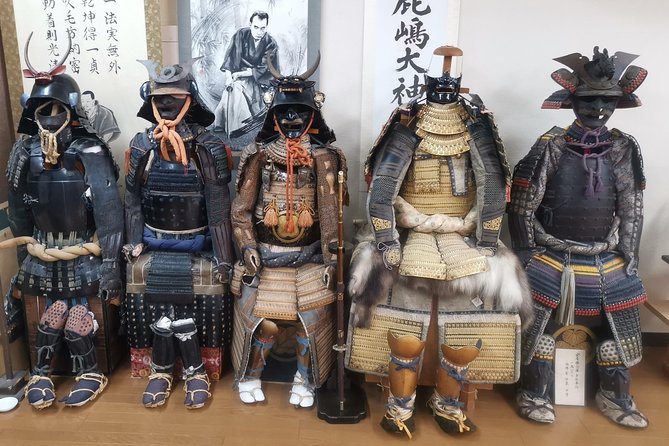
Here’s the part that makes this different from typical cultural demos: you practice basic movements and techniques, and then you get real cutting practice under supervision. You’re not just learning theory or pretending with a prop sword for the whole time.
In the experience, you do basics first, then you move into the cutting portion. Some feedback includes cutting tatami mats, including a parent and child who were able to cut through tatami mats on their own with guidance. Even if your level or comfort changes what you personally attempt, you should expect the lesson to include a supervised cutting segment.
Why this matters for you: cutting practice turns the lesson from “interesting” into “I understand how this works.” It also forces you to pay attention to form in a way that calm solo practicing never does.
That said, you should show up mentally ready to focus. This is controlled practice, but it still involves a sword. Listen carefully to instructions, move at the teacher’s pace, and don’t try to rush your way through.






Samurai philosophy: why the talk is part of the training
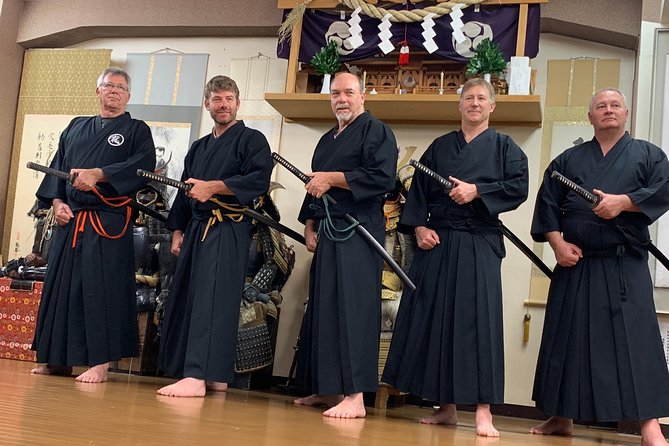
You’re learning more than how to swing. You’re learning the logic behind the ritual and why the movements are taught the way they are.
People have highlighted the master’s storytelling about samurai history and practical context, including talk about licensing for blades and how to handle a sword like a real practitioner. That’s not “extra fluff.” When someone explains why responsibility matters—ownership, handling, respect—it changes how you hold the sword during practice.
You’ll also get the philosophy side in an English-friendly way through the attendant. For example, one family described detailed explanations of the concept of Iaido and translation that helped make sense of what they were doing step by step.
My take: if you’re the type who only wants technique, you’ll still appreciate the philosophy because it makes the technique feel purposeful. If you’re the type who wants meaning, you’ll leave with a better understanding of how discipline is taught through movement.
The certification moment and what you do with it after
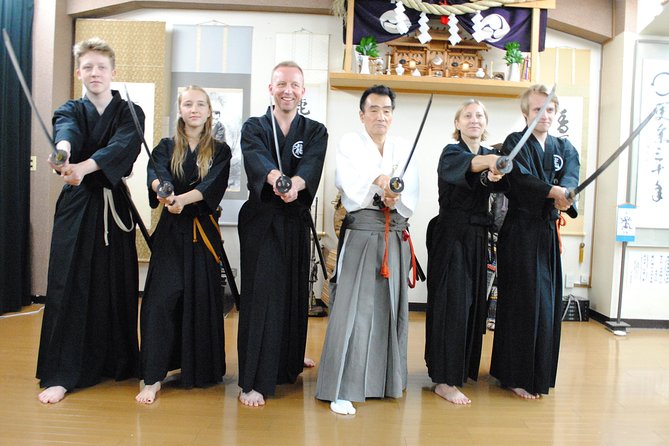
You receive a certification of participation. That’s a small thing, but it’s a practical one. It gives you something tangible to bring home, and it marks the fact that you completed a real lesson instead of only taking photos in a costume.
In some feedback, people also mentioned staff support with pictures. If you care about documenting your experience, it helps to know that the team is willing to guide you on what to capture, especially as you’re in uniform and learning proper form.
After the lesson, the activity ends back at the meeting point at Starbucks Kudanshita. That makes logistics simple: you’re not stuck figuring out how to get home from a remote location you’ve never visited.
Price and value: does $154.37 make sense?
At $154.37 per person for about 1 hour 30 minutes, this isn’t a budget activity. The value comes from what’s included and how the lesson is run.
You’re getting:
- Traditional Iaido uniform components (the jacket and items are included)
- An English-speaking attendant
- A private lesson format
- Real supervised practice, including cutting segments
- A participation certification
That combination is where the price earns its keep. A lot of sword experiences in Tokyo focus on visuals and quick gimmicks. This one is structured around instruction and practice, which typically requires time, space, and careful supervision.
Also note that there are group discounts available, and the lesson is booked on average about 58 days in advance. If you’re traveling with a partner or friend, splitting cost can make a noticeable difference, and booking early gives you more date choices.
Who should book (and who should skip)
This experience is best for you if:
- You want hands-on instruction, not just watching
- You’re interested in how Iaido works as a discipline
- You want explanations in English without losing the dojo structure
- You like structured, respectful training environments
It’s not a good match if you:
- Have heart conditions or are pregnant
- Need wheelchair accessibility
- Are uncomfortable with the idea of controlled sword practice
Wear comfortable clothing. You’ll change into the uniform, but you’ll still start in your own clothes, and you’ll want to move without restriction.
Finally, the experience requires good weather. The lesson venue is a dojo, so you might assume weather won’t matter, but the operator states it does. If weather is shaky during your Tokyo dates, keep a little flexibility.
Practical expectations: what could trip you up
This is a private lesson, so the biggest “gotcha” is usually preparation and communication, not difficulty.
- Arrive early. You need time to get settled and dressed.
- Follow safety instructions closely. If anything feels unclear, ask. The attendant is there for English support.
- Bring your best patience. Even experienced athletes need time to coordinate hands, posture, and timing.
There’s also an important lesson in logistics: once, a participant reported a pickup communication failure and the operator apologized afterward. I don’t expect that to be common, but it’s smart to double-check your confirmation and keep your messaging ready if anything changes in your schedule.
Should you book this Iaido Samurai experience?
I think you should book it if you want a real, guided introduction to Iaido—one where you practice, handle the sword properly, and get the philosophy side without turning it into a lecture. The combination of private attention, uniform ritual, and supervised cutting is what makes it feel worth your time in Tokyo.
Skip it if you can’t comfortably take part in sword training or if the health limitations apply. And if your trip is rigid with no wiggle room for weather, you may prefer an activity that isn’t stated as weather-dependent.
FAQ
How long is the Iaido swordsmanship experience in Tokyo?
It lasts about 1 hour 30 minutes.
What does the price include?
The experience includes an Iaido jacket and items, plus an English-speaking attendant. You also receive a participation certification.
Do I need private transportation to get there?
Private transportation is not included, so you’ll need to make your own way. The meeting point is near public transportation.
Where do we meet for the experience?
You meet at Starbucks Coffee – Kudanshita Japan (1-chōme 21 Kudankita, Chiyoda City, Tokyo), and the activity ends back at the meeting point.
Is this experience private or shared?
This is private in the sense that only your group participates.
What should I wear?
Wear comfortable clothing. You’ll also don a traditional Iaido uniform during the experience.
Who should not participate?
The experience is not suitable for individuals with heart conditions, pregnant women, or those requiring wheelchair accessibility.
![[1 Group Only] Tokyo Shibuya Food Tour for Family - Food tastings that actually cover two different worlds](https://e.thetokyoexplorer.com/wp-content/uploads/1-group-only-tokyo-shibuya-food-tour-for-family-400x267.jpg)