REVIEW · TOKYO
Private Sushi Making Tokyo Roll and Authentic Japanese Sushi
Book on Viator →Operated by Sushi Making Tokyo Cooking Class in Japan · Bookable on Viator
Sushi making in Asakusa feels way more real than eating your way through Tokyo. This private class pairs step-by-step instruction with fresh, authentic techniques, and you actually eat what you make. The one thing to think about is cost: it’s $1,300.72 per group (up to 15), so if you’re traveling solo, the value depends on splitting the group fee.
You’ll meet near Sensoji Temple, then spend about 1 hour 40 minutes learning how to shape sushi rolls and make classic nigiri. From the reviews, instructors like Yui, Masaki, and Ayu are big on patience and practical advice, including how to make your sushi look good, not just taste good.
In This Review
- Key Points You’ll Care About
- Asakusa Basecamp: Meet Near Sensoji and Get Oriented Fast
- What You’ll Make: Tokyo Roll Sushi and Classic Nigiri
- Step-by-Step Instruction: English Support and Styling Tips That Actually Help
- The Class Flow: From Rice Prep to Finished Pieces in About 1 Hour 40
- The Meal Part: You Eat Your Sushi, Not Just Watch It
- Value and Price: $1,300.72 Per Group, Up to 15
- Who This Class Fits Best (And Who Might Want Another Option)
- Practical Tips for Asakusa Sushi Day
- Should You Book Sushi Making Tokyo?
- FAQ
- Where is the meeting point for Sushi Making Tokyo?
- How long does the class last?
- Is prior sushi-making experience required?
- Is hotel pickup or drop-off included?
- Is this a private tour?
- Is an English-speaking instructor provided?
- What’s included in the price?
- Is there a confirmation after booking?
- Can I cancel for a full refund?
- Are service animals allowed?
Key Points You’ll Care About
- Private group experience: only your group participates, so you’re not pushed along in a packed classroom.
- Beginner-friendly, English instruction: no sushi experience needed, and the teaching is built for international visitors.
- You eat the results: the meal isn’t an afterthought; it’s the point of the class.
- Asakusa location by Sensoji: easy to pair with temple wandering and street-food time nearby.
- Hands-on roll sushi + nigiri skills: you leave with techniques you can actually use again.
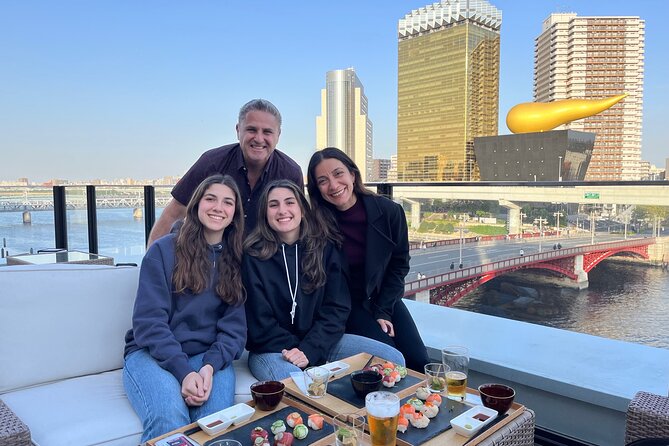
- Good classroom vibe and possible river views: one class highlighted a great view, including the Sumida River area.
Asakusa Basecamp: Meet Near Sensoji and Get Oriented Fast
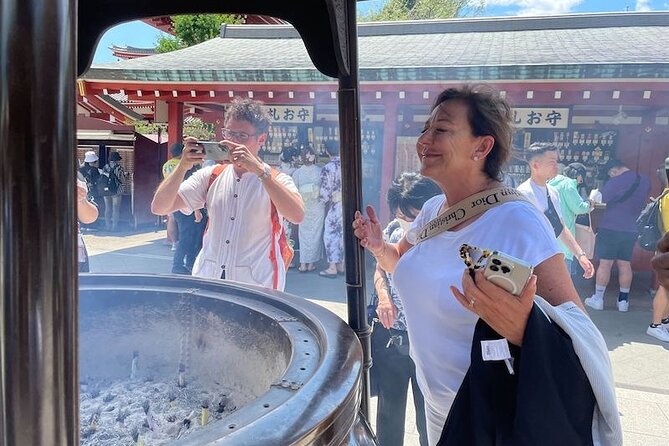
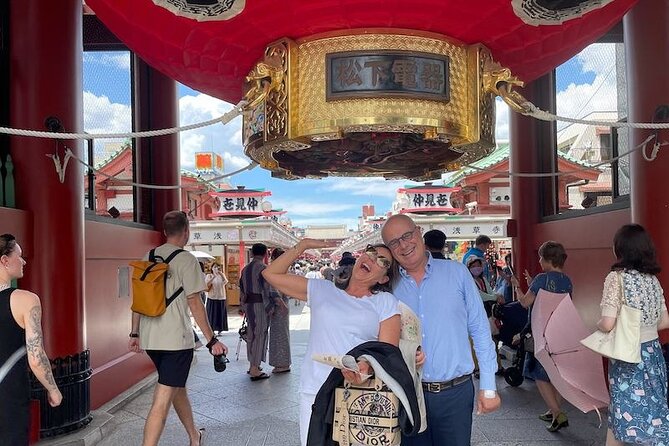
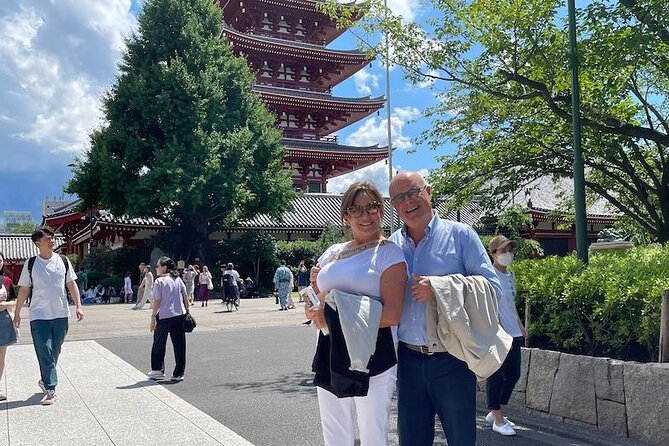
This experience runs from a cooking-class location in Kaminarimon (Taito City)—right by Sensoji Temple, one of the easiest anchors for planning your day. If you’re staying in central Tokyo or doing a first-time Asakusa sweep, this is a convenient spot to plug in between sightseeing plans.
You’ll start at the address: 2-chōme-17-9 Kaminarimon, Taito City, Tokyo 111-0034. Since there’s no hotel pickup, you’ll want to arrive a little early, get your bearings, and calm your day down before you start working with food and sharp tools (even if everything is guided).
One underrated part of the meeting location is timing. Asakusa is busiest earlier in the day, and Sensoji area foot traffic can grow quickly. Going in with a clear start time helps you avoid the “we’re running late and hungry” spiral.
Also, you’ll use a mobile ticket, which is simple—just make sure your phone battery isn’t at 2% like it always is on day one.
You can also read our reviews of more private tours in Tokyo



What You’ll Make: Tokyo Roll Sushi and Classic Nigiri
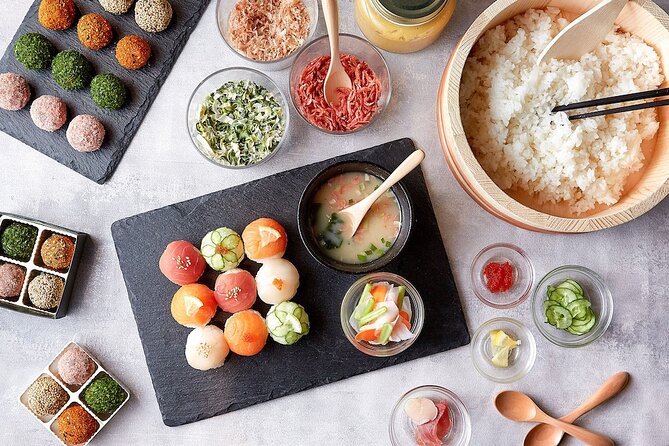
The class focus is straightforward: make sushi rolls and authentic Japanese sushi, then eat it. The roll part gives you the satisfying, tactile basics—spreading rice evenly, understanding how the filling goes in, and learning what “tight” means without turning the roll into a brick.
For nigiri, the emphasis shifts. Nigiri is more about feel and balance than rolling technique. Even if your hands are new to sushi, the structure of a guided class helps you avoid the common beginner mistakes: rice that’s too loose, uneven shaping, or topping that doesn’t sit right.
From the information you have, the class includes:
- Sushi rolls (Tokyo roll style)
- Authentic nigiri
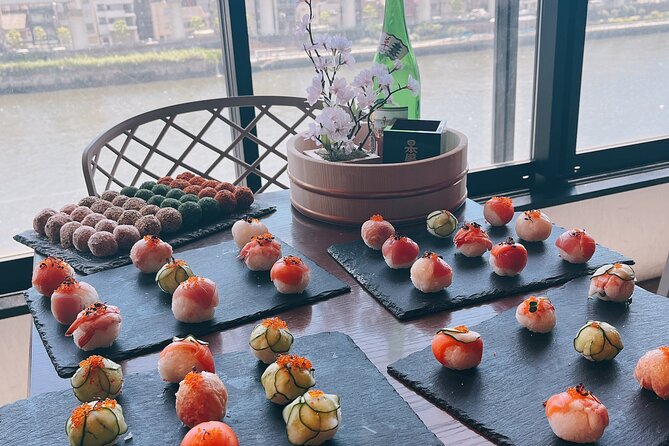
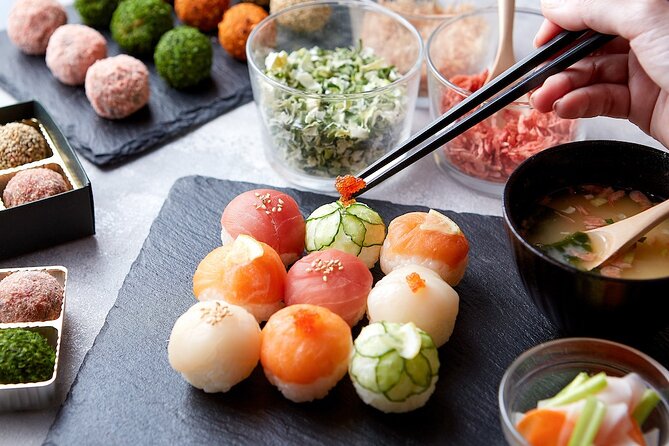
One review also mentioned learning temari sushi (the ball-style presentation) with instructor Ayu. That doesn’t change what you’re signing up for—think of it as a possible bonus teaching variation depending on how your session runs.
A big practical benefit here: sushi-making teaches you the logic behind Japanese food. You start seeing why rice texture matters, why cuts and toppings are handled a certain way, and how Japanese cuisine balances precision with light touch.
Step-by-Step Instruction: English Support and Styling Tips That Actually Help
No experience is required, and that matters. Sushi looks intimidating in photos because the final pieces look so clean. A good class doesn’t just show you what to do—it helps you understand what to fix when your attempt goes sideways.
The reviews give you a clear signal about teaching style. Instructors named Yui and Masaki are described as fun, patient, and enthusiastic, and one class specifically mentioned advice for making sushi look pretty. That’s not vanity; presentation is part of sushi craft. When your pieces look balanced, they usually taste more balanced too.
Here’s how that instruction likely helps you day-of:
- You’ll get hands-on guidance as you form the rice and shape pieces.
- You’ll learn technique first, then adjust by tasting and watching.
- You’ll have time to ask questions in English, so you’re not guessing what a “quick adjustment” means.
If you’re worried about the language barrier, take comfort: the class explicitly includes an English-speaking instructor. The goal isn’t awkward translation; it’s clear steps you can follow.
The Class Flow: From Rice Prep to Finished Pieces in About 1 Hour 40
The total duration is about 1 hour 40 minutes, and that’s a sweet spot for most people. Long enough to learn more than one technique, short enough that you don’t end up fatigued or rushed at the end.
While the exact minute-by-minute plan can vary by session, expect the learning to follow a natural pattern:
- Get oriented and start rolling
This is where you learn the basic mechanics of making a sushi roll.
- Switch gears to nigiri
Shaping and topping come next, with more focus on how pieces come together.
- Eat what you made
The tasting isn’t distant; it’s the reward at the end.
The private format also affects pacing. Because it’s only your group, instructors can slow down when someone needs extra help—something that’s hard to get in larger, shared classes.
One possible drawback to keep in mind: since there’s no pickup and the location is a fixed meeting point, you’ll be responsible for getting there on time. If your day is packed with tight train connections, build in a buffer.
The Meal Part: You Eat Your Sushi, Not Just Watch It
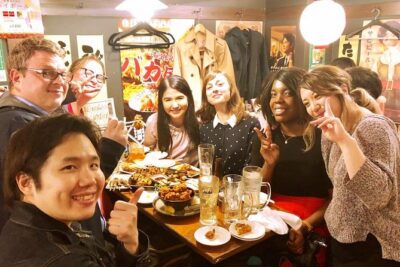
This is one of the best reasons to book: you eat what you make. A lot of cooking classes end with a quick nibble and a big lesson, but here the meal is the payoff. That means you’ll leave with a stronger memory than “I tried sushi once.”
It also helps you calibrate what you did right. You’ll notice the difference between rice texture and topping placement. And because you’re eating your own rolls and nigiri, you can connect technique to taste immediately.
Photos are part of the experience too. The class is set up so you can capture the moment—your finished work, not just the instructor’s hands. If you care about Instagram photos, Asakusa already has visuals covered, but the sushi pictures feel more personal since they’re truly yours.
One extra detail from a review: there’s a great view, including a look at the Sumida River from the class setting. Even if the view isn’t the main reason you book, it’s the kind of small pleasure that makes the whole hour feel special.






Value and Price: $1,300.72 Per Group, Up to 15
Let’s talk money in a real way. The price is $1,300.72 per group (up to 15). On the surface, that sounds expensive if you’re thinking solo.
But for value, you need to calculate per person:
- If you’re a family or a small group, your cost per person drops fast.
- If you can share with friends, this becomes a memorable, structured activity that includes ingredients, an English instructor, and a meal.
What you’re paying for is more than “a cooking session.” You’re paying for:
- Guided instruction (English-speaking, step-by-step)
- Ingredients included
- A private setting, so the instructor can focus on your group
- A meal made from your work
So the best value scenario is when you’re not booking this as a solo traveler experience. If you are traveling alone, you’ll want to be honest with yourself: would you rather do an upscale sushi meal at a counter, or is learning hands-on sushi craft worth the premium?
Timing also plays into value. At 1 hour 40 minutes, it’s efficient. You’re not losing half a day, which matters in Tokyo where schedules get tight.
Who This Class Fits Best (And Who Might Want Another Option)
This experience is a strong match if you:
- Want a beginner-friendly food activity that doesn’t require skills
- Travel with family or a group who enjoys shared activities
- Prefer a structured learning experience over a “walk and eat” food tour
- Care about authentic technique, especially classic nigiri
It also works well if you’re the sort of traveler who wants to take home more than souvenirs. Sushi-making gives you a repeatable skill—something you can try again later, even if only at home or when you spot the ingredients.
Who might consider something else?
- If you’re traveling solo and cost-sharing isn’t possible, the group pricing may feel steep.
- If you dislike hands-on activities (messy or tactile cooking), this may not be your style, since sushi shaping is very much a do-it-yourself session.
Practical Tips for Asakusa Sushi Day
These are the small things that make the experience smoother.
- Arrive a few minutes early
You’ll need time to find the exact meeting spot since there’s no pickup.
- Wear comfortable clothes
You’ll be leaning in and working with your hands; comfy beats cute.
- Go in hungry, not stuffed
You’re eating what you make, so don’t plan a giant lunch right beforehand.
- Bring your photo game, but don’t stress about it
You’ll have time to take pictures of your finished sushi, and the class vibe supports it.
- Plan this near your Asakusa sightseeing
Being close to Sensoji Temple makes it easy to blend into your day without long transit.
- Keep expectations realistic
You’re learning in 1 hour 40 minutes. The goal is correct technique and good sushi, not perfect chef-level shapes.
Should You Book Sushi Making Tokyo?
Yes, I think you should book it if you want an activity that’s structured, hands-on, and actually ends with a meal you made yourself. The English-speaking instruction, the beginner-friendly approach, and the private group setup make it feel more comfortable and personal than many public classes.
I’d especially recommend it to families and small groups visiting Asakusa, where the location near Sensoji makes the whole day easier to plan. If you’re a solo traveler, check the math: this is best when you can spread the group cost across more people.
If you want a fun Tokyo memory that isn’t just pictures of food, sushi-making in Asakusa is one of the most satisfying “I learned something” experiences you can add.
FAQ
Where is the meeting point for Sushi Making Tokyo?
You’ll meet at 2-chōme-17-9 Kaminarimon, Taito City, Tokyo 111-0034, Japan, near Sensoji Temple (Asakusa).
How long does the class last?
The experience lasts about 1 hour 40 minutes.
Is prior sushi-making experience required?
No. The class is designed so no experience is needed.
Is hotel pickup or drop-off included?
No. Hotel pickup and drop-off are not included. The activity ends back at the meeting point.
Is this a private tour?
Yes. It’s listed as a private tour/activity, meaning only your group participates.
Is an English-speaking instructor provided?
Yes. The experience includes an English-speaking instructor.
What’s included in the price?
Included are the ingredients of the cooking class and meal, plus the English-speaking instructor.
Is there a confirmation after booking?
Yes. Confirmation is received at the time of booking.
Can I cancel for a full refund?
Yes. You can cancel for a full refund if you cancel at least 24 hours before the experience starts. If you cancel less than 24 hours before, it won’t be refunded.
Are service animals allowed?
Yes. Service animals are allowed.