REVIEW · TOKYO
Experience the Sumo World in Tokyo
Book on Viator →Operated by Omotenashi-Japan · Bookable on Viator
Sumo looks different up close. This half-day Tokyo experience gives you rare access to a working stable, Asahiyama-beya, where you watch a morning session from close seating and then share chanko nabe lunch. It’s one of those activities that feels more like stepping into daily life than sightseeing.
I really like the way the day is built around watching real training. You sit comfortably for the practice, you can take photos at the end, and the wrestlers are actually part of the experience. I also like that the guides—often Ryoko and Haru—turn what you’re seeing into clear, practical context, including sumo rules and history while you travel.
One thing to consider is timing and meeting-point communication. This is an early start, and one review flagged stress when WhatsApp updates weren’t received in time; if you’re relying on messages, make sure you can access them and arrive at the meeting point promptly.
In This Review
- Key highlights at a glance
- Why a sumo training stable beats a ticketed tournament day
- The early start: Ueno Station rendezvous and train ride to the stable
- Asahiyama-beya practice: front-row seating, real intensity, real rhythm
- The hands-on sumo moment: pushing, photos, and staying humble
- Lunch after practice: chanko nabe, and how to get the vegetarian option
- What your guide adds: rules, terms, and wrestler life context
- Price and value: $105.71 plus the ¥1060 train fare
- Timing, group size, and the one thing to watch: communication
- Who this Tokyo sumo tour suits best
- Should you book this tour?
- FAQ
- Where do I meet the guide for the Sumo World tour?
- What time does the tour start?
- How long is the tour?
- What’s included in the price?
- Is there a vegetarian lunch option?
- What train costs are not included?
- What’s the group size limit?
Key highlights at a glance
- Rare access to Asahiyama-beya training, not a public event
- Comfortable front-row-style seating to watch practice closely
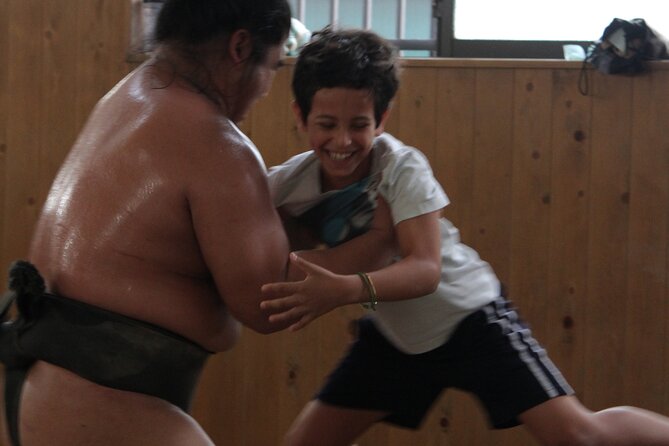
- Interactive sumo time where you try pushing/moving the wrestlers
- Lunch included, with vegetarian chanko nabe available if you notify in advance
- Photography at the end of the session so you’re not fumbling mid-training
- Small group size (maximum 26), which helps the guide manage questions
Why a sumo training stable beats a ticketed tournament day
If you think sumo is just two guys in a ring, this tour is a strong reality check—in a good way. Tournament action is the peak moment, but training is where you see the repetition, discipline, and physical strategy that build those results.
The value here is exclusive access to a real stable setting. You’re not stuck outside with a crowd. Instead, you’re seated for the practice session and you’re allowed to take photos afterward. That combination matters. Close seating lets you actually track form—footwork, balance, and how they set up to drive an opponent. And the photo window gives you time to capture the experience once the session is done.
Another reason this works for many people: sumo culture is usually explained in broad strokes. On this tour, you get a guided framework—how things work, what certain terms mean, and why traditions matter—so you don’t just watch big bodies doing big moves. The best guides also help you ask questions comfortably afterward, so you leave with a clearer sense of the wrestlers as people, not just athletes.
You can also read our reviews of more tours and experiences in Tokyo.



The early start: Ueno Station rendezvous and train ride to the stable

The tour begins at Ueno Station (7 Chome-1), where you meet at 7:45 AM. From there, you head out by train with stops along the way—Matsudo Station and then Kunugiyama Station—before reaching the stable area.
This train portion is more than transportation. It’s time for the guide to set expectations so the training makes sense when you arrive. You also get a feel for the pace of a Tokyo morning. For many visitors, that’s part of the charm: you’re moving like locals, not hopping between photo spots.
Logistically, the most important point is simple: you’re leaving early. The experience is built around arriving in time for the main practice block, so plan to be at the meeting point before 7:45. If you’re the type who likes a buffer, add it. One of the less-positive moments in the feedback described what happens when an update isn’t received in time and the group misses most of the training. That’s rare, but it underlines the rule: start the day on time.
Asahiyama-beya practice: front-row seating, real intensity, real rhythm
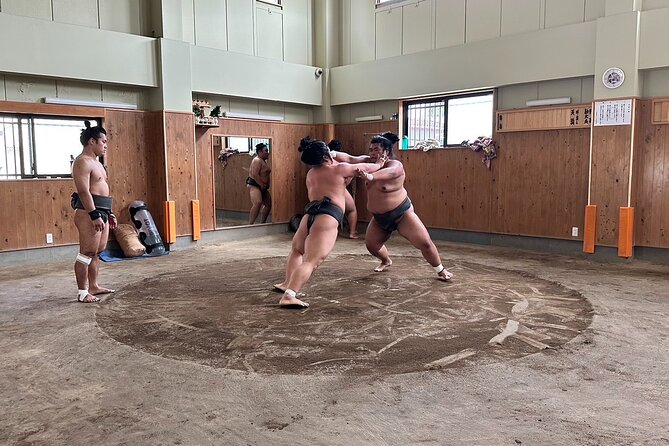
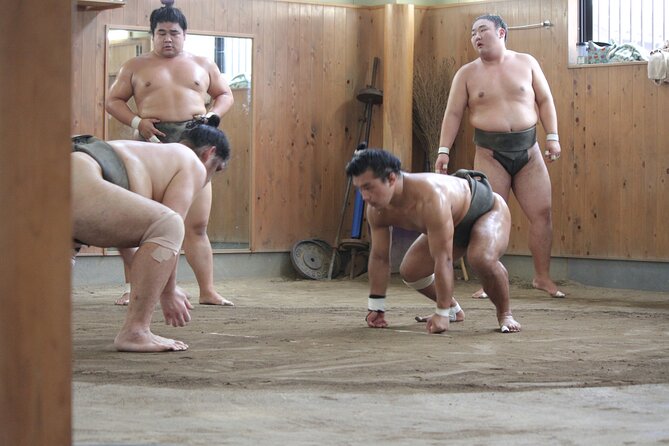
The heart of this tour is at 朝日山部屋 (Asahiyama-beya). Once you arrive, the focus is on the training session itself. You watch from seated positions—described as comfortable chairs—so you can actually follow what’s going on without standing the whole time.
The session is long enough to feel like a real training window: about two hours of practice time at the stable. That’s a sweet spot. It’s not so short that you miss the point, and it’s not so long that it turns into fatigue and boredom.
There’s also a hands-on moment. After the main training, the tour includes a chance for you to try sumo wrestling firsthand against the wrestlers. That’s where the experience becomes memorable in a way that watching alone can’t. Big technique plus slow control is one thing. Feeling how hard it is to move them—even in a playful, guided way—is another.
One more practical detail: photography is allowed at the end of the session. In other words, you don’t have to guess when it’s safe to lift your camera. You can watch carefully during practice, then capture the moment once the training has wrapped.
The hands-on sumo moment: pushing, photos, and staying humble
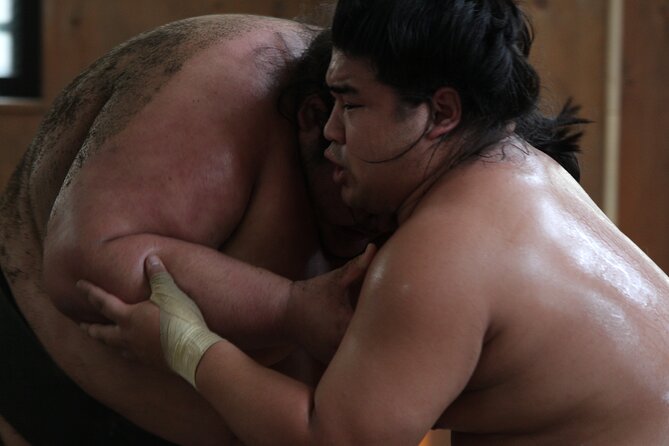
Trying sumo isn’t like a staged stunt. The goal is fun and participation, with the wrestlers guiding the interaction. That’s why people leave talking about two things: how intense the training looks, and how friendly the wrestlers are up close.
Your “try it” moment is described as an experience that includes trying to move/push the wrestlers, plus photos at the end. Some families and couples highlight that the wrestlers were good-natured and patient during the interaction, even when it’s clearly not your strength day.
Here’s the honest expectation I’d set: you might win a laughable contest or you might get gently shoved back. Either way, the point isn’t strength—it’s learning the balance and body positioning that makes sumo so effective. The fact that you’re allowed into the ring-style interaction at all is a big part of why this tour feels authentic.
Lunch after practice: chanko nabe, and how to get the vegetarian option
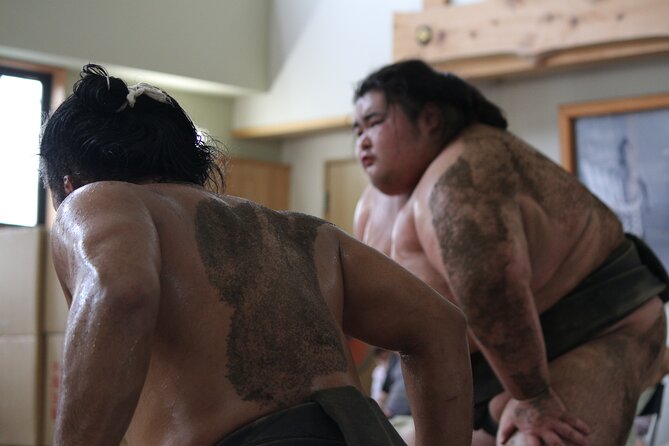
One of the best parts of this tour is the lunch. Lunch is included, and it centers on chanko nabe, a traditional stew linked with sumo training. It’s the kind of meal that makes sense after hard practice: warm, filling, and designed to help athletes fuel up.
Vegetarian eaters get a real option too. The tour offers vegetarian service if you notify at least 3 days in advance. That’s important because you want your meal handled ahead of time, not improvised at the last second.
From a practical standpoint, the meal also helps your energy for the rest of your Tokyo day. You’re out early, you’re watching a physically demanding session, and then you’re eating something that’s culturally connected to the sport you just saw.






What your guide adds: rules, terms, and wrestler life context
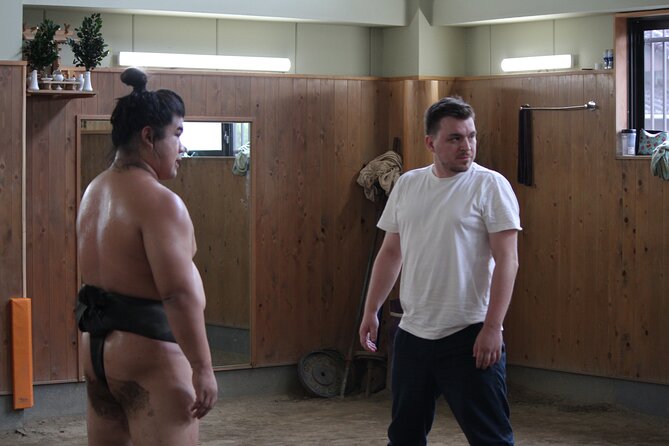
The on-train and in-stable guiding is part of the value. Guides (including names you’ll often see like Ryoko and Haru, plus others such as Tomer or Tammy on different days) explain what you’re seeing in plain language: history, rules, and cultural details that help the training click.
This is where the tour becomes more than entertainment. When you understand basic sumo concepts—how bouts work, what rituals mean, and how rikishi life is structured—the training stops looking random. You start noticing patterns: how they reset after contact, how they use positioning rather than just brute force, and how technique is repeated like a craft.
A nice bonus from feedback: some guides also help with navigating the rest of your day, including directions after the tour ends. That’s the kind of service that matters when you’re leaving a specific stable area back toward central Tokyo.
Price and value: $105.71 plus the ¥1060 train fare
The price is $105.71 per person, for an experience that lasts about four hours total, including lunch and the stable session.
Here’s how I think about value for this kind of tour:
- You’re paying for exclusive access to a working stable and a guided training-viewing experience.
- You’re also paying for instruction and translation context, which is the difference between watching sumo and understanding it.
- Lunch is included, and it’s not a random convenience meal—it’s linked to sumo culture through chanko nabe.
- You get interactive participation plus photo time, which typically costs more on its own in many experiences.
The main extra cost to plan for is transit. Round-trip JR train cost is about ¥1060 (around $7) and is not included. Budgeting that in still leaves you in the “fair price for an up-close cultural access day” zone.
In short: this isn’t a bargain, but it’s also not priced like a five-star show. It’s priced like a small-group, behind-the-scenes cultural moment—and that’s what you’re actually buying.
Timing, group size, and the one thing to watch: communication
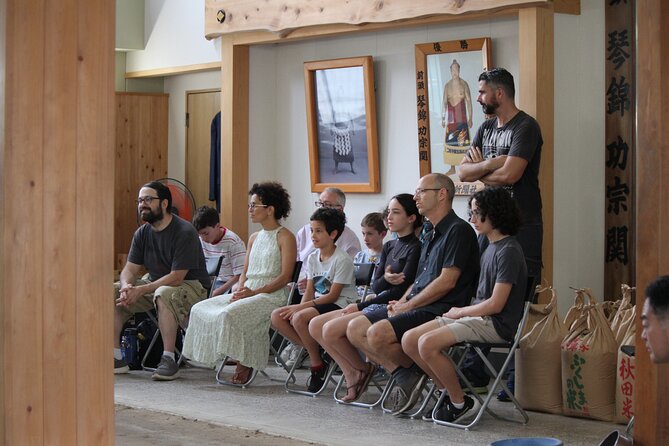
This tour caps at 26 travelers, which tends to make it easier for the guide to manage questions and keep the group moving. Smaller size also tends to improve the experience during the interactive portion, since there’s more time to explain what’s happening.
Timing is the other big factor. Start is 7:45 AM, and the stable practice window happens early in the morning. If you arrive late, you risk missing the core training time. One piece of negative feedback focused on missed training caused by not receiving the stable address update quickly enough. The guide explained communication was being shared via WhatsApp, and that technical issues can happen.
So here’s my practical advice: before the morning, make sure you can receive updates by the channel the operator uses (WhatsApp was mentioned). If you don’t use WhatsApp, plan an alternate method to get the meeting/stable details. Also, arrive at Ueno early enough to handle platform confusion. Tokyo stations are big. Even locals have to double-check signs sometimes.
Who this Tokyo sumo tour suits best
This tour is a great fit if you want more than a photo. It’s best for people who:
- Like sports culture and want to see training, not just competition
- Enjoy guided context—history, rules, and why traditions matter
- Want an authentic experience with access you typically won’t get to the public
- Are comfortable joining a small group early in the day
- Value included meals, especially culturally relevant ones like chanko nabe
It may not be ideal if you hate early starts or if you depend on complex tech to get meeting-point updates. The “early + communication + train timing” combo is the one real friction point.
Should you book this tour?
If you’re choosing one Tokyo sumo-related experience and you want it to feel real, I’d lean yes. The best reason to book is the combination: stable access + morning training viewing + interaction + lunch. That mix is hard to replicate with stand-alone tickets, and it’s exactly the kind of day that makes you feel like you got under the surface.
Book it when you can commit to the early meeting at Ueno and when you’re able to receive updates on time. Skip it if you’re traveling with a schedule that can’t handle a morning departure or if you know you won’t be able to access the operator’s communication channel.
FAQ
Where do I meet the guide for the Sumo World tour?
You meet at Ueno Station (7 Chome-1), Taito City, Tokyo, with the start point listed as Ueno Station 7 Chome-1.
What time does the tour start?
The tour start time is 7:45 AM.
How long is the tour?
It runs for about 4 hours total.
What’s included in the price?
The experience includes a sumo training session view, sumo wrestling participation, lunch (vegetarian option available with notice), and photography allowed at the end.
Is there a vegetarian lunch option?
Yes. Vegetarian lunch is available if you notify at least 3 days in advance.
What train costs are not included?
Round-trip JR train fare is listed as about ¥1060 (about $7) and is not included in the tour price.
What’s the group size limit?
The tour has a maximum of 26 travelers.