REVIEW · TOKYO
Private Ginza Architecture Walking Tour
Book on Viator →Operated by Showcase Tokyo Architecture Tour · Bookable on Viator
Ginza changes when someone points out details. This private walk links big-name architecture with cultural stops so you learn the how and why behind the facades. I like that the route is personalized to your interests, and you’re not stuck with a one-size lecture.
I also like the built-in pacing: about 3 hours 30 minutes at your own speed, with an English guide who explains what you’re seeing as you go. You get a mix of modern city design and older landmark buildings, plus plenty of chances to look up and frame good photos.
One consideration: it’s a real walking tour with a moderate fitness level, and a few famous places are viewed from the outside. If you want only the most famous buildings with long interior time, you may wish you had extra minutes at your top picks.
In This Review
- Key highlights worth your time
- Private Ginza Architecture: what you really experience in 3.5 hours
- From Tsukiji Station Exit 1 to Mitsukoshi at Ginza 4-chome
- What you see on the route: modern towers, temples, theater, brand design
- Stop-by-stop: the places that turn Ginza into a design story
- Ginza walking segment: where your guide teaches you how to look
- Tsukiji Hongwanji Temple: stepping from shopping into ritual space
- Kabukiza Theater: architecture you can feel in the room
- Nicolas G. Hayek Center: design and brand-world architecture in one place
- Toyoiwa Inari Shrine: a quick pause with a different texture
- Ginza Maison Hermes Le Forum: stepping into luxury architecture
- Mikimoto Boutique Ginza 2chome: pearls meet street-design context
- UNIQLO Tokyo: a modern, practical contrast from the street
- Mikimoto Ginza 4chome Honten and Wako Ginza: quick exterior reads
- Okuno Building: the interior finish that ties the loop together
- Price at $132.10: where the value shows up
- Guides and conversation style: the names that keep showing up
- How to prep: shoes, pace, and getting good photos
- Who this tour fits best
- Should you book this private Ginza architecture walk?
- FAQ
- FAQ
- How long is the private Ginza Architecture Walking Tour?
- Is this tour private?
- What is the maximum group size?
- Is the tour offered in English?
- Do I need to pay admission tickets for the stops?
- What’s included besides the guide?
- Where do I meet the guide?
- Where does the tour end?
- Is hotel pickup included?
- Are there two departure times to choose from?
- Can I cancel for a full refund?
Key highlights worth your time
- Private guide for up to 5 people, tailored to your interests and knowledge level
- Two departure times so you can fit it into a busy Tokyo day
- Stops with free admission listed for temple, theater, and several interiors
- A drink pause included, so you’re not just walking and rushing
- Ginza street-level design lessons, including how to read architecture from street height
Private Ginza Architecture: what you really experience in 3.5 hours
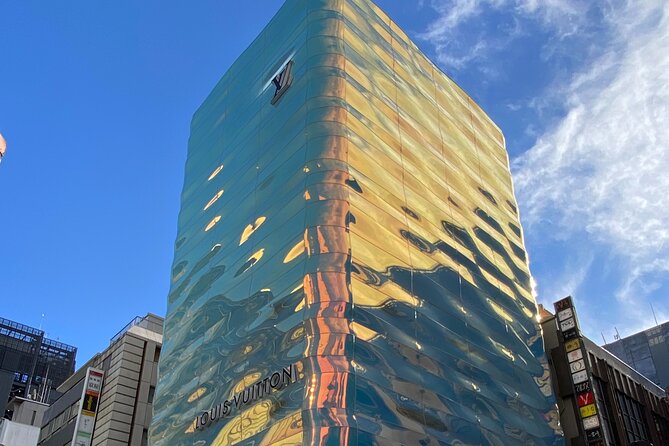
This tour is for people who like their Tokyo with context. Ginza can look like a polished shopping district from street level, but the architecture tells a second story: money, materials, and design choices all pushed into the same compact grid. With a private guide, you get help noticing those layers without needing to be an architecture expert first.
I’d call this a practical architecture tour, not a textbook. You walk, you stop, you go inside where it makes sense, and you talk through what you see. The schedule includes both cultural landmarks and contemporary brand commissions, so your brain gets a full picture of how Ginza balances old and new.
Because it’s private and customized, the guide can steer you toward what you care about most. Want to focus on modern corporate design? Lean that way. More interested in theater and tradition? The route supports that too. For me, that flexibility is the main reason to choose private instead of a generic group stroll.
You can also read our reviews of more walking tours in Tokyo


From Tsukiji Station Exit 1 to Mitsukoshi at Ginza 4-chome
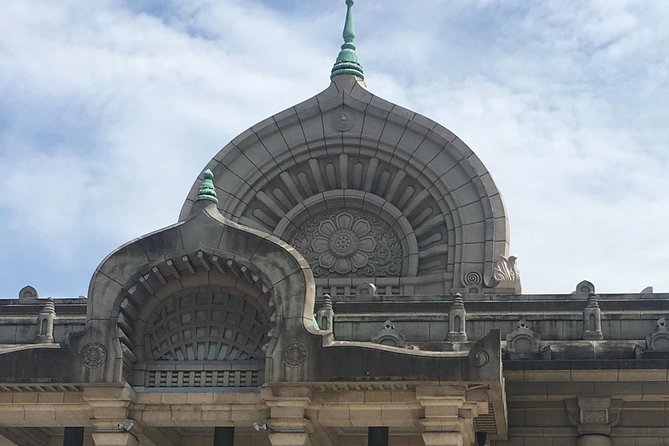
You start near Tsukiji Station, Exit 1 in Chuo City (Tsukiji, 3-chōme). The exact meeting point is listed near the station exit, which is helpful when you’re trying to avoid a long scavenger hunt in Tokyo. The tour ends at the Ginza 4-chome intersection, in front of Mitsukoshi department store, so it drops you back in one of the easiest areas to keep exploring.
There’s no hotel pickup or drop-off, so you’ll want to build in time to reach Tsukiji on your own. The good news is that the meeting point is near public transportation. If you’re using trains, this setup is usually straightforward.
Also check the tour format: it’s private, meaning only your group participates. The maximum size is 5 people per booking, which tends to make questions easier and the pace feel more human.
What you see on the route: modern towers, temples, theater, brand design
Ginza is famous for luxury shops, but the architecture is more than decoration. In a few blocks you can see how Japanese design uses light, proportion, and material textures to signal status and function at the same time. This tour uses that idea by pairing big interior spaces with short street stops that train your eye.
A key detail: the schedule lists stops where the admission ticket is free for the tour. That matters for planning, because it lowers the guesswork of what costs extra once you arrive. You still want to be ready for walking time and entry rules inside each building, but you’re not facing surprise ticket fees for the listed sights.
The tour also includes a cozy pause with drinks along the way. It’s not just a perk—when you’re learning to read architectural details, you need a break to reset your focus and take photos without rushing.
Stop-by-stop: the places that turn Ginza into a design story
Ginza walking segment: where your guide teaches you how to look
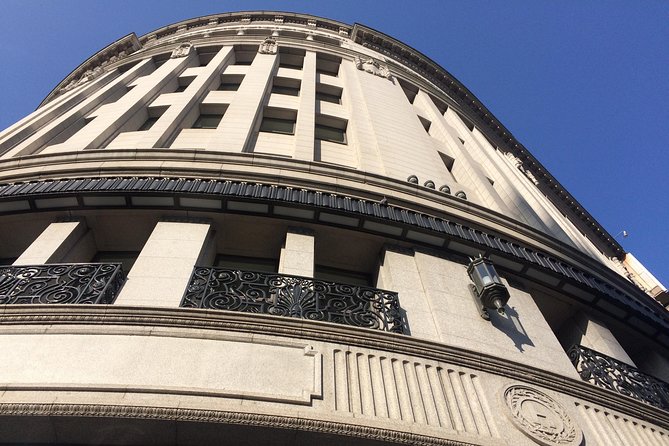
You begin with a guided walking stretch in Ginza, with about 40 minutes allocated to moving between sites. This is often the “calibration” part of the tour—your guide shows you where to stand, what angles to watch, and what design cues to notice. One helpful tip from guide behavior you may experience: you’ll get encouraged to look up and around, not just forward. That changes everything in a district full of façades.
This is also where customization shows up. If you’re drawn to the modern side, your guide can spend more time pointing out contemporary structures and the logic behind them. If you’re more into tradition, you’ll get the cultural framing early so the later stops connect.
You can also read our reviews of more private tours in Tokyo



Tsukiji Hongwanji Temple: stepping from shopping into ritual space
Next comes Tsukiji Hongwanji Temple. The tour includes time to go inside, so you’re not just glancing at a landmark from the outside. This stop adds a calm contrast to Ginza, and it also gives you a sense of how religious architecture sits inside the city’s commercial rhythm.
The time here is about 10 minutes, so think of it as an introduction rather than a long ceremonial visit. You’ll want to move quietly, listen carefully, and take in the layout before you head back into street life.
Kabukiza Theater: architecture you can feel in the room
Then you reach Kabukiza Theater with a visit that includes entering to enjoy its features (about 20 minutes). Even if you don’t plan to watch a performance, theater spaces are architecture with built-in storytelling. Your guide can connect design choices to how people gather, look, and experience stage culture.
One practical note: theater buildings can be busy and rules inside may change with show schedules. Since the stop is scheduled and time-boxed, you’ll get maximum value by staying present and letting the guide do the translation of what you see.
Nicolas G. Hayek Center: design and brand-world architecture in one place
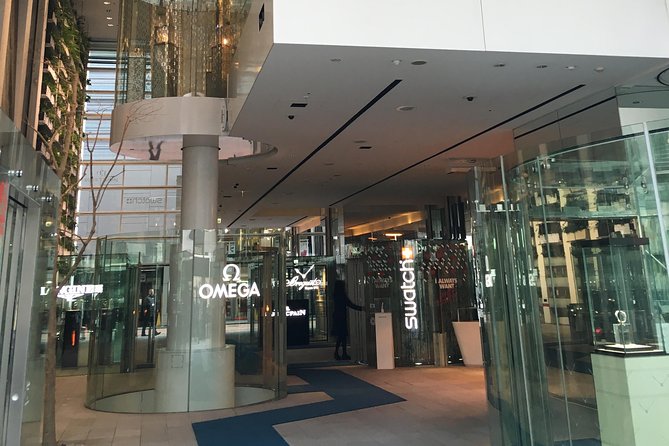
A short walk brings you to the Nicolas G. Hayek Center, with time inside (about 15 minutes). This stop is a good bridge between heritage and modern design: it’s about how corporate identities and design philosophies become real spaces you can enter.
If you like the intersection of architecture and everyday culture, this is one of the stops that makes Ginza more than a shopping route.
Toyoiwa Inari Shrine: a quick pause with a different texture
You’ll also stop at Toyoiwa Inari Shrine for about 5 minutes to enjoy its features. This is brief, but shrines are often where you feel the neighborhood’s older spiritual layer. It’s the kind of stop that gives you a small reset, even if you don’t plan to linger.
When you only have a few minutes, the best move is to pay attention to the details your guide points out and keep your photos respectful.
Ginza Maison Hermes Le Forum: stepping into luxury architecture
Time inside Ginza Maison Hermes Le Forum is about 15 minutes. This is where Ginza’s luxury identity becomes architecture you can walk through. It’s also a useful counterpoint to the more traditional spaces, because it highlights how modern brands use design to shape mood and customer flow.
If you’re the kind of person who reads buildings the way other people read menus, you’ll probably like this part.
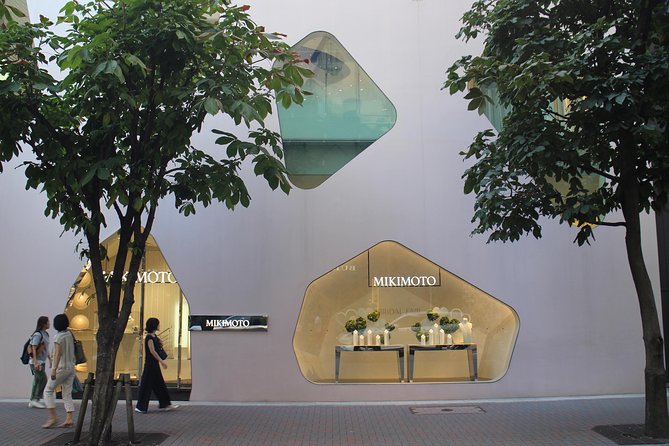
Mikimoto Boutique Ginza 2chome: pearls meet street-design context
Next is Mikimoto Boutique Ginza 2chome, about 5 minutes, and it’s included only if there’s time. That “if we have time” detail is important: it means your guide may adjust based on pacing, questions, and how smoothly the group moves between stops.
If it’s included, it adds another layer to Ginza’s theme: design as brand language. If it’s not included, you haven’t missed an essential anchor stop—your tour still covers the core mix of temple, theater, and major architecture points.
UNIQLO Tokyo: a modern, practical contrast from the street
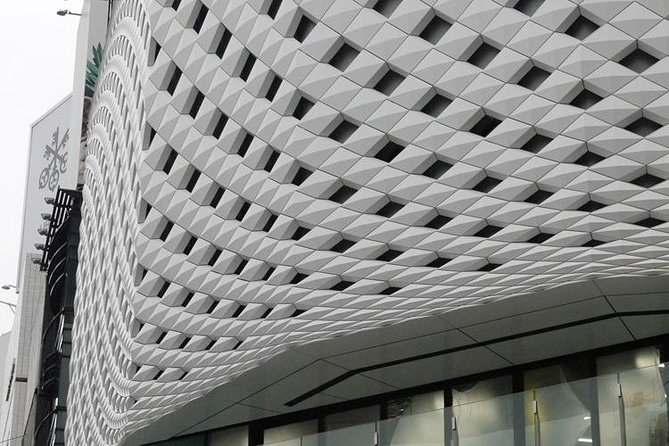
At UNIQLO Tokyo, you view from outside for about 10 minutes. This sounds simple, but it’s actually a smart choice. Brand architecture doesn’t always have to feel formal or ceremonial. Sometimes the point is how a building works for crowds, displays, and daily patterns.
Because you’re outside, you’ll likely focus on façade rhythm, entry layout, and how the building holds its shape in a dense neighborhood.
Mikimoto Ginza 4chome Honten and Wako Ginza: quick exterior reads
You’ll also have short exterior viewing stops at Mikimoto Ginza 4chome Honten (about 5 minutes) and Wako Ginza (about 10 minutes). These stops keep your pace moving while still training you to see design signatures from the street.
For exterior stops, your photos depend on where you stand. This is where a good guide earns their pay by telling you when to step left, tilt your camera up, and catch the right lines.
Okuno Building: the interior finish that ties the loop together
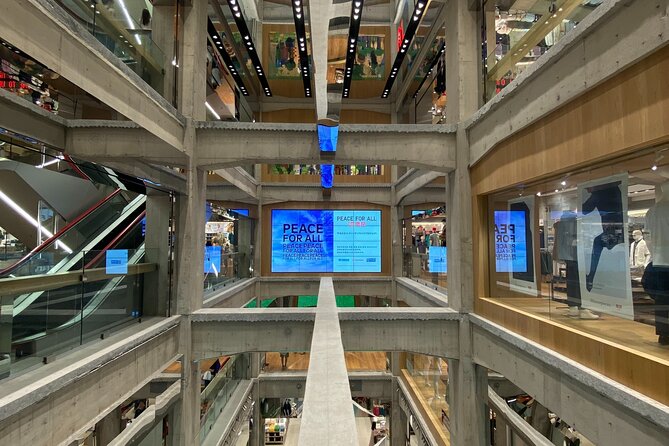
Finally, the tour includes going inside Okuno Building for about 10 minutes. Ending with an interior stop is nice because it reminds you that architecture isn’t just façades. It’s how spaces are organized, how light is treated, and how visitors experience the building once they cross the threshold.
This stop also makes the tour feel like more than a parade of photos. You leave with a stronger sense of what Ginza buildings are like when you’re inside them.
Price at $132.10: where the value shows up
At $132.10 per person for about 3.5 hours, this isn’t a bargain-bus ticket. But value in Tokyo isn’t only about cost. It’s about what you get that you can’t easily do solo: an English guide to interpret architecture, a curated sequence of specific stops, and private pacing for up to 5 people.
The price also makes more sense when you factor in what’s included:
- Local licensed tour guide
- Cozy pause with drinks
- Mobile ticket
- Free-entry stops listed in the schedule
If you were doing this on your own, you could walk Ginza and pick buildings, sure. The difference is that you’d likely spend extra time figuring out what matters. Paying for the guide buys you time, context, and a smoother flow.
For families or small groups, private tours can be especially sensible because one adult’s “I’ll just figure it out” doesn’t have to become three people wandering separately. The small group limit helps keep the experience focused.
Guides and conversation style: the names that keep showing up
Because the tour is private, the guide’s approach can strongly shape the mood. In past experiences tied to this tour style, guides like Yoko, Yuki, Taka Yamamura-San, Yoshi, Eriko, Mari, Makoto, and Haruka have been highlighted for strong English and for adapting the conversation to what the group wanted.
You can also pick up a useful pattern: the best guides on this route help you read Ginza like an architect does. They guide where to look, they connect buildings to culture and city planning, and they answer follow-up questions instead of rushing them.
If you care about modern luxury buildings and also want the older cultural anchors, Ginza’s mix can feel chaotic without guidance. This tour format is designed to prevent that by turning each stop into one clear takeaway.
How to prep: shoes, pace, and getting good photos
This is a walking tour with a moderate physical fitness level, and it lasts about 3 hours 30 minutes. Wear comfortable shoes you’d trust for uneven sidewalks and quick entry lines. Bring a light layer if weather changes, since you’ll be outside for chunks of the experience.
Photo tip, in plain terms: plan to look up. The route encourages architecture viewing angles, and you’ll get more out of the buildings by capturing lines and façades, not just storefront shots at eye level.
Also plan for short stops. Some entries are longer (like Kabukiza), and some are brief exterior viewing. Keep expectations flexible. If you find one stop especially fascinating, your guide can sometimes adjust discussion time within the tour’s structure.
Who this tour fits best
This private Ginza architecture tour suits you if:
- You want architecture plus culture, not just shopping stops
- You like asking questions and moving at your own pace
- You’re traveling with a small group and want a guide to connect the dots
- You want a structured loop that still feels human, not rushed
It’s also a good pick if you’ve been to Tokyo before and want a different lens. Ginza can feel familiar fast, but with a guide you start seeing the design decisions you usually miss.
If you dislike walking, want only exterior viewing, or have mobility limitations beyond a moderate fitness level, you may find the pace too much. In that case, you might prefer a shorter museum-focused plan instead.
Should you book this private Ginza architecture walk?
If you want to come away feeling you understand Ginza buildings—not just having pictures—this tour is a strong choice. The combination of private guide, English interpretation, and multiple interior stops makes the time feel used, not wasted.
Book it if you value a small group, like a guided route, and will enjoy learning how modern luxury architecture coexists with temples and theater culture. Skip it if you’re hoping for long, slow visits inside a few sites only, or if you’d rather avoid any walking beyond a gentle stroll.
FAQ
FAQ
How long is the private Ginza Architecture Walking Tour?
It lasts about 3 hours 30 minutes.
Is this tour private?
Yes. It’s a private tour, and only your group participates.
What is the maximum group size?
The maximum is 5 people per booking.
Is the tour offered in English?
Yes. The tour is in English and includes architectural, cultural, and historical information.
Do I need to pay admission tickets for the stops?
The schedule lists admission ticket free for the stops included on the tour.
What’s included besides the guide?
You get a cozy pause with drinks along the way.
Where do I meet the guide?
The meeting point is near Tsukiji Station Exit 1, in Tsukiji, Chuo City, Tokyo.
Where does the tour end?
It ends at the Ginza 4-chome intersection, in front of Mitsukoshi department store.
Is hotel pickup included?
No. There is no hotel pickup and drop-off.
Are there two departure times to choose from?
Yes, there are two departure times available.
Can I cancel for a full refund?
Yes. You can cancel up to 24 hours in advance for a full refund.