REVIEW · TOKYO
Tokyo: Best Samurai Experience
Book on GetYourGuide →Operated by 株式会社テイク · Bookable on GetYourGuide
Samurai fantasies usually stay in movies. This one turns them into a guided, safe, real-world workout in kimono + hakama with a sword-fighting finale. Two things I really like are the hands-on basics (draw, grip, swing, retract) and the fact that an instructor energy keeps it fun while you learn. One thing to consider: it is physical, and the activity has clear age and mobility limits.
You’ll move fast through the fundamentals—then go straight into a mock fight with music and photo ops. What makes it feel special is the setting: weapons and armor displayed in a dojo space that doesn’t feel like a modern classroom. If you want a long, deep sword-training program, this 1-hour session may feel short.
In This Review
- Key points that make this Tokyo samurai experience worth your hour
- How the Samurai Theater Tokyo session works in one hour
- Dressing as a samurai: kimono and hakama first
- Sword basics you actually practice: draw, grip, swing, retract
- Chanbara sword fighting and the music-powered finale
- The dojo details: weapons, armor, and that staged-old-Japan feeling
- Small group coaching: what up to 10 people changes
- Price and value: is $63 for one hour actually fair?
- Who this Tokyo samurai experience suits best
- Practical tips for getting better photos and smoother sword practice
- Should you book this Tokyo samurai experience?
- FAQ
- How long is the Tokyo Samurai experience?
- What is included in the price?
- What kind of sword do I use?
- Can I take photos or record video during the session?
- Do I have to pay extra to wear the armor on display?
- What languages do the instructors speak?
- How big is the group?
Key points that make this Tokyo samurai experience worth your hour
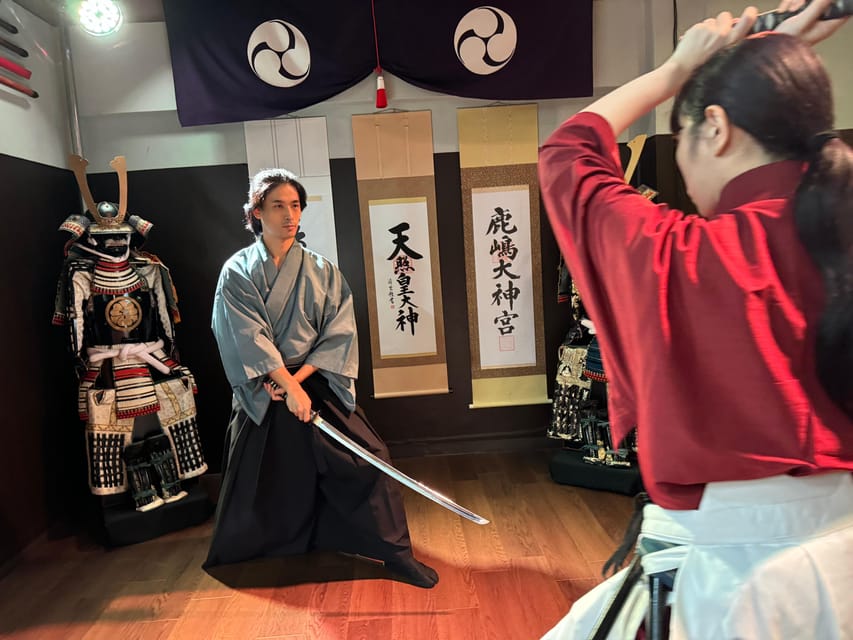
- Kimono and hakama selection lets you actually dress the part before training starts.
- Katana basics cover parts of the blade and core movements like draw and retract.
- Chanbara-style sparring keeps the training playful and structured.
- Smartphone photo and video support is part of the experience, not an afterthought.
- Small group size (up to 10) keeps the coaching more personal.
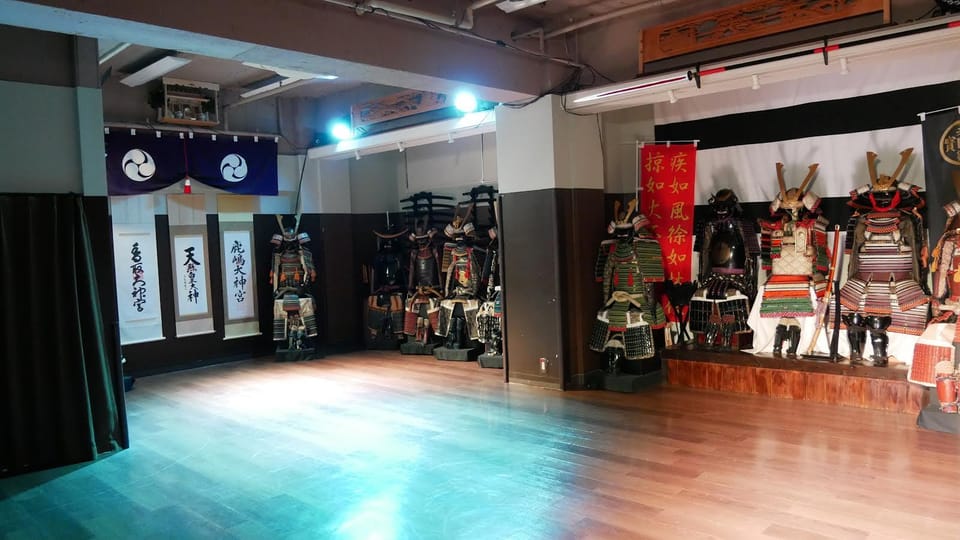
- Dojo atmosphere includes sword and spear displays, plus armor you can optionally wear.
How the Samurai Theater Tokyo session works in one hour
This is a 1-hour guided class that blends costume, basics, and a short “samurai show” moment. You’re not just watching. You’re in the action: holding a fake sword that cannot cut, practicing movements, then doing a simple sword fight.
The pacing matters here. The structure is built so you get enough instruction to participate right away. You start with the costume, then learn basic sword handling (from how to hold it to key motions). After that, you practice a mock chanbara fight. The session ends with a higher-energy battle-style moment with music, plus lots of camera time.
The vibe also helps. The dojo setting uses real displays—swords, spears, and armor—and the space feels intentionally staged rather than bland. That’s the kind of detail that makes a short experience feel like a full memory.
You can also read our reviews of more tours and experiences in Tokyo.



Dressing as a samurai: kimono and hakama first
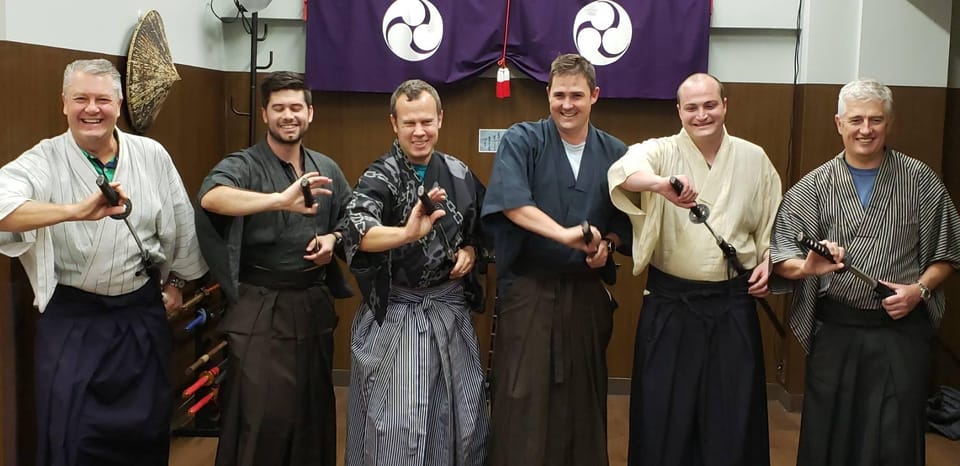
You begin by choosing your kimono and hakama. That’s not a small detail. It changes how the class feels, because you’re moving in a traditional outfit from the start. It also gives you instant “I’m in Japan” photos before you even pick up the sword.
Then you change fully into the samurai costume and get ready for training. The guides focus on getting you set up comfortably enough to learn the movements safely. Expect the session to be interactive—people around you are also in costume and jumping into practice together.
If you like roleplay and don’t mind looking a bit silly at first, you’ll probably love the first minutes. It’s part of the fun, and it helps everyone commit to the same theme.
Sword basics you actually practice: draw, grip, swing, retract
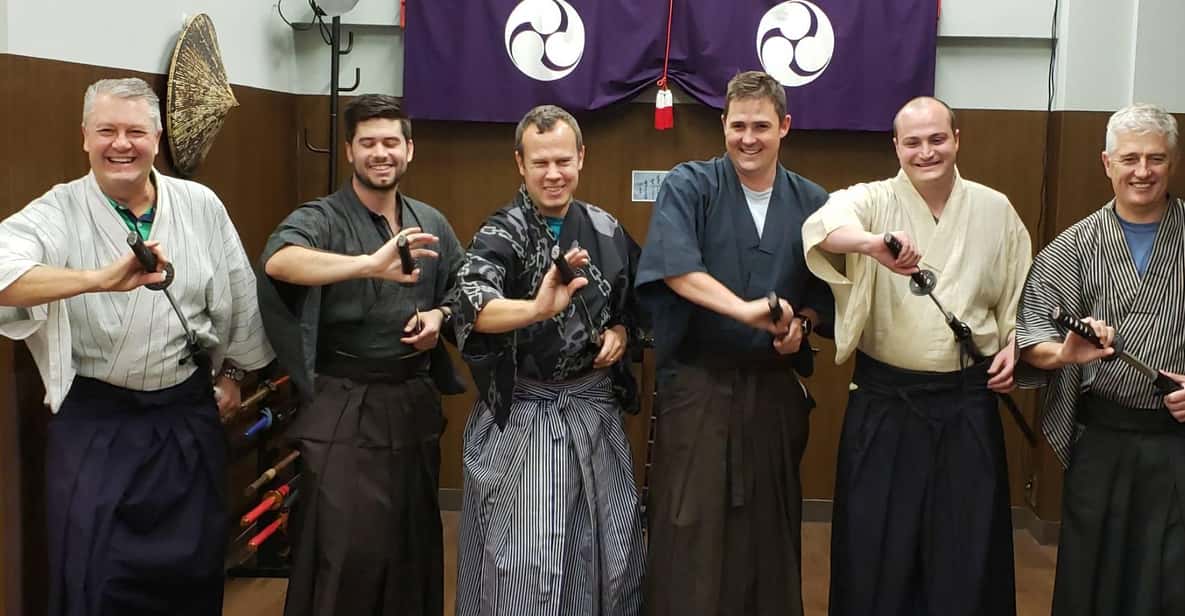
This is not a lecture tour. You’ll learn practical handling steps using a non-cutting practice sword. The instruction includes:
- getting the main parts of the blade explained
- learning how to hold the sword correctly
- practicing a few core motions: drawing the sword, swinging it, and retracting it
That sequence is smart for beginners. Draw and retract are the two big motions that make people feel like they know what they’re doing fast. Once you’ve repeated them a few times, the rest of the sparring becomes easier because your body has a baseline.
You’ll also learn basic stance ideas (one review specifically mentioned stance names). Even if you don’t remember every term, the repeated movement pattern is what matters. This is how you go from holding a prop sword to moving with intent.
And yes, your goal here is safe fun. The sword cannot cut, and the fight portion is guided into something you can participate in without specialized training.
Chanbara sword fighting and the music-powered finale
After the basics, you practice a simple chanbara (sword fight). Think of it as a short, choreographed practice spar: partners, cues, and a structure that keeps the energy up while the instructors manage the pace.
This part is where many people smile the most. The class gives you the feeling of real fencing without throwing you into something chaotic. Reviews highlight an emphasis on repeating moves properly, including offensive and defensive technique practice. That tells me the instructors don’t just wave swords around. They coach the shape of the movements.
Then comes the ending: an upbeat battle-style moment where you’re essentially “exterminating bad guys” to music. It’s not a quiet museum experience. It’s performance energy, and it’s why this works so well even for people who don’t know anything about samurai culture yet.
Two practical advantages to this structure:
- You get learning time and fun time in the same hour.
- You end with a payoff, so the session doesn’t fade after the costume and early drills.
The dojo details: weapons, armor, and that staged-old-Japan feeling
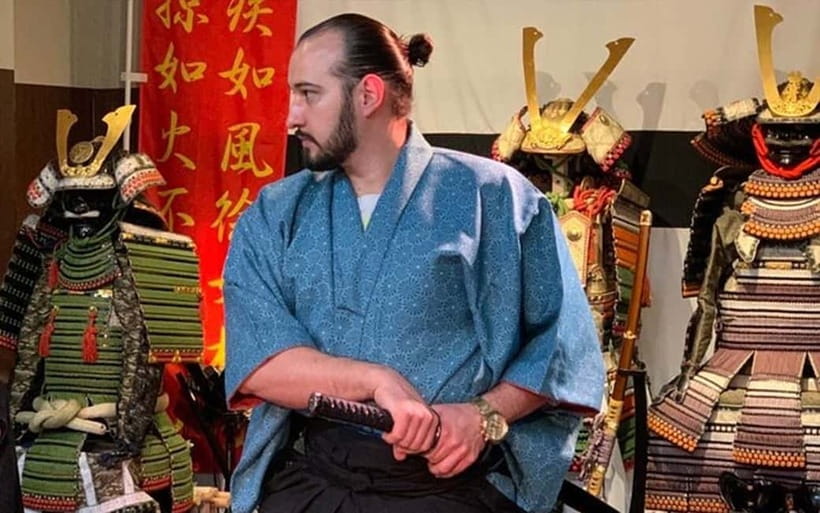
The dojo itself plays a role in the experience. You’ll see weapons on display, including swords and spears, plus armor. The space is described as not feeling modern, which helps you slip into the theme quickly.
There’s also an optional element: you can wear the armor on display, but it comes with an additional fee. If you love photos and want the full look, that’s worth considering. If you’re only in it for the sword practice, you can skip it and focus on the core class.
One more detail I like: the instructors are described as authentic teachers who have appeared in major Japanese dramas and movies. That matters because it usually correlates with presentation style—clear explanation, confident demonstrations, and a teaching rhythm that keeps the group moving.






Small group coaching: what up to 10 people changes
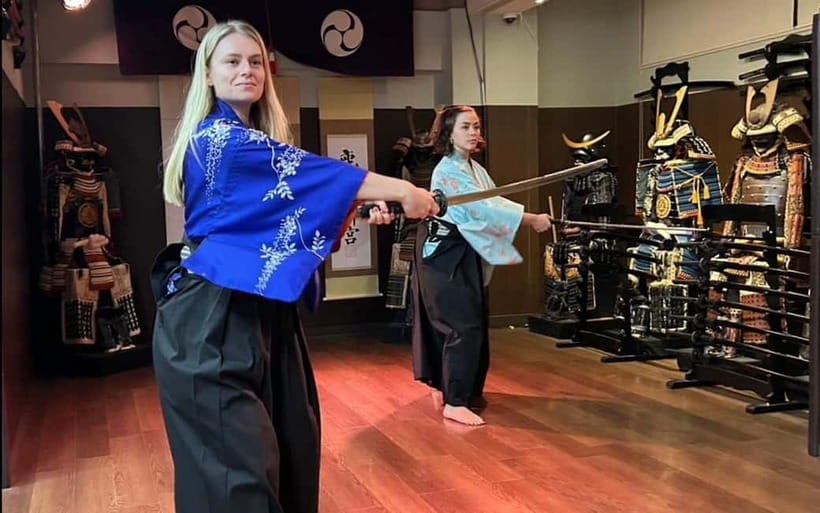
The group is limited to 10 participants. For a hands-on class, that limit is a big deal. Fewer people means more chances to get corrected on grips, stance, or timing.
It also affects the atmosphere. In a larger crowd, you’d spend more time waiting for your turn. Here, the pacing supports frequent repetition, which is how you actually learn motions like draw and retract in a short session.
The instructors speak English and Japanese, so you don’t need perfect Japanese to follow along. And reviews repeatedly mention assistants actively helping with costume and capturing moments, which suggests the group size supports that hands-on support.
Price and value: is $63 for one hour actually fair?
At $63 per person for a 1-hour experience, you should judge the value by what’s included—not just the time. This ticket includes:
- changing into kimono and hakama
- explanation of sword parts
- using a fake sword for practice
- the sword-fight training portion with samurai
- a photo with a samurai
On top of that, the session is built around photo and video moments during the class. Multiple reviews specifically call out instructors or assistants recording everything on your mobile phone. That’s not a minor perk. It can save you from the awkward problem of trying to film yourself while you’re busy learning motions.
So what’s the real value math? You’re paying for a guided, structured experience that combines three “tourist wins” in one package:
- costume and set photos
- beginner-level sword handling instruction
- a coached sparring finale with camera time
If you’re the type who loves dressing up and getting in on the action, this price makes sense. If you only want a passive show, you can probably find cheaper entertainment. But if you want to participate, $63 for one hour feels like a fair deal.
Who this Tokyo samurai experience suits best
This session fits people who want hands-on fun with a small-group feel. You’ll likely enjoy it most if you:
- like martial arts movies, samurai themes, or historical roleplay
- want beginner instruction with quick wins
- enjoy being photographed and filmed while you do the routine
- travel with family and want a shared memory
Reviews also include someone noting it was a blast for an older participant (61), which suggests the instructors can keep the session friendly and doable within the normal limits.
Now, the limits matter. It is not suitable for:
- pregnant women
- wheelchair users
- visually impaired people
- children under certain ages (it lists exclusions for under 2, under 3, and under 4, plus children under 1 year)
- people over 95 years
- people under 90 cm (3 ft) tall
If you fall into any of those categories, it’s best to look for another activity that matches your needs. Also, expect movement in traditional clothing—so if you’re sensitive about mobility, consider your comfort level carefully.
Practical tips for getting better photos and smoother sword practice
Because you’ll take videos and pictures with your phone during the session, plan like a filmer, not just a tourist. Keep your phone charged. Make sure you have enough storage so the assistant footage and your own clips don’t get cut off.
Wear footwear you can manage. The class includes changing into costume, and you’ll be moving through stances and practice moments. Comfortable shoes and simple clothing underneath help you feel less rushed during costume time.
Also, go in with the right mindset: you’re learning basics, not becoming a swordsman. The session is structured around safe, repeatable motions. If you treat it like a skill practice instead of a stunt show, you’ll get more out of every round.
Finally, arrive at the meeting point on time. The meeting point is given as Samurai Theater Tokyo (search it on Google Maps). That saves you stress and helps you get the costume flow without delays.
Should you book this Tokyo samurai experience?
I’d book it if you want a short, high-energy class where you leave with photos, a real sense of basic sword handling, and a fun final fight moment. At $63 for one hour, the value is strongest for people who want to participate, not just watch.
Skip it if you need a long training session, if you fall into the listed unsuitability categories, or if you’re looking for quiet cultural sightseeing only. But if you want to wear traditional clothing, learn simple katana motions, and get filmed while doing a guided chanbara spar, this is one of the most action-packed ways to spend an hour in Tokyo.
FAQ
How long is the Tokyo Samurai experience?
It runs for 1 hour.
What is included in the price?
Included are changing into kimono and hakama, an explanation of sword parts, using a fake sword (one that cannot cut), a sword fight with samurai, and a photo with a samurai.
What kind of sword do I use?
You wield a fake sword that cannot be cut, so the practice is designed to be safer for beginners.
Can I take photos or record video during the session?
Yes. You can take videos with your smartphone and take photos during the training.
Do I have to pay extra to wear the armor on display?
Armor on display is optional, and there is an additional fee to wear it.
What languages do the instructors speak?
The instructors speak English and Japanese.
How big is the group?
It is a small group, limited to up to 10 participants.