REVIEW · TOKYO
Mini Origami Lamp and Mizuhiki knot Belt Workshop in Ueno
Book on Viator →Operated by 和紙ラボTOKYO · Bookable on Viator
Origami that actually glows is rare. In Ueno, you’ll fold and glue handmade washi into a mini lamp, then tie a mizuhiki knot belt ornament using traditional paper cords. I like that it’s a true hands-on workshop with calm, patient coaching from Kaho Shinoda, not a rushed demo. I also like that you leave with two usable keepsakes, plus Japanese sweets and paper tea. One thing to know: the work is detailed, so it’s not a great fit for young kids.
You meet at 和紙ラボTOKYOJapan in Taito’s Ueno area and spend about 2.5 hours shaping paper with real craft technique. The lamp design is clever: it folds like a closed book, then you can light it for a gentle, warm glow. The mizuhiki part is also meaningful—you’ll learn how different knots relate to gifting.
If you hate fiddly paper work, you may feel a little challenged, even though most people can participate. But if you enjoy making things with your hands, this is the kind of Tokyo activity you’ll remember for years.
In This Review
- Quick reasons to book this Ueno washi workshop
- Ueno workshop basics: how this 2.5-hour class plays out
- The mini origami lamp: bellows folding and a warm glow
- The mizuhiki knot belt ornament: meaning you can use for gifts
- Meet Kaho Shinoda and the workshop vibe at 和紙ラボTOKYOJapan
- Japanese paper tea and sweets: the break that actually feels Japanese
- Materials and what you can carry home without drama
- Price and value: what $107.50 buys you in Tokyo
- Who should take this class (and who might not love it)
- Practical tips so your lamp looks like your lamp
- Should you book the Mini Origami Lamp and Mizuhiki Belt Workshop?
- FAQ
- How long is the workshop?
- What will I make during the session?
- Is this a private workshop?
- Is it suitable for young children?
- Does the price include tea and sweets?
- Where is the meeting point?
- Is there a cat at the workshop?
- What happens if I need to cancel or if weather is bad?
Quick reasons to book this Ueno washi workshop
- Private instruction in a calm studio setting, with your group only.
- Two finished crafts: a mini origami lamp and a mizuhiki knot belt ornament.
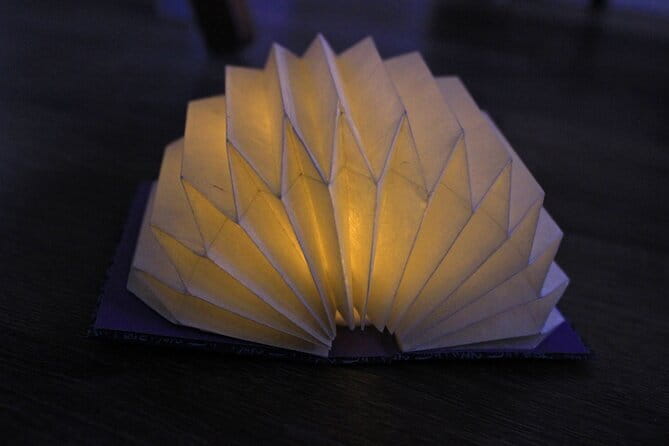
- A lamp that glows using a small light inside the bellows-style washi structure.
- Japanese sweets and special paper tea are included, including kozo tea/paper tea.
- Traditional mizuhiki meaning: knots tied for gift-giving purposes.
- A cat lives in the workshop, so tell them about allergies ahead of time.
Ueno workshop basics: how this 2.5-hour class plays out
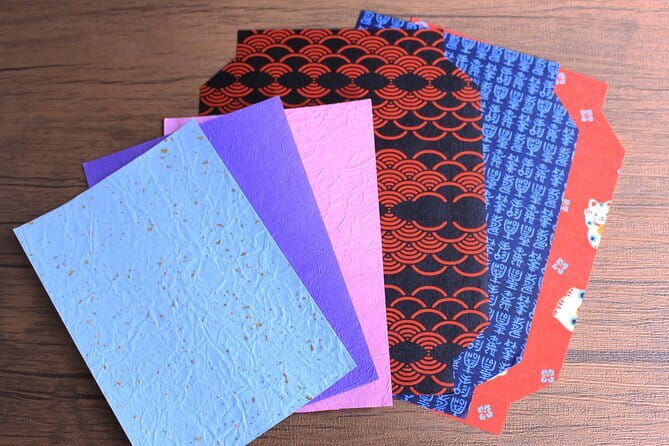
This is a straightforward, maker-focused workshop. The pacing is built for learning: you’ll start with the basics of washi paper, then move into two separate craft skills—origami lamp building and mizuhiki knot tying.
Plan on about 2 hours 30 minutes total. You’ll get materials, instruction, and time to ask questions as you go. Because it’s private, you’re not stuck trying to watch over other people’s shoulders while your hands dry out mid-step.
The location matters too. You’re in the Ueno area, which is convenient if you’re already spending time around Ueno Park, museums, or Ameyoko. After this, you can keep the rest of your day light—this is the kind of activity that doesn’t require a big mental shift afterward.
You can also read our reviews of more tours and experiences in Tokyo



The mini origami lamp: bellows folding and a warm glow
The first craft is the showpiece: a mini origami lamp built from multiple sheets of washi paper.
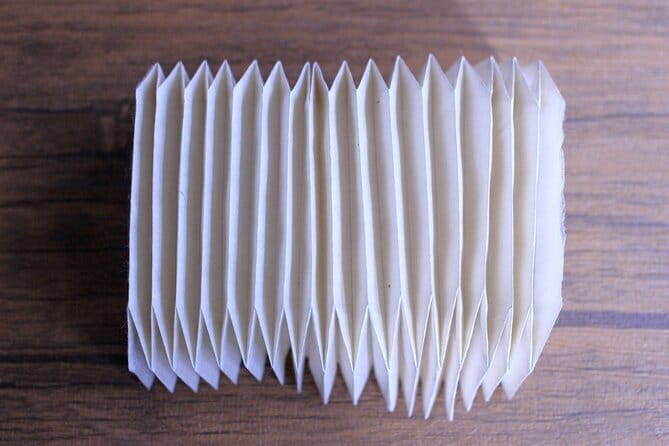
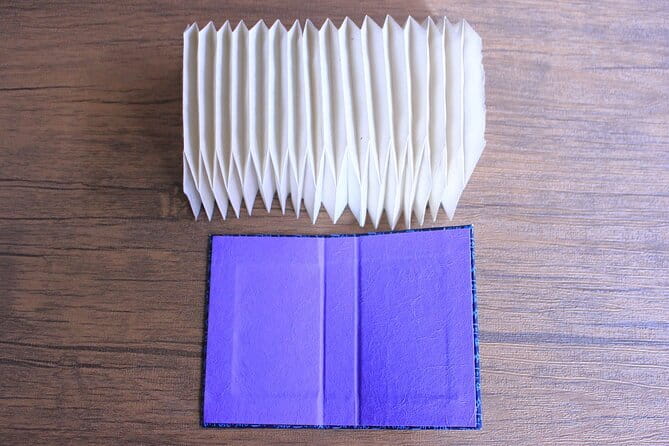
You begin by learning the basics of how washi works—light, durable paper that holds shape nicely once you’ve folded and secured it. Then you create a bellows-like structure by folding and gluing the washi sheets together.
Here’s the fun part: when the structure is folded and closed, it looks like a closed book. When you open it and place the small lamp inside, the paper “bellows” structure lets light spill out gently, giving that soft, warm glow that makes the whole thing feel more like a little interior design object than a school craft.
In practice, the steps are hands-on:
- You fold and glue the washi sheets into the bellows shape.
- You assemble the structure so it holds its form.
- You insert the small lamp so it lights from inside.
- You close it up so the final shape looks clean and intentional.
If you’ve never done paper folding with glue before, don’t panic. You’re not expected to invent anything. The workshop provides a guide document for the basics, and you’re given personalized coaching as you build.
The mizuhiki knot belt ornament: meaning you can use for gifts
Next comes mizuhiki. This is a traditional Japanese craft using paper cords. The workshop has you make a decorative ornament intended for a belt, using a mizuhiki knot tied from paper string.
The key idea is that mizuhiki isn’t just decoration. It’s tied to gifting culture. You’ll learn that each knot can have meaning—so the craft becomes something you can actually use when you give someone a present back home.
The cord itself is also part of the story: mizuhiki uses twisted washi paper in the core, wrapped with nylon or film, which makes it both decorative and sturdy. That sturdiness matters because you want knots to hold shape while still looking neat.
For you, the practical payoff is big:
- You’ll have a finished knot ornament you can attach to your belt or use as a gift topper.
- You get context for why people tie it a certain way, instead of just following steps.
The workshop doesn’t treat this like “just tie a knot.” It’s taught as a craft with purpose—perfect if you like souvenirs that feel connected to Japanese culture, not just pretty objects.
Meet Kaho Shinoda and the workshop vibe at 和紙ラボTOKYOJapan
The class is run through 和紙ラボTOKYOJapan in Taitō, Tokyo (Ueno area). The meeting point is listed at 3-chōme, and you’ll check in at the studio location there.
Inside, it’s the kind of workshop space where you can actually focus. You’re not fighting foot traffic or street noise. And since it’s private, you aren’t competing for attention. You can ask questions as they come up, which is huge for crafts like these where one small detail can change the final look.
The instruction comes from Kaho Shinoda (you may also hear her referred to as Ms Shinoda). Based on how she teaches in this setting, she’s patient and step-by-step. You get guided correction early, which helps you avoid building a lamp that doesn’t fold cleanly at the end.
One odd-but-valuable detail: there’s a cat in the workshop. If you have allergies, you’re asked to inform the team ahead of time. If you’re not allergic, expect a friendly presence rather than a formal “no pets” rule.
Japanese paper tea and sweets: the break that actually feels Japanese

After the crafting, you get a treat. This workshop includes Japanese sweets and tea, and it specifically offers a Japanese paper tea experience that’s not something you’ll casually find everywhere.
You’ll be served a tea that’s connected to washi/craft culture—often described as kozo tea (kozo is the mulberry tree used for traditional washi). Alongside it, there’s a selection of Japanese sweets.
This is more than an afterthought. It’s a nice reset: after folding, gluing, tying, and adjusting, your hands are tired and you’re ready to sit back for a few minutes. The tea also ties the session together thematically. You’re not just learning “how to make objects.” You’re learning how paper craft connects to the broader materials and culture.
If you like food with your activities (and who doesn’t), this added course makes the whole 2.5 hours feel complete.






Materials and what you can carry home without drama
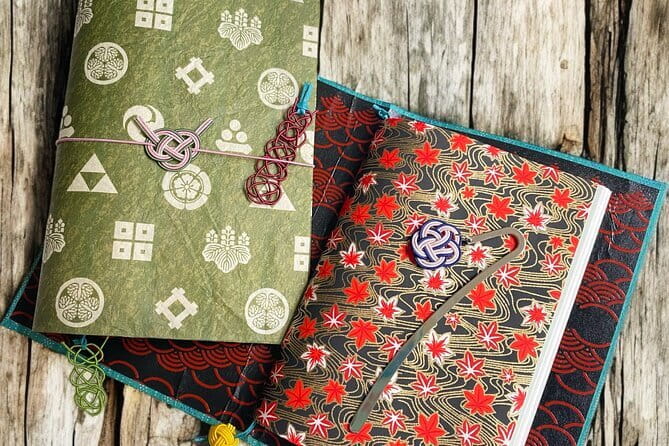
A big part of workshop value is how much hassle you avoid. Here, all materials are included, and the skills taught are designed around making two take-home pieces.
That means you can plan your packing without guessing what supplies you need. The lamp is made to be portable enough for travel—one reason this kind of craft works well for people staying a few days in Tokyo.
Still, handle it like what it is: paper structure. You’ll want to keep it flat or safely supported, especially during transit. The workshop ends back at the meeting point, so you can head out right after the session with your items in tow.
Price and value: what $107.50 buys you in Tokyo
The price is $107.50 per person, and it’s often booked about 29 days in advance on average.
Is that expensive? In Tokyo, yes—it’s not a cheap, drop-in craft table. But look at what’s included:
- Private instruction for your group only
- Two specific crafts with finished outputs
- Materials provided for both the origami lamp and mizuhiki ornament
- Japanese sweets and paper tea included
For me, the value comes from the time you get with the instructor. If you try to do this alone after searching YouTube, you’ll burn time and still end up frustrated with glue, alignment, or knots that don’t look tidy. Paying for coaching is paying for fewer mistakes and better results—especially with something as precise as a bellows-fold lamp.
If you’re the type who enjoys crafts, this price feels more like paying for an art experience than buying a product.
Who should take this class (and who might not love it)
This workshop is best for adults and older teens who enjoy making things. Most travelers can participate, but the craft work is detailed. The workshop also notes it is not suitable for young children.
Here’s my quick fit check:
- If you like careful handwork, paper crafts, and slow attention to detail, you’ll probably love it.
- If you want a quick photo stop and don’t care about making something, you might find this too hands-on.
- If you’re traveling with very young kids, skip this one and look for a simpler craft class.
Also consider your comfort level with scissors, glue, and fine folding. You’re not doing anything dangerous, but precision is part of the charm.
Practical tips so your lamp looks like your lamp
You won’t need special tools. The workshop gives you what you need. But a few habits can make your results prettier and easier.
- Give your hands a calm pace. With paper folding and gluing, rushing tends to create crooked edges that show later.
- Ask questions early. If something feels off, check in rather than waiting until the next step.
- Handle paper gently during assembly. Washe is durable, but it still needs care when joints are fresh.
- Think about the final shape. The lamp’s “closed book” look is part of the design, so make sure folds line up before you close it.
If you’re the kind of traveler who takes notes, you’ll enjoy the guide document for the basics of washi work.
Should you book the Mini Origami Lamp and Mizuhiki Belt Workshop?
I’d book it if you want an activity that feels like Japanese culture you can touch. The combo of a glowing mini lamp and a meaningful mizuhiki knot belt ornament is rare in Tokyo craft offerings. You also get a thoughtful add-on with Japanese sweets and paper tea, which makes it feel like a complete experience instead of a quick class.
Skip it if your idea of travel is lots of wandering and minimal sitting with glue. Also skip if you’re bringing very young kids, since the work is detailed.
If you do book it, you’ll likely leave with more than souvenirs. You’ll have a small lamp that proves you made something with care—and a knot ornament that connects to gifting traditions you can actually use.
FAQ
How long is the workshop?
It runs for about 2 hours 30 minutes.
What will I make during the session?
You’ll create a mini origami lamp and a mizuhiki knot ornament for a belt.
Is this a private workshop?
Yes. It’s a private class/activity, and only your group participates.
Is it suitable for young children?
No. The workshop says it is not suitable for young children due to the detailed work required.
Does the price include tea and sweets?
Yes. You’ll enjoy a selection of Japanese sweets and Japanese paper tea, all included.
Where is the meeting point?
You’ll meet at 和紙ラボTOKYOJapan, 110-0016 Tokyo, Taito City, Taitō, 3-chōme302 市川ビル 1F.
Is there a cat at the workshop?
Yes, there is a cat in the workshop. You should inform the team if you have any allergies.
What happens if I need to cancel or if weather is bad?
You can cancel for free up to 24 hours in advance for a full refund. If the experience is canceled due to poor weather, you’ll be offered a different date or a full refund.