REVIEW · TOKYO
Japanese Traditional Entertainment Experience in Tokyo
Book on GetYourGuide →Operated by Japanticket Inc. · Bookable on GetYourGuide
Tokyo changes the moment you slip into a kimono.
This geisha-focused ozashiki experience turns you into an Edo townsman for a short evening of performances and a proper parlor party. I particularly like the blend of role-play and real cultural forms, from the staged entertainment to the way the night is paced for watching and mingling. One thing to plan for: it’s only 30 minutes, so it feels like a concentrated sampler rather than an all-night immersion.
What I like most is the entertainment format. You’ll watch traditional performing arts alongside the parlor atmosphere, including dancing and shamisen, and the overall mood is warm and welcoming. The food choices also fit the experience: depending on your course, you can go light with matcha sweets or sit down for an Edo-style kaiseki meal with Fukagawa rice. The possible drawback is that you need to choose your course carefully, because the food and drink level changes a lot from UME to TAKE to MATSU.
In This Review
- Key Things to Know Before You Go
- A Geisha Parlor Evening in Fukagawa
- 30 Minutes Means a Concentrated Performance
- Kimono Transformation and the Edo Townsman Night Walk
- The Ozashiki Party Format: How the Night Moves
- Course Differences: UME vs TAKE vs MATSU
- UME COURSE: Matcha and the Parlor Start
- TAKE COURSE: Add the Fukagawa Meal Set
- MATSU COURSE: Kaiseki with Fukagawa Meshi and a Drink
- Food and Drink: What You’ll Actually Be Eating
- The Performing Arts: Shamisen and Dance
- Value for $74: Why the Price Can Make Sense
- Where It Starts: Meeting Point and Getting There
- Who This Experience Fits Best
- Before You Book: A Few Practical Considerations
- Should You Book This Japanese Traditional Entertainment in Tokyo?
- FAQ
- How long is the Japanese traditional entertainment experience?
- Where is the meeting point in Tokyo?
- Is transportation to the venue included?
- What languages are available during the experience?
- What is included in the ticket price?
- What does the UME course include?
- What does the TAKE course include?
- What does the MATSU course include?
- Can I cancel for free?
- Is the period-drama-style short movie included?
Key Things to Know Before You Go
- Kimono dress-up + Edo townsman walk: You’ll be transformed and guided through the temple grounds at night in role-play mode.
- Ozashiki parlor entertainment: A structured geisha-style entertainment setting, built around watching and listening.
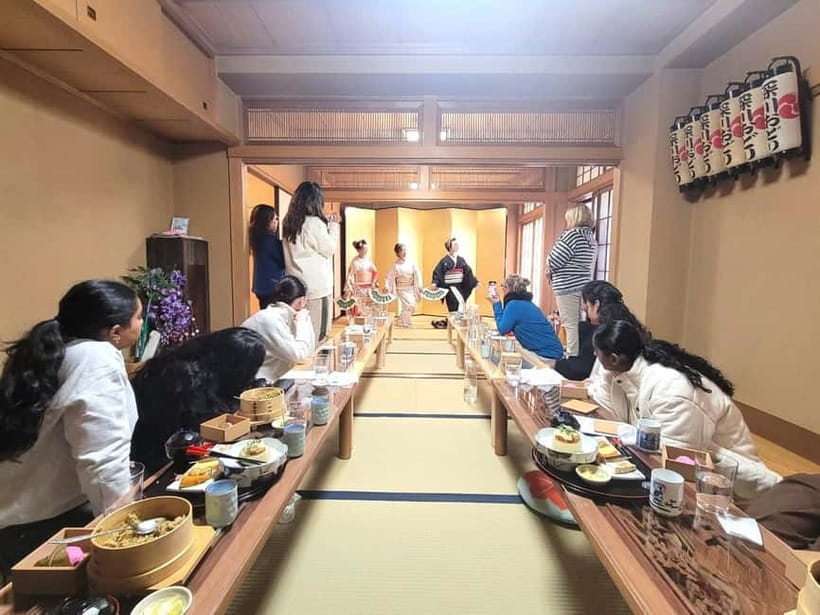
- Shamisen and dance included: Traditional performing arts show up during the party experience.
- Three course choices change your meal: UME is matcha sweets, TAKE adds a meal set, MATSU includes kaiseki with Fukagawa meshi and a drink.
- A true “party together” vibe: It’s designed so strangers meet, chat, and enjoy the evening as one group.
- One location, one tight timeline: Everything is packed into 30 minutes, so arrive ready to start on time.
A Geisha Parlor Evening in Fukagawa
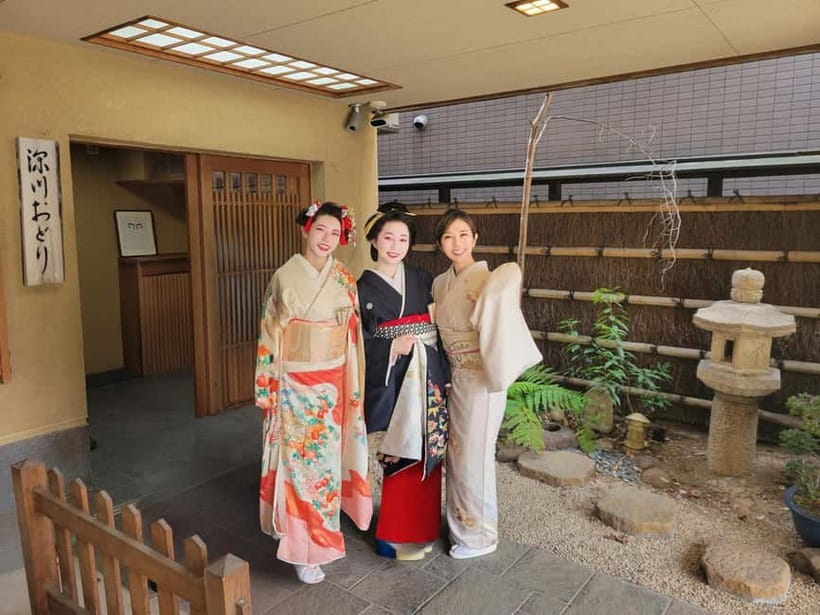
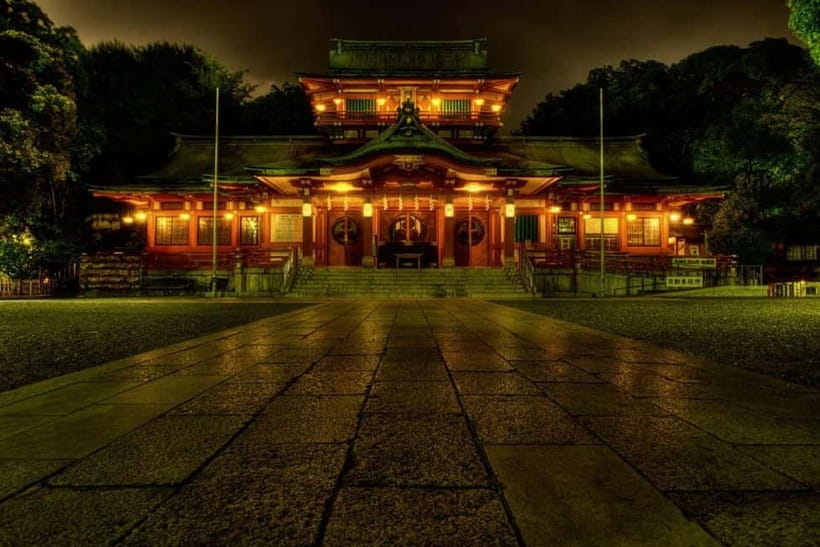
This experience is set in Honshu, Japan, in Tokyo’s Koto-ku area, with the meeting point at Fukagawa Odori Hachiman Zashiki (1-22-8 Tomioka, Koto-ku). The setting matters because it’s not a modern stage-and-seats setup. It feels like you’re stepping into an Edo-era mood, especially at night when the temple grounds become part of the experience.
The evening also has that classic Tokyo “small-world” effect: you’re not just watching from far away. It’s organized as an ozashiki party, which means you’re in a parlor-style environment where conversation and attention are both part of the show. The hosts, who speak Japanese and English, guide you through what’s happening and help make the experience feel understandable rather than mysterious.
You can also read our reviews of more tours and experiences in Tokyo.



30 Minutes Means a Concentrated Performance
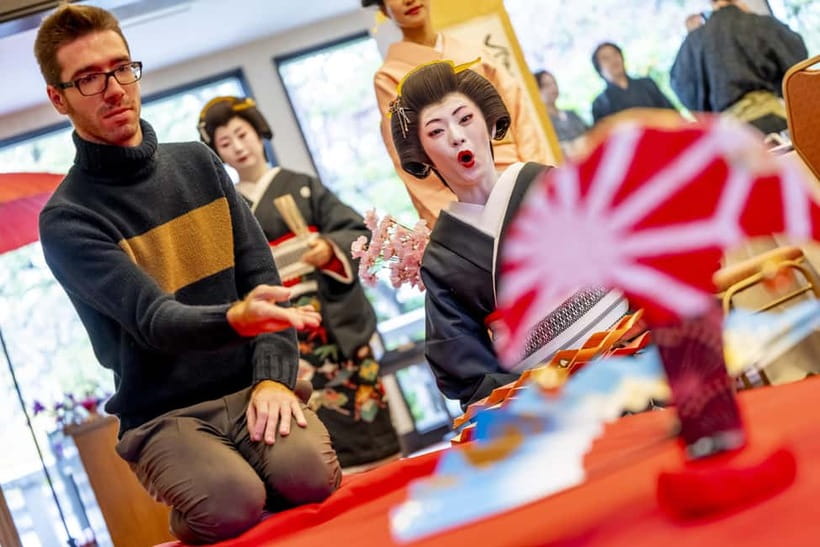
The entire experience runs for 30 minutes. That short time frame is the biggest reason this works for many people: you get a memorable cultural night without losing half a day to logistics and waiting.
But it’s also why you should go in with the right mindset. Think of it as a fast, well-packaged cultural night that hits the highlights: kimono role-play, parlor entertainment, and traditional arts like dancing and shamisen. If you’re hoping for a slow, long-form deep study of multiple traditions, you might feel a bit rushed.
The schedule uses starting times you can check for availability, so you’ll want to confirm what time your slot begins. Since transportation to the venue is not included, building a little buffer for getting there is smart, especially at night.
Kimono Transformation and the Edo Townsman Night Walk
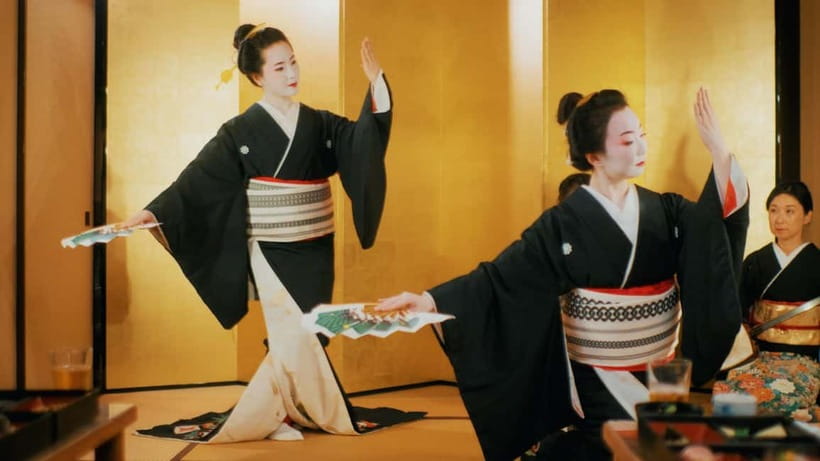
One of the most fun elements here is the transformation itself. Participants are dressed in kimonos, and then the evening continues with a walkthrough-style experience around the temple grounds at night.
This matters because it changes how you experience the space. Instead of being a visitor passing through, you’re in character as an Edo townsman. That role-play angle makes the surroundings feel more intentional, like a living setting rather than a venue you just arrive at and leave from.
There’s also a practical upside: once you’re in costume and guided into the flow, you don’t have to figure out what to do next. The host or greeter helps keep the pacing clear, which is especially useful if you want the cultural bits to make sense as they happen.
The Ozashiki Party Format: How the Night Moves
The experience is built around the parlor model, where entertainment and social energy happen together. This is where you’ll see the “big Japanese party” concept in action: people get together, enjoy, and share the same short window.
The setup includes a geisha experience element, particularly in the TAKE and MATSU courses (the UME course focuses on ozashiki with sweets and matcha). In the parlor portion, you’ll watch traditional performing arts such as dancing and shamisen, which is a key part of why this feels more than just a costume photo stop.
You should expect the evening to feel structured even while it’s social. The hosts explain aspects of the experience, and the overall tone stays gracious and professional. In other words, it’s party energy without becoming chaotic.
Course Differences: UME vs TAKE vs MATSU
The three courses are the heart of your decision. Same core experience theme, but your food and entertainment layer changes depending on which one you choose.




UME COURSE: Matcha and the Parlor Start
The UME COURSE centers on the ozashiki experience. It also includes Japanese sweets and matcha.
If you like the idea of something light and sweet, this course can work well. It’s also a good fit when you don’t want a full meal competing with the performance and want to stay flexible for later dinner plans in Tokyo.
TAKE COURSE: Add the Fukagawa Meal Set
The TAKE COURSE includes the ozashiki geisha entertainment experience, plus a Fukagawa meal set.
This is often the middle sweet spot. You get a bit more of the performance layer, and the food level feels more like an actual dinner rather than a snack. If you like the idea of being able to fully focus on the show without worrying about hunger, TAKE makes sense.
MATSU COURSE: Kaiseki with Fukagawa Meshi and a Drink
The MATSU COURSE is the most meal-forward option. It includes the ozashiki geisha entertainment experience, plus kaiseki cuisine with Fukagawa meshi, and a drink.
This is the course to pick if food is part of your travel goal. Kaiseki is a specific style of multi-course dining, and having it tied directly to a night of traditional performing arts means the meal isn’t just a separate activity. It becomes part of the total atmosphere.
Food and Drink: What You’ll Actually Be Eating
The food story here depends on your course. UME gives you Japanese sweets and matcha, which is ideal if you want a gentle start and a classic tea pairing moment.
TAKE adds a Fukagawa meal set. That name matters because it connects the dining to the local flavor identity of Fukagawa. MATSU goes further with kaiseki cuisine and Fukagawa meshi, plus a drink.
A practical tip: if you choose TAKE or MATSU, plan to eat with the expectation that it’s a real meal. One of the most common outcomes of this kind of dining setup is that it’s not just a small portion you forget about. It’s meant to be satisfying enough to carry you through the performance.
The Performing Arts: Shamisen and Dance
Traditional performing arts are a core part of the show. The program includes dancing and shamisen, and they’re presented as part of the parlor experience rather than a standalone performance you rush into and out of.
This is one of the big reasons the experience feels memorable. You get the “watching” part, yes, but you’re also in the setting where the performance fits naturally. The night walk, then the parlor, then the entertainment beats all connect.
If you’re someone who enjoys cultural theater but doesn’t want a long classroom-style format, this hits a good balance. You’ll be able to focus on what’s happening in front of you without needing prior knowledge.
Value for $74: Why the Price Can Make Sense
At $74 per person for about 30 minutes, this isn’t a budget “walk-up and go” experience. But value isn’t just the ticket price. Here, your money is buying multiple elements in one compact package:
- admission and the performance
- kimono role-play and the walkthrough at night
- an ozashiki-geared entertainment format (depending on the course)
- food and drink that range from sweets to a full kaiseki meal
- a souvenir included
That mix is what can justify the cost. You’re not just paying for a show; you’re paying for the whole evening experience design: dress-up, guided atmosphere, and course-based dining.
The smartest value move is choosing the course that matches your appetite for food and performance. If you only want a light tasting, UME keeps you from paying for a full meal you won’t fully enjoy. If you want the most complete night, MATSU gives you the full dining payoff with the traditional arts.
Where It Starts: Meeting Point and Getting There
You meet at Fukagawa Odori Hachiman Zashiki in Tomioka, Koto-ku. The English address is: Fukagawa Odori Hachiman Zashiki, 1-22-8 Tomioka, Koto-ku, Tokyo. The Japanese address is: 東京都江東区富岡1-22-8 深川おどり八幡座敷.
Transportation to the venue is not included, so you’ll want to factor in your own getting-there plan. For a night event, arriving a bit early is a stress-reducer.
If you’re planning to add the optional period drama-style short movie, note that it involves a professional cameraman and is listed as optional.
Who This Experience Fits Best
This is a great fit if you want a Tokyo night that feels culturally grounded but still fun and social. It’s especially good for:
- first-time visitors who want a clear, guided entry point into Japanese traditional entertainment
- people who like costume role-play, but still want real performance content like shamisen and dance
- food-minded travelers who want their meal to be part of the show (TAKE or MATSU)
- couples or small groups who want a compact evening plan without long commitments
If you’re the type who hates “time-boxed” experiences or expects hours of content, you may find the 30 minutes too short. But if you want a well-focused night, this format is exactly built for that.
Before You Book: A Few Practical Considerations
- Pick your course based on food, not just the theme. UME, TAKE, MATSU are different meals, so match your appetite to the option.
- Dress comfortably for a kimono day. You’ll be in traditional clothing, so avoid anything that limits movement or comfort.
- Plan around time. With only 30 minutes, punctuality matters more than usual.
- Decide if you want the optional period-drama short movie. It’s available, but it’s not included.
Should You Book This Japanese Traditional Entertainment in Tokyo?
Book it if you want a compact, guided geisha-style ozashiki night in Tokyo that includes traditional arts like shamisen and dance. It’s also worth it if you care about dining as part of the cultural show, especially with the TAKE and MATSU course options.
Skip it—or consider a different format—if you’re looking for a long, slow cultural deep dive. The experience is designed to deliver the highlights quickly, not to stretch into an all-evening program.
For the right match, though, this is a fun way to experience Edo-themed atmosphere at night, with a clear structure, English-speaking help, and an actual meal tied to the performance.
FAQ
How long is the Japanese traditional entertainment experience?
It lasts about 30 minutes.
Where is the meeting point in Tokyo?
You meet at Fukagawa Odori Hachiman Zashiki, 1-22-8 Tomioka, Koto-ku, Tokyo (東京都江東区富岡1-22-8 深川おどり八幡座敷).
Is transportation to the venue included?
No, transportation to the venue is not included.
What languages are available during the experience?
Japanese and English.
What is included in the ticket price?
Admission fee, performance, and a souvenir are included. Depending on your course, additional items like sweets, matcha, meal sets, kaiseki, and drink are included.
What does the UME course include?
The UME course includes the ozashiki experience and Japanese sweets and matcha.
What does the TAKE course include?
The TAKE course includes the ozashiki geisha entertainment experience and a Fukagawa meal set.
What does the MATSU course include?
The MATSU course includes the ozashiki geisha entertainment experience, kaiseki cuisine with Fukagawa meshi, and a drink.
Can I cancel for free?
Yes. You can cancel up to 7 days in advance for a full refund.
Is the period-drama-style short movie included?
No, it’s optional. If you choose it, it’s done by a professional cameraman.