REVIEW · TOKYO
Japanese Sake Tasting & Wagyu Sukiyaki Cooking Class in Tokyo
Book on Viator →Operated by 割烹道 · Bookable on Viator
Sake changes with one number: temperature. In Tokyo, you’ll pair that idea with a hands-on lunch of premium Wagyu sukiyaki plus guided sake tastings.
I like that the class is built around real technique, not just eating. You’ll get a structured tasting experience and then you’ll cook your own hot pot, which makes the flavors easier to understand and remember.
One consideration: this experience is centered on alcohol pairings, so if you don’t drink, you’ll want to clarify options in advance before you go.
In This Review
- Key highlights you’ll care about
- Entering Nishiazabu’s Kappodo studio: where the class starts (and ends)
- Sake tasting with Hiromi-san: chilled, room-temp, warm
- Snack pairings: how to taste sake like a pro (without acting like one)
- Wagyu sukiyaki cooking workshop: making your own hot pot lunch
- While the pot simmers: the chef vegetable carving demo
- Chef roles you might hear during the class
- Your meal and pairing finish: sukiyaki with sake
- Value check: what $129 really buys in Tokyo for 2 hours
- Practical logistics that help your day go smoother
- Who this Wagyu + sake class is best for (and who should pass)
- My booking verdict: should you sign up?
- FAQ
- How long is the Japanese Sake Tasting & Wagyu Sukiyaki class?
- Where is the meeting point in Tokyo?
- What sake temperatures are included in the tasting?
- Is lunch included, and what do I eat?
- Do I get any discount after the class?
- Is free cancellation available?
Key highlights you’ll care about
- Three temperatures of the same sake (chilled, room temperature, warm)
- Vessel and flavor lessons during the tasting
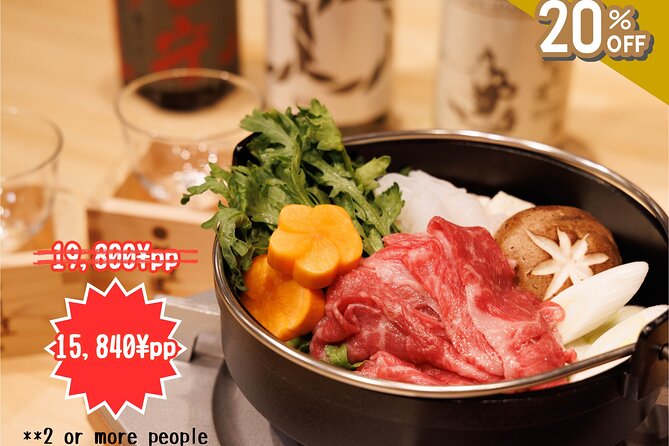
- Kano-Style Wagyu sukiyaki you cook yourself
- Chef vegetable carving demo happening while your sukiyaki simmers
- Small group size with a maximum of 8 travelers
- 10% off same-day shopping at the 1F Shop
Entering Nishiazabu’s Kappodo studio: where the class starts (and ends)
This runs out of a dedicated kitchen studio in Nishiazabu, at the Kappodo H.Q / Tokyo D kitchen Studio in DKビル, 2-chōme, Minato City. You meet at that location, and the experience ends back at the same meeting point—so you’re not stuck navigating Tokyo afterward with a full belly and warm sake in your system.
The start time is 11:00am, and the whole thing lasts about 2 hours. The max 8 travelers cap matters more than it sounds: you get a calmer, more conversational pace than the big-factory tours, and you’re likely to hear your instructions clearly without constantly craning your neck.
You’ll also use a mobile ticket, and the meeting point is near public transportation. That combination usually means less stress and more time enjoying the actual experience.
You can also read our reviews of more food & drink experiences in Tokyo



Sake tasting with Hiromi-san: chilled, room-temp, warm
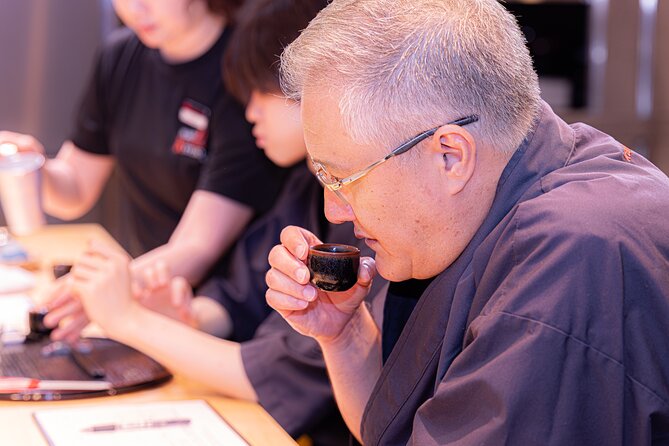
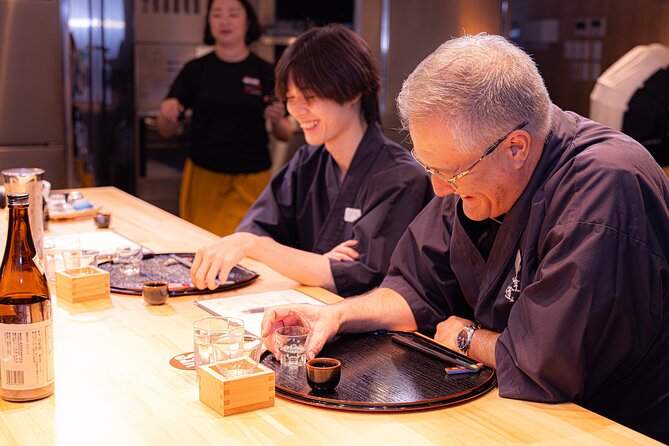
The class begins with sake tasting led by Hiromi-san. You’re not just sampling randomly—you’re comparing the same sake across three temperature ranges: chilled, room temperature, and warm. That simple setup is the whole point. Temperature changes how aromas come through, how sweetness feels on your tongue, and how the finish lands.
The tasting also includes a lesson on how vessels affect flavor. In other words, the way you serve sake isn’t an afterthought. It’s part of the tasting. You’ll learn why that matters, so when you order sake later, you’ll have a better instinct for what to try next.
There’s also structured pairing with snacks: each pour comes with selected Japanese snacks. This is where the class becomes more than drinking. You start noticing which notes in the sake match crunchy, salty, or savory bites—and that makes the rest of your meal feel more connected.
If you’re curious about the bigger picture, the overall lesson covers sake’s background too, including how sake is made and why it tastes the way it does. People often pick this part as a favorite because it turns a drink into a story you can taste.
Snack pairings: how to taste sake like a pro (without acting like one)
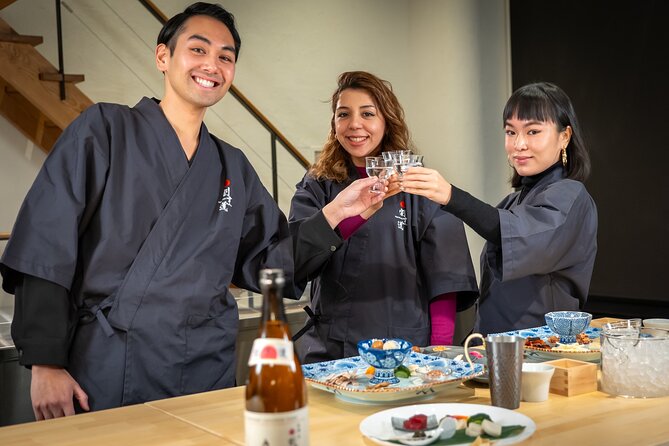
I love tasting experiences where you’re given a job. Here, that job is to pair sake with selected Japanese snacks during the lesson. It gives you a practical framework: taste the sake, eat something small, then go back and notice what changed.
It’s especially helpful if you’re new to sake. Instead of trying to translate flavors into fancy words, you’re training your senses with repeats. You’ll start to recognize whether a sake feels more refreshing chilled or more rounded when warmed, and which snack styles bring out those shifts.
Even if you don’t consider yourself a food nerd, this kind of pairing makes the class feel deliberate. You’re not just waiting for the cooking part—you’re building a mental map of what works together.
Wagyu sukiyaki cooking workshop: making your own hot pot lunch
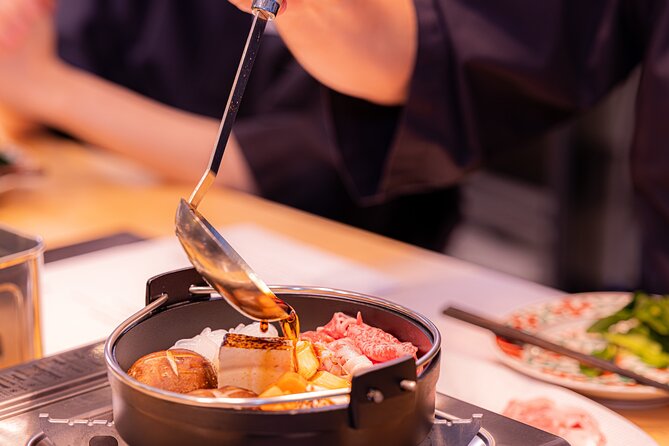
After the tasting, you move into the hands-on Wagyu sukiyaki workshop. The lunch part is included, and it’s built around premium Wagyu—so you’re not walking out hungry or stuck on a token portion.
The class style is Kano-Style Sukiyaki, tied to chef Kimagai. While the exact steps can vary by station and timing, the core experience is consistent: you’ll cook the hot pot yourself, then you’ll savor it as part of the class.
This is where the temperature lesson from sake tasting pays off. Sukiyaki is all about heat, aroma, and timing. The pot simmers, ingredients release their flavors into the broth, and the beef benefits from careful handling so it stays tender. Cooking it yourself turns it into something you can replicate later at home—or at least order with more confidence.
And yes, you’re going to sit down and actually eat what you made. That matters, because sukiyaki doesn’t really shine as a concept. It shines once it’s hot and your bowl is in front of you.
While the pot simmers: the chef vegetable carving demo
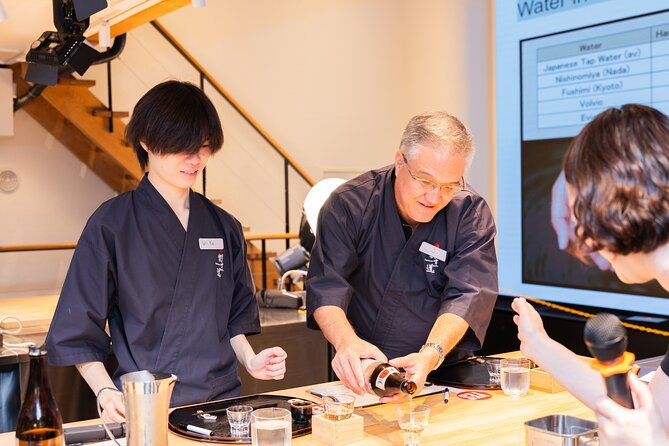
One of the more memorable moments in a class like this is what happens during the waiting time. Here, while your sukiyaki simmers, you get a live decorative vegetable-cutting demonstration by a professional chef.
This matters for two reasons. First, it turns “waiting for food” into an event, so the class never drags. Second, it shows you how Japanese cooking treats vegetables as both flavor and presentation. Even if you don’t copy the exact cuts, you’ll pick up ideas about technique and careful prep.
In a hands-on class, it’s easy to focus only on your own station. The demo gives the group something shared to watch together, which keeps the mood relaxed and fun.
You can also read our reviews of more cooking classes in Tokyo




Chef roles you might hear during the class
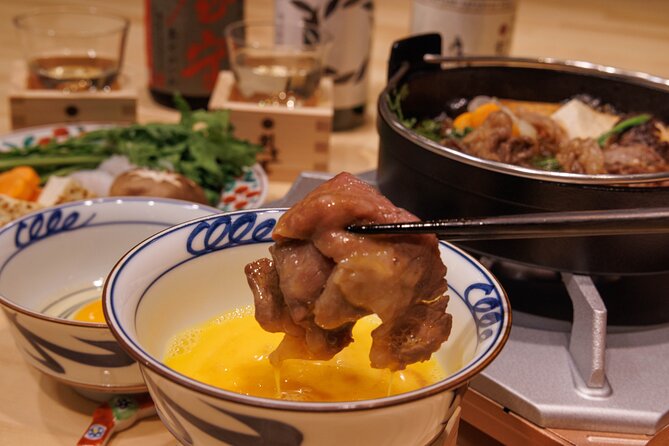
The experience is led by staff with roles that feel distinct, not interchangeable. In the tasting portion, Hiromi-san leads the sake instruction. In the cooking portion, Kimagai is connected with the Kano-Style Sukiyaki, and Naoya-san is praised for cooking.
You don’t need to memorize who does what—but it helps you understand what kind of teamwork you’re stepping into. This is a small studio with a teaching flow: guide the senses first (sake), then guide your hands (sukiyaki), then finish with tasting and eating.
Your meal and pairing finish: sukiyaki with sake
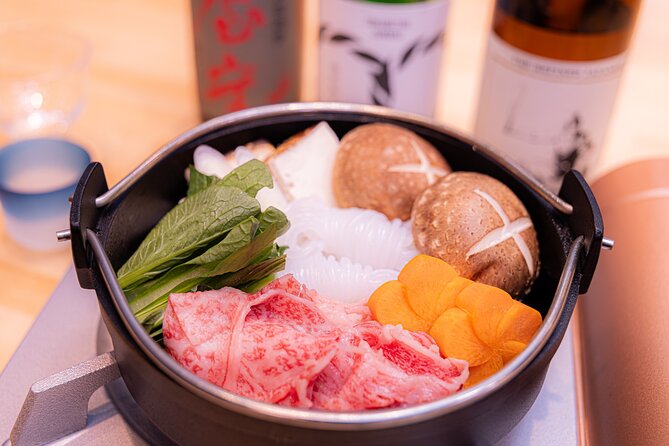
Toward the end, you don’t just eat sukiyaki in isolation. The experience includes pairing your hot pot with sake, aiming to finish the journey you started with the tasting.
That’s a smart structure. If you do the sake lesson and then you never connect it to the food, the whole thing can feel like separate activities. Here, the pairing at the end helps you connect cause and effect: you taste, then you cook, then you eat with intention.
Also, you’ll receive a certificate of participation. It’s not life-changing, but it’s a nice keep-sake—especially if you’re doing this as a family activity or a group day-plan item.
Value check: what $129 really buys in Tokyo for 2 hours
At $129 per person for about 2 hours, the big question is whether this is just a curated meal or whether it’s actually worth it versus doing things separately.
Here’s what you’re getting that supports the price:
- Sake tasting including alcohol in three temperature ranges (plus other types of sake)
- Lunch: Wagyu beef sukiyaki
- All equipment used in the sake pairing lesson
- A certificate of participation
- A same-day 10% off perk at the 1F Shop
For Tokyo, that kind of package makes sense because you’re combining instruction, included drinks, and food with a known quantity of time. If you’ve ever tried to piece together a sake tasting plus a cooking class plus a decent lunch on your own, you know it can easily turn into a scheduling mess—or a spend-heavy day.
The small group size also nudges the value upward. You’re paying for attention and a smoother teaching pace, not just a seat in a room.
One more small value detail: the studio setting keeps things organized. You’re not wandering through multiple venues or waiting around for transfers. Less friction tends to mean you actually enjoy the experience instead of managing logistics.
Practical logistics that help your day go smoother
This is designed to be easy to slot into a Tokyo itinerary. It starts at 11:00am, and you’ll be back at the meeting point when it ends. That makes it a strong early lunch choice before you move on to sightseeing.
The meeting point is in Nishiazabu at the Kappodo H.Q / Tokyo D kitchen Studio area, and it’s near public transportation. So you’re not relying on a private driver, and you can usually plan your route with typical subway/train connections.
Also note: private transportation isn’t included, so you’ll handle getting there on your own. That’s normal for a class, but it’s worth keeping in mind if you’re comparing it to higher-end, door-to-door options.
Finally, this is capped at 8 travelers. If you’re bringing a family or a small group, it’s a good sign you won’t feel swallowed by a crowd.
Who this Wagyu + sake class is best for (and who should pass)
I’d steer you toward this if you:
- want a first serious step into sake tasting with temperature comparisons
- enjoy hands-on cooking, not just watching
- like Japanese food culture that includes small, practical techniques
- are traveling with family or friends who want a shared activity (the class format is built for groups)
I’d rethink it if you:
- don’t want alcohol at all, since the course is built around sake pairings
- aren’t going to eat Wagyu beef, since lunch is specifically Wagyu sukiyaki
Also, the time is only about 2 hours. That’s great if you want a focused experience. If you’re looking for a slow, long meal with lots of free time afterward, this might feel brisk.
My booking verdict: should you sign up?
If you want a Tokyo food experience that actually teaches something—without turning into a classroom lecture—this is a solid choice. The three-temperature sake tasting, the vessel lesson, and the way the tasting connects to your final bowl of sukiyaki make the time feel purposeful.
It also looks like a great pick for groups because the studio stays small (max 8) and the schedule moves clearly from tasting to cooking to eating. Add the 10% off at the 1F Shop, and you’ve got an extra reason to plan a quick stop nearby the same day.
If your priority is only eating, you might still enjoy it—but you’ll get more out of it if you like learning by doing, tasting, and comparing.
FAQ
How long is the Japanese Sake Tasting & Wagyu Sukiyaki class?
The experience lasts about 2 hours.
Where is the meeting point in Tokyo?
You meet at Kappodo H.Q / Tokyo D kitchen Studio / Cooking Workshop, DKビル, Nishiazabu 2-chōme 21-12, Minato City, Tokyo 106-0031.
What sake temperatures are included in the tasting?
You’ll taste sake in three different temperature ranges: chilled, room temperature, and warm.
Is lunch included, and what do I eat?
Yes. Lunch is Wagyu beef sukiyaki, and it’s included in the price.
Do I get any discount after the class?
Yes. On the same day of your workshop visit, you can enjoy 10% off all items at the 1F Shop.
Is free cancellation available?
Yes. You can cancel for a full refund up to 24 hours before the experience starts. If you cancel less than 24 hours in advance, the amount paid is not refunded.