REVIEW · TOKYO
Handmade Japanese Glass Art Sandblasting Workshop in Tokyo
Book on Viator →Operated by Beauty of Japan · Bookable on Viator
Your souvenir starts in your own hands. In this Tokyo sandblasting workshop, you work on Japanese glass with a limited group size of four, guided step-by-step so your design actually comes out looking like Japan. You can choose motifs such as Mt. Fuji, kimono patterns, geisha, samurai, and more, then take your finished piece home as a real keepsake. One small catch: you’ll want to settle on your design early, because the whole class runs about 90 minutes.
What I like most is how personal the attention feels. This is the kind of hands-on art class where the workshop owner can correct your technique instead of treating you like a production line. Another win is that everything you need is provided, so you’re not wasting precious Tokyo time hunting for tools or supplies. If you’re a beginner, you’ll still be able to finish something you’re proud to show on your next train ride.
In This Review
- Key things to know before you go
- A Small-Group Craft Break in Asakusabashi
- What You’ll Make: Sandblasting Motifs on Japanese Glass
- How the 90 Minutes Typically Flow
- The Teacher’s Role (and Why It Makes This Worth It)
- Materials Included: Fewer Decisions, More Making
- Price and Value: Is $53.43 a Good Deal?
- Getting There and Building It Into a Tokyo Day
- What to Expect From the Final Glass Keepsake
- Who This Workshop Is Perfect For
- When It Might Not Be Your Best Fit
- Should You Book This Sandblasting Workshop?
- FAQ
- How long is the Handmade Japanese Glass Art Sandblasting Workshop?
- What is the price per person?
- How many people are in each class?
- What kinds of designs or motifs can I make?
- Is hotel pickup or drop-off included?
- Where do I meet for the workshop?
- What’s included in the price?
- When will I receive confirmation after booking?
Key things to know before you go
- Max four participants for real one-on-one guidance.
- Japanese motifs on glass like Mt. Fuji, kimonos, geisha, and samurai.
- Step-by-step sandblasting instruction while you work.
- All materials and tools included, which keeps it stress-free.
- A take-home keepsake you made with your own hands.
- Near public transportation in the Asakusabashi area, so it fits neatly into a day plan.
A Small-Group Craft Break in Asakusabashi
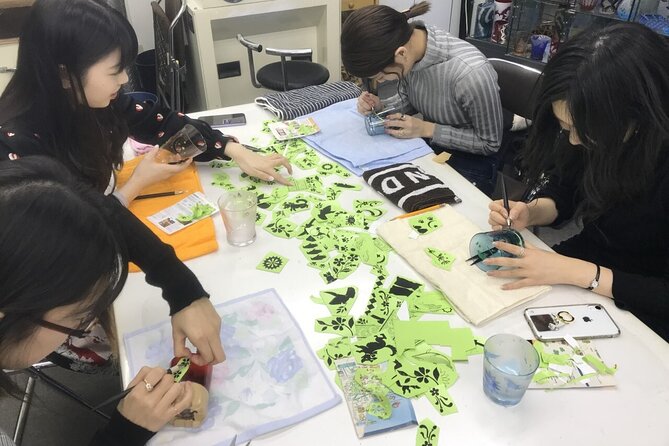
Tokyo can feel like constant motion. This workshop is a planned pause. Instead of rushing between temples and train changes, you sit down, get instructions, and work on one focused project for about 1 hour 30 minutes.
The big advantage here is the small group limit (four participants). That changes the vibe fast. In a big class, you might spend the session waiting for help. Here, the workshop owner can actually watch what you’re doing and guide you as you go—especially helpful for first-timers who don’t yet know what a good starting point looks like.
The location also helps. The meeting point is in Asakusabashi, and it’s described as near public transportation. That matters because Tokyo days are already crowded with trains, transfers, and line-waiting. Getting to this on time should be manageable, even if you’re juggling other stops.
You can also read our reviews of more tours and experiences in Tokyo



What You’ll Make: Sandblasting Motifs on Japanese Glass
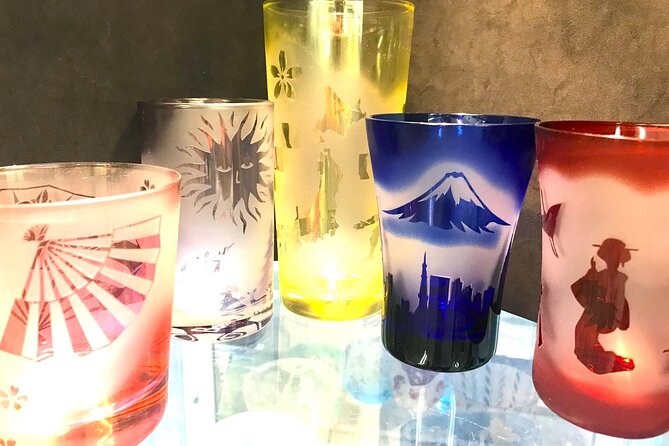
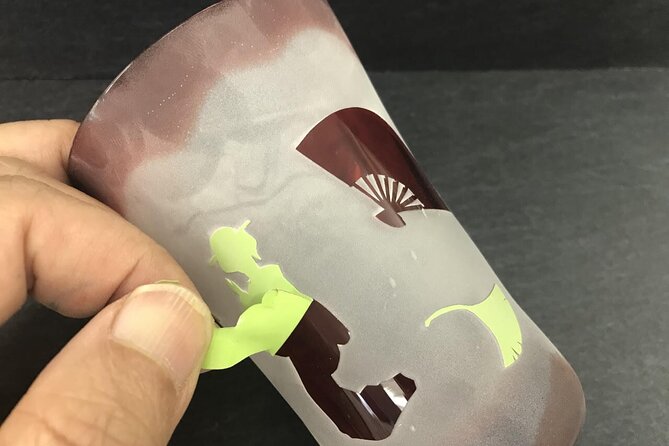
The core experience is learning Japanese glass sandblasting and using it to create a personalized design on glass. You’ll decorate your glass with Japanese motifs—think Mt. Fuji, kimono patterns, geisha, samurai, and more. The sandblasting machine turns your design into an etched/frosted look, giving you a high-impact result without needing advanced drawing skills.
This matters for souvenir value. Lots of Tokyo “craft” activities end with something decorative but generic. Here, you’re building your own composition from motif options and design templates. Your final piece is something you can keep in your home, use as a display item, or gift to someone who’d rather have a story than another magnet.
One more thing: the class is positioned for both beginners and people who already like making art. That balance is important. If you’re new, you’ll appreciate clear steps and tools in front of you. If you’ve done craft workshops before, you can still enjoy the technique aspect—sandblasting is tactile and satisfying in a way that’s different from painting.
How the 90 Minutes Typically Flow
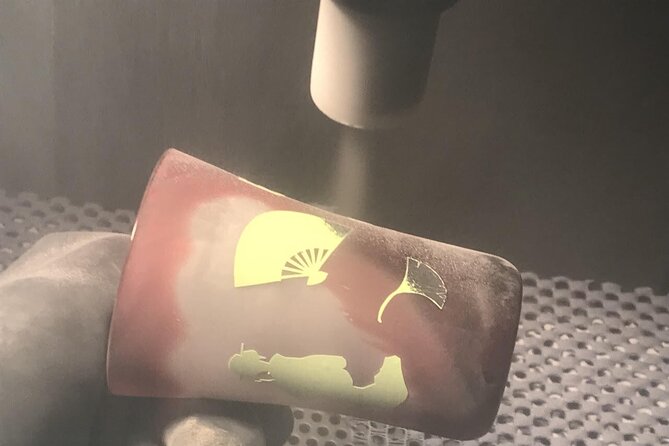
The session runs about 90 minutes and ends back at the meeting point. While the exact minute-by-minute rhythm can vary, you can expect a simple progression built around getting you to a finished, take-home artwork.
First, you arrive at the shop on your ticket time. You’re in the right place to start right away, and the workshop is set up for people to begin working without extra shopping. If you’ve ever shown up to a craft place and had to figure out where to start, this avoids that problem by keeping things straightforward.
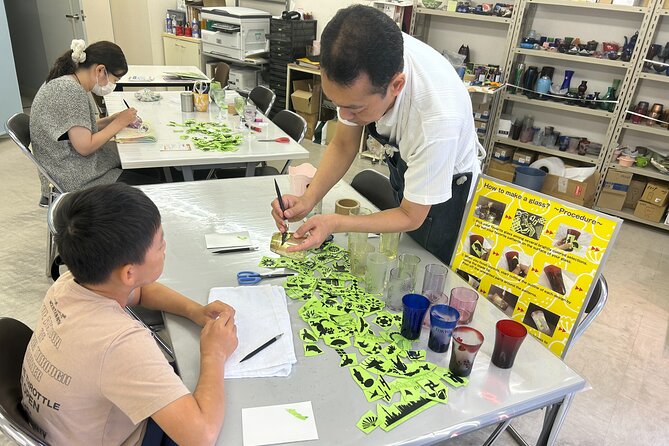
Next comes the design phase. You’re given images to help you plan your glass. The point isn’t to test your drawing ability. It’s to help you visualize how the motif will look once it’s transferred into the sandblasting pattern.
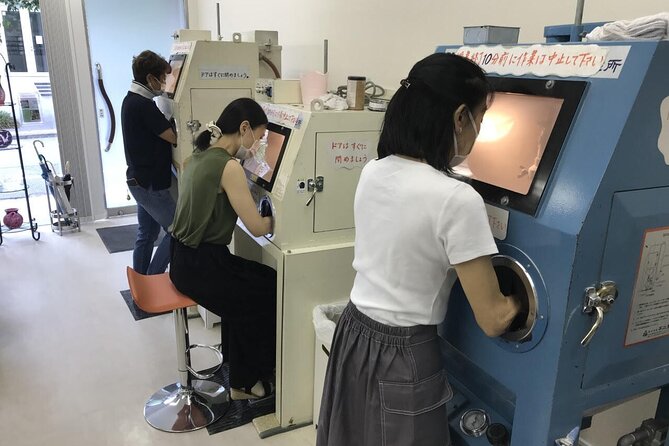
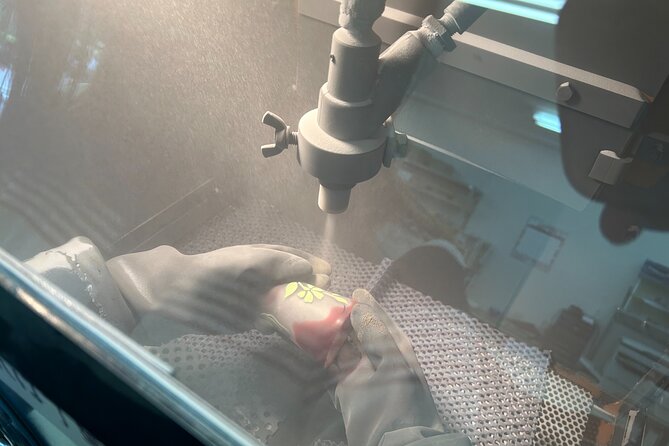
Then you move into the sandblasting portion. This is the hands-on part where guidance counts. You’ll learn the basics of the technique and operate the sandblasting machine to bring your design to life. The goal is a clear, recognizable motif—not a vague speckled effect.
Finally, you finish up and get your finished glass artwork to take home. In a class this short, you’re not waiting around for a multi-day process. The whole structure is designed so you leave with the souvenir in hand.
The Teacher’s Role (and Why It Makes This Worth It)
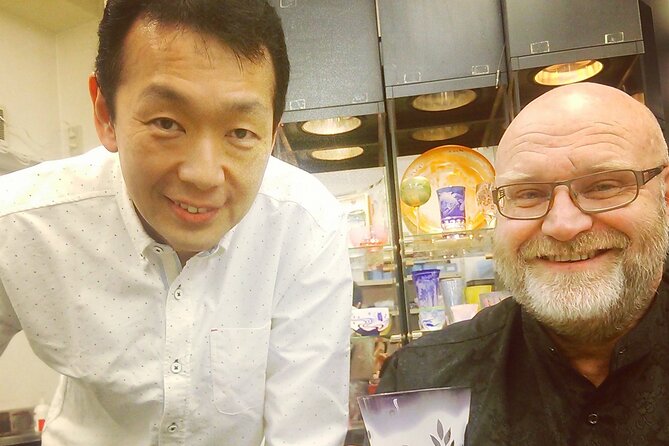
The workshop owner’s coaching is a big part of the success of this class. From what’s shared in past experiences, the teaching style is patient and practical. The tone is calm, and you get direction that helps you correct course before your glass is fully processed.
The name Aki-san comes up in feedback as an example of a teacher who’s both patient and supportive. Even if your Japanese is limited (and you want to keep it that way), the instruction is built around doing the work, not delivering a long lecture. That’s exactly how you want art classes to function in Japan: you should be guided by clear steps, not stressed by technical language.
Also, this class tends to be welcoming on arrival. One person noted that there was an easel outside with their name when they arrived early, which hints at the shop’s organized approach. That kind of small readiness detail matters. It helps you feel oriented right away, so you can focus on the work instead of the logistics.
Materials Included: Fewer Decisions, More Making
The price includes the lesson and material fee, plus consumption tax. That’s not just “nice to have”—it’s part of the value. In many city craft experiences, you end up paying extra for tools, supplies, or upgrades. Here, you can plan your day with less uncertainty.
You also don’t need to bring art supplies. Tools and materials are provided, so your role is simpler: pick a motif, follow the steps, and operate the sandblasting process with guidance. That’s especially helpful if you’re traveling light.
This also makes the workshop family-friendly in practice. When supplies are handled for you, kids and adults can share the experience without turning it into a search mission through Tokyo stores. The class is described as fun for the whole family, and the structure supports that.






Price and Value: Is $53.43 a Good Deal?
At $53.43 per person, this workshop sits in the “reasonable craft activity” range for Tokyo. But the better question is: what are you actually getting?
You’re paying for:
- A short, guided lesson (about 90 minutes)
- A small class setting (max four participants)
- The tools and materials
- A take-home glass artwork you made yourself
- Lesson fee plus consumption tax included
The value is strongest if you want a real souvenir. Sandblasted glass isn’t generic. The finished piece tends to feel more personal than something you would buy pre-made. And because you’re working with Japanese motifs like Mt. Fuji and kimono patterns, the result has cultural specificity without needing deep background knowledge.
Is it expensive compared to a casual activity that costs nothing but a bus fare? Sure. But it’s also not just a “look at art” experience. It’s a hands-on session where you leave with something you can use or display. For many people, that’s the sweet spot.
Getting There and Building It Into a Tokyo Day
The meeting point is 1-chōme-26-12 Asakusabashi, Taito City, Tokyo 111-0053. The session is near public transportation, so plan to use the nearest train/subway option and then walk a short distance.
A practical strategy: schedule this workshop as a mid-day or early-evening plan. Tokyo’s mornings can be great for sightseeing, but you may want a controlled, indoor activity before the day gets too crowded. A 90-minute class is easy to plug into your schedule, and you’ll be back at the meeting point when it ends.
Since this is a mobile-ticket experience, keep your phone handy. Also, bring a clear idea of what motif you want before you arrive. You’ll have images to help you choose, but the more decisive you are, the smoother the design phase feels.
What to Expect From the Final Glass Keepsake
You’re creating a personalized glass artwork using sandblasting. The description emphasizes Japanese motifs like geisha, kimono patterns, samurai, Mt. Fuji, and more. The sandblasting machine brings the design to life, leaving you with a custom memento.
In real terms, that usually means you’ll get a glass piece with etched or frosted lines that clearly read as your chosen motif. It’s not like a souvenir sticker. You made it in one focused session, and the finish is tactile and visible from multiple angles.
This is also the kind of keepsake that holds up well in photos. A sandblasted glass surface catches light differently than flat souvenirs. That’s why it tends to feel like a “real thing” rather than a quick purchase.
Who This Workshop Is Perfect For
This workshop is a great match if you want:
- A hands-on activity instead of another photo stop
- A small, guided class with attention from the workshop owner
- A souvenir that feels personal and tied to Japan
- Something beginners can do without feeling out of place
It’s also a solid family activity. If you’ve got a range of ages in your group, a class like this works because supplies are included and instruction is step-by-step.
If you’re the kind of person who gets impatient when activities run slowly, this may suit you too. The session is compact and focused: you plan your design, sandblast, finish, and take your glass home. No long wait for a product to be shipped later.
When It Might Not Be Your Best Fit
This is an art process, so it requires a bit of willingness to slow down and follow instruction carefully. If you want a high-energy sightseeing day with lots of walking and constant movement, you may find a focused craft session less exciting.
The only other consideration is the design decision. You’ll likely want to commit to a motif early, because the overall time window is short. If you’re indecisive right up until the moment you start, give yourself a little lead time.
Should You Book This Sandblasting Workshop?
If you want a Tokyo souvenir with real personal effort behind it, I’d book it. The small-group format, the step-by-step instruction, and the fact that materials are included make it a straightforward plan. For $53.43, you’re buying time, coaching, and a take-home glass artwork you’ll actually want to keep.
Book it especially if you:
- Want a relaxing, creative break from the city
- Like crafts where the result is visibly tied to your choices
- Travel with family or mixed skill levels
Skip it if you’d rather spend your time outdoors sightseeing nonstop, or if you strongly dislike structured activities with a limited time window.
FAQ
How long is the Handmade Japanese Glass Art Sandblasting Workshop?
It’s about 1 hour 30 minutes.
What is the price per person?
The price is $53.43 per person.
How many people are in each class?
The workshop has a maximum of four participants.
What kinds of designs or motifs can I make?
You can create Japanese motifs such as Mt. Fuji, kimonos, geisha, samurai, and more.
Is hotel pickup or drop-off included?
No, hotel pickup and drop-off are not included.
Where do I meet for the workshop?
The meeting point is 1-chōme-26-12 Asakusabashi, Taito City, Tokyo 111-0053, Japan. The activity ends back at the meeting point.
What’s included in the price?
Materials and the lesson fee are included, along with consumption tax.
When will I receive confirmation after booking?
Confirmation is received within 48 hours of booking, subject to availability.