Shinjuku tastes better with a guide. This 4-hour walk strings together neon streets and old-school Tokyo lanes, then feeds you along the way with a set plan for food-first stops.
I like two things most: the small-group feel (up to 10 people) and the way you land at multiple restaurants for all-you-can eating rather than one quick meal. I also appreciate the extras that make it feel complete, like local desserts plus soft drinks and water, and I’ve seen guides such as Hernand and Adam praised for keeping the experience moving.
One possible drawback: the sushi and seafood style may not match every palate, and food explanations can be uneven depending on your guide. If you want real clarity on what you’re eating, ask early and don’t be shy.
In This Review
- Key highlights you’ll actually use
- Shinjuku in 4 hours: what this walking format gets you
- Kabukicho and Godzilla Road: the neon hit and the photo break
- Don Quijote Shinjuku: a store stop that’s actually useful
- Golden Gai bar lanes and Hanazono Shrine: night energy with a breather
- Omoide Yokocho: tiny bar food and chef speed
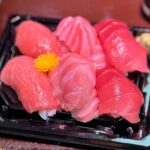
- The meal plan: sushi, seafood, and Japanese wagyu all-you-can
- Price and value: is $195 fair for Shinjuku?
- How the guide experience shapes everything (and how to get the best version)
- What to wear and how to pace your 4-hour Shinjuku day
- Should you book Golden Gai Hidden Eats A Personalized Shinjuku Food Tour by Guide?
- FAQ
- How long is the Shinjuku food tour?
- What does the tour include for food and drinks?
- Is alcohol included?
- Where do I meet, and how does the tour end?
- What are the age requirements and group size?
- Can I cancel for a full refund?
Key highlights you’ll actually use
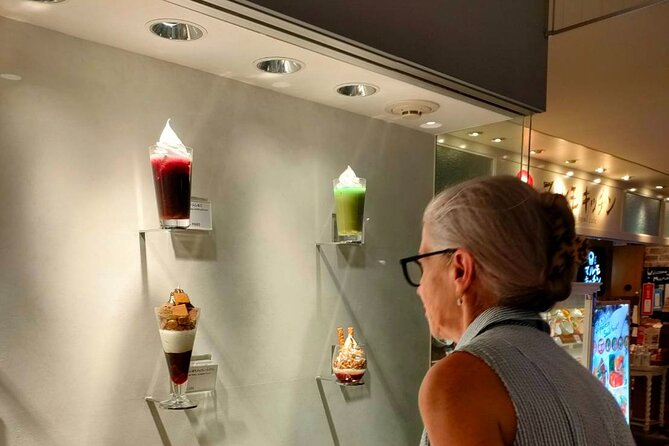
- Up to 10 people for a personalized pace through Shinjuku’s maze of streets
- 3–4 restaurant stops with an all-you-can meal plan featuring sushi, seafood, and Japanese wagyu
- Old alley districts on the route including Golden Gai and Omoide Yokocho
- Free-to-enter walking stops like Hanazono Shrine and the Godzilla Road photo spot
- Soft drinks, water, and local desserts included (alcohol is extra if you want it)
- Pictures after the tour so you don’t leave with only blurry station selfies
Shinjuku in 4 hours: what this walking format gets you
Shinjuku can feel like a video game map where you don’t know where the exits are. This tour is built for that exact problem: you start at Shinjuku Station and walk with a guide for about four hours, hitting landmarks and food stops along the way. It’s not a slow “stroll and admire” loop; it’s a planned route with enough movement that you see more than one micro-neighborhood.
The group size matters. With a maximum of 10 people, you’re not just following a human dot in a crowd—you have a real chance to ask questions and keep up. The tour also uses a mobile ticket, and you end back at the meeting point, which keeps logistics simpler than open-ended day plans.
You’ll also notice what the tour provider does and doesn’t promise. There’s no hotel pickup, so you’ll want to arrive on your own at Shinjuku Station (3-chōme area). And while alcohol isn’t included, you’ll be at places where it’s available if you want to add it. That makes the included food and soft drinks the “core,” which is helpful if you’re comparing value.
You can also read our reviews of more food & drink experiences in Tokyo

Kabukicho and Godzilla Road: the neon hit and the photo break
The route kicks off in Kabukichō, Shinjuku’s nightlife district. This is the part of Tokyo that hits your senses first: busy streets, bright signage, and that slightly chaotic energy that looks like it belongs in a movie. For first-timers, Kabukichō is the fast way to understand why Shinjuku is famous for its nightlife reputation—and for photographers, it’s where the first strong images happen.
Right after, there’s a stop for Godzilla Road & Head. It’s a quick pause, but it’s the kind of “set-piece” photo moment that helps you remember the day. You’re not trapped in a long museum visit; you’re out in the street where the city is the show.
What I like about these early stops is that they’re free to enter and low-pressure. You can treat them as a warm-up while your guide takes care of the next steps—especially important if you’re tired from travel. The only real consideration here is pace. If you get motion sick easily or you’re not comfortable walking in dense crowds, Kabukichō’s streets can feel like a lot at first.
Don Quijote Shinjuku: a store stop that’s actually useful
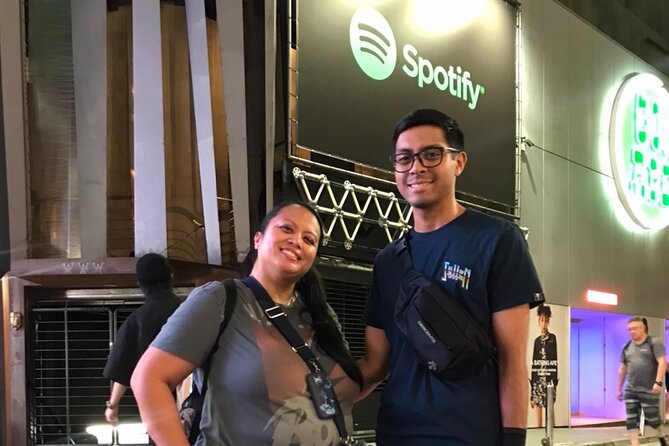
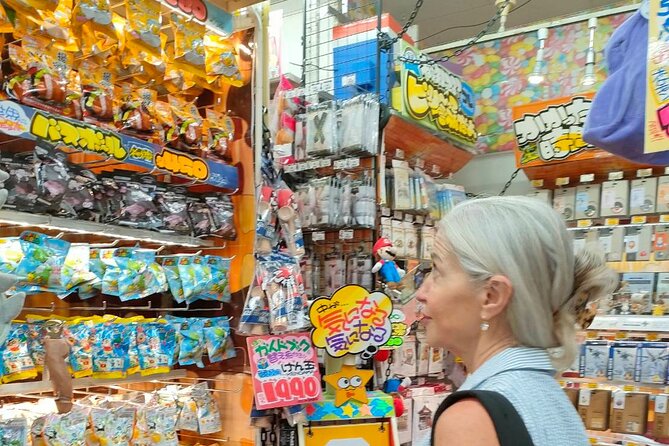
Next up: Don Quijote Shinjuku. This isn’t just a random detour. In Japan, big convenience-style stores can be a cheat code for practical travel needs—snacks, drinks, small items, and odd little things you didn’t know you’d want until you see them.
Why it works on a food tour: it gives you a chance to reset for the rest of the day without turning the schedule into a shopping marathon. You can grab water if you’re extra thirsty, or pick up a small snack if you’re the type who likes to pace hunger. The tour keeps this stop to about 30 minutes, so it won’t steal time from the restaurant portion.
One heads-up: Don Quijote locations are busy. If you’re sensitive to crowds or you don’t enjoy browsing in tight aisles, treat this stop as quick in-and-out time. The tour is timed for walking efficiency, not leisurely wandering.
Golden Gai bar lanes and Hanazono Shrine: night energy with a breather
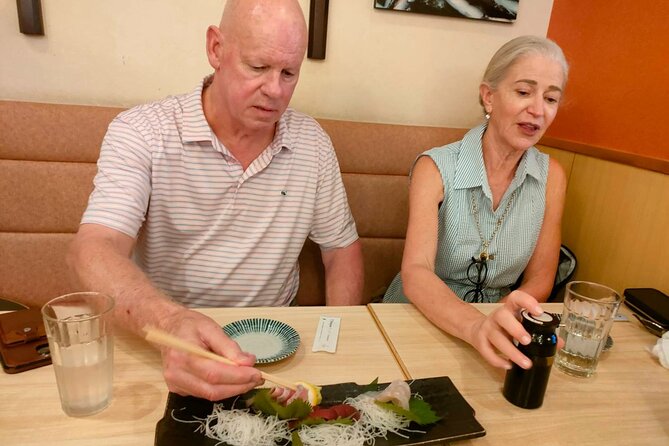
Then you get to Shinjuku Golden Gai, a district known for its tiny bars and narrow lanes. This is one of those places where the city feels more intimate than it does on main streets. You’ll see that the nightlife here runs on small-scale spaces rather than big venues—lots of doorways, small signs, and a sense that each bar is its own micro-world.
The tour doesn’t only show you “look but don’t touch” Tokyo. You’re being walked into neighborhoods that function like real hangout zones, which is why a guide helps. They can point out what you’re looking at and how locals actually move through the area.
After Golden Gai, the plan shifts to Hanazono Shrine. The contrast is the point. Shinjuku’s modern scene is all high-rise and nightlife, while Hanazono Shrine brings you back to an older sacred space in the middle of the action. The tour frames it as an important local Shinto shrine founded before the Edo Shogunate period. You get a chance to step out of the noise for a bit, then re-enter the street with clearer focus.
This combination works especially well if you’re doing Shinjuku as your first or second Tokyo area day. It prevents the whole tour from becoming one long stretch of neon overload. The one consideration: if you’re hoping for a quiet, long sit-down shrine moment, the stop is brief (about 30 minutes), so plan to use it for walking the grounds and soaking in the mood shift.
Omoide Yokocho: tiny bar food and chef speed
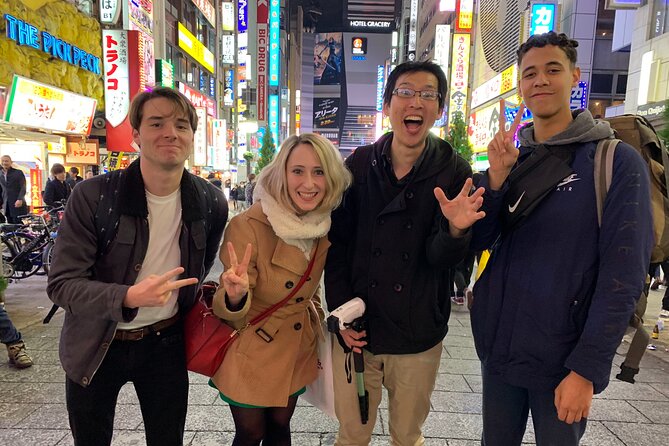
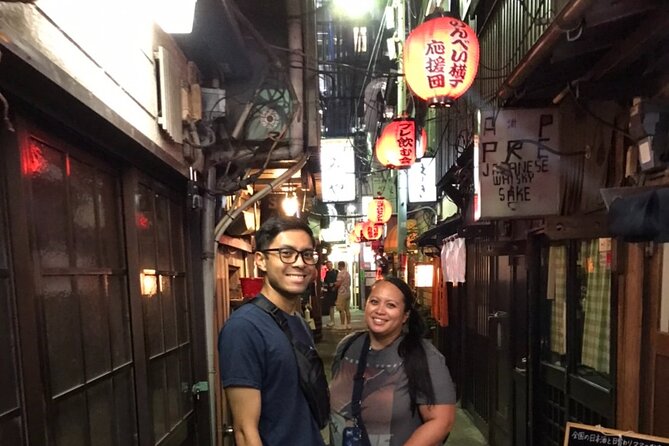
Finally, you reach Omoide Yokocho, famous for its small lanes of locally oriented bars. This is where the tour leans into the eating. You’re set up with the kind of atmosphere that feels like you’re joining a community rhythm—tight spaces, quick interaction, and food prepared for you as you order or as you’re served.
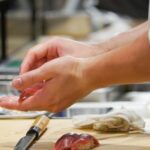
The tour description emphasizes that chefs prepare food for you and there’s also room for jokes. That matters more than it sounds. In a place like Omoide Yokocho, language barriers can make you feel like you’re just eating randomly. With a guide, you’re more likely to understand what’s coming next and why it matters.
There’s also a practical benefit: these lanes are compact. You’re not spending the last part of your tour crossing half the city. You end with food in a concentrated pocket, which helps the four-hour clock stay tight.
If you’re sensitive to smoke or noise, keep it in mind. Omoide Yokocho spots are meant for eating fast and talking loudly, so expect the full atmosphere—not a calm dining room.
You can also read our reviews of more tours and experiences in Tokyo


The meal plan: sushi, seafood, and Japanese wagyu all-you-can
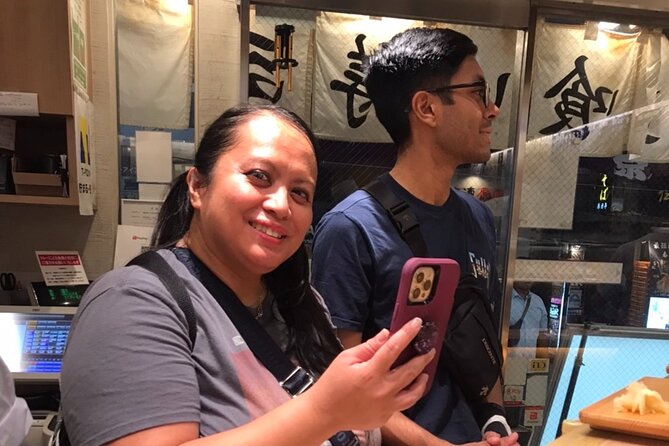
This tour is built around the idea that you should leave Tokyo feeling like you learned something about food, not just collected bites. The description promises all-you-can eating with sushi, seafood, and Japanese wagyu—plus local dishes chosen by the master guide and local desserts.
It’s also structured across 3 to 4 restaurants. That’s important for value. If you do only one meal stop, you’re stuck with whatever that one place serves well (or poorly) for the whole tour. Multiple stops increase your odds of getting variety in texture and flavor, especially in a city where restaurant styles can swing from traditional counters to specialty wagyu shops quickly.
What you should look for in the included meal experience:
- Soft drinks and water are included, so you won’t have to negotiate drink costs as part of your budget.
- Alcohol is not included, but it’s available to purchase. If you want sake or beer, plan extra money.
- You’ll be inside restaurant environments where being with a guide can help you order or understand what you’re being served.
Now the fair warning, based on what you should watch out for: if your guide doesn’t explain what you’re eating clearly, you can end up eating something you don’t understand. And since sushi style can vary—rice texture, cut type, and freshness preferences—someone might not love every piece. That doesn’t mean the tour is bad; it means you should treat the guide as your translator. Ask what the dish is, what makes it special, and how to eat it.
Price and value: is $195 fair for Shinjuku?
At $195 per person, this isn’t a bargain-basement snack run. But it also isn’t priced like a luxury tasting menu with huge fixed courses. The value comes from stacking benefits that tourists often pay for separately: a guided walking route, multiple restaurant admissions, included soft drinks and water, and the promise of a multi-stop all-you-can meal plan.
Here’s what you’re paying for in practical terms:
- Time savings: Shinjuku is hard to navigate on your own if you’re trying to find the right vibe and the right food spots quickly.
- Food variety: 3–4 restaurant stops increases what you get to taste compared with a single place.
- Included extras: local desserts, plus pictures after the tour, add to the feel that the experience is more than just eating.
- Small group model: up to 10 people helps keep the tour usable rather than chaotic.
What could reduce value for you? If you already know exactly where you want to eat and you’re comfortable ordering without help, the main advantage of the guide disappears. Also, since alcohol isn’t included, your total cost can rise if you plan to drink.
Still, for a first-time Shinjuku day or for anyone who wants a food-focused overview without turning it into a self-planned spreadsheet, the price can make sense.
How the guide experience shapes everything (and how to get the best version)
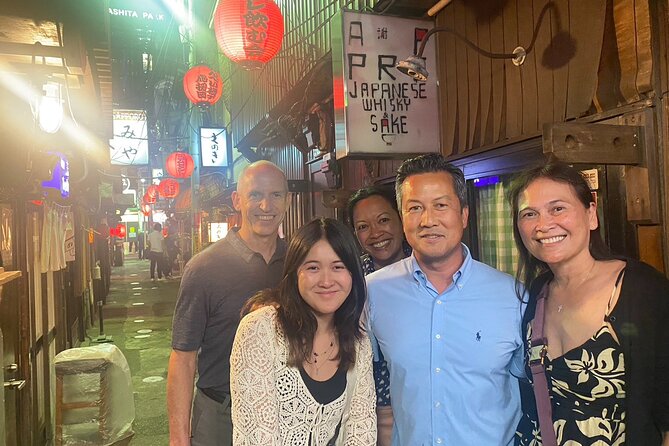
This tour is only as smooth as your guide’s pacing and explanation style. The tour language is simple—walking, landmarks, then eating—and your comfort depends on whether your guide is clear and proactive.
I’ve seen strong examples tied to this tour format, including Hernand, who’s been mentioned for meeting on time and delivering a fun, well-run food walk. I’ve also seen Adam named in a positive light for managing the group energy and steering people to satisfying spots. When the guide is on top of things, you get a tour that feels like someone is showing you their favorite Shinjuku rhythm rather than pushing a schedule.
So here’s how you make sure you get the best version:
- Ask at the first restaurant: what is being served, and what should you try first?
- If you have dietary limits, be upfront early. The tour is group-based, and changes work best before you’re already seated.
- Don’t wait until the last stop to ask about the food. Mid-tour questions are when you’ll get the most useful answers.
And if you’re the kind of person who needs detailed explanations to enjoy food, treat this as a potential risk area. In any food tour, explanations can vary by guide. Your job is to help the experience by asking questions right away.
What to wear and how to pace your 4-hour Shinjuku day
This is a walking tour, so comfort wins. Wear shoes you’d wear for a real Tokyo day—grippy soles are useful when sidewalks get crowded and you’re crossing street patterns constantly. Even though there’s no formal dress code, you’ll likely be moving through night streets and restaurant lanes where you don’t want to feel restricted.
Plan your energy for the full arc. You start with lively districts and photo stops, then work your way toward shrine calm, then finish with the most intense food atmosphere. If you show up starving, you might feel impatient at the early photo stops. If you arrive overly full, the all-you-can part could feel like too much. A normal pre-tour snack is a good middle ground.
Also, remember: you’re ending back where you started. That’s convenient, but it means you’ll want to know how you’ll get home afterward from Shinjuku’s busy station area.
Should you book Golden Gai Hidden Eats A Personalized Shinjuku Food Tour by Guide?
Book it if you want:
- A guided way to hit Shinjuku’s major micro-areas without getting lost
- A food-focused Tokyo day with multiple restaurants and included soft drinks and water
- A small-group route (up to 10) where you can ask questions and keep the pace
Skip it or think twice if:
- You need very detailed dish explanations and you worry they may be inconsistent
- You’re picky about sushi style and expect every piece to match your preferences
- You don’t want to walk much, since this is a four-hour street and alley experience
If you like your Tokyo days practical—less guesswork, more eating with context—this tour can be a strong way to understand Shinjuku fast. And if you go in ready to ask what’s on your plate, you’ll get much more out of the meal than just the taste.
FAQ
How long is the Shinjuku food tour?
The tour runs for about 4 hours.
What does the tour include for food and drinks?
You’ll get local dishes selected by the guide, soft drinks and water, local desserts, and meals at 3 to 4 restaurants.
Is alcohol included?
No. Alcoholic drinks are available to purchase, but they are not included.
Where do I meet, and how does the tour end?
You meet at Shinjuku Station (3-chōme-38-1 Shinjuku, Shinjuku City, Tokyo 160-0022, Japan). The tour ends back at the meeting point.
What are the age requirements and group size?
The minimum age is 18. The tour has a maximum of 10 travelers.
Can I cancel for a full refund?
Yes. You can cancel up to 24 hours in advance for a full refund, and any changes within 24 hours are not accepted.