REVIEW · TOKYO
Full Day Kamakura Tour, From/To Tokyo, Yokohama, 2- 12 guests
Book on Viator →Operated by GLOBAL GUIDE&TRANSPORT SERVICE Co.,LTD · Bookable on Viator
Temples and sea air in one tight day. This private vehicle day trip through Kamakura and Enoshima is built to dodge crowded trains and keep the day moving. I like the flexible rhythm too, with a driver-guide who can shift timing between dispersed sights, not lock you into one rigid route. One catch: most temple and island admissions are extra, so you’ll want to budget beyond the tour price.
What I really like is how the stops stack into a satisfying mix of Zen calm, big religious icons, and coastal scenery. You’ll visit Hokokuji, known for a bamboo grove that’s thick with over 2,000 bamboo stalks, then head to Kotoku-in for the Amida Buddha known as the Great Buddha of Kamakura. After that, Hase-dera brings you the famous eleven-headed Kannon statue, before you round out the day with a key shrine and Enoshima island time.
In This Review
- Key highlights worth caring about
- How a private Kamakura and Enoshima day actually feels
- Price and logistics: what you’re paying for
- Hokokuji Temple’s bamboo grove: the calm start of the day
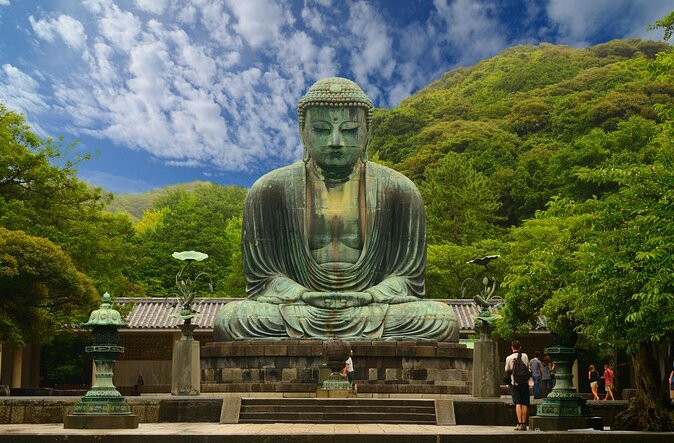
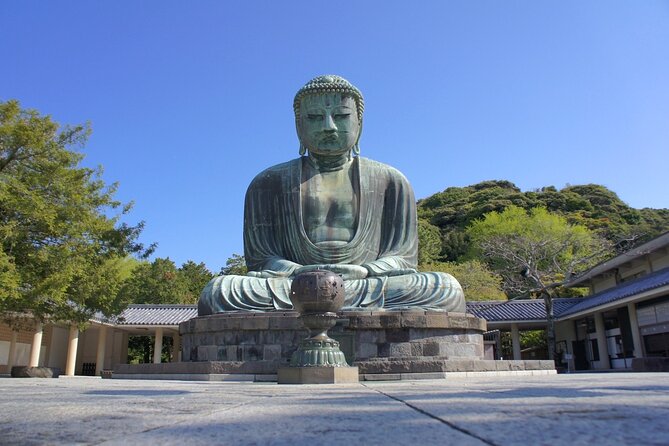
- Kotoku-in and the Great Buddha of Kamakura: 11.4 meters of Amida
- Hase-dera: the eleven-headed Kannon statue that does the heavy lifting
- Tsurugaoka Hachimangu: a shrine tied to Minamoto dates
- Enoshima Island: sea-side sightseeing plus the Escar add-on
- Kamakura lunch time: use the hour well
- Who this private tour suits best (and who should think twice)
- Should you book this Kamakura and Enoshima private day trip?
- FAQ
- How long is the Full Day Kamakura Tour?
- What group size is this tour for?
- Does the price include transportation and the guide?
- Are admission fees included in the tour price?
- Is lunch included?
- Is pickup offered, and where does the tour start from?
- Is Tsurugaoka Hachimangu Shrine admission free?
- Will I receive tickets on my phone?
- What happens if the weather is poor?
Key highlights worth caring about
- Private transport that saves your energy: Pickup is offered and you travel by car instead of wrestling with crowded public transit.
- Small group cap (2 to 12): It stays personal, and the driver-guide can adjust timing without slowing everyone down.
- Driver-guide planning: You get help moving between temple clusters and the island without doing all the research work yourself.
- Hokokuji’s bamboo grove: A Zen temple setting with a bamboo screen behind the main hall and narrow pathways through the stalks.
- Two standout religious statues: The Great Buddha of Kamakura and Hasedera’s eleven-headed Kannon are the kind of sights you remember.
- A real block of Enoshima time: Island time is built in (plus the Enoshima Escar option if you want it).
How a private Kamakura and Enoshima day actually feels
This is the kind of itinerary that works best when you let someone local handle the “between places” part. Kamakura and Enoshima are spread out enough that DIY can turn into time drains: you hop on trains, then walk, then wait, then repeat. Here, the selling point is simple: you get a private vehicle and a driver-guide, so you spend the day looking at temples and coastline instead of planning your next transfer.
The group size (2–12) also matters. In a small group, it’s easier to keep a steady pace at places where lines or crowds can build. And because it’s private, the schedule can be flexible for your needs—useful if someone needs a restroom stop, or if you just want a slower moment in a garden or hall.
One small practical thing: you’ll likely get a mobile ticket, which cuts down on paper chaos. Japan is good at digital ticketing, and this style of tour leans that way.
You can also read our reviews of more tours and experiences in Tokyo
Price and logistics: what you’re paying for
The tour price is $715.34 per group (up to 12) for about 9 hours. That means your per-person cost depends on how many people are in your group. As a quick way to think about it:
- If you fill it with 12 people, that’s roughly $60 per person before extra costs.
- If it’s only a pair, it’s more like $358 per person before extra costs.
That might sound like a wide range, but it’s the tradeoff with private tours. You’re mainly paying for transportation + a driver-guide (both are included). You’re not just buying a list of stops. You’re buying time saved, coordination handled, and fewer crowd bottlenecks.
Then there’s the add-on spending you should expect. Temple and island admissions are not included, and the tour lists specific amounts:
- Bamboo Temple at Hokokuji: ¥1,000
- Hase Temple at Hase-dera: ¥400
- Kotoku-in (Great Buddha): ¥300
- Enoshima Escar: ¥500
- Total shown: ¥2,200 per person in admission fees
Lunch is also extra, typically ¥1,500–2,000. If you budget that in ahead of time, the pricing feels a lot more predictable. If you show up thinking the tour price covers everything, you’ll be surprised.
Hokokuji Temple’s bamboo grove: the calm start of the day
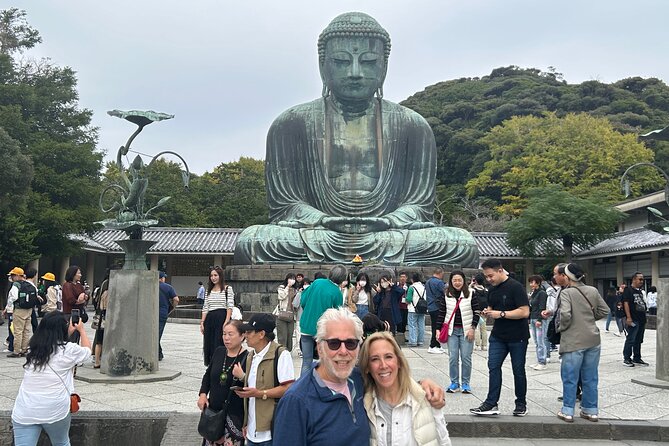
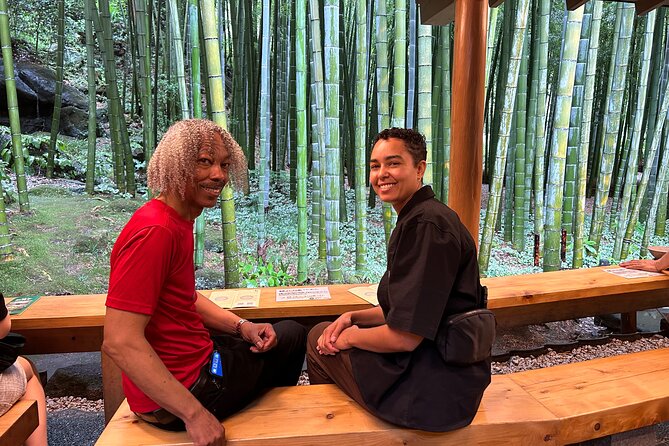
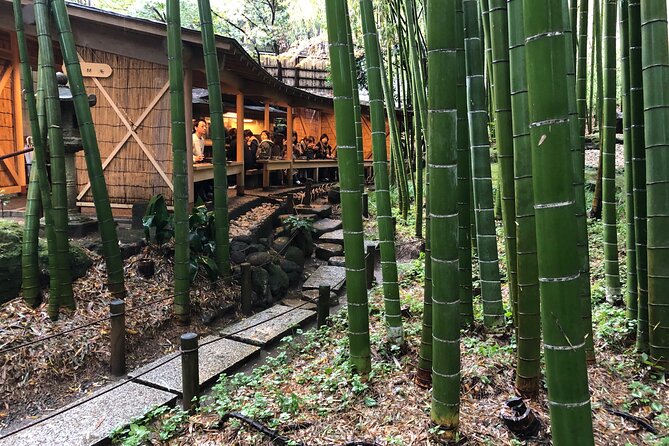
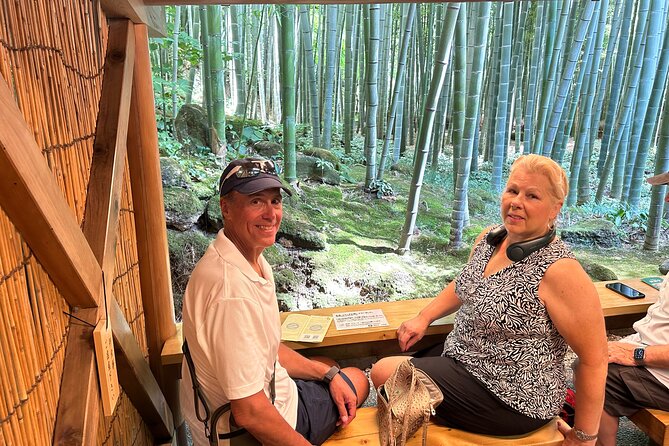
Hokokuji is famous for what feels like a natural room made of bamboo. This is the stop with the bamboo grove behind the main hall, with over 2,000 dark green bamboo stalks. You go through narrow pathways that guide you under the canopies, and the whole scene has a quiet, Zen-temple feel even when it’s busy.
This is also a great place to slow down. One reason I’d put Hokokuji early in the day is atmosphere. Temples can shift from peaceful to crowded as the day warms up, and bamboo spaces tend to feel best when you’re not rushing.
On the spiritual side, this temple visit pairs well with curiosity. You may notice little signs of traditional wishes and offerings—things people associate with care for the unborn, plus prayers connected with healing and prosperity. It’s not just “pretty bamboo.” It’s a functioning place with rituals that make sense in context.
Practical note: the tour allots about 1 hour here. The bamboo pathways are the main event, so don’t plan to spend that hour on your phone. Let your eyes adjust first—then you’ll start seeing all the little angles and layers of stalks.
Admission for this stop is ¥1,000 (not included).
Kotoku-in and the Great Buddha of Kamakura: 11.4 meters of Amida
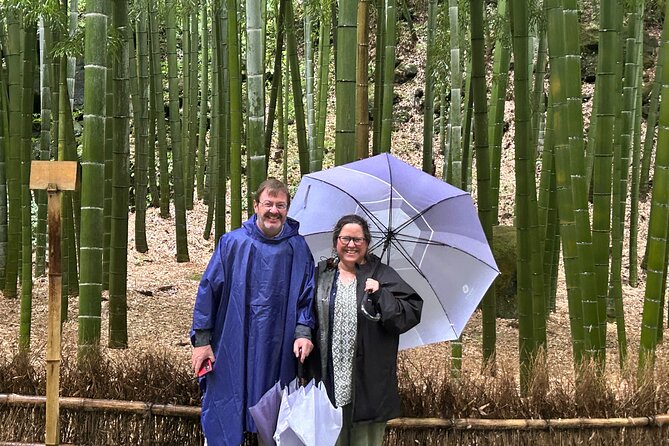
If you want a big-photo moment that still feels grounded, Kotoku-in does that. The centerpiece is the Great Buddha of Kamakura, a bronze Amida Buddha statue about 11.4 meters tall.
This is one of those sights where scale hits you quickly. From up close, it’s not just a statue. It’s weight, weathering, and the sense that the landmark has stood there long enough to become part of the town’s rhythm.
The tour gives you around 30 minutes. That’s usually enough for:
- a look at the statue from your best angle
- a slow walk around the grounds
- a quick reset before the next major stop
Admission is ¥300 (not included). The time allocation suggests the tour assumes you’ll take in the Great Buddha, then keep moving.
Hase-dera: the eleven-headed Kannon statue that does the heavy lifting
Hase-dera is a standout because it centers on one dramatic, specific art object: an eleven-headed statue of Kannon, the goddess of mercy. The statue is listed as a 9.18 meter tall gilded wooden sculpture, and it’s regarded as one of the largest wooden sculptures in Japan.
That height changes the viewing experience. Instead of “a statue you see,” it becomes “a statue you feel towering over the space.” Even if you don’t know every detail of the iconography, the scale communicates importance.
The tour allots 1 hour for Hase-dera. I’d use that time for two things:
- First, take in the statue as the headline.
- Then, look for supporting details in the temple setting—because Kannon-focused spaces often have smaller elements that help tell the story of mercy and devotion.
This stop is ¥400 in admission (not included). With a private vehicle and a driver-guide, you can keep the day flowing without wasting time hunting for your next transfer.




Tsurugaoka Hachimangu: a shrine tied to Minamoto dates
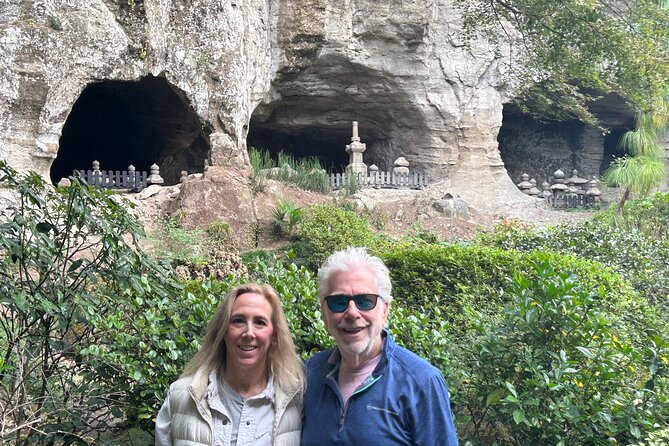
Tsurugaoka Hachimangu is Kamakura’s most important shrine. It’s also one of the places where the past feels more like a timeline than a vague story.
Key historical points tied to the shrine include:
- It was founded by Minamoto Yoriyoshi in 1063.
- It was enlarged and moved to its current site in 1180 by Minamoto Yoritomo (the founder and first shogun figure associated with the Kamakura period).
The tour gives you about 45 minutes, and since this stop is free, it’s a good pressure-release valve after two paid-ticket stops. You can spend that time reading the shrine space more slowly—especially if you like historical context that comes with specific names and dates.
Even on a long day, a free shrine slot feels like a small win.
Enoshima Island: sea-side sightseeing plus the Escar add-on
After temples inland, Enoshima Island shifts the mood. The tour describes it as a pleasantly touristy island just off the coast, connected to the mainland by a bridge. You’ll get about 1 hour 30 minutes, which is enough to do two things well: wander the island area and choose one optional activity without feeling rushed.
Enoshima also comes with built-in structure. The island offers attractions including a shrine area, and the tour time suggests you’re not meant to speed through everything. You’re meant to get the island feel—coastal, scenic, and very much part of modern day tourism.
There’s also an extra ticket option listed: Enoshima Escar, which costs ¥500 (not included). If you like viewpoints or want a different angle on the island, this is the kind of paid add-on that can be worth it. If you’d rather keep costs down, you can skip it and still have plenty to do during your island block.
This stop is the one where your day becomes more flexible. If the weather is good, lean into it. If it’s less ideal, use the time for the shrine and sheltered areas and don’t force an outdoor grind.
Kamakura lunch time: use the hour well
You get about 1 hour for lunch in Kamakura. The tour lists lunch as ¥1,500–2,000, so plan to eat within that range or adjust expectation.
Here’s my practical advice: don’t treat lunch like a food hunt marathon. The tour is timed around several major religious sights, so the best move is to pick something close by and sit down quickly. You’ll save energy for the afternoon shift into Enoshima.
If you’re a ramen person, this is a day where that craving often fits. One highlighted favorite from a past day on this route was a ramen restaurant experience during lunch time. So if ramen sounds right, it’s a safe bet for the vibe of a Kamakura day.
Who this private tour suits best (and who should think twice)
This works best if you want maximum impact with minimal logistics pain.
You’ll be especially happy if:
- you dislike crowded public transit and want a private vehicle
- you want a driver-guide to connect the dots between temple clusters
- your group includes a mix of interests—big icons, bamboo Zen atmosphere, and a coastal island break
- you’re traveling with limited time and want a full day without doing research and transfers all on your own
You might think twice if:
- you’re traveling solo or as a tiny group and you don’t want to pay the private-group rate
- you want only one or two sites at an unhurried pace (this itinerary hits multiple major stops, by design)
Should you book this Kamakura and Enoshima private day trip?
Yes, if you value time efficiency and want the “best of Kamakura + Enoshima” feeling in one structured day. The private transport and driver-guide planning are the main reasons this tour is a good deal, not just the list of famous sights. Budget for the extra admissions (about ¥2,200 per person) and lunch, and it turns into a predictable spend.
Skip it if you’re comfortable with DIY transit and you’d rather control every hour yourself, because the value here is in reduced friction. Also keep an eye on conditions: the tour notes it needs good weather, and poor weather can trigger a different date or a full refund.
If your goal is a smooth, high-impact day—bamboo calm, a giant Buddha, Kannon sculpture scale, a major shrine, and island time—this one fits the bill.
FAQ
How long is the Full Day Kamakura Tour?
It runs for about 9 hours.
What group size is this tour for?
It’s a private tour for groups of 2 to 12 guests, and only your group participates.
Does the price include transportation and the guide?
Yes. The tour price includes transportation-related expenses and guide service.
Are admission fees included in the tour price?
No. Temple and island admissions are not included. The listed total admissions are ¥2,200 per person, covering Hokokuji’s bamboo temple, Hase-dera, Kotoku-in, and Enoshima Escar.
Is lunch included?
No. Lunch is not included, and the tour lists lunch expectations as ¥1,500 to ¥2,000.
Is pickup offered, and where does the tour start from?
Pickup is offered, and the tour is described as From/To Tokyo and Yokohama.
Is Tsurugaoka Hachimangu Shrine admission free?
Yes. The itinerary lists Tsurugaoka Hachimangu as free.
Will I receive tickets on my phone?
Yes. The tour includes a mobile ticket.
What happens if the weather is poor?
The experience requires good weather. If it’s canceled due to poor weather, you’ll be offered a different date or a full refund.