REVIEW · TOKYO
Full-Day Tour to the Picturesque Spots of Mount Fuji
Book on GetYourGuide →Operated by Japan Visionary Tour · Bookable on GetYourGuide
Fog lifts, and suddenly it’s all Fuji. This full-day tour strings together classic Mount Fuji photo stops with real local rhythm, from the thatched-roof village at Saiko Iyashi-no-Sato Nenba to the shrine-and-pagoda scene at Arakurayama Sengen Park. I like that it’s built for sightseeing without you having to wrestle train transfers all day.
Two parts I especially like: the quiet stroll through Oshino Hakkai’s eight crystal springs (and yes, you taste the cold meltwater), and the payoff photo moment from Arakurayama Sengen Park once you reach the observation deck. It’s the kind of day where your camera gets a workout, but you still get to slow down at places that feel distinctly Japanese.
One thing to keep in mind: the big views depend on weather. If Mount Fuji is hidden by haze or clouds, the day can feel less dramatic even when every stop is still worth visiting.
In This Review
- Key points that make this Mount Fuji day trip worth your time
- Mount Fuji day trip from Tokyo: the big-picture flow
- Getting there: Tokyo Station vs Shinjuku departure and the 2-hour transfer
- Saiko Iyashi-no-Sato Nenba: a thatched village built for Fuji framing
- Lake Kawaguchiko and Oishi Park: kochia bushes, reeds, and Fuji in the background
- Oshino Hakkai (UNESCO): cold spring water and the eight-spring walk
- Arakurayama Sengen Park: 400 steps, shrine energy, and Chureito Pagoda in the frame
- Lunch, cash, and photo prep: the practical stuff people forget
- Price and value: what $49 really buys you
- Season timing: lavender, maple, and cherry blossoms change the “foreground”
- Who should book this tour (and who should skip it)
- Should you book this Mount Fuji day trip?
- FAQ
- What are the departure times from Tokyo?
- Where does the tour start and end?
- Is Mount Fuji visibility guaranteed?
- What is included in the price?
- Are meals included?
- Can I taste the spring water at Oshino Hakkai?
- Will the route change during cherry blossom or maple seasons?
- Can I cancel for a refund?
Key points that make this Mount Fuji day trip worth your time
- Saiko Iyashi-no-Sato Nenba: Heian-era thatched-roof village vibes, great for calm, culture-first photos
- Oishi Park at Lake Kawaguchiko: Kocho bushes form a “soft carpet” look toward the lake and Fuji
- Oshino Hakkai (UNESCO): Eight springs fed by Mount Fuji snowmelt, plus a chance to try the water
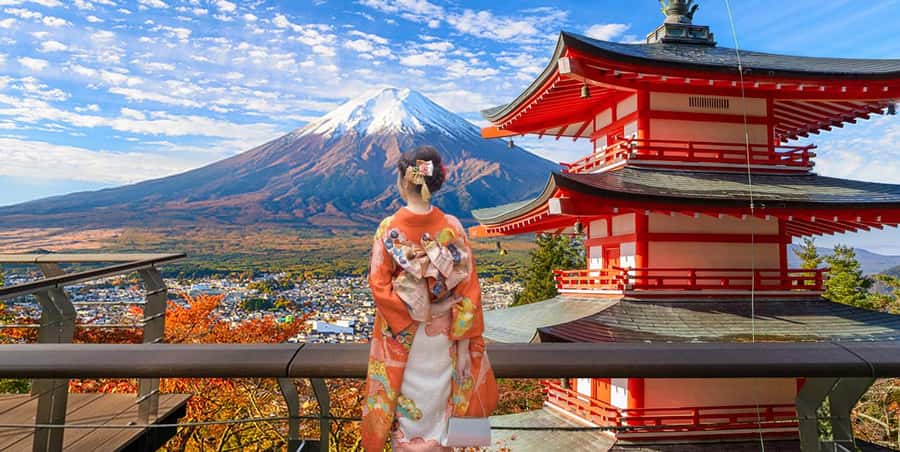
- Arakurayama Sengen Park: A climb of 400 steps to a viewpoint that frames the Chureito Pagoda with Mount Fuji
- Guide support: Professional multilingual guide in English and Chinese, helpful for keeping your day moving
- Season swaps: Oishi Park can be replaced by the maple corridor or cherry blossom groves in the right season
Mount Fuji day trip from Tokyo: the big-picture flow
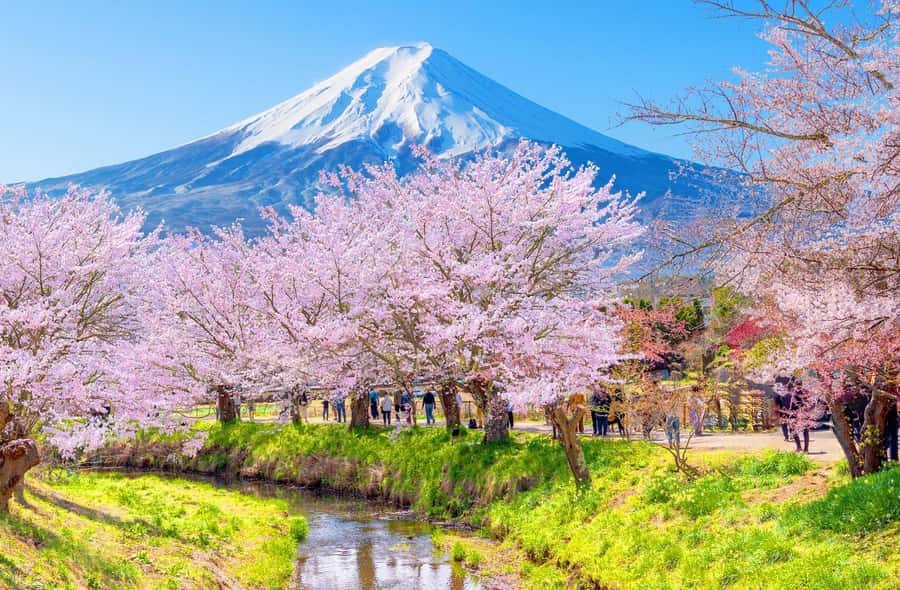
This is one of those “classic hits” Mount Fuji routes that works best when you accept the rhythm: travel time, then short but meaningful stops that stack up to a strong day of scenery, culture, and photos. You’re leaving Tokyo early and spending most of the day in the Fuji-area towns, with a practical schedule that’s flexible if traffic or weather needs adjustments.
The tour keeps you moving, but not in a frantic way. The timing includes real walking windows—like the village stroll, the lake-side park time, and the steps up at Arakurayama Sengen Park—so the day feels like more than just bus rides with quick photo stops.
Price-wise, $49 per person can look low for a full-day trip once you factor in the parts that often cost you when you DIY: round-trip transfers, an A/C vehicle, entry tickets, and a guide. You’re also covered for parking, tolls, gas, and environmental fees, which are the silent budget killers on day trips.
You can also read our reviews of more tours and experiences in Tokyo

Getting there: Tokyo Station vs Shinjuku departure and the 2-hour transfer
You depart early—either 8:00 AM from Tokyo Station or 8:30 AM from Shinjuku Station. Expect about a 2-hour transfer time to the Fuji area, and it can stretch if traffic does its usual thing. This matters because early starts are part of how you’re more likely to catch clearer visibility for Mount Fuji.
Once you’re on the road, the tour is designed to remove decision fatigue. You just show up, ride comfortably in the A/C vehicle, and let the guide handle the pacing. That’s the value: you’re paying to buy time and reduce hassle, not just to see the views.
Saiko Iyashi-no-Sato Nenba: a thatched village built for Fuji framing
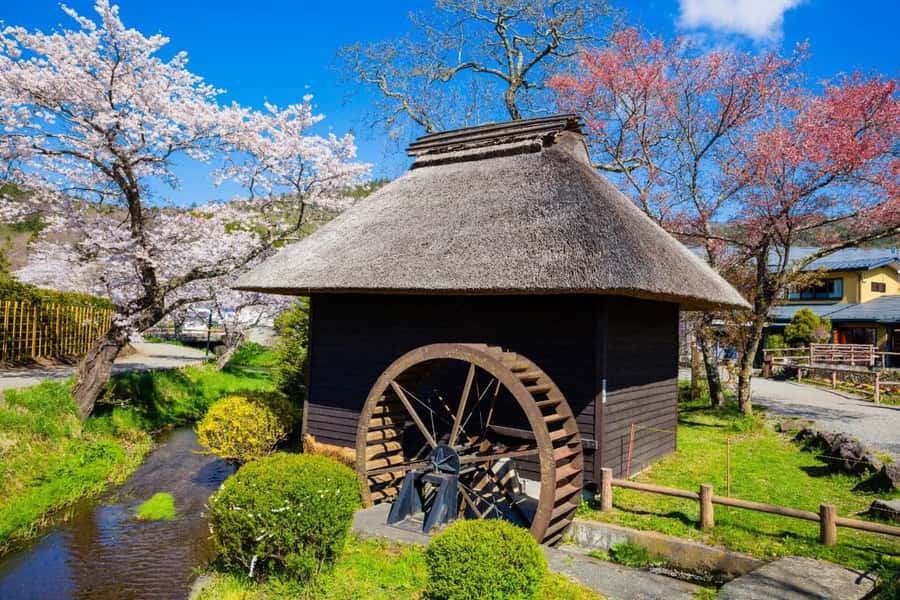
Saiko Iyashi-no-Sato Nenba is a meticulously reconstructed Heian-era thatched-roof village. Think old-country Japan in a way that’s understandable fast: you walk through traditional buildings that have been carefully preserved, and the village layout naturally creates photo frames.
What I like about this stop is the contrast. You get to shift from modern Tokyo energy to a calmer, craft-and-countryside feel without needing to read a lot of complicated history first. On clear days, the two thatched houses can line up so Mount Fuji looks like it’s placed in the distance behind them—like a postcard, but with real footsteps around you.
One small reality check: this is a walking stop. Comfortable shoes help more than you think, especially if your day is already stacked with later walking and the 400-step climb.
Lake Kawaguchiko and Oishi Park: kochia bushes, reeds, and Fuji in the background
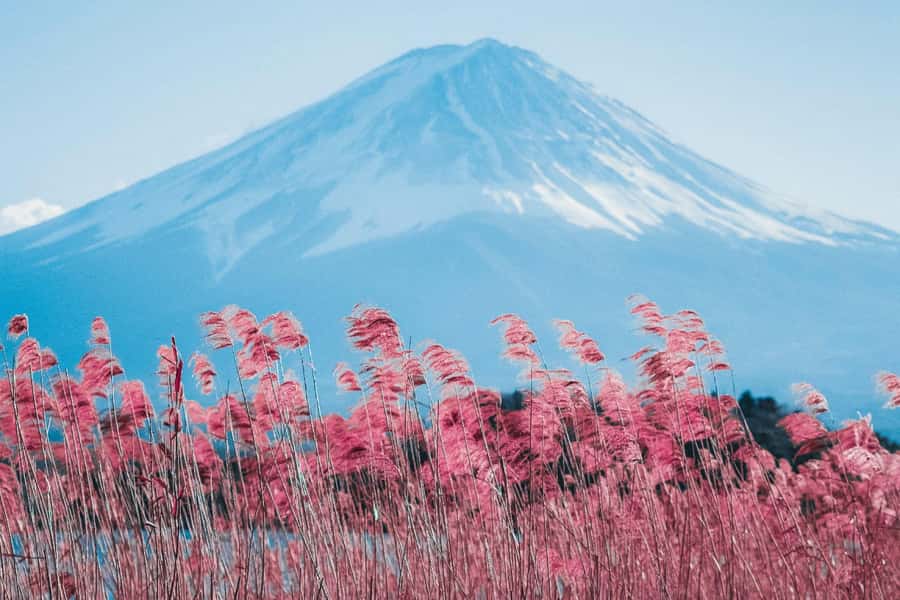
Oishi Park is your lake-side viewing block at Lake Kawaguchiko, and the setting is built for lingering. You get a gentle stroll, with kochia bushes forming neat rows that ripple like a soft carpet. Thin reeds near the shoreline move with the breeze, and you get that classic “Fuji across the water” look.
Timing and weather do a lot here. If visibility is good, the lake sparkles and Mount Fuji feels close enough to study. If visibility is weak, the lake still has beauty, but the dramatic framing is reduced.
Also, pay attention to the seasonal note: during maple and cherry blossom periods, the tour may swap Oishi Park for the Maple Corridor in autumn or cherry blossom groves in spring. That’s not a downgrade. It’s the same concept—park-side Mount Fuji views—just with a different seasonal “foreground” look.
Oshino Hakkai (UNESCO): cold spring water and the eight-spring walk
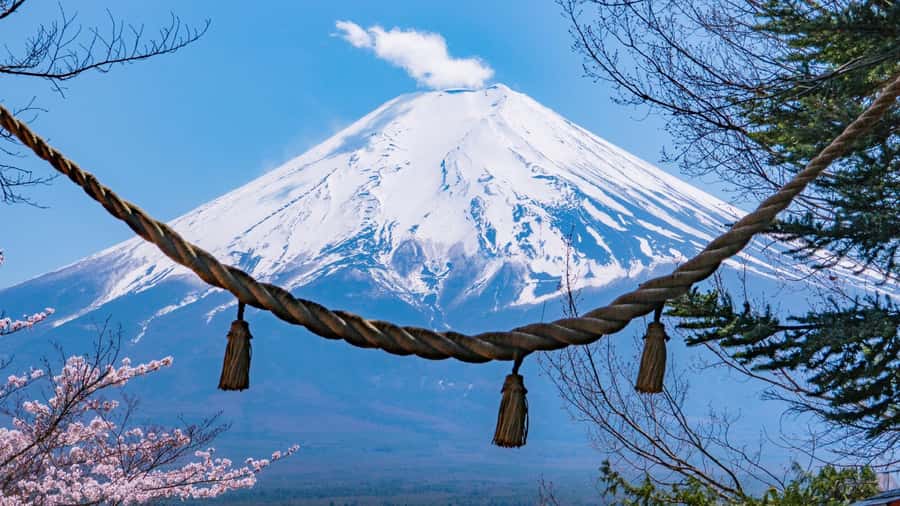
Oshino Hakkai is named for its eight crystal-clear springs, all fed by Mount Fuji’s pure snow. It’s designated as UNESCO World Heritage, and the vibe is different from the more showy photo parks. Here, the focus is quieter: water channels, clear pools, and that feeling of standing near something simple and old.
The highlight is straightforward: you can taste the meltwater. It’s refreshing and clean in a way that’s hard to fake. There’s also local legend about good health and long life, but even if you treat that as folklore, the practical win is that you get a genuine “Mount Fuji water” moment.
Plan for a short walk and some time standing still. This stop rewards patience. If you keep moving nonstop, you miss the best part: watching the springs and seeing how clear the water really is.





Arakurayama Sengen Park: 400 steps, shrine energy, and Chureito Pagoda in the frame
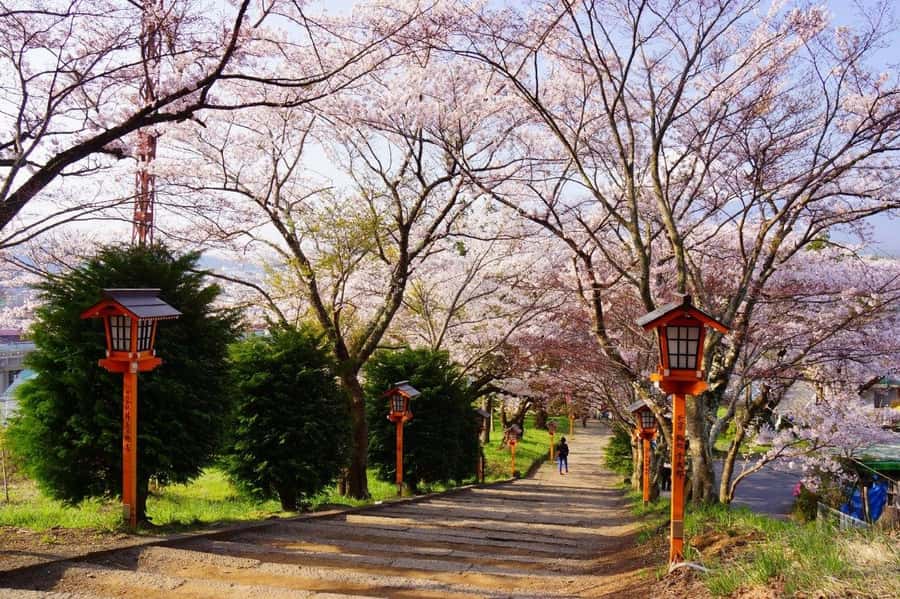
Arakurayama Sengen Park is where the tour cashes in on the most iconic views. You climb about 400 steps to reach the observation deck, and yes, it’s a real climb. If you want the best photos, you also want your breathing under control by the time you get to the top.
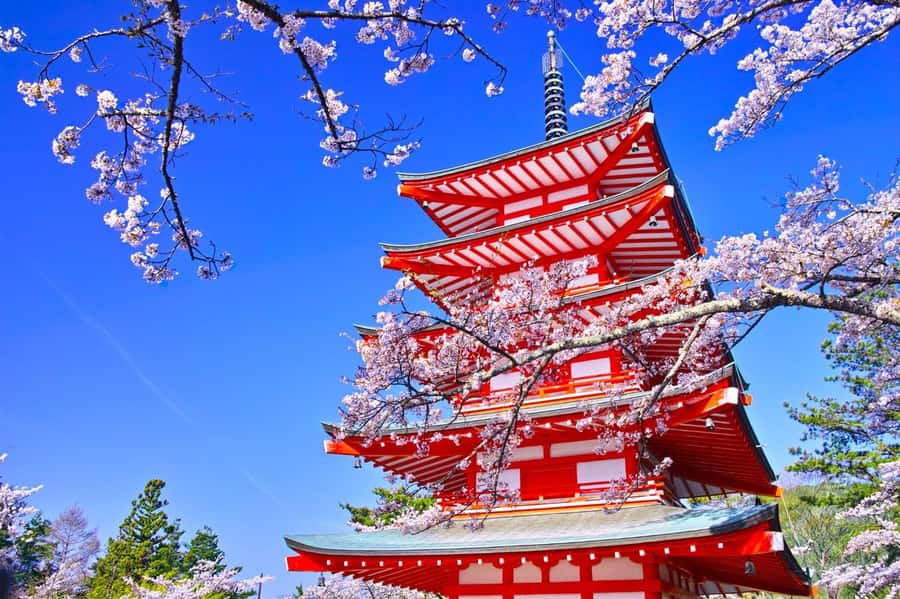
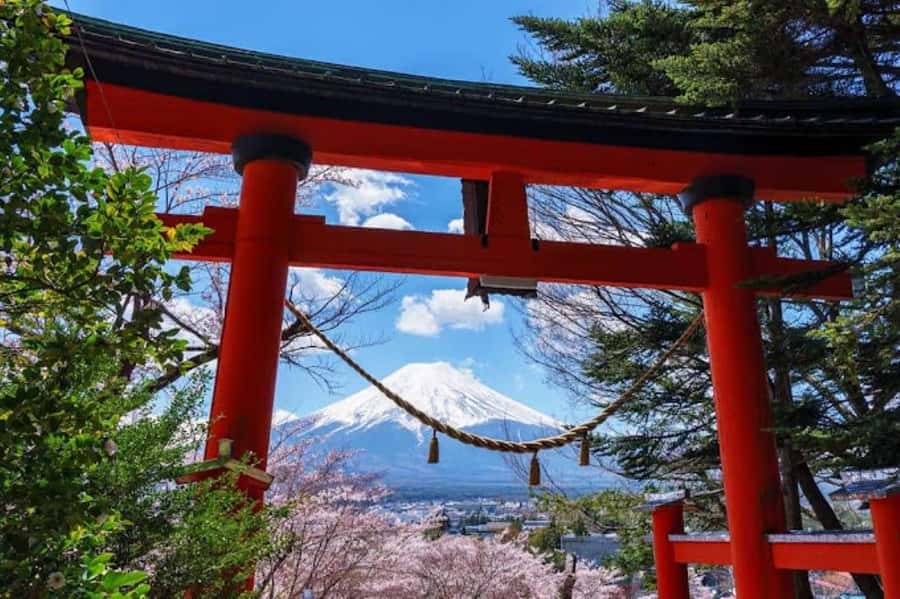
At the viewpoint, the vermillion five-story pagoda—Chureito Pagoda—sits in harmony with Mount Fuji. It’s a famous framing, but it works because it’s not just a structure; it’s the way the sightline lines up with the mountain.
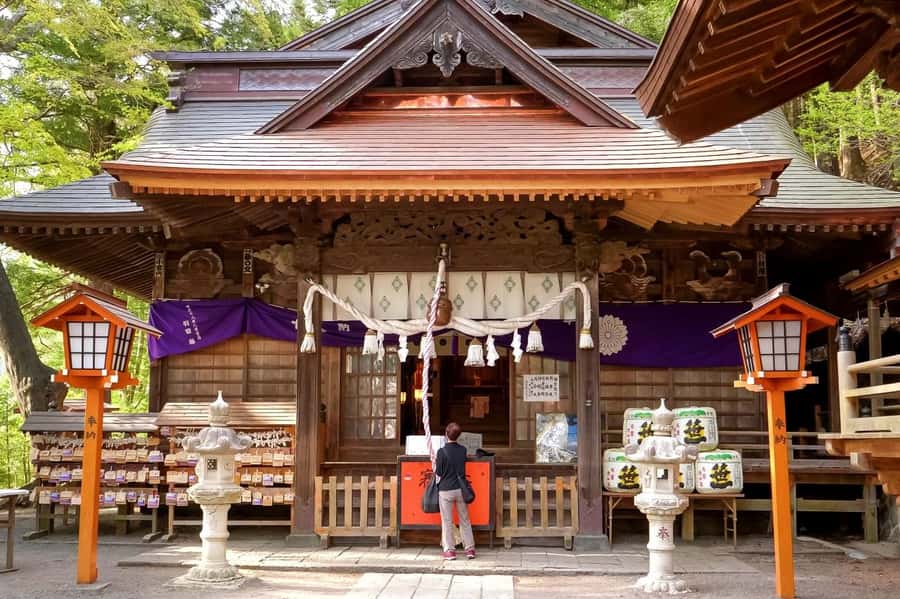
Before or around the viewpoint area, you’ll also pass by Arakura Fuji Sengen Shrine, established in 705. The shrine is dedicated to the deity of Mount Fuji, and it historically played a role in rituals intended to calm the mountain’s fiery eruptions. You don’t need to know every detail to feel what’s going on here: it’s a serious place of prayer paired with a very photogenic outlook.
Lunch, cash, and photo prep: the practical stuff people forget
Meals and beverages aren’t included. That means you should plan to buy food at stops along the way or during any lunch time provided by the route. One heads-up: a prior lunch arrangement has been described as an amusement-park-style stop where rides cost extra money, so you may want to focus on getting a good meal rather than paying for activities.
Carry some cash. Many local merchants don’t accept credit cards, and having a little yen makes lunch and small snacks easier. Also, bring water—your days start early and you’ll walk more than you think, especially with the 400 steps at the park.
For photos, wear the right shoes and treat the day like a walking circuit. You’ll be stopping often, but your feet still have a job to do. And if the visibility of Mount Fuji matters most to you, check the weather forecast in advance—fog is the main spoiler.
Price and value: what $49 really buys you
At $49 per person, this tour is priced to compete with what you’d spend doing it on your own. You’re not just paying for viewpoints. You’re paying for a guide (English and Chinese), entry tickets, and round-trip transfers from the Tokyo meeting points.
It also includes all the extras that add up on day trips: A/C comfort, parking, tolls, gas, and environmental fees. When you compare that to piecing things together and hunting down tickets, the value becomes clearer.
If you’re the type who likes to follow a route that keeps you on the “greatest hits” without wasting hours planning, this is a good deal. If you want total freedom to stay wherever you want and skip everything you dislike, you might find a DIY approach more flexible.
Season timing: lavender, maple, and cherry blossoms change the “foreground”
The highlights mention purple lavender fields stretching toward Mount Fuji, and the route is clearly designed around seasonal scenery. Even when Oishi Park is swapped out for maple corridor or cherry blossom groves, you still get the concept of a strong foreground leading toward the mountain.
Here’s the practical tip: plan around crowds during peak seasons and public holidays. This tour can handle it better than a DIY plan because the schedule accounts for travel time and safety adjustments, but crowded viewpoints still mean you might wait a bit for clear photo angles.
The day is also weather-dependent in a big way. Mount Fuji can be crisp and close on clear days, or muted behind clouds. The good news is that even when the mountain isn’t perfect, the village, the springs, and the shrine area still offer genuine culture and scenery.
Who should book this tour (and who should skip it)
This fits best if you want a structured Mount Fuji day trip from Tokyo and you value having a guide to keep timing smooth. It’s also ideal if you’re okay with walking: there’s gentle walking at Oishi Park and the village, plus the more serious 400-step climb at Arakurayama Sengen Park.
It’s not suitable for wheelchair users, people with mobility impairments, or pregnant women, based on the tour notes. If you’re traveling with strollers or large luggage, you should indicate it when booking since it can affect how the day works.
If you’re visiting in the morning and prefer not to manage public transport, this is a strong option. You’ll also appreciate the “no thinking” approach: you show up, ride, walk, see the key sites, and return.
Should you book this Mount Fuji day trip?
Yes, if your goal is to see the core Mount Fuji classics in one day without doing the logistics. The mix is smart: a traditional village, a lake-view park, UNESCO spring water, and the famous pagoda-and-mountain framing from the top of Arakurayama.
I’d book this when you’re traveling with limited time in Japan and you want maximum return on a single day outside Tokyo. If you’re sensitive to walking or the idea of 400 steps sounds painful, you’ll want to consider a different style of tour.
FAQ
What are the departure times from Tokyo?
The tour departs at 8:00 AM from Tokyo Station and 8:30 AM from Shinjuku Station. The transfer time is estimated at about 2 hours, depending on traffic.
Where does the tour start and end?
You’ll be picked up at the meeting point listed for your booking option, and the tour ends back at the same meeting point.
Is Mount Fuji visibility guaranteed?
No. The schedule may be adjusted for safety, and Mount Fuji visibility can be affected by weather. You should check the forecast before you go.
What is included in the price?
Included are a professional multilingual guide (English and Chinese), entry tickets to attractions, A/C vehicle comfort, round-trip transfers, and taxes plus parking, toll, gas, and environmental fees.
Are meals included?
No. Meals and beverages are not included.
Can I taste the spring water at Oshino Hakkai?
Yes. The tour includes tasting the clear spring water from Oshino Hakkai, fed by Mount Fuji snowmelt.
Will the route change during cherry blossom or maple seasons?
Yes. During those seasons, the tour may go to the Maple Corridor in autumn or cherry blossom groves in spring instead of Oishi Park.
Can I cancel for a refund?
You can cancel up to 24 hours in advance for a full refund.