REVIEW · TOKYO
Explore Asakusa’s historic landmarks
Book on Viator →Operated by Japan Wonder Travel · Bookable on Viator
Asakusa hits fast, and it makes sense. This guided walk turns Tokyo’s most famous old-town landmarks into something you can actually read as you go, from Kaminarimon to Senso-ji.
I really like two things: the way your guide explains what you’re seeing (and what to do) and the extra time in the streets that feel like daily Tokyo, not just postcards.
One consideration: it’s a walking experience in a central area, so if you get worn out quickly or dislike crowds, you’ll want to plan your pace.
In This Review
- Key things to know before you go
- Where the tour starts in Asakusa (and why that matters)
- Kaminarimon Gate: Fujin and Raijin plus the photo magnet
- Nakamise-dori shopping street: snacks, souvenirs, and how to not waste time
- Senso-ji Temple and Kannon: etiquette that makes you feel at ease
- Hanayashikidori and Hoppy Street: old Tokyo energy away from the main rush
- Optional 1-hour sushi making class: when it fits best
- Price and value: what $35 buys in a small-group experience
- The guides: friendly, question-ready, and tuned to first-time visitors
- Who should book this Asakusa walk (and who might skip it)
- Should you book this Asakusa walking tour?
- FAQ
- How long is the Asakusa historic landmarks tour?
- What are the main stops on the tour?
- Is there an option to add sushi making?
- Where is the meeting point?
- Do I need to buy tickets for the sights?
- Is the tour good for first-time visitors?
- How big is the group?
- Can I cancel for free?
Key things to know before you go
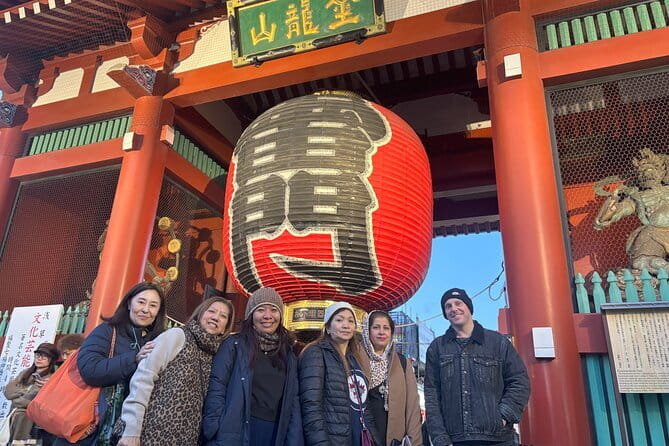
- Small group size (max 8) means more chances for questions and photos.
- Senso-ji etiquette and context help you feel comfortable praying, viewing, and moving through the temple area.
- Photo-friendly stops include Kaminarimon’s huge red lantern and the classic temple approach streets.
- You go beyond the main sights with time around Hanayashikidori and Hoppy Street.
- Optional sushi making class adds a focused 1-hour activity after the walk.
Where the tour starts in Asakusa (and why that matters)
Your tour meets at the Asakusa Culture Tourist Information Center in Kaminarimon, at 2-chōme-18-9 Kaminarimon, Taito City. Meeting here keeps things simple: you’re already planted right at the heart of Asakusa’s action, not trekking across town before you even begin.
The tour runs about 1 hour 30 minutes to 3 hours 30 minutes (it varies with the route pace and whether you add the sushi class). You’ll also end back at the same meeting point, which is handy when you’re trying to plan the rest of your day in Tokyo.
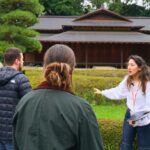
Because the experience is designed for a small group (up to 8), I’d treat this as a great first-day option. You’ll get your bearings quickly, learn what matters in the area, and then you can roam more confidently later on your own.
You can also read our reviews of more historical tours in Tokyo


Kaminarimon Gate: Fujin and Raijin plus the photo magnet
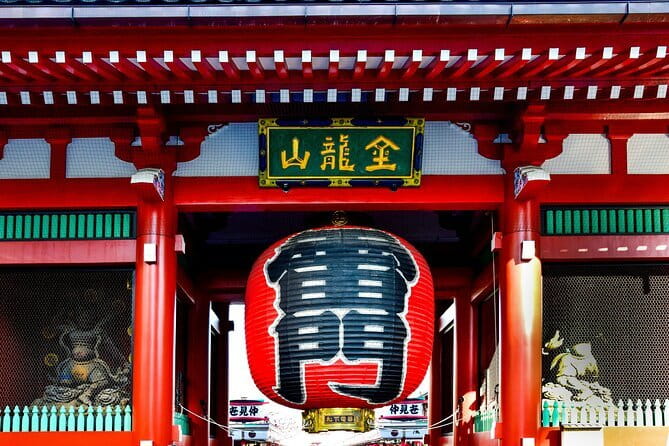
Kaminarimon is Asakusa’s instant headline. This is the iconic Thunder Gate, the entrance to Senso-ji, with statues of Fujin (wind) and Raijin (thunder) on either side. And yes, the massive red lantern in the center is exactly as famous as it looks—this is the stop where people naturally stop, frame, and shoot.
What I like about having a guide here is that it’s not just a landmark. You’ll learn what the gate is for and how it connects to the temple experience beyond the photos. That small bit of context turns the gate from scenery into a story you can carry as you walk forward.
The gate itself is quick—about 10 minutes—but it’s a perfect warm-up. You can arrive, reset your expectations for the crowds ahead, and then step onto Nakamise-dori with a clearer idea of what you’re walking toward.
Nakamise-dori shopping street: snacks, souvenirs, and how to not waste time
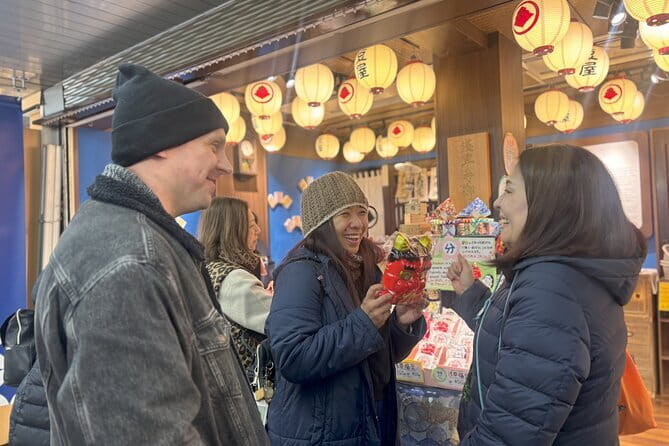
Nakamise-dori is the famous approach street to Senso-ji, lined with shops selling traditional Japanese snacks, souvenirs, and crafts. If you’ve never done this kind of street-walk before, it can feel a bit overwhelming. That’s exactly why a guide helps: you don’t just drift—you move with purpose.
You’ll spend around 10 minutes here. That’s enough time to get a feel for the street and pick a few things without turning the tour into a half-day shopping mission. If you’re trying to buy gifts, I’d think of this as your scouting phase. Spot what looks interesting, check the vibe, and then decide what you really want to buy once you’re calmer and not in the main flow.
A nice detail from past tour experiences: guides have helped people find specific shopping areas after the tour and even recommend shops. So if you’re the kind of person who wants one or two smart gift picks (not 30), this structure can work well.
Senso-ji Temple and Kannon: etiquette that makes you feel at ease
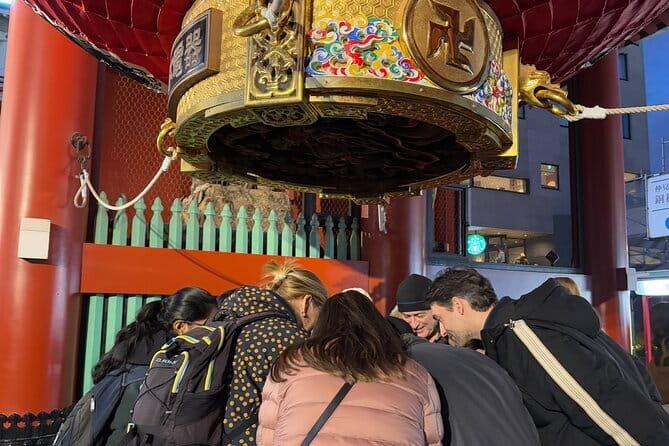
Senso-ji is Tokyo’s oldest temple and one of the city’s most recognizable religious spaces. It’s dedicated to Kannon, the goddess of mercy. The big idea here is that you’re not just looking at a building—you’re walking into a place where people pray, make offerings, and follow customs that go beyond sightseeing.
Your guide spends about 30 minutes at Senso-ji, and the practical value is huge: you’ll get clear explanations of its history and worship etiquette. This is one of the most useful parts of the experience, especially if you’re visiting for the first time and want to avoid doing things awkwardly or incorrectly.
I also love that you’re not left to figure it out on your own. In at least one past tour experience, the guide showed how to properly pray and get fortunes. Even if you skip the fortune part, you’ll still walk away understanding what the steps mean and why people behave the way they do.
This stop is where the tour earns its keep. You’ll know what you’re seeing, so the temple area becomes more than a crowd-photo backdrop.
Hanayashikidori and Hoppy Street: old Tokyo energy away from the main rush
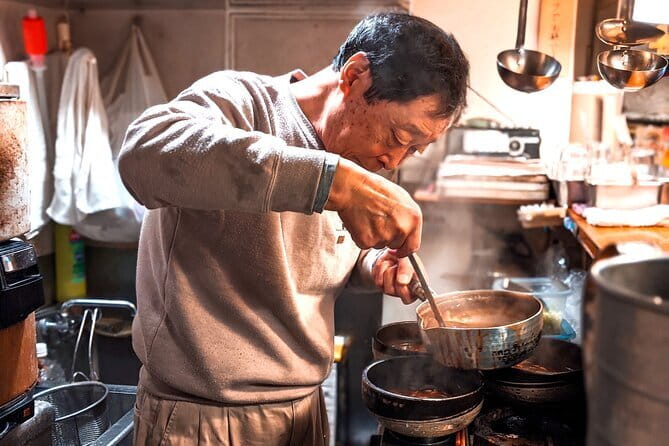
After the temple area, the tour shifts to the streets around it, where Asakusa starts to feel like everyday Tokyo rather than a museum. You’ll first pass through Hanayashikidori for about 20 minutes. This street is named after Hanayashiki, Japan’s oldest amusement park nearby. You’ll find shops, restaurants, and cafes, plus a nostalgic tone that feels like older Tokyo rather than just a souvenir corridor.
This is a good place to grab a snack you actually want, or to browse without the same intensity as the main approach street. If you care about food and small detours, this is where your day gets more personal.
Then you’ll move to Hoppy Street for about 20 minutes. This area is known for izakayas (Japanese pubs) that serve a local drink called Hoppy. Along the way, you’ll typically run into classic casual bites like yakitori and oden, and the vibe leans relaxed and social.
If you’re curious about post-work Japan culture (without needing to fully commit to a long dinner), this is a solid taste. It also helps you understand how Asakusa stays alive after the daylight temple crowds.






Optional 1-hour sushi making class: when it fits best
You can add a sushi making option after the Asakusa walk. The class runs 1 hour, and the scheduled times are either 12:30–13:30 or 15:30–16:30. It’s offered as a follow-on after a 1.5-hour Asakusa walking tour option, so timing depends on which walk length you end up doing.
This add-on is worth considering if you want one hands-on Tokyo memory. It also breaks up the day in a fun way: you go from street history and temple context to a practical food activity.
One practical note: sushi class times are fixed windows, so if you’re traveling during a busy season, book early. The experience is often reserved about 54 days in advance on average, which usually means popular slots can fill.
Price and value: what $35 buys in a small-group experience
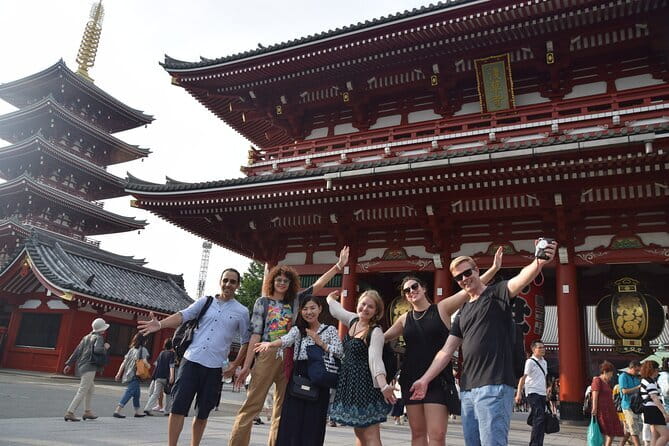
The price is $35.00 per person, and the tour is led by a local expert. For this area, that’s a pretty straightforward value proposition: you’re paying for an organized, guided walk with context, plus time allocated to the key landmarks and the slightly deeper street experiences.
A big part of the value is the group size—max 8. That makes it easier for your guide to answer questions and for you to move at a comfortable pace. It also matters in crowded temple-adjacent streets, where it’s nice to have someone who understands how to keep the group together and where to pause for photos.
Another value point: key admission stops listed here are free, so you’re not stacking extra costs just to see the main sights. You’re mostly paying for guidance, storytelling, and the structure that turns a famous area into a more meaningful one.
You’ll also receive a mobile ticket, which reduces friction on the day of travel.
The guides: friendly, question-ready, and tuned to first-time visitors
One reason people keep giving this kind of tour high marks is the guides. Past experiences include guides like Sachi, Andy, Kayoko, Sunny (Chiharu), and Yoshiko. Across different groups, you see the same pattern: English communication that works well, plenty of space for questions, and a willingness to help with details like how to pray or how to pick gifts.
If you like tours where you can ask, stop, and get answers instead of being herded along, this setup tends to fit. It also helps you get more out of the streets, since your guide can point you toward what’s worth your time—like where to focus on souvenirs or where to find good food moments without turning everything into guesswork.
Who should book this Asakusa walk (and who might skip it)
This is a great fit if you’re:
- In Tokyo for the first time and want Asakusa orientation fast
- Interested in how religion, street shopping, and neighborhood life connect
- Traveling with someone who wants clarity on etiquette and what things mean
You might want to consider another style of experience if:
- You want lots of time alone for wandering far beyond the main temple area
- You’re extremely sensitive to crowds and walking in central Tokyo
- You’re looking for museums or ticketed attractions beyond what’s already included here
The overall feel is practical. You’re not just checking boxes—you’re learning how to look at Asakusa the right way, then continuing the day with more confidence.
Should you book this Asakusa walking tour?
If your plan includes Senso-ji plus a quick taste of Asakusa’s surrounding streets, I think this is an easy yes. The $35 price makes sense because you’re buying guidance for the temple etiquette and the meaning behind what you’re seeing, then getting time in Hanayashikidori and Hoppy Street that most first-timers would otherwise skim past.
Book it especially if you’re going on day one or day two in Tokyo and you want your bearings without stress. And if you’re tempted by the sushi option, pick the time that matches your hunger and your energy. A class at 12:30–13:30 works well if you like an early lunch plan; 15:30–16:30 is better if you want a later reset.
If you want a smooth Asakusa day with fewer confusion points, this is the kind of tour that earns its place on your itinerary.
FAQ
How long is the Asakusa historic landmarks tour?
The duration is about 1 hour 30 minutes to 3 hours 30 minutes, depending on the flow of the experience and whether you add the sushi class.
What are the main stops on the tour?
You’ll go to Kaminarimon Gate, Nakamise-dori shopping street, Senso-ji Temple, Hanayashikidori, and Hoppy Street.
Is there an option to add sushi making?
Yes. You can add a 1-hour sushi making class after the Asakusa walking tour. The class times are 12:30–13:30 or 15:30–16:30.
Where is the meeting point?
The meeting point is Asakusa Culture Tourist Information Center, 2-chōme-18-9 Kaminarimon, Taito City, Tokyo 111-0034, Japan.
Do I need to buy tickets for the sights?
Admission tickets for the listed stops are free.
Is the tour good for first-time visitors?
Yes. The tour is designed to guide first-time visitors through the landmarks and explain history and worship etiquette at Senso-ji.
How big is the group?
The maximum group size is 8 travelers.
Can I cancel for free?
Free cancellation is available. You can cancel up to 24 hours in advance for a full refund.