REVIEW · TOKYO
Asakusa Night Evening Walking Tour with English-Speaking Guide
Book on Viator →Operated by GuideMe Japan · Bookable on Viator
Night in Asakusa hits different, fast. This short 1-hour walk helps you read the sights at night with an English-speaking guide, starting at Kaminarimon Gate and ending at Hoppy Street for dinner plans. I especially like the smooth flow: classic temple landmarks first, then the quieter side streets with local food energy.
Two things I’d highlight: you get stories tied to what you’re seeing (not just photo stops), and the timing helps you enjoy Sensō-ji after the peak rush. One thing to consider: the main hall at Sensō-ji closes at 6 PM, so if your tour is later, you may only be outside and around the grounds rather than fully inside.
In This Review
- Key Highlights You’ll Actually Feel During the Walk
- Why Asakusa Feels More Personal After Dark
- 1 Hour, 6 Stops: The Real Logic of the Route
- Burger King to Hoppy Street: Start/Finish That Makes Dinner Easy
- Kaminarimon Gate at Night: The Thunder Gate Moment
- Nakamise Shopping Street After the Peak: Snacks and Souvenirs Without the Stress
- Sensō-ji Temple at Night: When the Main Hall Closes at 6 PM
- Asakusa Shrine Next to Sensō-ji: The WWII Survival Story
- Hanayashikidori: Where the Classic Area Gets a Fun Edge
- Hoppy Street: The Perfect End Point for Izakaya Dinner
- English-Speaking Guides: What You Gain Beyond the Sights
- Price and Value: $34.29 for a Structured, Night-Friendly Plan
- What to Expect at Each Stop Time-By-Time
- Timing Tips: Make Sure You Don’t Hit the 6 PM Wall
- Who This Tour Is Best For
- Should You Book This Asakusa Night Walk?
- FAQ
- How long is the Asakusa night walking tour?
- What stops are included in the itinerary?
- Is the Senso-ji main hall open during the tour?
- What language is the guide?
- Where does the tour start and end?
- Is food included?
Key Highlights You’ll Actually Feel During the Walk
- A tight 1-hour route that covers the core sights without dragging your evening
- English-speaking guides who add context and local legends as you go
- Night lighting at Kaminarimon plus a calmer vibe around Sensō-ji
- Street-level Asakusa culture, from Nakamise to izakaya alleys at Hoppy Street
- Small group size (max 8), which keeps the pace comfortable and questions easy
Why Asakusa Feels More Personal After Dark
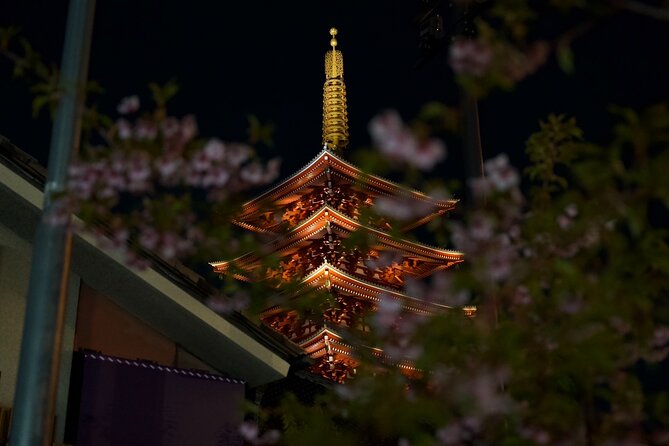
Asakusa at night isn’t just a prettier time of day. The smells shift, the crowds thin, and the area starts to feel like a neighborhood again instead of a checklist. On this walk, that matters because Asakusa’s best moments aren’t only the big landmarks. They’re the transitions: from the thunder-red gate, to temple grounds, to side streets where local shops and izakayas keep doing their thing.
I like that the tour is designed for the “before dinner” window. You’re not trying to force a full meal into the schedule. Instead, you finish right where you want to eat, so the walk supports your evening rather than competing with it.
You also get a practical kind of storytelling. With an English-speaking guide, you’re less likely to wander past details that would otherwise look random—like the meanings behind the shrine next to Sensō-ji or the reason Asakusa’s streets have their own identity.
You can also read our reviews of more walking tours in Tokyo


1 Hour, 6 Stops: The Real Logic of the Route
This is an easy commitment: about 1 hour total, with around 10 minutes per stop. That structure is ideal if you’re jet-lagged, arriving late, or already saw Asakusa in daytime and now want context.
The pacing also means you don’t have to constantly decide how long to stay at each spot. You’ll see the essentials, plus you’ll have just enough time to look around at night—then you keep moving.
The small group size (up to 8 travelers) is a quiet but important detail. In Tokyo, even “short” walks can turn stressful if the group is big. Here, a smaller headcount keeps the flow smoother, and it’s easier to hear the guide without craning your neck the whole time.
Burger King to Hoppy Street: Start/Finish That Makes Dinner Easy
The meeting point is specific: Burger King Asakusa Azumabashi (Kaminarimon, 2-chōme area in Taito City). You’ll end at Hoppy Street (Hoppy St, 2-chōme-8 Asakusa). That end point is not an accident.
Hoppy Street is known for izakayas lined along an alley, with hoppy as a local favorite. So when the tour ends, you’re already in the right zone for food and drinks without needing to figure out how to get there next.
A practical tip: since the tour wraps on a street famous for nightlife energy, plan your post-tour steps with comfort in mind. If you’re aiming for a specific restaurant, you’ll have time to browse, but don’t wait too long—at peak hours, popular spots can fill quickly.
Kaminarimon Gate at Night: The Thunder Gate Moment
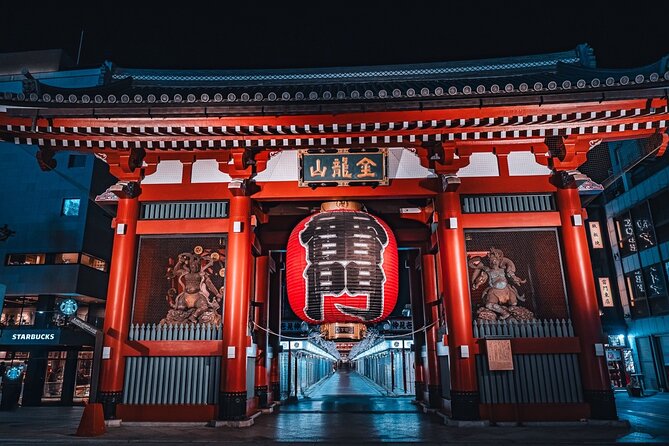
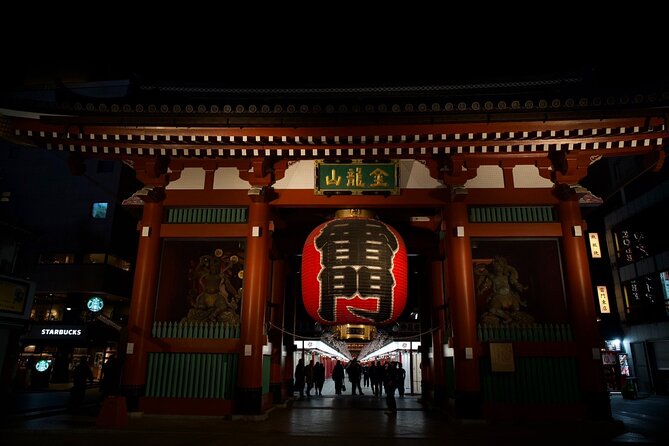
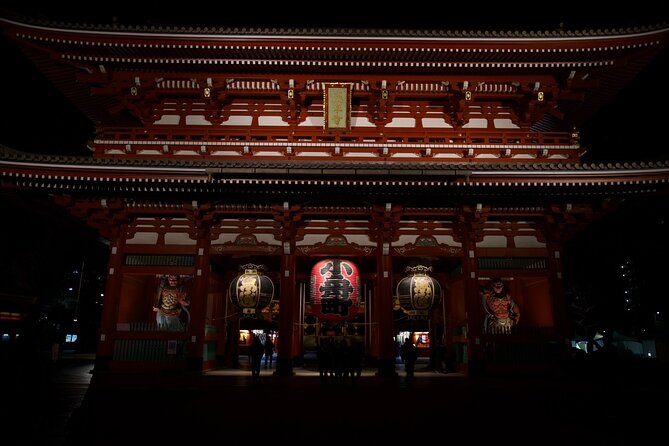
Your first real anchor is Kaminarimon Gate, the iconic entrance to Sensō-ji. It’s called the Thunder Gate for a reason, and at night it feels even more dramatic. The gate’s scale plus the huge red lantern creates that classic Asakusa photo look—only the timing helps you avoid the worst crush.
On the flanks of Kaminarimon, you’ll see statues of Fujin (wind) and Raijin (thunder). This matters because it turns the gate from a background for selfies into something you can actually read.
A mild consideration: because this is a landmark entrance, it can still be busy depending on the exact day and hour. The guide pacing helps, but the gate is still a gate—so expect people moving through.
Nakamise Shopping Street After the Peak: Snacks and Souvenirs Without the Stress
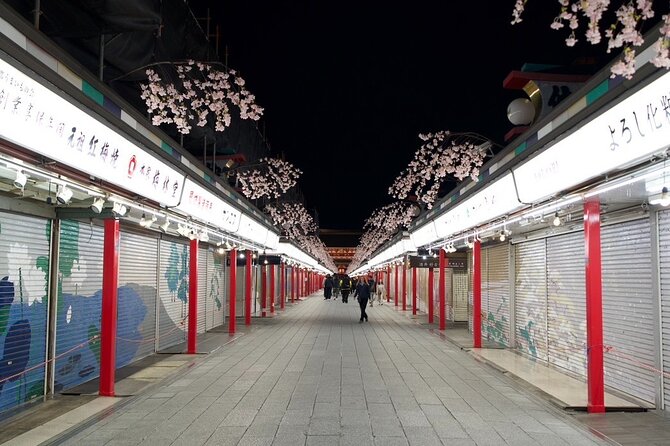
From Kaminarimon, you step onto Nakamise Shopping Street, the approach lined with shops selling traditional snacks, souvenirs, and handcrafted items. In daytime it can feel like you’re walking through a constantly moving market stream. At night, the vibe softens.
This stop is short, so don’t plan to do full shopping here. Use it like a sampling window: notice the goods, spot the snack options you like, and decide what you might buy later (or what to skip so you don’t end up with extra bags).
Also, since food and drinks are not included, this is on you. The tour gives you the path and the context; your dinner is still your choice.
You can also read our reviews of more guided tours in Tokyo

Sensō-ji Temple at Night: When the Main Hall Closes at 6 PM
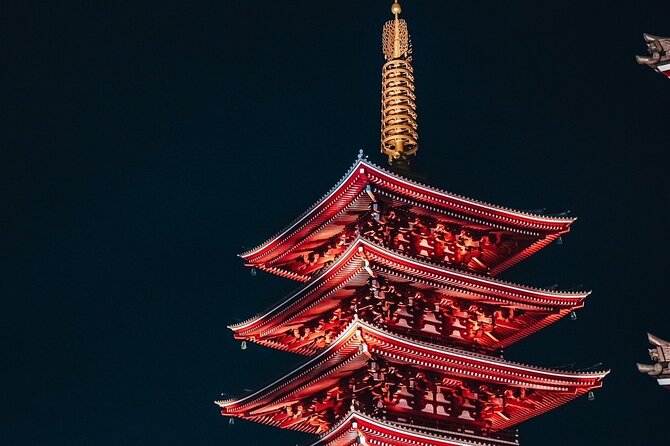
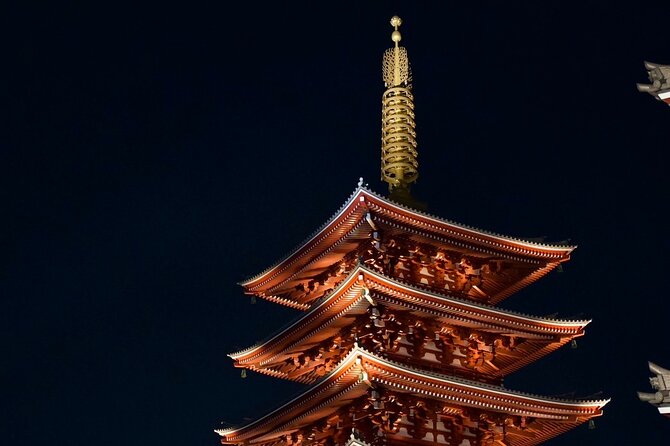
Sensō-ji is one of Tokyo’s best-known temple complexes, and at night the grounds feel calmer. The iconic Kaminarimon gate creates instant “you’re here” recognition, but the real value is how the evening atmosphere changes what you notice.
Sensō-ji is dedicated to Kannon, the goddess of mercy. That sort of detail helps you understand why certain areas and rituals look the way they do, even if you’re not deeply religious. You’re not just looking; you’re interpreting.
Here’s the one scheduling reality check: the main hall closes at 6 PM, so entry may not be possible if your tour runs later than that. The tour timing is still designed for nighttime viewing, but the experience may shift from inside-the-hall viewing to outside-and-grounds viewing depending on the exact hour.
If you’re sensitive to that kind of limitation, check your actual tour time when you book. If you’re arriving specifically hoping for main-hall entry, you’ll want earlier scheduling.
Asakusa Shrine Next to Sensō-ji: The WWII Survival Story
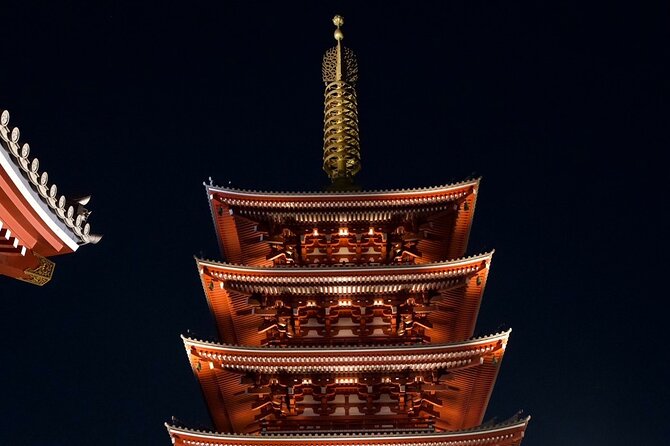
Next door to Sensō-ji is Asakusa Shrine, a historic Shinto shrine connected to the three men who founded Sensō-ji. It’s also known for an endurance story: the current shrine was built in the 17th century and survived World War II.
That’s not just trivia. Hearing it while you stand there changes how you experience the place. Instead of seeing an attractive shrine building and moving on, you start noticing the sense of continuity—how the area kept its identity even through major disruption.
The shrine is described as a symbol of harmony, which fits what night walks in Asakusa can feel like: quiet, respectful, and less chaotic than the shopping streets.
Hanayashikidori: Where the Classic Area Gets a Fun Edge
After the shrine, the tour shifts gears toward Hanayashikidori, named after Hanayashiki, Japan’s oldest amusement park. This is where Asakusa stops feeling purely ceremonial and starts feeling playful and everyday.
You’ll pass shops, restaurants, and cafés, so it reads like a “real-life corridor” instead of only a sightseeing lane. That’s a big part of why this tour works as a warm-up for dinner. It bridges the mood from sacred to social.
Stop length is short, so think of this as a vibe check. If you want to browse longer, you can always return later—especially since the tour ends in a food-focused area.
Hoppy Street: The Perfect End Point for Izakaya Dinner
The final stop is Hoppy Street, an alley lined with izakayas. This is where locals and visitors mix, and it’s specifically tied to the drink called hoppy.
Even if you don’t plan to drink alcohol, this is a great ending point because the alley atmosphere makes it easy to pick a place to eat. You’ve already seen the temple zone and the shopping zone, so now you’re moving into the part of Asakusa that runs on dinner conversations, casual meals, and late-night energy.
Because food and drinks aren’t included, you’re free to choose your style: quick bites, a sit-down izakaya, or something lighter if you’re traveling with kids or prefer non-alcoholic plans.
English-Speaking Guides: What You Gain Beyond the Sights
What makes this tour feel worth it is the guide layer. The route is clear, but the stories give the sights context. In past experiences with this operator, guides such as Takumi and Mio have stood out for making the walk feel both informative and genuinely enjoyable—especially for people who already visited during the day but didn’t understand what they were looking at.
That’s a big win. Daytime Asakusa can be impressive, but it can also be a lot. At night, with a guide connecting the symbolism and local background to each stop, you get a smoother understanding of why each place matters.
You’ll also likely find it easier to ask questions. Small groups help here, and the short segments mean the guide isn’t racing ahead while you’re still trying to catch up.
Price and Value: $34.29 for a Structured, Night-Friendly Plan
At $34.29 per person, the cost isn’t about buying souvenirs or getting a meal bundled in. It’s about buying time and clarity.
Here’s how I think about the value:
- You’re getting an English-speaking guide for about 1 hour, which is useful in Tokyo where small details can get lost fast.
- You’re getting a planned route that ends at a dinner-focused street, so you don’t waste time backtracking or hunting for where to eat.
- You’re moving through free-to-enter sights and streets as listed in the route, so you’re not paying extra for admissions during the walk.
The other planning detail I like: this tour is often booked around 50 days in advance. That suggests a steady demand—so if Asakusa is on your must-do list, lock in your time early rather than hoping a slot appears later.
What to Expect at Each Stop Time-By-Time
To help you picture the flow, here’s the practical rhythm:
At the start (Kaminarimon), you’ll get the iconic gate experience with an explanation of the thunder/wind figures. Then you slide into Nakamise for a quick orientation to the shopping street’s role in feeding the day-to-day culture of Asakusa. After that, you move into the Sensō-ji area, where night lighting changes the feeling and the closing time for the main hall can affect what you can enter.
Next, Asakusa Shrine gives you a second sacred stop that’s close by but different in identity. Hanayashikidori brings in everyday energy and amusement-park history. Finally, Hoppy Street turns the evening from sightseeing into food mode.
That structure is why this feels like a good “first evening” plan even if you already visited once earlier. You’re not repeating the same walk with the same understanding—you’re changing the lens.
Timing Tips: Make Sure You Don’t Hit the 6 PM Wall
If your tour time is near the 6 PM window, it’s worth paying attention to that Sensō-ji main hall closure. The outside experience will still work at night, but if main-hall entry is important to you, earlier is safer.
Also, night walking in Tokyo is still walking. Wear shoes that don’t punish you on uneven pavement. It’s only an hour, but it’s an hour in a part of the city where crowds can thicken around gates and main streets.
Who This Tour Is Best For
This works especially well for:
- First-time visitors to Tokyo who want an Asakusa sampler without overplanning.
- People who visited Asakusa in the day but felt like they were seeing it with missing context.
- Travelers who prefer a small group and a guide-driven route rather than wandering alone.
- Anyone who wants a straightforward plan that ends in a ready-to-go dinner area.
If you’re the type who hates guided structure and only wants to wander independently, you might feel constrained by the set stops. But if you like knowing where to look and what you’re seeing, this format fits.
Should You Book This Asakusa Night Walk?
I’d book it if you want a clean, efficient way to experience Asakusa after dark—with English guidance, a tight route, and a finish that practically hands you your dinner plan. The guide quality is clearly part of the appeal, with names like Takumi and Mio showing up in the kind of feedback that matters: the walk feels more meaningful because the stories connect to the setting.
Skip it (or reconsider the time) if main-hall entry at Sensō-ji is a must for you and your schedule likely runs after 6 PM. Otherwise, it’s a solid, low-stress way to start your evening with real local atmosphere rather than just snapping pictures and moving on.
FAQ
How long is the Asakusa night walking tour?
The tour lasts about 1 hour.
What stops are included in the itinerary?
The route includes Kaminarimon Gate, Nakamise Shopping Street, Sensō-ji Temple, Asakusa Shrine, Hanayashikidori, and Hoppy Street.
Is the Senso-ji main hall open during the tour?
The Sensō-ji main hall closes at 6 PM, so entry may not be possible depending on the tour time.
What language is the guide?
The tour includes an English-speaking guide.
Where does the tour start and end?
It starts at Burger King Asakusa Azumabashi in the Kaminarimon area and ends at Hoppy Street.
Is food included?
No. Food and drinks are not included, though Hoppy Street is a good place to continue for dinner after the tour.