REVIEW · TOKYO
Tsukiji Food Strolling and Hama Rikyu Garden Walking Tour
Book on Viator →Operated by Reelu inc · Bookable on Viator
Two markets, one calm garden, one morning plan. This Tsukiji Food Strolling and Hama Rikyu Garden walk connects Tokyo’s wholesale food world with an Edo-era garden break, with matcha and wagashi as an optional add-on.
I really like how the guide helps you move through the Tsukiji area without guessing where to stand, what to look for, or when it’s a good moment to ask questions. I also like the built-in contrast: after your market time, you get an included hour at Hama Rikyu Gardens where you can slow your pace near the tea house.
One possible drawback: you’re on your feet for about 2.5 hours, and food and drinks are not included, so you’ll want to budget extra yen for tastings you decide to buy.
In This Review
- Key points to know before you go
- Tsukiji and Hama Rikyu: the real value is the pairing
- Where the tour starts (and how to avoid a slow first 15 minutes)
- Stop 1: Tsukiji Hongwanji Temple as your reset button
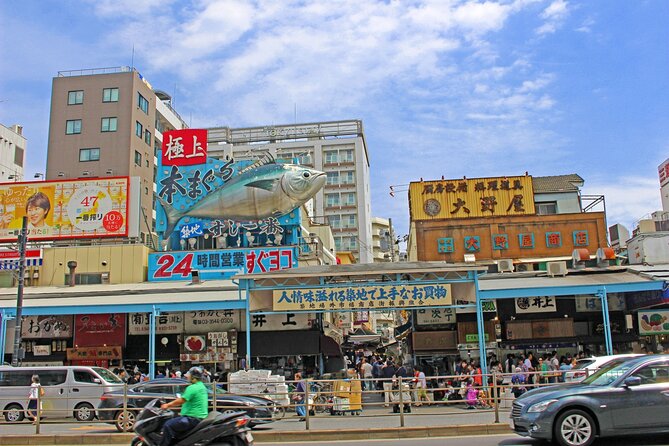
- Stop 2: Tsukiji Jogai Market walk for ingredients, not just souvenirs
- Stop 3: Hama Rikyu Gardens—where the city noise fades
- Matcha and wagashi etiquette: how to decide if it’s worth it
- How the guide experience changes the whole morning
- What you should expect to pay for tastings
- Group size and timing: why 2.5 hours feels right
- Price and value: what $32.32 really covers
- Where this tour fits best (and who might skip it)
- Practical tips so your morning runs smoothly
- Should you book this Tsukiji and Hama Rikyu walking tour?
- FAQ
- How long is the Tsukiji Food Strolling and Hama Rikyu Garden tour?
- What is the meeting point for the tour?
- Where does the tour end?
- What is included in the price?
- Are lunch or drinks included?
- Is matcha and wagashi included?
- Do I need to pay for Tsukiji Hongwanji Temple or Tsukiji Jogai Market?
- How large is the group?
- What is the cancellation policy?
Key points to know before you go
- Small group size (up to 12) makes it easier to hear your guide and ask questions.
- Tsukiji Hongwanji Temple + Jogai Market are quick, well-timed stops that set you up for the food walk.
- Hama Rikyu Gardens entry included saves you from planning and ticket logistics mid-trip.
- Optional matcha and wagashi etiquette tasting runs about 1,000 yen and is paid on-site.
- Mobile ticket is a simple, low-fuss way to check in for a morning plan.
Tsukiji and Hama Rikyu: the real value is the pairing
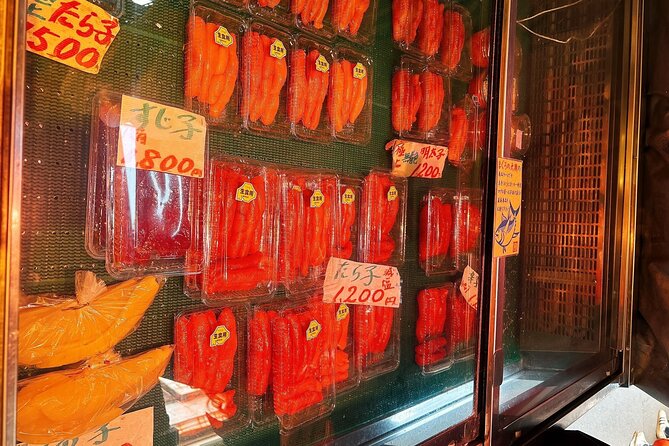
A Tokyo food morning can turn into chaos fast. Too many stalls, too many smells, and not enough context. This tour works because it pairs two very different experiences: the working ingredient world around Tsukiji, then a calm break in Hama Rikyu Gardens a short hop away.
You’ll get a local guide to steer you through the Tsukiji stops. That matters more than you might think, because the market area rewards good timing and good questions. After that, the garden gives you the kind of stillness Tokyo rarely offers in the middle of a weekday.
The price is $32.32 per person for a roughly 2 hours 30 minutes walk with Hama Rikyu admission included. That’s not just “cheap sightseeing.” It’s also a way to avoid building your own route at the last minute.
You can also read our reviews of more walking tours in Tokyo


Where the tour starts (and how to avoid a slow first 15 minutes)
Your meeting point is Starbucks Coffee at Tsukiji Station (2-chōme 12-8, Ōhiro Building, 1F). It’s a solid choice because stations give you an easy arrival option, and you can regroup if you’re running a minute late.
In practice, this start location helps if you’re also doing other Tokyo plans that day. Tsukiji is not where you want to gamble on directions before you’re ready to eat, learn, and walk. Starting at a known landmark keeps the morning smooth.
You’ll end at Hama Rikyu Gardens, with dismissal at the tea house. If you want to keep exploring after the tour, that drop-off is convenient for transitioning from guided time to wander time.
Stop 1: Tsukiji Hongwanji Temple as your reset button
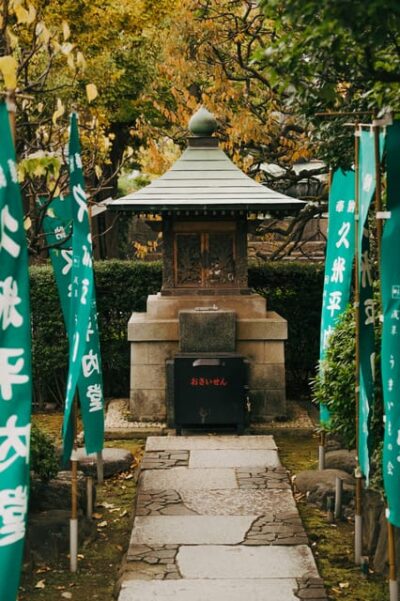
The tour begins with Tsukiji Hongwanji Temple, near the Tsukiji Market area. Admission is listed as free, and the visit is short (about 10 minutes). That’s intentional.
This temple stop works like a gear shift. Before you hit the food lanes, you get a calmer, more architectural moment with Indian- and Western-inspired elements. Even in a short time, it helps you understand that Tsukiji isn’t only about transactions. It’s also part of the neighborhood’s daily life.
If you’re someone who tends to feel overwhelmed in markets, this is a smart first beat. It also gives you something non-food to focus on briefly, so your energy stays steady for what comes next.
Stop 2: Tsukiji Jogai Market walk for ingredients, not just souvenirs
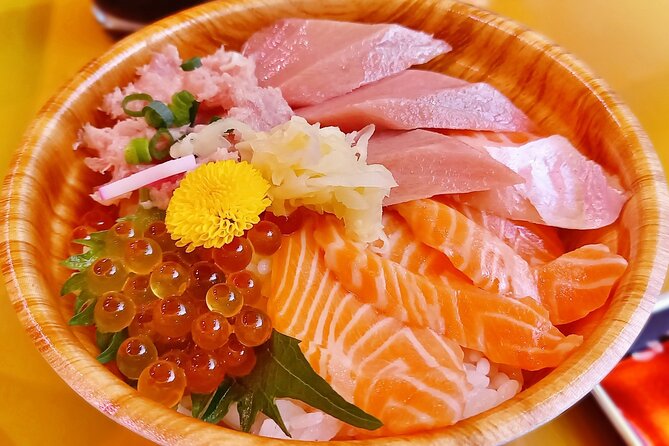
Next comes Tsukiji Jogai Market for about one hour, and admission there is also free. This is where the tour shifts from atmosphere to food education.
Tsukiji has an 83-year history as a central wholesale market. The scale is huge in numbers: around 480 types of seafood and about 270 types of produce. That can feel like sensory overload if you walk in cold. With a guide, you get structure—what to notice, how to think about ingredients, and what questions to ask without slowing the whole group down.
This is also a good time to pick up practical Tokyo-food instincts. For example, you learn how wholesale culture shapes what ends up in retail later. The market isn’t just a place to buy. It’s a place where supply chains meet local taste.
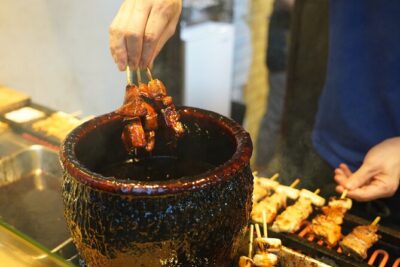
If you want to sample as you go, your guide can help you decide what’s worth buying in that moment. And because the tour is a walking format, you can keep moving instead of getting stuck in a single line.
Stop 3: Hama Rikyu Gardens—where the city noise fades
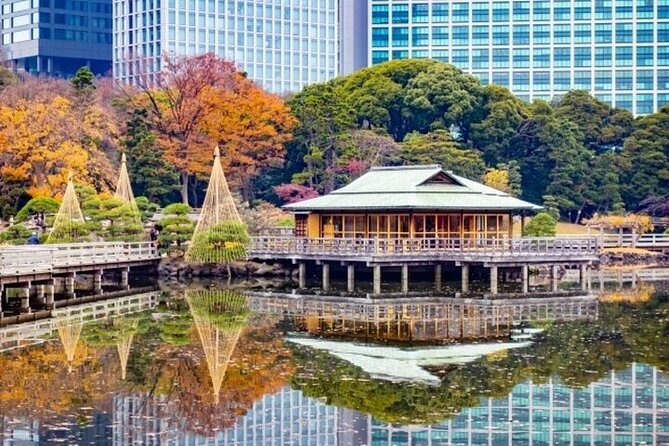
After Tsukiji, you’ll head to Hama Rikyu Gardens for about one hour. The garden admission fee is included (listed as 300 yen per person), so you don’t have to manage tickets during your transitions.
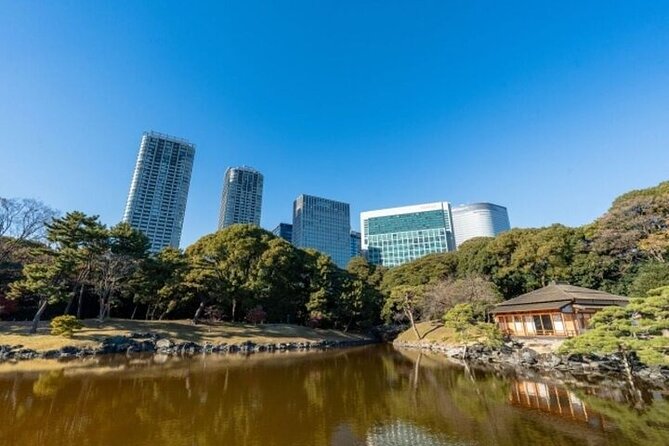
Hama Rikyu is an Edo-period garden, over 370 years old. The contrast is part of the point: skyscrapers nearby, then a carefully arranged space meant for quiet viewing.
The tour info notes seasonal flowers, and that’s worth factoring in. If your trip lines up with a bloom window, you may see more color than you would on a plain green day. Even if not, the tidal-garden concept is a big part of why the design feels different from most urban parks.
You’ll also get to learn Japanese etiquette while tasting matcha and wagashi, if you choose the optional stop. That’s a nice pairing with garden time, because sweets and tea make sense in a calm setting.
At the end, you’ll be dismissed at the tea house in the gardens. If you’d like to keep exploring, it’s an easy place to start wandering again without losing your bearings.
You can also read our reviews of more food & drink experiences in Tokyo





Matcha and wagashi etiquette: how to decide if it’s worth it
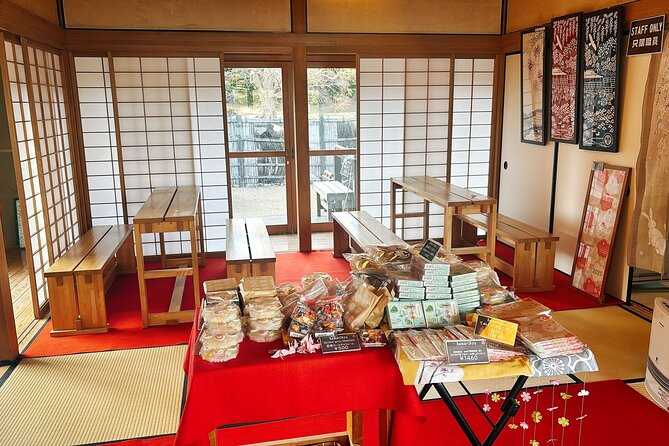
You have an optional add-on: Japanese etiquette while tasting matcha and wagashi. It’s listed as about 1,000 yen, paid on-site.
Here’s how I’d think about it before you decide:
- If you want a more guided cultural moment (not just sights and food), it’s a good fit.
- If you’re mainly focused on sampling lots of Tsukiji snacks, you might skip this to keep your spending focused on market tastings.
- If tea and sweets are already your thing, the etiquette framing can make a simple snack feel more meaningful.
One plus: the etiquette taste sits in the Hama Rikyu setting, so you’re not bouncing between experiences. It turns the garden visit into something a bit more interactive.
How the guide experience changes the whole morning
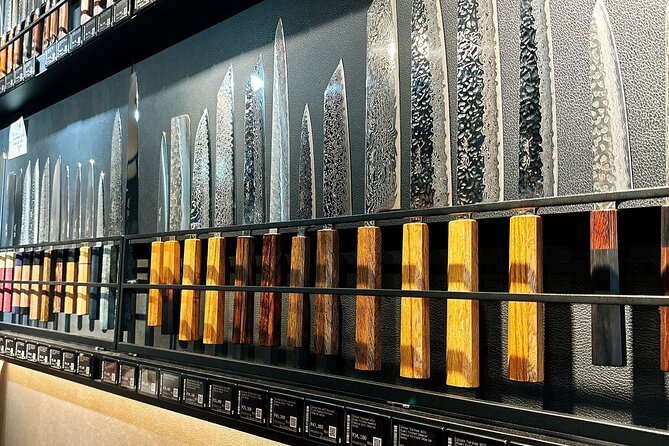
This kind of tour can go two ways: you either get a real guide who connects dots, or you get someone who just tells you where to stand. The difference shows up fast.
In the feedback for this tour style, guides like Masumi have been praised for sharing history and current knowledge, and Miyuki has been noted for being informative, pleasant, and responsive to what people want to see. Other named guides, including Erica, Pepito, and Yuko, also show up with comments about friendly guidance and strong local know-how.
You should still come ready to do some walking and ask questions. But a good guide can help you translate market chaos into a simple plan: where to look, what to buy, and when to move on.
If you’re traveling with family, it can help even more. A smaller group and a guided structure make it easier to keep everyone together without turning it into a “rush to the next stop” situation.
What you should expect to pay for tastings
Food and drinks are not included. That’s the main budget reality.
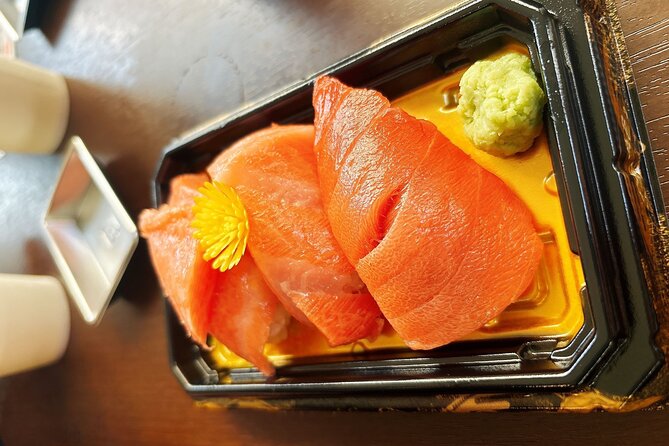
So you’ll likely spend extra yen on things you want to taste at Tsukiji. The good news is that this is part of the experience design. You’re not locked into a set menu you might not like. You can choose.
If you’re the type who needs a plan, consider setting a rough tasting budget before you start. You can also pace your purchases: a small first sample early, then a bigger buy later once you understand what’s good that day.
Also remember the matcha and wagashi add-on is optional and paid on-site. Decide while you’re there so you can match it to your energy and appetite.
Group size and timing: why 2.5 hours feels right
The tour runs about 2 hours 30 minutes. That’s long enough to cover Tsukiji Temple and market time, plus a full hour in Hama Rikyu.
Group size is capped at 12 travelers, which is a sweet spot for a walking tour. It’s small enough that you’re not lost in a crowd, but big enough to keep the energy moving along.
Morning timing helps. Markets can be active, and the tour is designed around that kind of flow. If you have a later lunch plan, you’ll usually still have time to eat afterward—because the tour doesn’t include lunch, you’ll decide how and where to continue.
Price and value: what $32.32 really covers
At $32.32 per person, you’re paying for guided time plus included admission to Hama Rikyu Gardens (300 yen per person). Both Tsukiji Hongwanji Temple and Tsukiji Jogai Market admission are listed as free in the itinerary, so the only ticket cost tied directly to admissions is the garden.
So what are you really buying?
- A guide who can structure the Tsukiji area into something you can follow.
- Time saved on sorting out routes and entry during a busy morning.
- Hama Rikyu Gardens entry without stopping your schedule for ticket management.
If you were to do it yourself, you’d spend time figuring out the sequence, and you might still miss the “what to notice” part that makes market walking satisfying. This tour pays for that clarity.
Is it the cheapest way? Probably not. Is it a good value for a guided food-and-garden morning? In my view, yes—especially if you want Tsukiji without the stress.
Where this tour fits best (and who might skip it)
This tour is a strong match if:
- You want a guided Tsukiji experience but don’t want to do full-on food tours with heavy restaurant stops.
- You like pairing “eat and learn” with a calm space afterward.
- You’re curious about Japanese etiquette and tea culture, even if you keep it optional.
You might skip it if:
- You hate walking or get sore feet quickly.
- You want a totally independent market adventure with zero structure. (Here, the value is the guidance.)
It’s also a good pick for first-time Tokyo visitors, because the stops are iconic and the tour keeps the morning organized.
Practical tips so your morning runs smoothly
Wear shoes you trust. Even when the itinerary is “only” 2.5 hours, markets mean steady steps and frequent small adjustments. You’ll also want to be ready for sensory intensity—smells and sound are part of Tsukiji’s reality.
Bring a little cash for on-site spending. Food and drinks aren’t included, and the optional matcha and wagashi add-on is around 1,000 yen. Even if you keep tastings light, that flexibility helps.
If you’re traveling with specific interests—seafood, fruit, wagashi, or garden design—tell your guide early. Good guides can shape the walk around what matters to you, instead of sticking to a fixed script.
Finally, if you’re the type who photographs everything, pace yourself. The best shots often come after you slow down for a moment, not while you’re moving at full speed.
Should you book this Tsukiji and Hama Rikyu walking tour?
If you want a Tokyo morning that balances food culture with a real break from city noise, I think this tour is worth booking. The small group size, the structured Tsukiji stops, and the included Hama Rikyu admission make it feel like a complete experience rather than a random checklist.
Book it if you’ll use the guide’s help to choose what to taste and what to notice. If you’d rather wander Tsukiji alone with no guidance, you might find it less compelling. For most people planning one good morning in this area, though, it’s a smart use of time—and your feet will at least agree you got your money’s worth.
FAQ
How long is the Tsukiji Food Strolling and Hama Rikyu Garden tour?
It runs about 2 hours 30 minutes.
What is the meeting point for the tour?
Meet at Starbucks Coffee – Tsukiji Station, located in Tokyo’s Chuo City area near Tsukiji Station.
Where does the tour end?
The tour ends at Hama Rikyu Gardens, with dismissal at the tea house.
What is included in the price?
The tour includes a local tour guide and admission to Hama Rikyu Gardens (300 yen per person).
Are lunch or drinks included?
No. Lunch, food, and drinks are not included, and you should purchase them individually.
Is matcha and wagashi included?
Matcha and wagashi are optional. If you want them, it’s available for about 1,000 yen and is paid on-site.
Do I need to pay for Tsukiji Hongwanji Temple or Tsukiji Jogai Market?
According to the itinerary, admission for Tsukiji Hongwanji Temple is free and admission for Tsukiji Jogai Market is free.
How large is the group?
The maximum group size is 12 travelers.
What is the cancellation policy?
Cancellation is free up to 24 hours in advance for a full refund. If you cancel less than 24 hours before the start time, the amount paid is not refunded.