REVIEW · TOKYO
Tsukiji Fish Market: Street Food Tour with Tasting
Book on Viator →Operated by Local Guide Stars · Bookable on Viator
Tokyo smells like sea air and soy markets. This Tsukiji tour is interesting because it turns a chaotic fish district into a guided, bite-by-bite lesson in how Japanese cooks build flavor, including a special wasabi set. I especially like the way guides (for example Kawa and Tomo) help you move through tight stalls smoothly and make food choices feel easy, even when it’s busy.
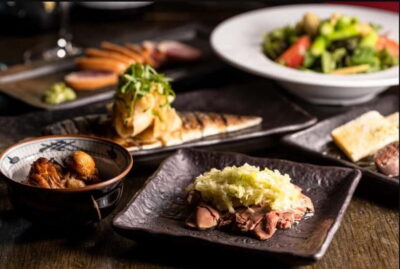
My other favorite part is the food itself: you’re not doing a random snack crawl. The tasting menu can include premium sushi or a seafood rice bowl, plus items like wagyu skewers, wagyu menchi katsu, tamagoyaki, grilled eel, shumai, and a strawberry dessert—so you get a real cross-section of what Tsukiji is good at.
One consideration: the market areas can be crowded, and you’ll spend a fair amount of time standing and walking. If you dislike crowds or need lots of seated breaks, this won’t feel relaxing.
In This Review
- Key Highlights to Look For
- Tsukiji Still Feels Like a Working Market
- What You’ll Eat: Tastings That Actually Cover the Map
- The flavor lesson you’ll take home
- Stop 1: Tsukiji Jogai Market Street Food (Getting Your Bearings Fast)
- What to watch for
- Stop 2: The Fish-Cutting Show and Your Seafood Bowl
- The umami angle (without getting too nerdy)
- Stop 3: Tsukiji Fish Market Atmosphere and Trader Rhythm
- The drawback here is simple
- Stop 4: Tsukiji Hongwanji Temple and the Cultural Link
- Price and Time: Does $97.55 Make Sense?
- Group Size, Tickets, and Where You’ll Meet
- What to Expect If You’re a First-Timer (or a Food Person)
- Practical Tips to Make This Tour Feel Effortless
- Should You Book This Tsukiji Street Food Tour?
- FAQ
- How long is the Tsukiji Fish Market street food tour with tasting?
- What is the price per person?
- How big is the group?
- Where do I meet for the tour?
- What food is included in the tasting?
- Is there a mobile ticket?
- Are any admissions included?
- Can I cancel for a refund?
Key Highlights to Look For
- Wasabi set built into the tasting, not tacked on at the end
- Fish-cutting show that explains craft and technique with a chef demonstration
- Street-food style sampling at the Tsukiji Jogai Market for fast orientation
- Professional trader atmosphere at the working fish market, not a staged show
- Small group size (max 15) for better access to guides and stalls
- Temple stop at Tsukiji Hongwanji that connects food culture and Buddhism
Tsukiji Still Feels Like a Working Market
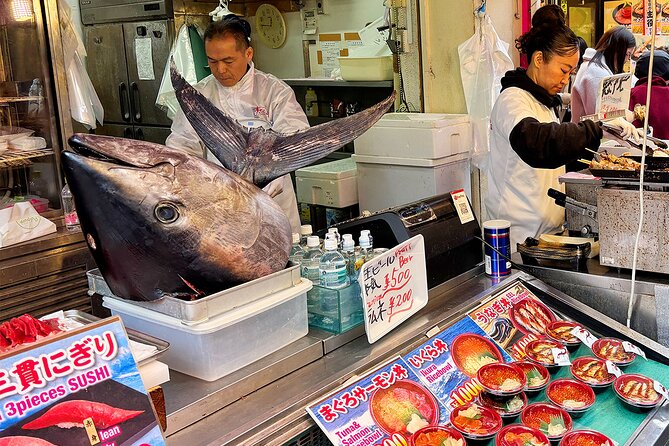
Tsukiji isn’t just a place to eat. It’s a place where trade happens. That matters because the tour doesn’t treat everything like a museum exhibit.
The structure is smart: you start with the market street-food world, then you get the craftsmanship lesson, then you end back in the real trader atmosphere. That order helps your brain connect the dots between food ingredients, how they’re handled, and why flavor in Japan often feels precise rather than loud.
With a maximum of 15 people, you’re not stuck in a giant herd. And since it runs about 2 hours, you can fit it without losing an entire morning.
You can also read our reviews of more food & drink experiences in Tokyo



What You’ll Eat: Tastings That Actually Cover the Map
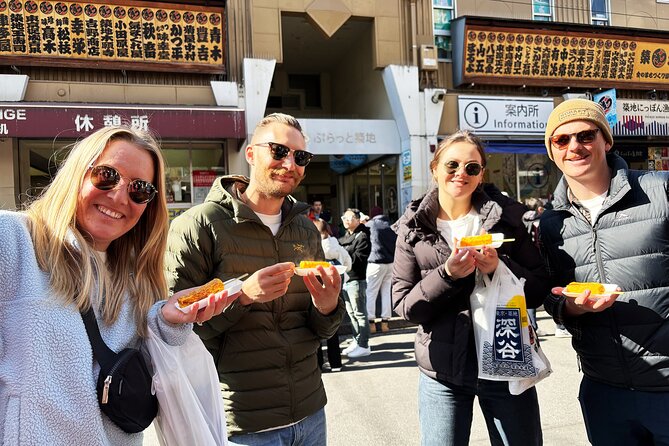
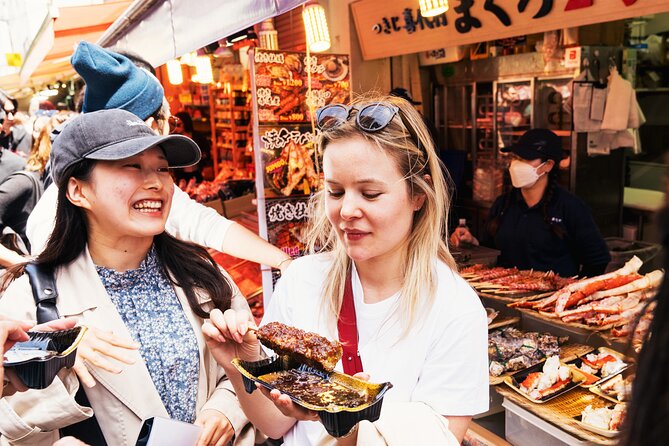
The tasting list is where the value becomes real. You’re getting a mix of seafood and Japanese comfort food textures, plus a couple of “you can only really appreciate this in context” bites.
Here’s what the set includes (your exact selection may vary depending on the set the guide provides):
- Premium sushi or a seafood rice bowl
- Wagyu beef skewer
- Wagyu menchi katsu (a Japanese-style croquette)
- Tamagoyaki (sweet omelette)
- Grilled eel
- Shumai (dumpling)
- Strawberry dessert
Then there’s the extra flavor upgrade: the guide’s special wasabi set. This is important. Wasabi in a casual tourist setup is often just “heat.” Here, it’s treated like an ingredient that changes the balance of raw or delicate seafood flavors.
A small but meaningful pro move: guides like Tomo are known for asking questions on your behalf at stalls. That helps if you want to understand what you’re tasting without stopping the group or guessing.
The flavor lesson you’ll take home
Japanese cooking often aims for clarity: umami, sweetness, salt, and texture in the right order. The tour hints at how that happens through:
- How seafood is preserved and handled
- Craft choices (cutting, grilling, and shaping)
- Pairing logic, especially wasabi with seafood
Even if you don’t care about cooking theory, you’ll feel the difference on your tongue.
Stop 1: Tsukiji Jogai Market Street Food (Getting Your Bearings Fast)
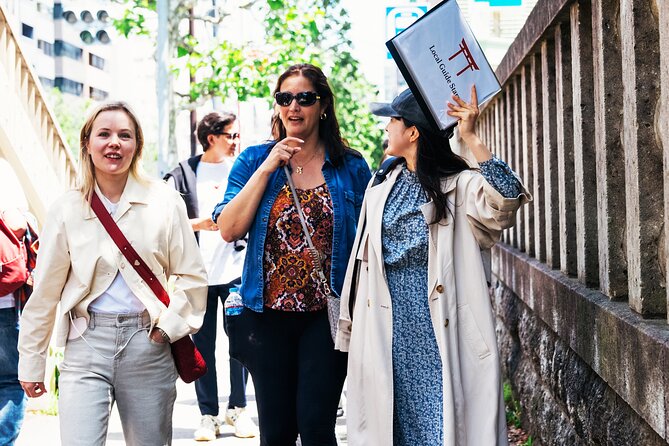
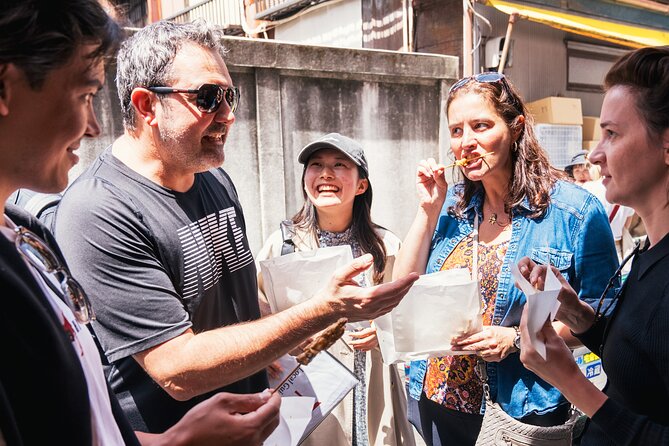
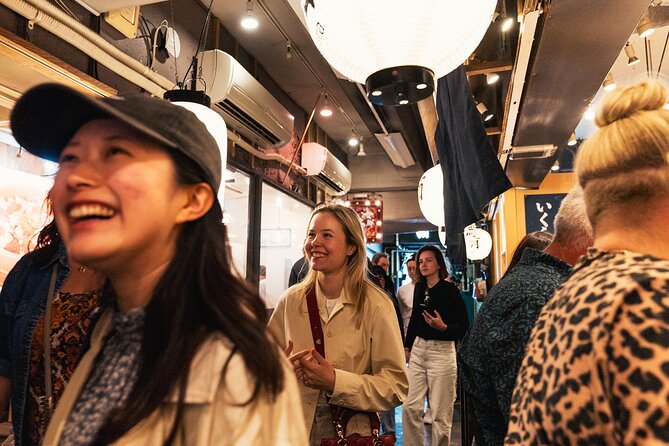
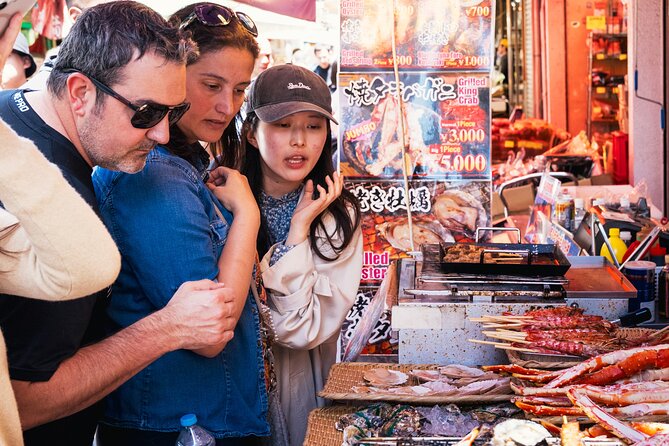
You’ll begin at Tsukiji Jogai Market, and the first 45 minutes are all about orientation. This is where the guide helps you connect the busy visual chaos to something you can actually enjoy.
In a place like Tsukiji, wandering alone usually turns into one of two problems:
1) You end up chasing what looks good but isn’t explained.
2) You waste time in lines because you didn’t know what to order.
A guide fixes that. They pace you, point you toward the street-food stalls that match the tasting plan, and keep the group moving so you can focus on eating rather than figuring out the logistics of being hungry in public.
What to watch for
Jogai market areas can feel loud and fast. Wear shoes that handle uneven ground and crowds. You’ll want to eat without constantly adjusting bags or stepping around people.
You can also read our reviews of more tours and experiences in Tokyo



Stop 2: The Fish-Cutting Show and Your Seafood Bowl
Next comes the chef demonstration: an exclusive fish-cutting show where a skilled chef fillets a whole fish using traditional techniques. This is only about 30 minutes, but it’s the part that makes the rest of the tasting feel more grounded.
Why I like this stop: it puts food craftsmanship in plain sight. You’ll see the care that goes into turning a whole fish into usable cuts. That matters because texture and flavor depend on more than sauce and heat.
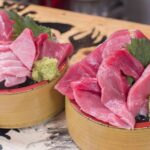
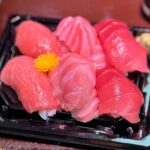
After the cutting show, you’ll enjoy a fresh seafood bowl. This is a clever setup: you watch how fish is prepared, then you eat the result before the details blur.
The umami angle (without getting too nerdy)
The tour also points you toward traditional preservation techniques that help enhance umami. You don’t need a textbook for this. Once you taste, you’ll understand the idea: better handling and smart preservation can make seafood taste more “complete,” not just salty or fishy.
Stop 3: Tsukiji Fish Market Atmosphere and Trader Rhythm
Then you move into the Tsukiji Fish Market zone for 30 minutes—this is where you see professional traders operating.
This stop is shorter than some people expect, but it’s long enough to do two things:
- Notice how fast the workflow moves.
- Realize why a guided tour helps you catch what’s happening.
If you’ve ever walked into a working market and felt like you were watching from behind glass, this section helps you feel the tempo more directly. You’re not meant to be a trader. You’re meant to understand the environment that produces the food.
The drawback here is simple
You may not be able to control noise, crowding, or pacing in this area. The upside is you’re getting the “real” Tsukiji feel, not just a photo-friendly version.
Stop 4: Tsukiji Hongwanji Temple and the Cultural Link
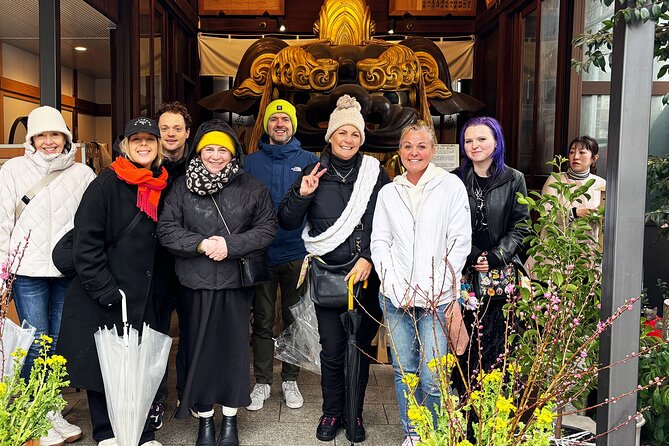
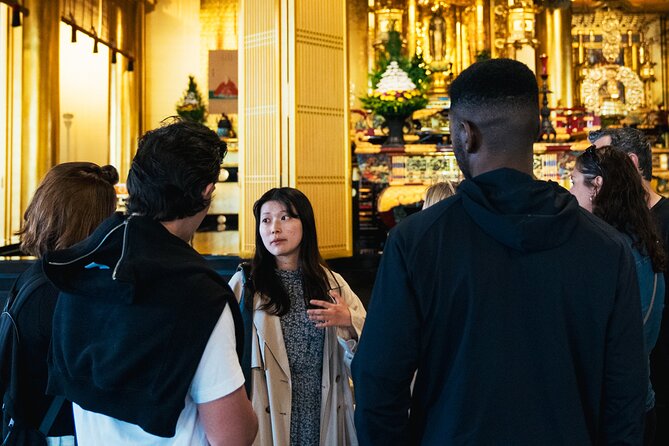
At Tsukiji Hongwanji Temple, you get a 15-minute cultural stop with a local guide. You’ll enter the temple and learn about its charm, plus culture and history tied to Buddhism.
Is this a food stop? Not directly. But it’s relevant. Japanese food culture isn’t only technique. It’s also worldview—ritual, respect, and how communities organize daily life.
I find these short temple stops work well when they’re not too long. Here, it’s brief enough to keep the tour focused on eating, yet it adds context you’d miss if you only chase snacks.
Price and Time: Does $97.55 Make Sense?
At $97.55 per person for about 2 hours, this is the kind of tour that’s often a good value when you want more than one bite.
Here’s why the math feels fair:
- You get a full tasting menu with multiple categories (seafood, fried/croquette-style, omelette, grilled items, dessert).
- You get wasabi set flavor support, which you’d otherwise have to find and purchase on your own.
- A guide handles the “what do I order” part, which saves time in a place where time gets expensive quickly (in the form of queues and confusion).
Could you eat similar items alone for less? Maybe. But Tsukiji is not where you want to spend your first hour learning where things are. This tour buys you structure.
For me, the key value question is this: do you want to eat a bunch of excellent bites with context in a short time? If yes, the price lands in the reasonable range.
Group Size, Tickets, and Where You’ll Meet
You’ll meet at 築地本願寺本堂3-chōme-15-1 Tsukiji, Chuo City, Tokyo 104-0045, Japan. The tour ends back at the meeting point.
Logistically, the tour is described as near public transportation, and the ticket is mobile. You’ll also receive confirmation at booking time.
With a maximum of 15 travelers, you typically get enough attention to ask questions at stalls without feeling like the guide is racing past you.
One more practical point: since it’s about 2 hours, it’s a good fit for travelers who want a serious food hit early without disrupting your whole day.
What to Expect If You’re a First-Timer (or a Food Person)
This tour suits you if:
- You want street-food style tastings with clear ordering and pacing
- You like seafood and also enjoy Japanese comfort foods like katsu and shumai
- You’d rather learn how food is handled than just eat it
- You’re okay with standing and walking in a busy market area
- You want a mix of food plus culture at the temple
If you prefer a slow, self-directed stroll with long stops and lots of personal choice, you might feel boxed in. The tour is designed to move.
Also, because the list includes items like grilled eel and wagyu, it’s geared toward people who want more than generic snacks. You’ll leave fed, not merely “satisfied.”
Practical Tips to Make This Tour Feel Effortless
A few things will help you enjoy it more:
- Wear comfortable shoes with grip. Market floors aren’t always predictable.
- Bring a small bag you can keep close. Crowds make loose handling annoying fast.
- Eat calmly. This is about tasting, not gulping.
- If you have dietary restrictions, ask clearly when the guide starts. The tour is structured around a set menu, so it’s best to coordinate early.
And one small mental trick: treat the wasabi set as part of the tasting, not an optional extra. You’ll learn more that way.
Should You Book This Tsukiji Street Food Tour?
Book it if you want a guided Tsukiji experience that balances real market atmosphere with hands-on flavor learning. The best reason to say yes is the combination: premium seafood or rice bowl, multiple classic Japanese items, and a guide-led wasabi set that makes the tasting feel intentional.
Skip it if you hate crowds and want a relaxed pace with lots of downtime. Also skip if you’re the type who wants to wander and choose everything alone. This tour is structured, and that’s the point.
If you’re on your first Tokyo trip and you want one high-impact food plan in a working market, this is a strong choice.
FAQ
How long is the Tsukiji Fish Market street food tour with tasting?
The tour lasts about 2 hours.
What is the price per person?
The price is $97.55 per person.
How big is the group?
The tour has a maximum of 15 travelers.
Where do I meet for the tour?
The meeting point is 築地本願寺本堂3-chōme-15-1 Tsukiji, Chuo City, Tokyo 104-0045, Japan.
What food is included in the tasting?
The set can include premium sushi or a seafood rice bowl, wagyu beef skewer, wagyu menchi katsu, tamagoyaki, grilled eel, shumai, and a strawberry dessert. You’ll also get a special wasabi set by your guide.
Is there a mobile ticket?
Yes, the tour uses a mobile ticket.
Are any admissions included?
Some stops are listed as admission free, and the fish-cutting show includes admission.
Can I cancel for a refund?
Yes. You can cancel up to 24 hours before the experience for a full refund. If you cancel less than 24 hours before, the amount paid is not refunded.