REVIEW · TOKYO
Tokyo : Yanaka and Nezu-Old Traditional Town Cultural Experience
Book on Viator →Operated by Undiscovered Tokyo Tours · Bookable on Viator
Old Tokyo still breathes in Yanaka. This small-group cultural stroll is built around quiet shrines and temple stops, with guide Sui adding the kind of context you usually only get from locals. I especially liked how she explained what’s going on at Nezu Shrine and how to handle the shrine-temple etiquette without fuss, plus I loved the chance to end at Yanaka Ginza for local snacks and souvenirs.
The one thing to consider: this is a walking-focused 3.5-hour tour, so if you want big, sit-down museum time, you might feel like you move too fast. Still, the pace is relaxed, and the stops are short on purpose, so you can see more old neighborhood texture without tiring out.
In This Review
- Key things you will actually notice
- Why Yanaka and Nezu feel like Tokyo before the crowds
- Starting with Sui: what makes this tour work
- Nippori meeting point and a comfortable pace for 3.5 hours
- Nezu Shrine: the torii path, praying steps, and a fortune
- Tennoji Temple: a quick hit of calm and garden views
- Yanaka District: seeing Meiji, Taishō, and Showa traces on real streets
- A slower Nezu neighborhood walk with old and new side by side
- Yanaka Cemetery: scenic grounds and a chance to slow down
- Pass the 100-year Himalayan cedar: a small roadside marker with weight
- Yuyake Dandan: the sunset staircase photo stop
- The 200-year bathhouse turned art gallery, plus shop-house energy
- Yanaka Ginza: snack shopping with local recommendations
- Price and value: what $39.41 buys you in real time
- Who should book this tour, and who might not love it
- Quick FAQ for planning your Yanaka and Nezu day
- FAQ
- How long is the Yanaka and Nezu tour?
- Where do I meet, and do I return there?
- What are the main stops on the walk?
- Is admission included for entry places?
- How big is the group?
- What’s the cancellation policy?
- Should you book this Yanaka and Nezu tour?
Key things you will actually notice
- Nezu Shrine torii approach and wish + fortune moments, explained in plain language
- Sui’s temple and shrine guidance, including what visitors typically should pay attention to
- Yanaka’s layered eras in real streets, from Meiji to Taishō to Showa-period leftovers
- Photo stops that are actually worth the stop time, including Yuyake Dandan
- Cemetery scenery and calm breaks that add a reflective side to the walk
- Yanaka Ginza snack-and-souvenir time where you choose what you want to eat
Why Yanaka and Nezu feel like Tokyo before the crowds
If your Tokyo plan is all bright lights and packed trains, Yanaka and Nezu offer a very different beat. This tour centers on older neighborhood streets where you can see everyday life, smaller shops, and temple grounds that feel less like a checklist.
I like that the experience doesn’t rush you into major landmarks. Instead, you get small moments: a shrine path lined with torii gates, temple calm, old shopfronts, and street-level details that are easy to miss if you’re just passing through on your own.
Even better, you’re walking through areas tied to multiple eras of Japanese city life. You’re not just learning history in the abstract; you’re seeing remnants of building styles and neighborhood rhythms that still show up on the sidewalks.
You can also read our reviews of more tours and experiences in Tokyo.



Starting with Sui: what makes this tour work
The guide can make or break a small-group neighborhood walk, and this one has a strong track record. Sui comes through as friendly and highly engaging, with English that’s easy to follow. You’ll get explanations that don’t feel like memorized facts, and that matters because temples and shrines can be confusing if nobody tells you what you’re looking at.
From the way the tour is described, Sui’s strength is practical context: why temples and shrines matter, what to notice, and how to behave respectfully. That kind of guidance helps you feel confident walking through sacred spaces, not like you’re intruding.
The group size stays small—up to 9 people—which keeps the walk from turning into a conga line. You still move at an orderly pace, but you’re not stuck behind a wall of other tourists.
Nippori meeting point and a comfortable pace for 3.5 hours
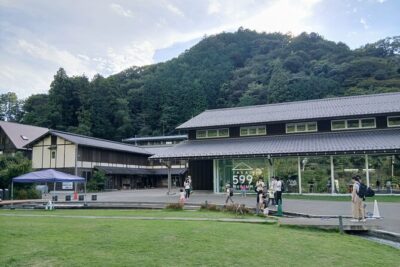
You meet at Nippori Station (2 Chome-19 Nishinippori, Arakawa City, Tokyo). The tour ends back at the same meeting point, so you’re not forced to re-plan transport at the end.
The route is designed for a 3 hours 30 minutes experience with multiple short stops. That’s a sweet spot for many first-time Tokyo visitors: enough time to see real neighborhood character, but not so long that you’re dragging yourself by the last photo.
The pace also matters. Reviews highlight that the walk doesn’t feel like a sprint. Expect a steady rhythm where you can pause, look around, and actually absorb what you’re seeing, especially at shrines, temple grounds, and viewpoints.
Nezu Shrine: the torii path, praying steps, and a fortune
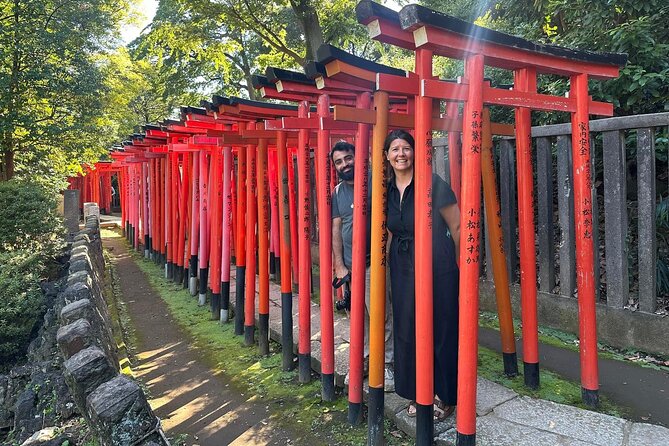
Nezu Shrine is where the tour’s tone really sets. You’ll spend about 30 minutes here, and it’s easy to see why people remember it: the approach path is lined with torii gates, and the whole place feels like a calm break from city noise.
What makes this stop useful is that you don’t just walk through. You learn how people pray here, how visitors write a wish, and how the fortune telling works. Having those steps explained in simple terms turns the shrine from a pretty photo location into something you can participate in thoughtfully.
This is also one of the best places for learning “in the moment.” When you’re standing in front of the elements of the ritual, the guide’s explanations click faster than reading a guidebook after the fact.
Tennoji Temple: a quick hit of calm and garden views
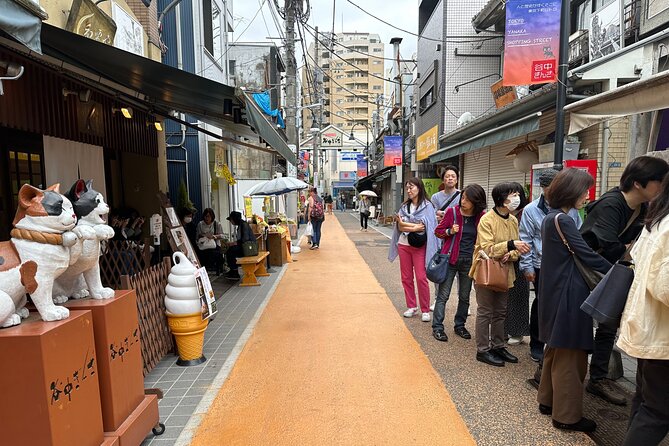
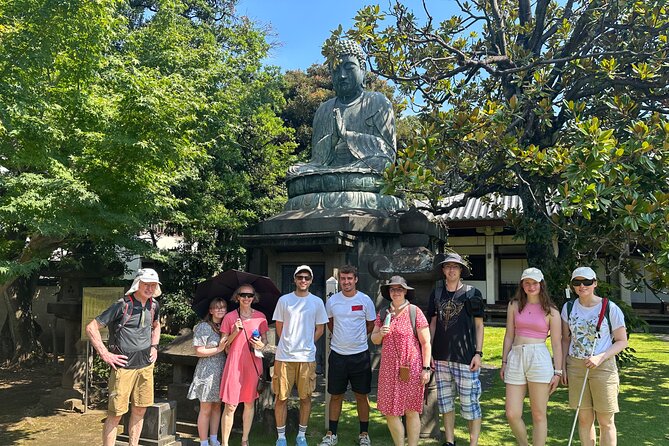
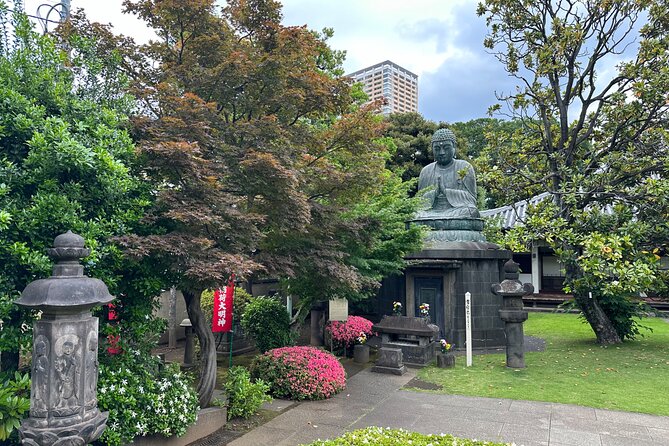
Next comes Tennoji Temple, a stop that’s shorter—about 5 minutes—but intentionally so. You’ll see a large bronze seated image of Buddha and take a quiet moment in the spiritual setting of the Yanaka area.
Why this works: the tour isn’t trying to turn every stop into a long lecture. It gives you a taste of temple atmosphere, including the surrounding garden view, then moves you onward so you can keep your energy for the neighborhood walking.
If you’re the type who likes variety—one calm moment, then street-level exploration—this short temple stop is a good fit.






Yanaka District: seeing Meiji, Taishō, and Showa traces on real streets
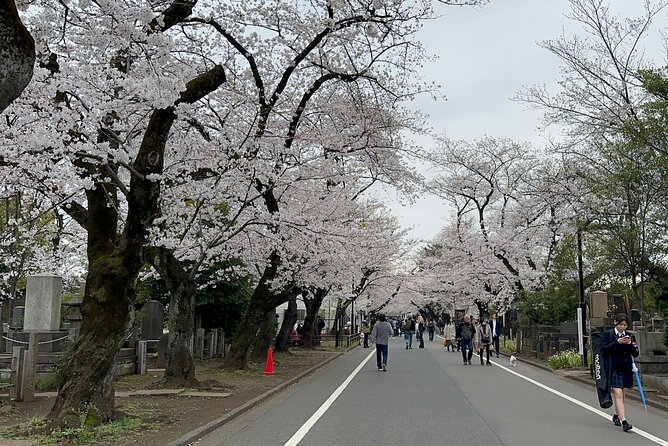
About 50 minutes goes to the Yanaka District, and that’s a big chunk. Here, the tour focuses on the physical remnants of older Tokyo rather than only indoor sights.
You’ll notice building remains that reflect Meiji Period, Taishō period, and Showa period influences. That layered look is what makes Yanaka different from generic “old-town” areas that can feel staged. You’re seeing small shops that have been passed down, plus the kind of street textures that don’t show up in the highest-profile districts.
This is also where Sui’s local recommendations come in. You’ll be able to ask questions while you walk—questions about what you’re seeing and how to interpret it—without needing to steer the tour yourself.
A practical tip: bring your slow-walking attention. This part rewards you for looking at storefront details and street layout, not just scenery at the end of the block.
A slower Nezu neighborhood walk with old and new side by side
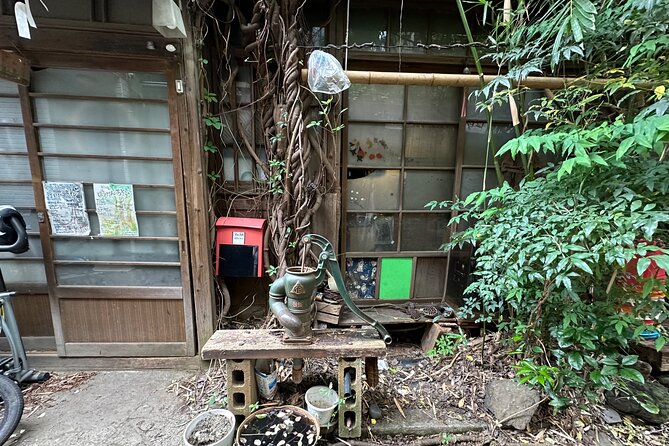
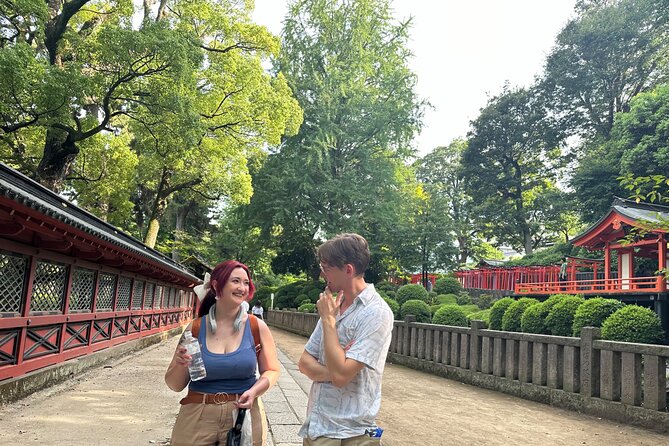
After Yanaka District, you get about 30 minutes in Nezu—another residential-feeling area where the tour leans into everyday streets. You’ll move at a slower pace with an experienced guide who knows the neighborhood well.
This stop is built for contrasts: old and new houses, plus older shops that still feel like they belong to the neighborhood rather than to tourists. It’s the kind of walk that helps you understand Tokyo as a living city, not just a collection of sights.
The value here is that the guide helps you read the street. Without explanation, you might see homes and move on. With explanation, those streets become clues to how the neighborhood developed and how people still use these spaces today.
Yanaka Cemetery: scenic grounds and a chance to slow down
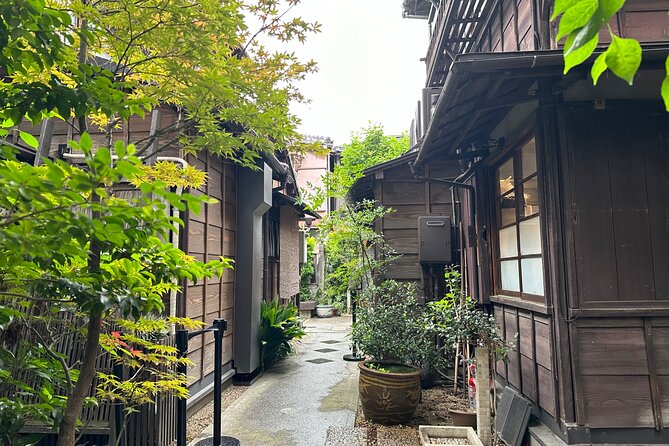
You’ll spend about 20 minutes at Yanaka Cemetery. It’s known as one of Tokyo’s larger and more scenic cemetery areas, and many important figures are buried there.
Even if cemetery visits aren’t your usual thing, this stop works on a tour because it changes the pace. Instead of shopping and sightseeing intensity, you get a calmer, more reflective atmosphere. It’s a useful reset in the middle of the day.
And yes, you’ll see it as part of the neighborhood fabric, not as a detached stop. The tour keeps it respectful and grounded, which is important for places with solemn purpose.
Pass the 100-year Himalayan cedar: a small roadside marker with weight
Between the cemetery and the next highlights, you’ll pass a 100-year-old Himalayan cedar tree. This isn’t a long “stop and learn” moment, but it adds character to the walking route.
Little things like this matter in Tokyo neighborhood exploring. A tree like this becomes a landmark you remember later, and it also signals the depth of time you’re moving through on this route.
It’s the sort of detail you’d likely miss if you were walking without a guide, even if you were in the area.
Yuyake Dandan: the sunset staircase photo stop
Then comes one of the tour’s fastest moments: Yuyake Dandan, often called the sunset staircase. You get about 2 minutes here, mostly for a photo stop and quick viewpoint.
What makes it worth including is the pay-off: you can see the Yanaka Ginza street view from the staircase. Even without perfect lighting, it’s a visual way to connect the neighborhood hillsides to the main shopping street below.
Two minutes feels short, but the tour clearly treats this as a quick “grab the angle” moment. You’re not pulled away from the rest of the experience, and you don’t lose time chasing the wrong viewpoint.
The 200-year bathhouse turned art gallery, plus shop-house energy
After Yuyake Dandan, you’ll pass a 200-year-old bath house that’s been turned into an art gallery. The tour treats this as an in-between stop, a visual reminder of how older structures can gain a new life while keeping their bones.
From there, you move into Ueno Sakuragi Atari for about 15 minutes. This part is focused on wooden houses that have become shops. It’s a different kind of old-Tokyo experience—less shrine-calm and more street-level browsing through small storefronts.
The tour notes that the activity admission here is included, which helps justify the stop. Even if you don’t buy anything, you get a feel for the neighborhood’s small-scale commercial life.
Yanaka Ginza: snack shopping with local recommendations
The tour ends at Yanaka Ginza, an old shopping street where the guide brings the experience full circle. You’ll have about 10 minutes here, and the guide will introduce popular local street foods, Japanese desserts, and Japanese souvenirs.
This is a great final step because it lets you convert the walking and learning into choices you can take home. You pick what you want to eat or buy, and you’re doing it right where the neighborhood activity happens.
A small piece of advice: treat this as your first chance to taste Yanaka’s street-food style. If you love it, you can come back on another day and explore at your own speed.
Price and value: what $39.41 buys you in real time
The price is $39.41 per person, and the duration is about 3.5 hours. That’s a reasonable rate for a focused small-group neighborhood tour—especially because you’re not just walking around; you’re getting guided explanations at multiple key stops.
Most stops have free admission noted (including Nezu Shrine and Tennoji Temple). The one clearly marked exception is Ueno Sakuragi Atari, where the admission is included. So your money isn’t going entirely to logistics—it also covers guide time across a route that mixes sacred sites, street exploration, and shopping areas.
Also consider the booking rhythm: the tour is often booked about 38 days in advance on average. If your travel dates are fixed, booking earlier helps you lock in a time slot without compromise.
Finally, the experience uses a mobile ticket, which is convenient on a first Japan day when you’re still getting your bearings.
Who should book this tour, and who might not love it
I think this tour is ideal if you:
- Want a quieter, older-side Tokyo experience without hopping across the whole city
- Like walking neighborhoods and reading streets, not just seeing big attractions
- Appreciate shrine and temple context more than just pictures
- Want a guide who can explain what to do and how to act respectfully
You might skip it if you:
- Prefer long museum-style stops and lots of downtime
- Feel uncomfortable in places that require quiet attention and respectful behavior
- Don’t enjoy walking between multiple stops, even at a relaxed pace
One more fit check: this is described as a small-group experience with up to 9 travelers, so if you hate group crowds, this should feel manageable.
Quick FAQ for planning your Yanaka and Nezu day
FAQ
How long is the Yanaka and Nezu tour?
It runs for about 3 hours 30 minutes.
Where do I meet, and do I return there?
You start at Nippori Station (2 Chome-19 Nishinippori, Arakawa City, Tokyo 116-0013, Japan) and the tour ends back at the same meeting point.
What are the main stops on the walk?
You visit Nezu Shrine, Tennoji Temple, Yanaka District, a Nezu residential area walk, Yanaka Cemetery, Yuyake Dandan, Ueno Sakuragi Atari, and you finish at Yanaka Ginza.
Is admission included for entry places?
Nezu Shrine, Tennoji Temple, Yanaka District, Nezu area walking, Yanaka Cemetery, Yuyake Dandan, and Yanaka Ginza are listed as free admission. Ueno Sakuragi Atari has admission included.
How big is the group?
The tour has a maximum of 9 travelers.
What’s the cancellation policy?
You can cancel for a full refund if you cancel at least 24 hours before the experience starts. If you cancel less than 24 hours before, the amount paid isn’t refunded.
Should you book this Yanaka and Nezu tour?
Yes, if you want a Tokyo day that feels local and unforced, with Sui guiding you through temples, shrines, and older neighborhood streets at a steady, relaxed pace. The best part is that the experience focuses on understanding what you’re seeing—especially at Nezu Shrine—so your photos come with context.
Book it if you’re staying near Yanaka or you want an easy way to start your trip on the right foot. The price is fair for the time and the guided stops, and you end with the practical payoff of Yanaka Ginza snacks and souvenirs.
Pass if your priority is big, high-energy attractions with lots of downtime. This is calmer, slower, and more about street-level learning than headline sights.