REVIEW · TOKYO
Wagyu & Sake Pairing in Shinjuku – Steak, Shabu-Shabu & More
Book on Viator →Operated by Ninja Food Tours · Bookable on Viator
Sake and wagyu pair like a secret handshake. This Shinjuku experience pairs craft sake with a full wagyu course, plus you get real help deciphering Japanese menus so you’re not guessing what you’re eating. I also love that the menu walks you through wagyu differences by region and cooking style, not just one safe cut. The one thing to watch is the pace: it’s a lot of food in about 3 hours, so bring an appetite and go easy on big lunches.
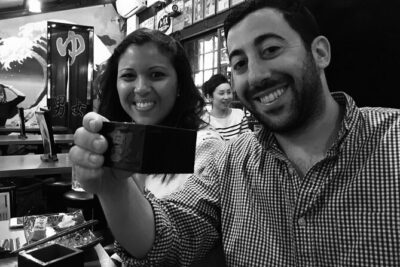
The best part is the format: you’re in a small group (max 8), you start with an aperitif and an explanation of what you’ll taste, then you move course-by-course with tailored sake pairings. It can feel more social than a solo dinner, and you’ll leave with practical take-home tips for spotting good sake and wagyu later in Tokyo. If you have dietary needs, plan ahead—vegan/vegetarian and gluten-free options are limited, and last-minute changes aren’t supported.
In This Review
- Key things to know before you go
- Why Wagyu and Sake in Shinjuku Works So Well
- The 3-Hour Flow: Aperitif Talk to Full-Course Finish
- Course 1: The Aperitif and the Lesson You’ll Actually Use
- The Wagyu Full-Course Meal: Cuts, Techniques, and What to Notice
- Appetizers: Your baseline for salt, fat, and aroma
- Tongue: A punchy way to understand wagyu richness
- Tataki and warm sake: The temperature match matters
- Sirloin steak with nigori: When creaminess meets creaminess
- Hotpot with unpasteurized sake: Umami goes fully on
- Dashi udon: The palate reset you didn’t know you needed
- Dessert with sake: A reminder that sake isn’t only for sipping
- Sake Pairing Strategy: Different Styles for Different Wagyu Bites
- Hosts Matter: Names You’ll Hear and the Style of Teaching
- The Small-Restaurant Reality: Personalized, But Go in Knowing It’s Tight
- Price and Value: What $148.65 Buys You in Real Terms
- Who This Tour Fits Best (and Who Might Skip It)
- Should You Book This Wagyu and Sake Pairing in Shinjuku?
- FAQ
- What is the duration of the Wagyu and Sake pairing in Shinjuku?
- What time does the tour start?
- How much does it cost per person?
- How many people are in the group?
- Where do we meet and where does it end?
- What’s included in the price?
- Are drinks like beer included?
- Can the tour accommodate dietary restrictions?
- Is there English support?
Key things to know before you go
- Small-group format (max 8) for more time with your host and better pacing during the meal
- Multiple wagyu cuts and preparations, including tongue, tataki, steak, hotpot, and udon in a single evening
- Sake pairing at each course, with examples that include nigori, warm sake, and unpasteurized sake
- Original sake cocktails designed specifically to match the wagyu you’re eating
- Menu support in Japanese plus tailored foodie tips for the rest of your trip
- A strong value angle: you’re paying for a full meal and lots of sake, not just a quick pour-and-go
Why Wagyu and Sake in Shinjuku Works So Well
If you love food but hate feeling lost, this is a smart kind of Tokyo night. Shinjuku is loud and packed, and Japanese menus can be intimidating—especially when you’re trying to order something as specific as wagyu grades or sake styles. This tour takes that stress out by pairing each course with explanations you can use right away.
The wagyu part isn’t treated like a single “wow bite.” You’ll taste different types of wagyu from multiple regions, then learn what separates wagyu from other beef. The sake part does the same job: instead of one generic pour, you’ll see how different brewing styles and serving methods change the flavor match.
For me, the pairing is the real headline. Fat, sweetness, and umami from wagyu behave differently depending on the cut and the cooking method. Craft sake does too. When you taste them together in an intentional sequence, everything starts clicking.
You can also read our reviews of more food & drink experiences in Tokyo


The 3-Hour Flow: Aperitif Talk to Full-Course Finish
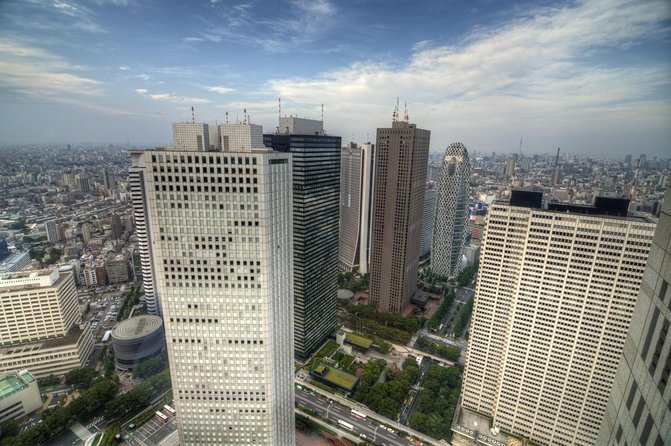
This is scheduled for 6:00 pm and runs about 3 hours. You meet at Ushinobi Shinjuku (NSK Building, 201, 1-chōme-22-1 Hyakuninchō, Shinjuku City, Tokyo 169-0073). It ends back at the same spot, so you don’t have to plan a second half of the night.
You’ll start inside with an aperitif—described as some unique Japanese drinks—then talk about sake and wagyu: history, relevance, and regional differences. After that comes the wagyu full-course meal, where you’ll taste multiple cuts in different preparation styles.
Finally, you’ll finish with dessert that includes sake, plus a surprise element. One of the consistent themes in the reviews is that the meal and pours feel generous—so don’t schedule anything right after.
Course 1: The Aperitif and the Lesson You’ll Actually Use
The evening begins with you being welcomed into the restaurant and getting drinks before the food hits. That matters because it sets the stage: you’re not just eating; you’re learning how to taste. You’ll get an explanation of sake and wagyu, including how regional differences show up in flavor.
This is also where the menu-decoding help pays off. If you’ve ever stared at Japanese wine or sake terminology and wished for a cheat sheet, this tour aims to fix that. The point isn’t trivia. The point is understanding so you can order on your own later.
In reviews, hosts like Chi and Miyuki were singled out for being engaging and welcoming, and Tadashi for going deeper into the systems behind wagyu and sake. That kind of “teach while you eat” rhythm is exactly what makes a short tour feel complete.
The Wagyu Full-Course Meal: Cuts, Techniques, and What to Notice
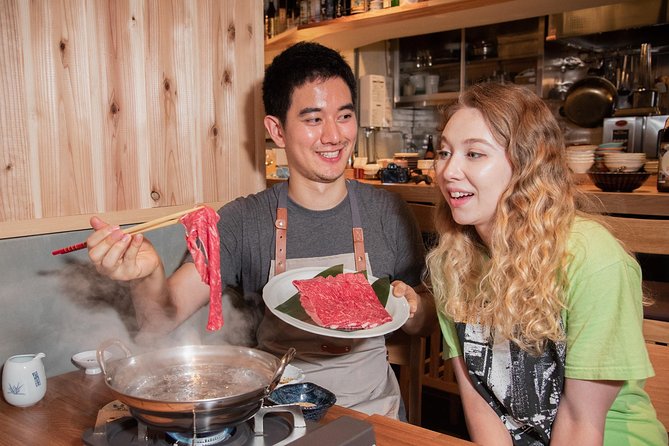
You’ll get a wagyu full-course meal with different types of wagyu from many regions in Japan. The operator notes that the best cuts available for your date are used, so don’t expect every single course to be identical across every day—but you can expect a similar structure and variety.
A common example menu includes:
- Two kinds of appetizers
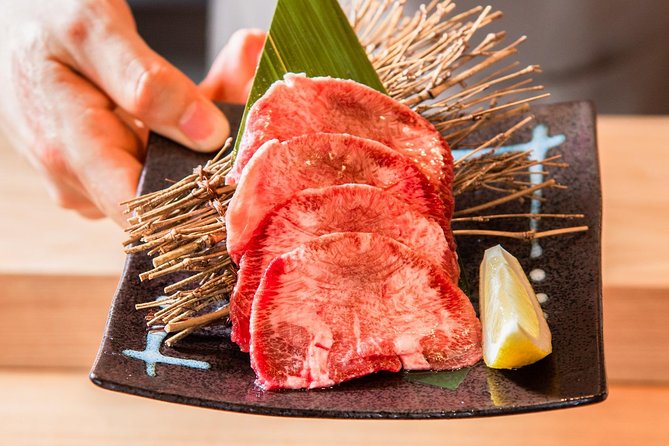
- Grilled wagyu beef tongue
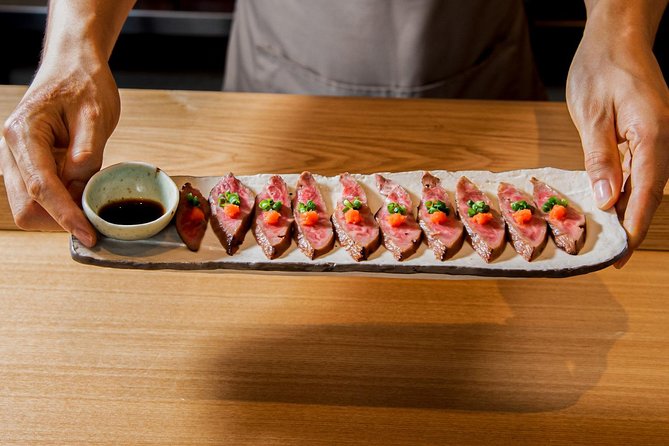
- Wagyu chuck flap tataki with warm sake
- Seasonal salad
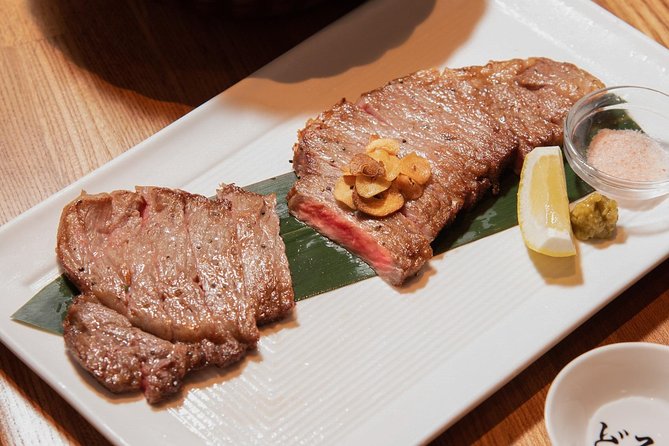
- Wagyu sirloin steak with nigori
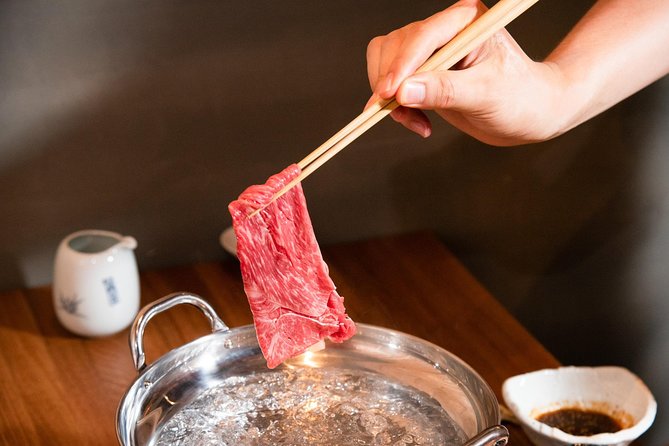
- Wagyu chuck hotpot with unpasteurized sake
- Wagyu dashi udon
- Dessert: sake with a surprise
Here’s how to approach each course so you get more out of it.
Appetizers: Your baseline for salt, fat, and aroma
Appetizers set the baseline for how the rest of the meal will taste. You’ll get two different starters, which helps you notice texture and seasoning early. This is also where you begin to calibrate your palate for what the sake pairing will do.
You can also read our reviews of more drinking tours in Tokyo


Tongue: A punchy way to understand wagyu richness
Grilled wagyu beef tongue is a great choice for a tasting tour because tongue has a distinct flavor profile and a satisfying chew. It shows you how wagyu’s richness isn’t just about tenderness—it’s also about depth of taste.
Tataki and warm sake: The temperature match matters
Wagyu chuck flap tataki (served with warm sake) is about contrast. Tataki tends to hit with a charred aroma and a slightly different fat behavior than fully cooked steak. Warm sake can amplify certain notes that cold served sake keeps quieter.
Sirloin steak with nigori: When creaminess meets creaminess
Wagyu sirloin steak paired with nigori is an especially good learning moment. Nigori sake tends to feel creamy or softly textured, and that changes how the steak’s richness lands on your tongue. You’ll start noticing how the same wagyu can feel different depending on the pairing.
Hotpot with unpasteurized sake: Umami goes fully on
The wagyu chuck hotpot paired with unpasteurized sake is heavy on comfort flavor—broth, fat, and aroma all working together. Unpasteurized sake can bring a fuller, lively profile, which usually makes the whole bite feel more intense.
Dashi udon: The palate reset you didn’t know you needed
Wagyu dashi udon is a smart ending to the savory run. It brings broth-based refreshment after rich meats. It also lets you taste how wagyu flavor shows up in liquids, not just on plates.
Dessert with sake: A reminder that sake isn’t only for sipping
Dessert with sake might sound unusual if you think of sake only as a drink. But the goal here is balance—sweetness plus fermentation character. The surprise element is part of the fun, and it’s also a way to end on a note that feels distinctly Japanese.
Sake Pairing Strategy: Different Styles for Different Wagyu Bites
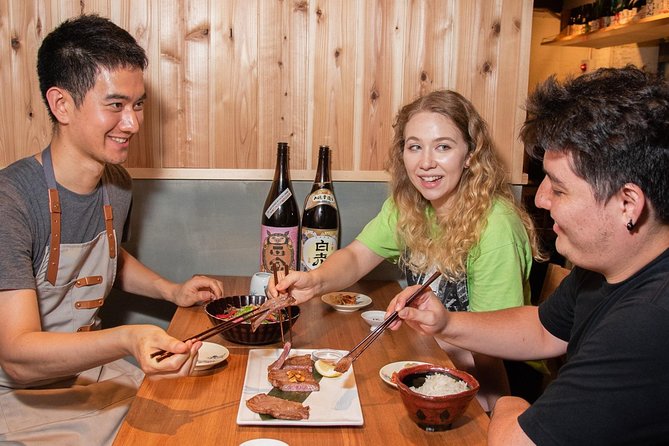
This tour is built around sake prepared in different ways for each wagyu dish. Instead of one standard pairing, you’re tasting multiple styles across the evening. The examples show that you might see:
- Nigori with steak
- Warm sake with tataki
- Unpasteurized sake with hotpot
- Cocktails and course-specific pairings designed for the menu
There are also “original cocktails” described as made by the team specifically to match the wagyu. One review specifically mentioned tasting aged sake and fermented sake paired with A5 wagyu, which tells you the range can go beyond basic sake categories.
A useful way to think about this: sake isn’t just alcohol. It’s acidity, texture, aroma, and sweetness, all changing from glass to glass. When you taste it with different cuts—tongue, tataki, steak, and hotpot—you learn how to predict pairings in your own future Tokyo meals.
Hosts Matter: Names You’ll Hear and the Style of Teaching
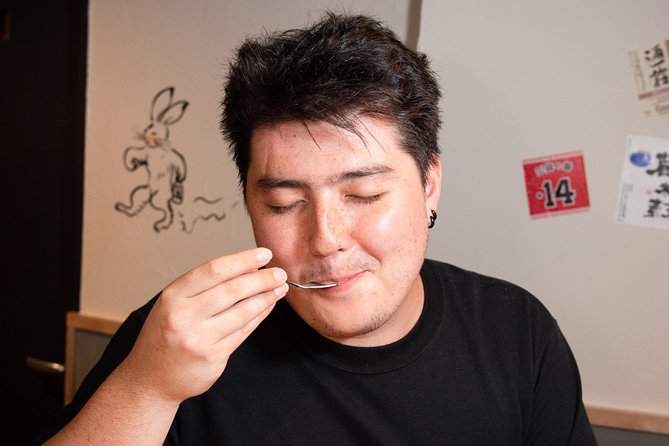
Food tours succeed or fail based on the host, and this one leans hard into that. Reviews consistently praise hosts like Joe, Tadashi, Andrea, Miyuki, and Chi for being engaging and good at explaining what’s on your plate.
What I like about this setup is that the explanations aren’t stuck in a lecture. One review mentioned learning the grading system of the meat, how sake is made, and even getting to take part in preparing and cooking the food. Even if you don’t get every hands-on moment on your date, the format is designed to keep you connected to the meal.
Also, several reviews point out that English support made it easy to understand. That matters in Shinjuku, because good sake and wagyu ordering can be confusing fast. If you want to feel confident walking out—this helps.
The Small-Restaurant Reality: Personalized, But Go in Knowing It’s Tight
This activity is capped at 8 travelers, which is exactly why the experience feels personal. Smaller groups also make it easier for the staff to pace the meal course-by-course.
The downside is physical space. One review flagged that the place felt small, with people sitting close together. That doesn’t mean it’s uncomfortable for everyone, but it’s worth knowing if you’re someone who prefers lots of elbow room.
My advice: come with the mindset of “food class with friends.” You’re here to taste, learn, and share attention with the group.
Price and Value: What $148.65 Buys You in Real Terms
At $148.65 per person, this isn’t the cheapest night in Tokyo. But it’s also not trying to be. You’re paying for:
- A full wagyu course meal
- Japanese craft sake pairings across multiple dishes
- Help with menu deciphering in Japanese
- Take-away foodie tips for the rest of your trip
- A small-group host-led experience (max 8)
Several reviews highlight value in a way that matches this: one person said it felt like great value even if you counted the sake alone. Another said there was more food and sake than expected.
When a tour includes a full meal and multiple sake pairings, the price starts to look like the cost of eating out well—except you get instruction and structure. If you’ve struggled to find good wagyu and good bars on your own, paying for someone to steer you can easily save time and misorders.
Who This Tour Fits Best (and Who Might Skip It)
This is a great fit if you’re:
- Visiting Tokyo for the first time and want a guided route to two top food obsessions: wagyu and sake
- The kind of traveler who likes learning what makes food taste the way it does
- Nervous about ordering in Japanese and want help reading menus
- Looking for an evening that feels social but still focused
It may be less ideal if you:
- Have dietary needs beyond what’s available. Vegan, vegetarian, and gluten-free options are described as limited, and they ask you to message restrictions at least a week before. Last-minute requests may not be possible.
- Prefer lighter dinners. This is a full-course meal with multiple beef preparations and sake pairings, so it’s not a snack tour.
If you’re a sake beginner, you’ll likely leave with better instincts for what you like. If you’re more experienced, the chance to taste styles like nigori and unpasteurized sake with specific food pairings is still useful.
Should You Book This Wagyu and Sake Pairing in Shinjuku?
I’d book it if your goal is a focused Tokyo food night with payoff. The combination of multiple wagyu preparations, course-by-course sake pairings, and menu help hits the sweet spot for first-timers and returning food lovers alike. It’s also one of those experiences where the group size supports real conversation instead of feeling like you’re herded through.
I’d pause if you’re likely to feel overwhelmed by heavy meals or if your diet is strict. The tour is strict about food changes, and limited options aren’t a small detail—they’re central to whether you can enjoy the meal comfortably.
If you’re heading to Shinjuku anyway and you want a night that teaches you how to taste, this is a strong bet. You’ll walk out with clearer instincts for what to order next—and a full stomach to prove it.
FAQ
What is the duration of the Wagyu and Sake pairing in Shinjuku?
It lasts about 3 hours.
What time does the tour start?
The start time is 6:00 pm.
How much does it cost per person?
The price is $148.65 per person.
How many people are in the group?
The maximum group size is 8 travelers.
Where do we meet and where does it end?
You meet at Ushinobi Shinjuku (NSK Building, 201, 1-chōme-22-1 Hyakuninchō, Shinjuku City, Tokyo) and the activity ends back at the meeting point.
What’s included in the price?
The full course meal is included, along with sake pairings as part of the experience.
Are drinks like beer included?
Additional drinks other than the sake pairings (such as beer) are not included.
Can the tour accommodate dietary restrictions?
Vegan, vegetarian, and gluten-free options are limited. You’re asked to message any food restrictions at least a week before the tour date, and last-minute requests can’t be accommodated.
Is there English support?
The tour is described as helping you decipher menus in Japanese, and reviews mention English-speaking hosts, including native English speakers.