REVIEW · TOKYO
Private Mt. Fuji Day Trip from Tokyo with English-Speaking Driver
Book on Viator →Operated by Discover Sakura Japan · Bookable on Viator
Mt. Fuji is picky with the weather. This private day trip is built for a calm, photo-friendly tour of the Fuji area, with an English-speaking driver and a private vehicle so you can move on your schedule instead of being herded. You’ll hit high-impact spots like Oshino Hakkai and the Arakura Fuji Sengen Shrine viewpoint area.
I especially like the way the route mixes classic nature sights with easy cultural stops, so the day doesn’t feel like one long bus ride of lookouts. I also like that you can adjust the plan to your interests, which matters when visibility is good or when you want more time somewhere specific.
One thing to factor in: not everything is included. The Kachi-Kachi (Mt. Fuji Panoramic) Ropeway and Mt. Fuji 5th Station have extra entrance costs, so you’ll want to budget for those in advance.
In This Review
- Key highlights at a glance
- Private car and English-speaking driver: your Fuji-day advantage
- Price and logistics: what you’re really paying for
- Oshino Hakkai: eight ponds, one of Fuji’s best water stories
- Arakura Fuji Sengen Shrine and Chureito Pagoda: the classic photo with context
- Lake Kawaguchiko plus Oishi Park: choosing your Fuji angle
- Kachi-Kachi Ropeway: the extra ticket that can turn a good day into a great one
- Nenba Village (Saiko Iyashi no Sato Nenba) and the 1966 rebuild story
- Mt. Fuji 5th Station and Kitaguchi Hongu Fuji Sengen Jinja Shrine: views and meaning
- Lake Yamanaka and Gotemba Premium Outlets: finish with options that help
- When visibility fails: how to still enjoy the day
- Who should book this private Mt. Fuji day trip
- Should you book this tour?
- FAQ
- How long is the Mt. Fuji private day trip from Tokyo?
- What is the price and group size?
- Is hotel pick-up included?
- Is there an English-speaking driver?
- Is a mobile ticket included?
- Which major attractions are free versus extra cost?
- How flexible is the itinerary?
- How long do you spend at Oshino Hakkai and Lake Kawaguchiko?
- Where do you go for shopping?
- What’s the cancellation policy?
Key highlights at a glance
- Private, English-speaking driver: You get focused help navigating and timing without group pressure.
- Custom itinerary options: Swap in places like Shiraito Falls or Fuji Safari Park if they fit your day.
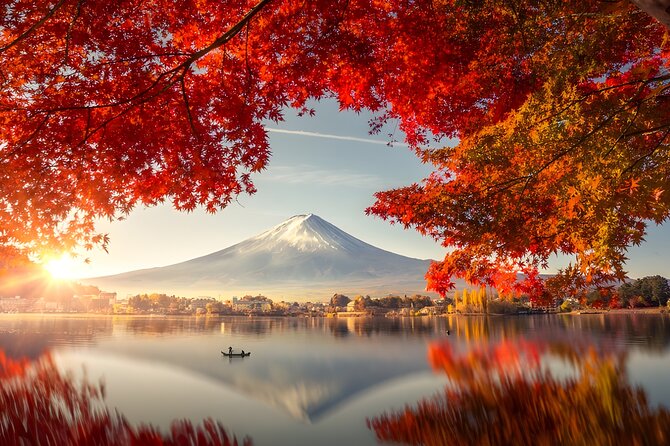
- Big scenery hits in short time windows: Oshino Hakkai, Chureito Pagoda, and two different lakes each bring a different view.
- Chureito Pagoda plus shrine context: You’re not only chasing photos; you learn what the place is.
- Seasonal flower timing at Oishi Park: Lavender in summer, red kochia in autumn, and strong Fuji angles.
- Finish with shopping at Gotemba: Useful if you want a practical end to a long day.
Private car and English-speaking driver: your Fuji-day advantage
The biggest value here is simple: you’re not sharing the drive. With a private vehicle and an English-speaking driver, you can keep the day smooth even if traffic is slow or if you want a short detour for photos. Fuji area roads can be a puzzle, especially if you’re bouncing between lakes and viewpoints. Having someone who can think ahead saves time and stress.
This is also the kind of trip where “timing” is half the experience. Early or late light changes how Mount Fuji looks, and it changes how crowded each stop feels. Since you’re not tied to a fixed group pace, you can generally spend an extra few minutes where the views are working and move on when they’re not.
And yes, the English support matters. Most of the on-foot time is free-flow, with insights given mostly while you’re between destinations. That style keeps things relaxed while still giving you context for what you’re seeing.
You can also read our reviews of more private tours in Tokyo

Price and logistics: what you’re really paying for
The price is $332.60 per group (up to 3 people) for about 10 hours total, including pickup and drop-off around central Tokyo hotels. That pricing model makes this tour feel more like a “private service” than a budget day trip. It’s also why it can be a great deal for small groups: if you’re traveling with a partner or a family member, you often end up splitting the cost of the car and driver.
What’s included is practical: bottled water, an air-conditioned vehicle, and fuel/parking/toll fees. Those small costs add up on your own, and they’re easy to forget when you’re planning a self-drive day.
What’s not included is where you should plan ahead:
- Mt. Fuji 5th Station: ¥2,100 per booking
- Mt. Fuji Panoramic (Kachi-Kachi) Ropeway: ¥1,000 per person
- Ropeway and 5th station admission can be the difference between a smooth day and a day where you’re scrambling for cash or tickets.
If you’re staying near Haneda, Narita, or Yokohama, there’s also an extra ¥10,000 per booking for pickup/drop-off. If you can, staying inside Tokyo makes your logistics easier.
Oshino Hakkai: eight ponds, one of Fuji’s best water stories
Your first meaningful stop is Oshino Hakkai, a cluster of eight clear spring ponds in the village of Oshino, in the Fuji Five Lakes area. It’s the kind of place where you get a quick lesson without it feeling like a museum. The water is the star, and you can see why people come even when the sky is ordinary.
This stop is scheduled for about 1 hour, and it’s free to enter. That’s a nice setup because you’re not burning budget early, and you’re building momentum for the rest of the day.
Practical tip: if the views of Fuji are faint that day, Oshino Hakkai still works. The ponds give you something solid to look at even when the famous peak is shy.
Arakura Fuji Sengen Shrine and Chureito Pagoda: the classic photo with context
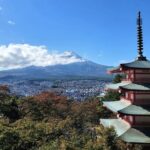
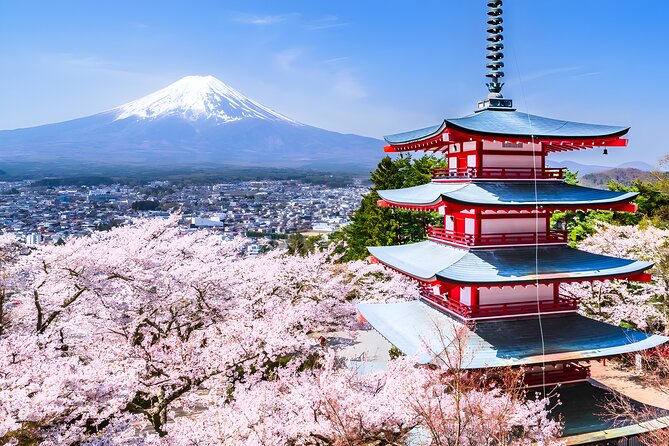
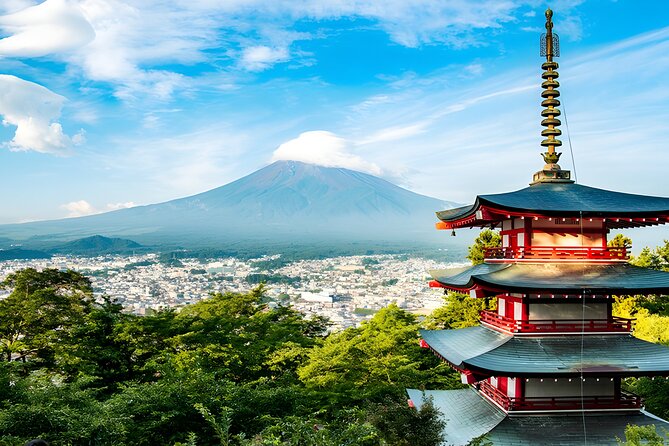
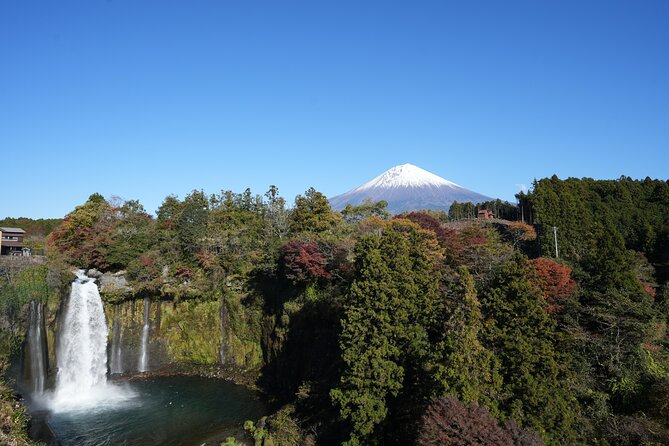
Next up is Arakura Fuji Sengen Shrine, commonly known for the Chureito Pagoda view area. The pagoda is a five-story structure on a mountainside, and Mount Fuji often lines up in the background. That’s why this is famous.
The tour keeps it easy: about 1 hour, and admission is free. You’ll get both the viewpoint and the shrine setting in one stop, which helps if you prefer more than just clicking photos.
Even if Fuji isn’t perfectly visible, this stop usually still feels rewarding because you’re getting a sense of how people frame the mountain here. This is one of those places where understanding the spot makes your photos better, not just taller.
Lake Kawaguchiko plus Oishi Park: choosing your Fuji angle
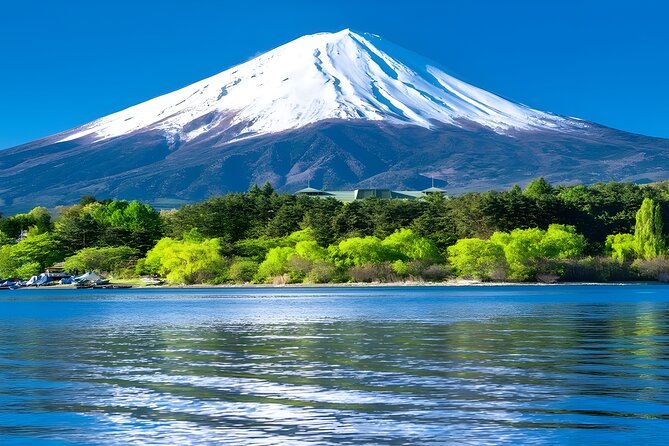
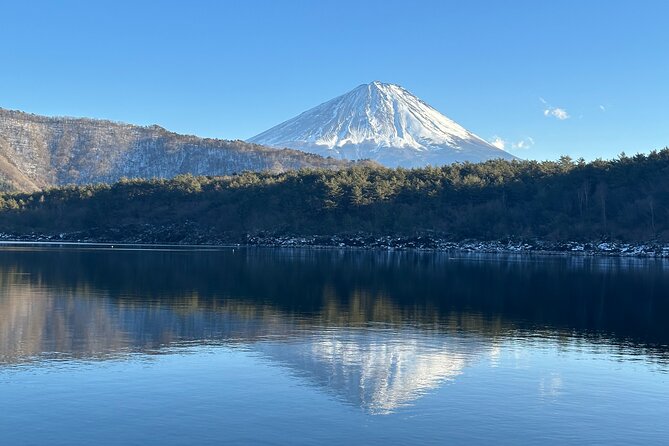
Then you move to Lake Kawaguchiko, often the best “gateway” lake for visitors. It’s the most visited of the Fuji Five Lakes, and it’s also the second largest by surface area. The tour allots about 30 minutes here, with free admission.
That short timing makes sense. You’re there for views and for getting your bearings. If you linger too long, you lose flexibility for the rest of the day.
After that comes Oishi Park on the north shore of Kawaguchiko for about 30 minutes. Oishi Park is especially known for seasonal flowers:
- lavender in summer
- red kochia in autumn
Even if you don’t care about flowers, the real value is that Oishi Park tends to deliver strong Mount Fuji angles. When Fuji is visible, it’s one of the easiest places to feel like you really earned your photos.
You can also read our reviews of more tours and experiences in Tokyo




Kachi-Kachi Ropeway: the extra ticket that can turn a good day into a great one
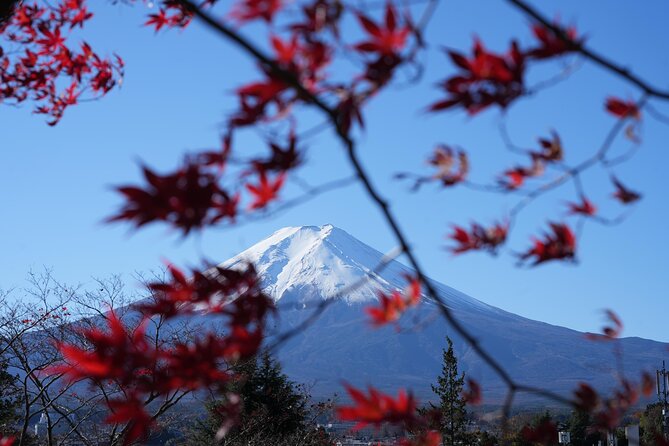
The itinerary includes time for the Mt. Fuji Panoramic Ropeway (often called Kachi-Kachi). The tour allots about 1 hour for this segment, but the ropeway ticket itself is not included—plan for ¥1,000 per person.
Why this is worth considering: it’s one of the simplest ways to change perspective without spending your day walking uphill. When you’re doing multiple lakes and shrines, a ride that gives you higher views can be a smart trade.
If you’re traveling with kids or anyone who doesn’t want a lot of stairs, the ropeway can also be a nice “sit and enjoy” break.
Nenba Village (Saiko Iyashi no Sato Nenba) and the 1966 rebuild story
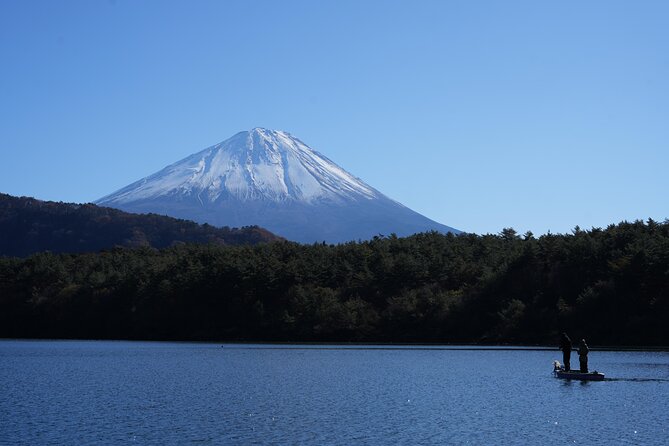
Depending on how your driver sets the timing, you may also visit Saiko Iyashi-no-Sato Nenba (Nenba Village) on the northwest shore of Lake Saiko. This stop is about 30 minutes.
Admission is not included, but the experience is very different from the other viewpoints. It’s a traditional thatched-roof village setup, rebuilt after a 1966 typhoon. So you’re looking at a place that carries a real survival-and-rebuild story, not only a staged postcard scene.
If Fuji visibility is weak that day, this stop helps keep the day interesting. You’re not only waiting for a perfect mountain view; you’re seeing how local life is represented in a preserved-style village.
Mt. Fuji 5th Station and Kitaguchi Hongu Fuji Sengen Jinja Shrine: views and meaning
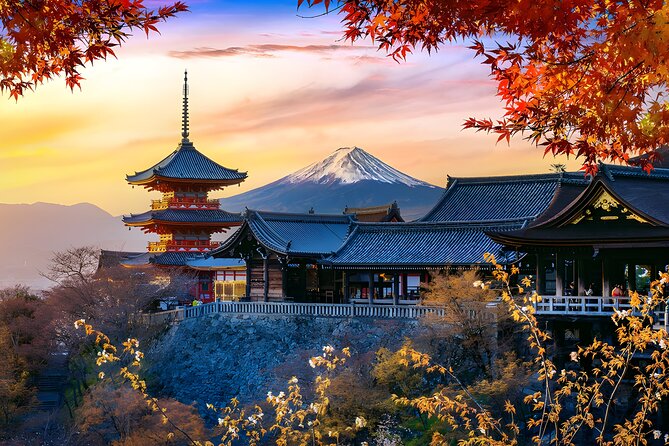
Time for a classic “closer to Fuji” moment: Mt. Fuji 5th Station. The tour gives about 1 hour here. Admission is not included, and there’s a listed ¥2,100 per booking fee.
This is at roughly 2,300 meters above sea level and it’s designed for both climbers and tourists. You’ll find shops and food, plus the kind of big, open viewpoint you feel in your bones.
Now, here’s the balanced part: not everyone wants the “summit feeling,” and 5th Station can be busy in peak seasons. The private format helps you manage that—if the line or crowd is annoying, you’re more likely to be able to adjust timing with less hassle than a fixed group.
Later you also visit Kitaguchi Hongu Fuji Sengen Jinja Shrine, about 1 hour and free. This shrine is one of around 1,300 Asama shrines dedicated to the deity of volcanoes, especially Mount Fuji. It’s also part of the Mount Fuji UNESCO World Cultural Heritage Site, which gives the stop real weight beyond the scenery.
If you like when a photo spot has a real story behind it, this is one of the best places on the route for that.
Lake Yamanaka and Gotemba Premium Outlets: finish with options that help
You then head to Lake Yamanaka, about 30 minutes with free admission. It’s the largest and highest of the Fuji Five Lakes, around 980 meters above sea level. It’s a good change of pace from Lake Kawaguchiko, and it often gives a different angle of Fuji.
The itinerary notes you can find activities like boating, cycling, and hot springs in the area, but for this tour, you’re really there for views and a relaxed stop rather than a full activity block.
Finally, you end with Gotemba Premium Outlets for about 1 hour. This is free to enter, and it’s a practical way to wrap a long day. If you’re traveling with family, shopping can be a low-stress “everyone wins” ending after hours of scenery.
When visibility fails: how to still enjoy the day
Fuji isn’t guaranteed. If you arrive and the mountain is hidden, you’re not stuck with a wasted day. The route includes enough variety that you can still have a satisfying experience:
- Oshino Hakkai focuses on water and ponds, not just the peak
- Shrines and pagoda viewpoints still feel meaningful even without a perfect alignment
- Nenba Village keeps the day interesting with culture and history-through-rebuild
- Oishi Park gives seasonal charm even when the mountain is faint
The private format also helps because your driver can adjust timing and stop emphasis based on what you’re actually seeing that day.
Who should book this private Mt. Fuji day trip
This tour is a strong match if you:
- want flexibility and don’t want to time your day down to the minute
- prefer a private car experience over public transit and transfers
- are traveling as a small group (up to 3) and want cost to stay reasonable
- like mixing viewpoints with cultural stops like shrines and a traditional village
It might not be your best fit if you:
- want all-in pricing with no extra fees (ropeway and 5th station cost extra)
- don’t care about the cultural stops and only want one or two major photo points
- are hoping to spend hours hiking; this is structured for a full day by car, not a long trek
Should you book this tour?
Yes, if you want a straightforward, high-value day that hits major Fuji-area anchors without turning your trip into a logistics project. The combination of private transport, a helpful English-speaking driver (Ken), and a route that mixes lakes, shrines, and one optional “higher view” stop is a solid formula for most visitors.
Book it with one mindset: treat Mt. Fuji visibility as a bonus, not the whole prize. If you go in ready to enjoy Oshino Hakkai, the shrine area, the lakes, and the season at Oishi Park, the day still feels complete—even when Fuji decides to play hide and seek.
FAQ
How long is the Mt. Fuji private day trip from Tokyo?
It’s about 10 hours total, including pick-up and drop-off.
What is the price and group size?
The price is $332.60 per group, up to 3 people.
Is hotel pick-up included?
Yes, pickup and drop-off at any hotel in Tokyo is included. Pick-up/drop-off at Haneda, Narita, or Yokohama costs an extra ¥10,000 per booking.
Is there an English-speaking driver?
Yes. The tour includes a private English-speaking driver and a private air-conditioned vehicle.
Is a mobile ticket included?
Yes. The tour includes a mobile ticket.
Which major attractions are free versus extra cost?
Most listed stops have free admission. The extra costs you should plan for are Mt. Fuji 5th Station (¥2,100 per booking) and the Mt. Fuji Panoramic (Kachi-Kachi) Ropeway (¥1,000 per person).
How flexible is the itinerary?
The itinerary can be customized to match your interests. You can also request additions such as Shiraito Falls or Fuji Safari Park, if you want.
How long do you spend at Oshino Hakkai and Lake Kawaguchiko?
You spend about 1 hour at Oshino Hakkai and about 30 minutes at Lake Kawaguchiko.
Where do you go for shopping?
You end at Gotemba Premium Outlets for about 1 hour.
What’s the cancellation policy?
You can cancel for free up to 24 hours in advance for a full refund.