REVIEW · TOKYO
Tokyo: Know about Kabuki performing – Ginza Walking
Book on GetYourGuide →Operated by gotcha Corporation · Bookable on GetYourGuide
Kabukiza in one quick walk. That’s the magic of this Kabuki culture outing in Ginza: you get a guided look at the Kabukiza area, plus stops tied to Kabuki, without needing to sit through a full performance. I especially like the combo of Kabukiza’s building and gallery exhibits and the chance to pick up souvenirs that are only available in this area. One drawback to consider: Kabuki viewing isn’t included, so if you want an actual show, you’ll need separate plans.
I also found the guide factor to be a big part of the value. One guide named Fumei came through with friendly, clear explanations and a bit of extra context about theatre in Japan. If you’re the type who wants every technical detail of how Kabuki works, you may wish the tour spent even more time on the finer points.
Still, this is a smart option when your Tokyo schedule is tight and you want something more meaningful than just photos. It’s a small group capped at 9, and the pacing fits a 2-hour window in central Ginza.
In This Review
- Key highlights worth showing up for
- Nissan Crossing start: fast orientation in central Ginza
- Kabukiza building gallery: a practical way to get Kabuki basics
- Kabuki souvenirs at Kabukiza: the part you’ll actually remember
- Kabuki-linked shrine stop: why it adds meaning
- Ginza clock tower moment: a familiar landmark with a new context
- Guides and small-group pacing: what you gain with a cap of 9
- What’s included (and what you should plan separately)
- Price and value: is $56 for 2 hours fair?
- Who should book this Kabuki and Ginza walk?
- Should you book this tour?
- FAQ
- Where is the meeting point?
- How long is the tour?
- What is the price per person?
- Is there a live guide?
- Is this a small group?
- Does the tour include Kabuki viewing?
- What can I see related to Kabuki?
- Will I have time for shopping?
- Is there a Ginza landmark included?
- What is the cancellation policy?
Key highlights worth showing up for
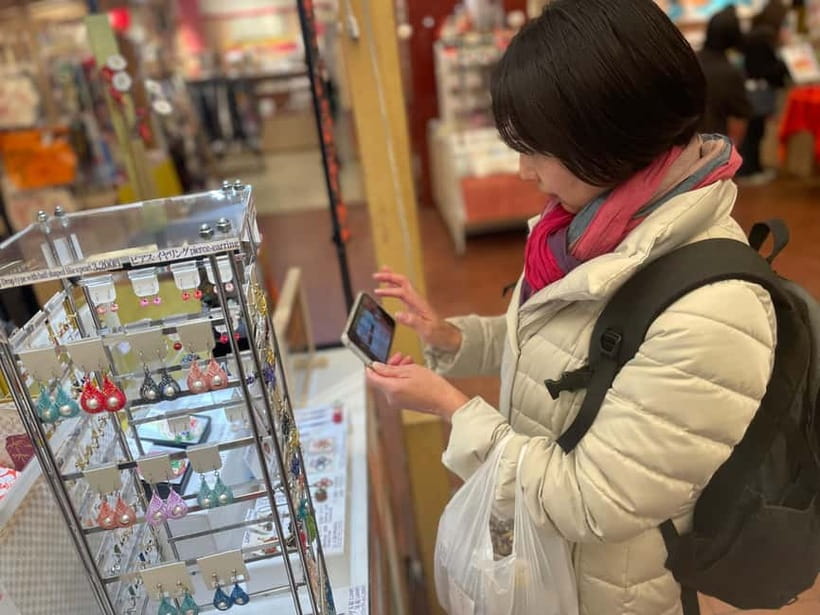
- Kabukiza building + gallery exhibits that help you understand what you’re looking at before you buy anything or guess blindly
- Souvenir stops tied to the Kabukiza area, including items only found here
- A Kabuki-associated shrine stop, adding a more spiritual layer to a theatre-themed day
- A famous Ginza clock tower photo moment, tucked into a short, walkable route
- English live guide with theatre context beyond the basics
Nissan Crossing start: fast orientation in central Ginza
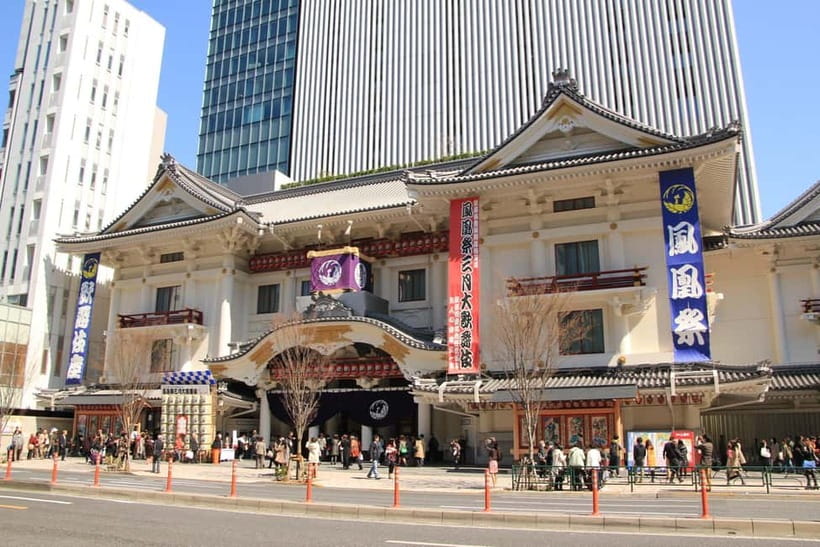
You meet right in front of NISSAN CROSSING, which is a good choice if you’re trying to stay grounded in Tokyo geography. Ginza can feel like a lot—streets, crosswalks, department stores—but starting at a recognizable hub makes the first 10 minutes less stressful.
From there, the tour is built like a compact “Kabuki intro plus city landmarks” route. You’ll be walking with your guide, so you won’t spend your short time wandering in circles trying to find the right building.
You can also read our reviews of more walking tours in Tokyo


Kabukiza building gallery: a practical way to get Kabuki basics
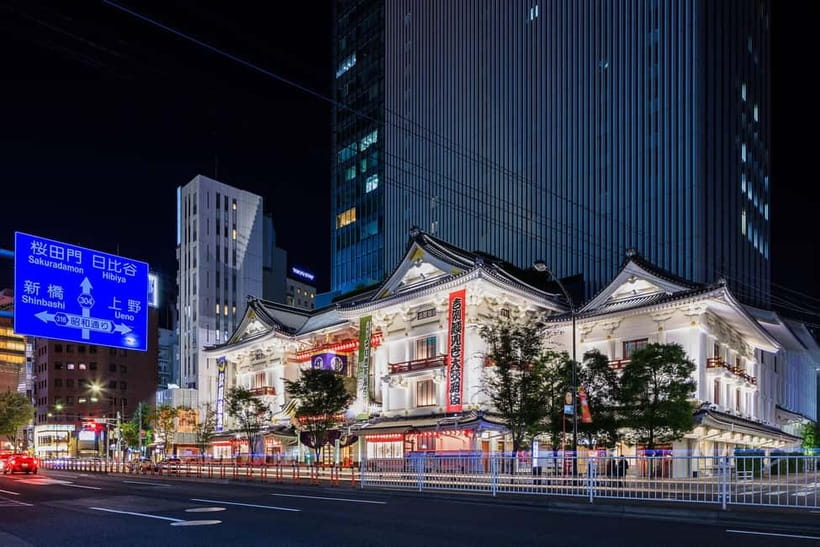
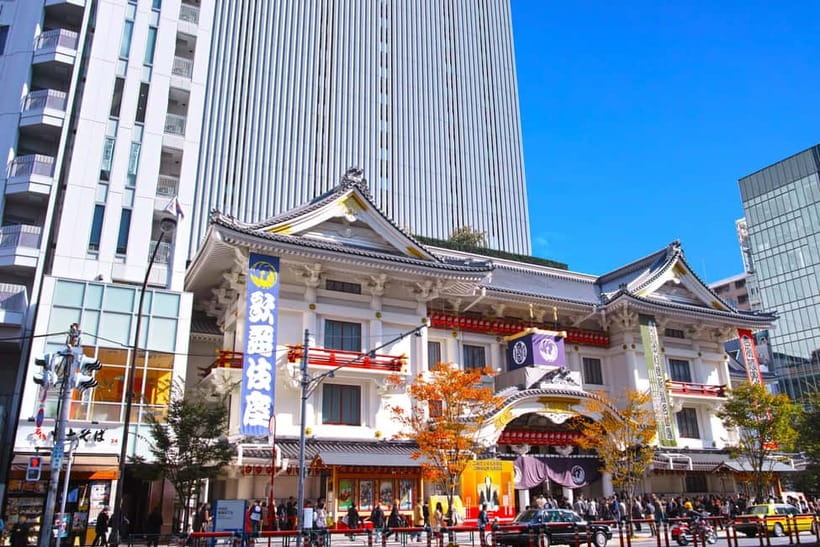
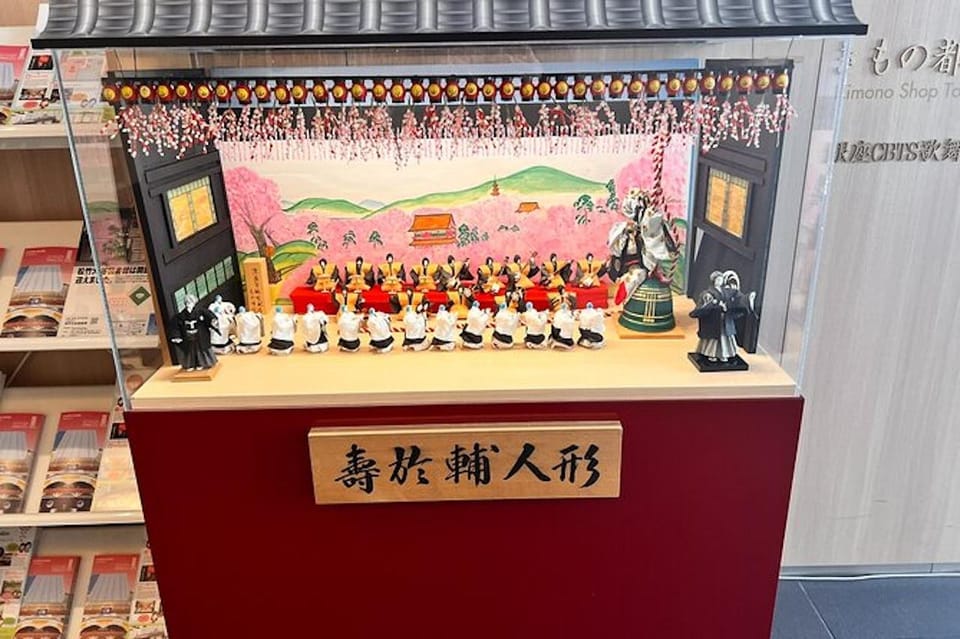
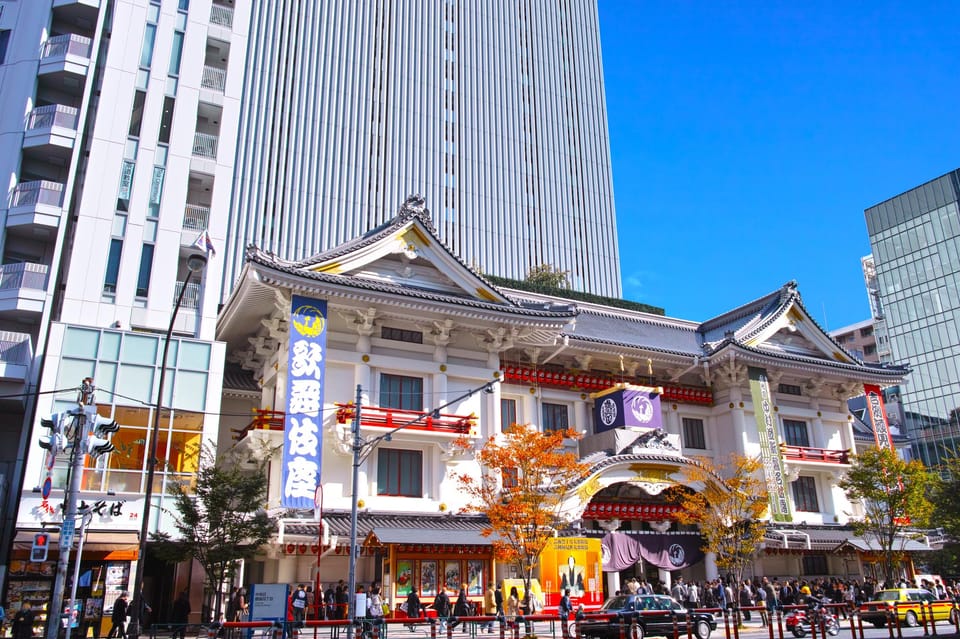
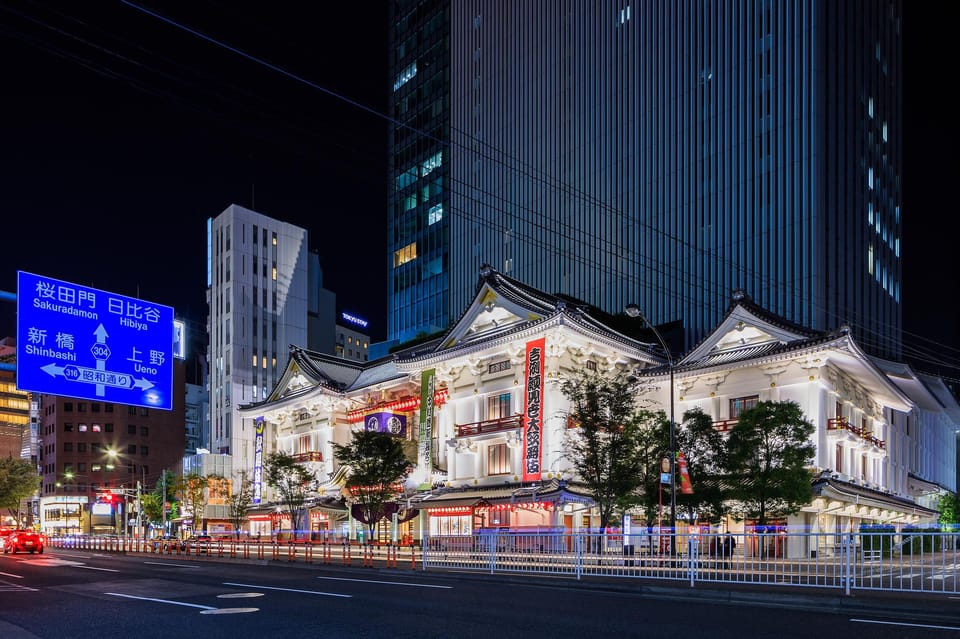
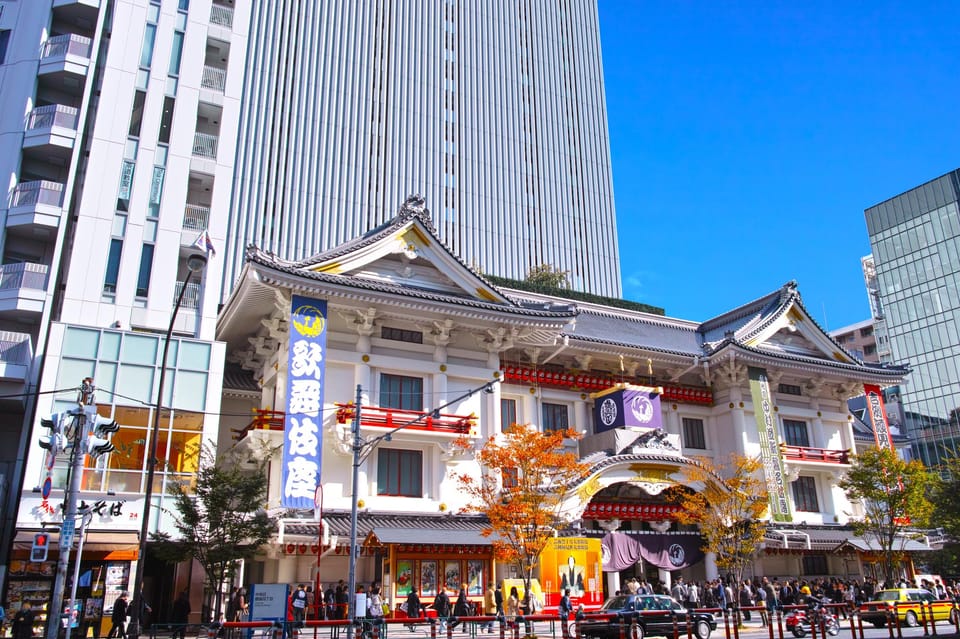
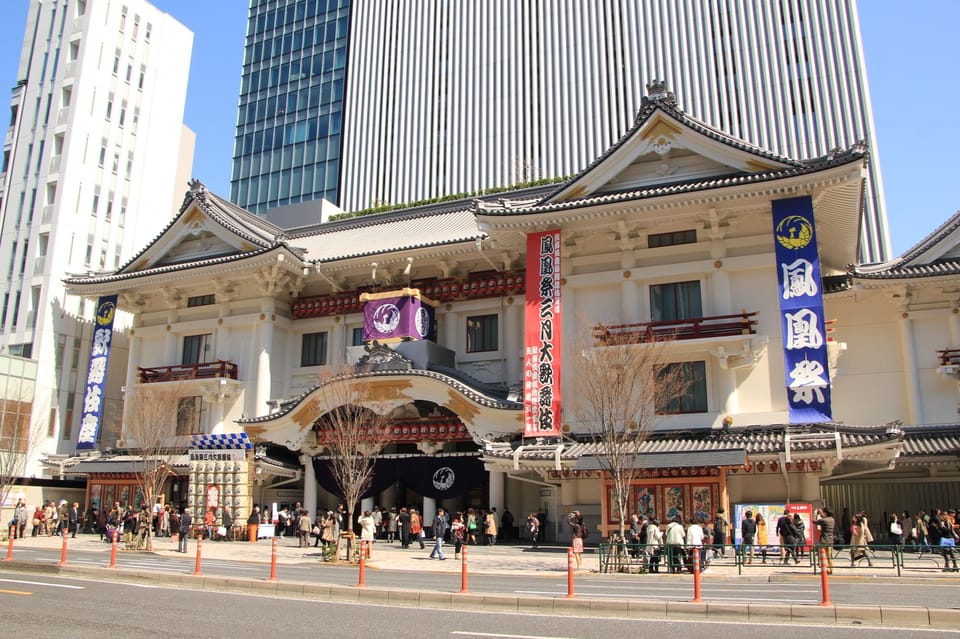
The core of the experience is seeing Kabukiza and spending time in the nearby gallery area. This is where the tour earns its keep: it gives you a first look at the world of Kabuki, so your attention isn’t just on costumes as eye candy.
Expect the guide to connect the dots between Kabuki culture and what you see around the theatre complex. The goal isn’t to turn you into a Kabuki scholar in two hours. It’s to help you understand what matters—style, performance tradition, and why Kabuki has such a strong identity in Japan.
I like this approach because it respects reality. Most people don’t have time for a full show on top of everything else. A gallery-focused start means you can still leave Tokyo feeling like you got a real slice of traditional Japanese performing arts.
Kabuki souvenirs at Kabukiza: the part you’ll actually remember
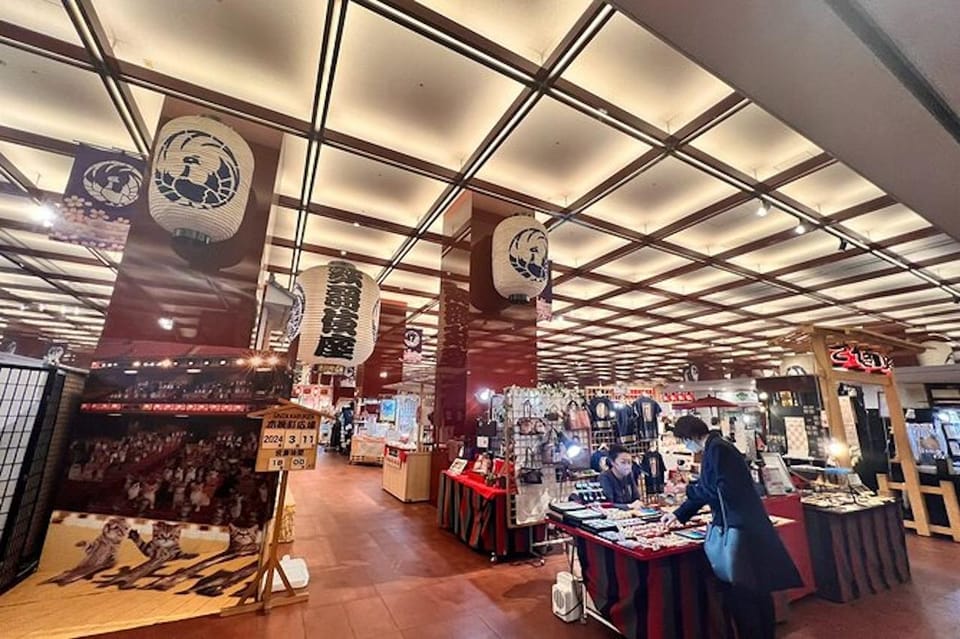
One of the most tangible perks is the shopping element—done in a way that makes sense for your time. You’ll stop at souvenir shops where you can find Kabuki goods and related Japanese items, including Japanese accessories and Japanese sweets. The standout promise here is souvenirs only available at Kabukiza or in this area, which is exactly what you want when you’re limited on luggage space.
Here’s how to make this part work for you:
- Set a tiny budget ceiling before you go in. The shops can be tempting fast, especially when you’re already in Kabuki mood.
- If you’re buying for others, decide early whether you want small edible gifts (sweets) or keepsakes (goods/accessories). That prevents last-minute panic purchases.
- Treat the shopping stops like part of the cultural experience, not just a detour. The guide helps you focus on what’s worth hunting for.
Also, shopping cost isn’t included. That’s normal. But it means you control your spend. You can keep it light or go all-in.
Kabuki-linked shrine stop: why it adds meaning
You’ll also visit a shrine associated with Kabuki. Even without a performance, this kind of stop helps explain how Kabuki culture sits inside everyday Japanese tradition. It’s a reminder that theatre isn’t floating in a vacuum—it connects to belief, ritual, and community life.
The shrine stop gives you a pause in the route, which I found helpful. After galleries and shopping streets, you get a different kind of atmosphere—quieter, more reflective. It’s the kind of contrast that makes the day feel more like a real cultural walk and less like an airport-style checklist.
I wouldn’t expect this to be a long, lecture-heavy stop, since the tour is only two hours. But it’s enough time to notice the link between Kabuki and the wider cultural world around it.
Ginza clock tower moment: a familiar landmark with a new context
The tour ends up at a famous clock tower in Ginza, giving you an easy “I was here” landmark moment. This is the part that works well even if you’re already a Ginza regular, because you’re not just sightseeing for sightseeing’s sake.
By the time you reach this spot, you’ve already learned a bit about Kabuki and you’ve visited a theatre-associated site. So the clock tower photo feels like part of a story, not a random stop.
If you want one practical tip: bring your best walking shoes. Ginza is flat, but you’ll be moving steadily for about two hours.





Guides and small-group pacing: what you gain with a cap of 9
This is a small group, limited to 9 participants, with a live English guide. That headcount matters. With fewer people, questions don’t get lost, and the guide can keep the pace moving without leaving you behind.
One reason I’d consider booking even for a short trip is that the guide isn’t just repeating labels on a wall. The vibe is friendly and explanatory, with extra theatre-world context beyond the Kabuki specifics. A guide named Fumei stood out for doing that well.
The main watch-out is expectation-setting. If you want a very detailed breakdown of how Kabuki techniques work—deeper acting conventions, stage mechanics, or an extended lesson—this may feel like a first taste rather than a full course. That’s not bad. It just means you should treat it as orientation.
What’s included (and what you should plan separately)
Your included item is straightforward: a tour guide. Everything else—mostly your own movement, plus any shopping—is on you.
Two key considerations:
- Kabuki viewing isn’t included. So you’ll leave without seeing a live performance as part of this tour. If your heart is set on watching Kabuki on stage, you’ll need to book tickets elsewhere.
- Shopping costs at each store are not included. Your guide can point you toward the good stuff, but your wallet decides the final haul.
Because of this setup, the tour works best as a cultural sampler. Think “taste + context + quick orientation,” not “tickets to an entire show.”
Price and value: is $56 for 2 hours fair?
At $56 per person for a 2-hour walk, the value depends on what you’re optimizing for.
This price is mostly paying for:
- A guide who helps you understand Kabukiza and what you’re seeing
- A compact route that bundles theatre culture with Ginza landmarks
- Small-group attention (up to 9 people)
You’re not paying for admission to a performance, and you’re not paying for shopping. That’s important because it lowers the risk of spending money and realizing it wasn’t what you wanted. If you come in wanting an intro to Kabuki and a guided way to experience the Kabukiza area, this feels like a reasonable spend.
Also, if you’re short on time, this kind of tour can save hours of figuring out what to do next. It’s easier to make decisions when someone points the direction and keeps the walk efficient.
Who should book this Kabuki and Ginza walk?
You’ll probably love it if:
- You have limited time and want a quick Kabuki culture hit
- You like guided context more than reading everything yourself
- You enjoy themed shopping when it’s attached to something real (here, it’s Kabukiza-related)
You might skip or pair it with a performance ticket if:
- You specifically want to watch Kabuki as the main event
- You’re hoping for an in-depth technical masterclass in Kabuki performance
It also suits solo visitors who want structure. Two hours is long enough to feel you did something, but short enough to still keep your day flexible.
Should you book this tour?
If you’re trying to see Kabuki culture without committing an entire day to a show, I’d book this. The Kabukiza gallery learning plus the Kabuki-linked shrine stop gives you context, and the Kabukiza-only souvenir angle makes it feel like a smart purchase, not random shopping.
Just go in with the right goal: this is a guided orientation walk, not a live Kabuki ticket.
If you want a full Kabuki night, do this as a daytime plan and then schedule a performance separately. That combo gives you both the backstage understanding and the stage experience.
FAQ
Where is the meeting point?
Meet in front of NISSAN CROSSING.
How long is the tour?
The duration is 2 hours.
What is the price per person?
The price is $56 per person.
Is there a live guide?
Yes, there is a live tour guide in English.
Is this a small group?
Yes. The group is limited to 9 participants.
Does the tour include Kabuki viewing?
No. Kabuki viewing is not included.
What can I see related to Kabuki?
You’ll see the Kabukiza building and visit Kabuki exhibits in a gallery. You’ll also stop at a shrine associated with Kabuki.
Will I have time for shopping?
You’ll visit souvenir shops in the area. Shopping costs are not included, and you’ll likely want to budget for purchases.
Is there a Ginza landmark included?
Yes. The tour includes a stop at a famous clock tower in Ginza.
What is the cancellation policy?
You can cancel up to 24 hours in advance for a full refund.