Ramen gets real when you make it. At Yuzu Washoku Studio near Yanaka, you learn how to build Japanese flavor from the ground up, not just watch someone cook. I’m especially into the from-scratch dashi and ramen soup you make, and the practical gyoza filling, folding, and pan-fry skills you walk away with.
The session is led by Yuki, who keeps the class friendly and hands-on. You’ll also get a short guide to Japanese home cooking and Tokyo table basics, then you sit down to eat your own work with the rest of your small group. One thing to consider: the menu can be adapted for vegetarians, but it’s not suitable for a gluten-free diet, and ramen noodles/gyoza wrappers are not made from scratch.
In This Review
- Quick hits before you go
- Tokyo ramen near Yanaka, the hands-on way
- The 2.5-hour flow: lecture first, then kitchen time
- What you learn for real ramen at home
- Gyoza practice: filling, folding, and crisp bottoms
- The meal: ramen, gyoza, seasonal veg, and green tea
- Dietary needs: vegetarian-friendly, not gluten-free
- Price and value: what $110.56 buys you
- Getting to the studio near Nishi Nippori
- Who this class is best for
- Should you book this Tokyo ramen and gyoza class?
- FAQ
- What time does the class start?
- How long is the cooking class?
- Is this a private class?
- What do I make and eat during the class?
- Is ramen noodles or gyoza wrappers made from scratch?
- Can the menu be adapted for vegetarians?
- What meeting address should I use?
- Are aprons and towels provided?
- Is hotel pickup included?
- What happens if the weather is bad?
Quick hits before you go
- Near Yanaka, easy transit: about 10 minutes from JR Nishi Nippori Station
- Small private class: you cook with your group only
- From-scratch flavor base: learn dashi and ramen soup from scratch
- Real gyoza technique: filling, folding, then pan-fry for that crispy bottom
- Seasonal side dish + green tea: dinner-style comfort food made in one sitting
Tokyo ramen near Yanaka, the hands-on way
Tokyo has a million ramen spots, but this kind of experience gives you something restaurants can’t: muscle memory. You’re not just tasting a bowl. You’re learning why it tastes like itself—starting with the broth and then building toward the toppings and sides.
This class is set up close to the Yanaka area, in everyday Tokyo territory rather than a theme-park corner. The meeting point is at 1-chōme-58-4 Nishinippori, Arakawa City. In practice, that makes it easier to pair the class with other sights in the north/east Tokyo loop you might already be planning.
And you’re not dealing with a giant crowd. It’s a private setup for your group, which matters when you want your questions answered while your hands are still in the food.
You can also read our reviews of more tours and experiences in Tokyo


The 2.5-hour flow: lecture first, then kitchen time
Plan for about 2 hours 30 minutes total. The day starts at 10:00 a.m., with a meet-up at the studio. There’s a short lecture portion where you get context on Japanese home cooking and a quick Tokyo guide, roughly 10:15 to 10:30 a.m.
Then the work begins. The main block runs until about 12:30 p.m., when you also eat what you made. This pacing is actually smart: you get enough background to understand what you’re doing, but you spend most of your time chopping, mixing, folding, and cooking.
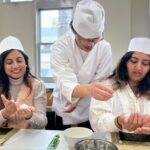
You’ll also be given aprons and towels, which sounds small until you realize how often you get splashes in a real hands-on class. It’s a comfort factor that makes the cooking part feel less stressful.
What you learn for real ramen at home
This is a home-style ramen and gyoza class, and it’s careful about what’s truly taught from scratch. You will learn how to make dashi broth and the ramen soup from scratch, using techniques that are meant to be repeatable at home.
That’s the key difference between a souvenir workshop and a skill class. The “secret” to ramen usually lives in the stock and the build. Once you know how to make the base, you can adjust toppings later without starting from zero.
You also learn how to prepare chashu pork as a ramen topping. Even if you don’t end up making the pork every time, it helps you understand what a topping is supposed to do in the bowl: add fat, texture, and that slow-cooked richness that people chase when they order ramen.
The class also includes basics of Japanese table setting. It’s not a performance lesson. It’s practical—useful if you want to feel more at ease when you eat in smaller local places, not just tourist counters.
Gyoza practice: filling, folding, and crisp bottoms
If ramen is the star, gyoza is the sidekick that steals the scene. You’ll make dumplings from scratch, including the filling and the folding technique. That folding part is where most people struggle when they try later at home, so being taught by an instructor while you’re doing it matters.
Then comes the pan-fry stage—the moment you get that signature golden, crispy bottom. This is another “real life” skill, because gyoza isn’t just about taste. It’s about contrast: crisp on the bottom, tender in the middle, with a hot, savory filling.
One useful thing here: the class is designed so you can actually reproduce the process. You’re not just learning a recipe list. You’re learning the sequence that makes gyoza work: filling, fold discipline, then heat management in the pan.
And yes, you’ll eat your results. The whole experience finishes with a shared meal of your homemade ramen and gyoza.
The meal: ramen, gyoza, seasonal veg, and green tea
Your included meal is homestyle ramen, gyoza, and a seasonal vegetable side dish, plus green tea. The vegetables vary by season, so don’t expect the exact same ingredients every time. That seasonal switching is also part of how Japanese home cooking stays grounded in what’s available.
From a value standpoint, this is important. You’re paying for instruction and then getting a full sit-down meal based on what you cooked. You’re not left hungry after class or forced to find your next meal nearby.
In addition to food, there’s the comfort of structure. You cook, you taste along the way, and then you eat together at the end. That makes the class feel like a real Tokyo kitchen experience instead of a hurried demonstration.






Dietary needs: vegetarian-friendly, not gluten-free
If you eat meat, the class includes chashu pork, but the menu can be adapted for vegetarians. One of the strongest signals from the experience is that Yuki pays attention and adjusts when needed, including for no-meat preferences.
That’s a big deal because ramen and gyoza recipes depend on ingredients, and improvising without coaching can lead to disappointment. Here, you should feel confident that your instructor is willing to work with your needs within the menu’s constraints.
The constraint is gluten. This experience is not suitable for a gluten-free diet. Also, it’s worth noting that while you make key ramen components from scratch (dashi and soup), the class does not prepare egg noodles or gyoza wrappers from scratch. So if you’re hoping for every element to be fully made by hand, manage expectations.
Price and value: what $110.56 buys you
At $110.56 per person, this isn’t a cheap activity. But it also isn’t paying for something vague like a cultural show. You’re paying for three things that add up fast: instruction, hands-on cooking time, and a meal you can’t just replicate from a cookbook the same way.
Here’s the practical value breakdown in plain terms:
- You get small-group, private-class attention, which helps you learn the technique rather than just collect a recipe.
- You learn from-scratch soup and dashi, which is often where home versions go wrong.
- You make both ramen and gyoza, plus a seasonal veg side dish and green tea.
And the extras matter too: aprons and towels are provided, and you’re given a mobile ticket. No hotel pickup means the price stays focused on the actual class.
If you like hands-on food experiences and want skills you’ll use again, this class can be worth it. If you only want to taste ramen and move on, a restaurant meal may be easier.
Getting to the studio near Nishi Nippori
You meet at 1-chōme-58-4 Nishinippori, Arakawa City, Tokyo 116-0013. Start time is 10:00 a.m., and the activity ends back at the meeting point, so you’ll be free to explore after lunch in the area.
The studio is listed as about 10 minutes from JR Nishi Nippori Station, which is helpful. You don’t need a complex multi-step transfer chain to get there, and it makes timing more forgiving if your Tokyo day runs late.
There’s no hotel pickup or drop-off. That’s standard for Tokyo cooking classes, but it does mean you’ll be doing your usual transit navigation. If you’re comfortable using trains and walking short distances, you’ll be fine.
Who this class is best for
This is a great fit if you want an authentic Tokyo food skill, not just a meal out. It’s designed for families, couples, and solo travelers, and the private format makes it feel calmer than big group tours.
You’ll probably enjoy it most if you:
- like ramen and want to understand the broth, not just the noodles
- enjoy learning technique with your hands (folding, pan-frying, portioning)
- want a class where you can ask questions while cooking
If you’re traveling with very picky eaters, you’ll still want to communicate dietary needs in advance. The class can adapt for vegetarian preferences, but it’s not gluten-free.
Should you book this Tokyo ramen and gyoza class?
Yes—if your goal is to leave Tokyo with skills, not just photos. The biggest reasons to book are the from-scratch dashi and ramen soup focus and the hands-on gyoza folding and crisp pan-fry training. That combo turns ramen from a dish you order into a dish you can build at home.
Book with a quick reality check: if you need gluten-free food, or if you’re expecting the wrappers and noodles to be fully handmade too, this may not match your hopes. But if you’re open to a skill-focused home-style approach, this class is a satisfying way to spend a morning in Tokyo.
FAQ
What time does the class start?
The class starts at 10:00 a.m. at the studio meeting point in Nishinippori.
How long is the cooking class?
It lasts about 2 hours 30 minutes total.
Is this a private class?
Yes. This is a private tour/activity, meaning only your group participates.
What do I make and eat during the class?
You’ll make homestyle ramen, gyoza, and a seasonal vegetable side dish, and you’ll enjoy it together with green tea.
Is ramen noodles or gyoza wrappers made from scratch?
Not from scratch. The class does not prepare egg noodles or gyoza wrappers from scratch, but you do learn dashi broth and ramen soup from scratch.
Can the menu be adapted for vegetarians?
Yes. The menu can be adapted for vegetarians, but it is not suitable for a gluten-free diet.
What meeting address should I use?
Meet at 1-chōme-58-4 Nishinippori, Arakawa City, Tokyo 116-0013, Japan.
Are aprons and towels provided?
Yes. The studio provides aprons and towels for use during the class.
Is hotel pickup included?
No. Hotel pickup and drop-off are not included.
What happens if the weather is bad?
The experience requires good weather. If canceled due to poor weather, you’ll be offered a different date or a full refund.