REVIEW · TOKYO
Tokyo Private Art Tour in Kagurazaka Shinjuku with Licensed Guide
Book on Viator →Operated by Tokyo Licensed Guide Volunteer Group · Bookable on Viator
Art in Tokyo can be more than sightseeing. It’s a guided thread from famous paintings to streets, shrines, and old city layers. This route starts with the Yayoi Kusama Museum (admission included), so you’re not just hearing about her—you’re seeing her world.
I especially like the way this tour connects art to place. You get a licensed guide who can explain what you’re looking at, from Kusama’s background to the meaning behind shrine and neighborhood stops, instead of treating it like a checklist.
One thing to consider: it’s only about 2 hours 30 minutes total, with just 1 hour inside the museum. If you want a long, slow Kusama deep-dive, you may want more time on your own after the tour.
In This Review
- Key things to know before you go
- Tokyo art, explained like you’re walking through a story
- Yayoi Kusama Museum: where the guide makes the art click
- Akomeya Tokyo and Kengo Kuma: architecture as the quick palate cleanser
- Akagi Shrine: modern lines in a sacred setting
- Kagurazaka: Edo atmosphere with a stylish edge
- Ushigome Mitsuke near Idabashi: samurai-era heritage without the museum walls
- Price and logistics: what $46.05 buys you
- The guide factor: why the right explanations matter
- Who should book this private Kagurazaka art tour
- Should you book it?
- FAQ
- FAQ
- What’s the duration of the Tokyo Private Art Tour in Kagurazaka Shinjuku?
- How much does the tour cost?
- Is this tour private?
- What time does the tour start?
- Where do I meet the guide?
- Where does the tour end?
- Is the museum admission included?
- Are there any paid admissions on later stops?
- What ticket method is used?
- Can I cancel for a full refund?
- Is it common to book this tour far ahead?
Key things to know before you go
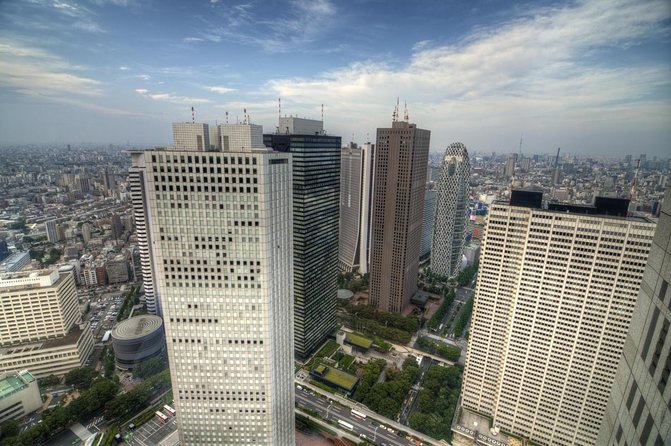
- Private group experience: only your group joins, so your guide can match your pace.
- Kusama Museum included: 1 hour at the museum with admission taken care of.
- Architectural stop at Akomeya Tokyo: designed by Kengo Kuma, with a quick photo-and-story break.
- Modern meets sacred: Akagi Shrine is described as sophisticated and surprising.
- Edo traces in Kagurazaka: a neighborhood that blends old Tokyo atmosphere with a stylish feel.
- Samurai-era connection at Ushigome Mitsuke: a guided look at heritage near Idabashi.
Tokyo art, explained like you’re walking through a story
Tokyo can feel like it has a new theme every block. What I like about this tour is the structure: it uses art (and art-adjacent places) to teach you how Tokyo layers time. You start with one of Japan’s most internationally recognized contemporary artists, then shift gears to Edo-era atmosphere you can actually walk through.
This isn’t only about standing in front of famous objects. The stops are chosen so the guide can connect why they matter—paintings, architecture, shrines, and the older street rhythms behind neighborhoods like Kagurazaka. If your brain likes cause-and-effect, you’ll get a lot out of the order.
The price is also worth thinking about. At $46.05 per person for a private, guided, 2.5-hour route that includes museum admission, it’s not just a walk—it’s guided time plus one paid entry.
You can also read our reviews of more guided tours in Tokyo
Yayoi Kusama Museum: where the guide makes the art click
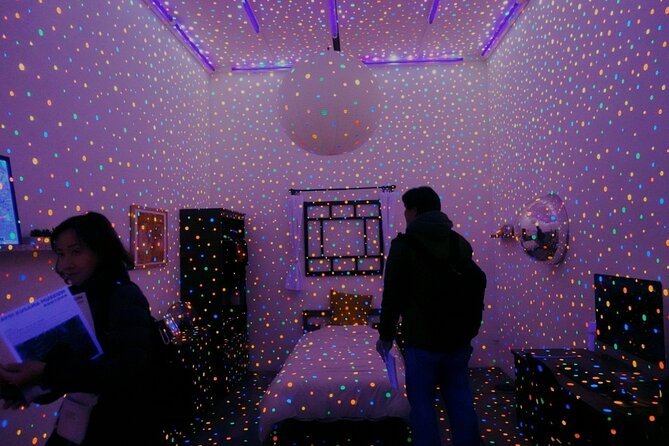
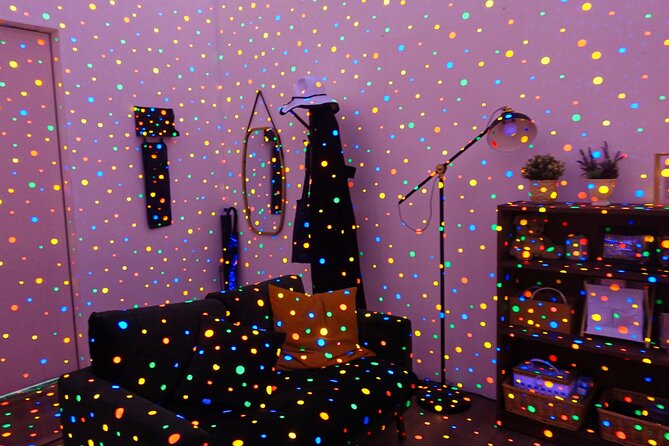
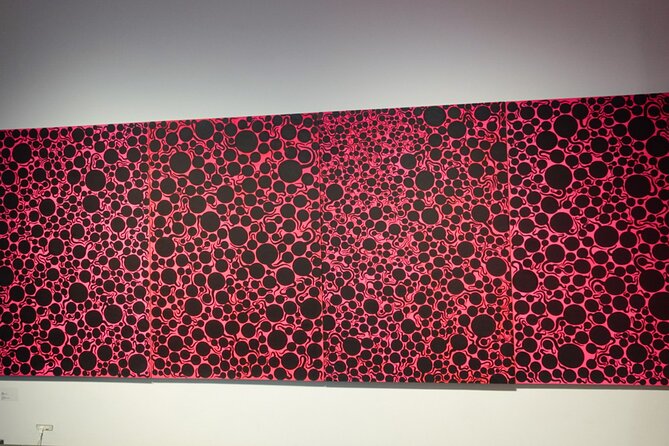
The tour begins at the Yayoi Kusama Museum, and that first stop sets expectations fast. You get about 1 hour inside, and the admission ticket is included. This is your chance to see Kusama’s work firsthand, not just as images on the internet.
In the best moments, a good guide helps you notice patterns you’d otherwise miss. In this case, the guide focuses on Kusama’s bio and how her life links back to the visual language you’re seeing in the rooms. One guide name that came up in past experiences is Nao—people described him as easy to talk with and enthusiastic about Kusama, plus Japan’s shrine and temple context as it connects to the rest of the route.
If you’re a Kusama fan, you’ll likely appreciate how the tour frames what you see. If you’re new to her, the guided explanations can help you move past the initial wow-factor and understand what you’re looking at and why it became so recognizable worldwide.
A practical note: since the museum portion is time-limited, go in with a quick plan. Decide what you want most—maybe learning the story behind her themes, or just slowing down and taking your own look—then let the guide guide the rest.
Akomeya Tokyo and Kengo Kuma: architecture as the quick palate cleanser
After Kusama, you get a shorter stop at Akomeya Tokyo for about 20 minutes. The admission is free, so you’re not paying extra for this segment. What you are getting is a taste of how modern Tokyo design can still feel deeply intentional.
The building design here is credited to Kengo Kuma, an architect with worldwide recognition. That matters because it changes how you look at the city. Instead of treating architecture as background, the guide can point out the design choices that shape your movement through the space.
This stop works well because it’s not another museum. It’s more like a design breather: you walk, look up and around, and let your brain reset before heading to a shrine and then into older streets.
If you’re the type who likes photos, this is often the moment you’ll want to slow down. And if you’re not, it’s still useful because it’s a concrete example of how Tokyo connects contemporary design thinking with older layers of culture.
Akagi Shrine: modern lines in a sacred setting
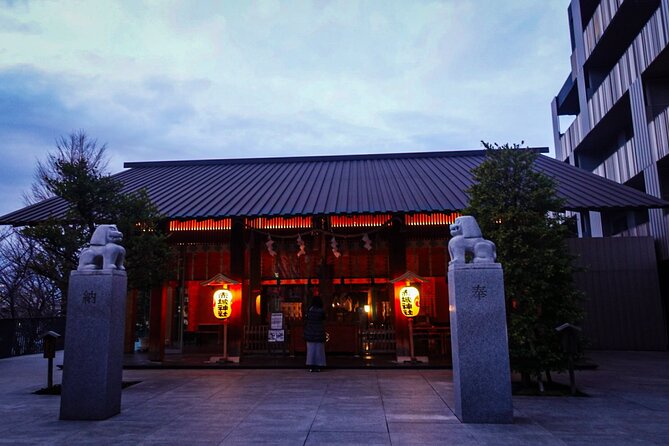
Next comes Akagi Shrine, also around 20 minutes, with no admission ticket required. The standout description is that it feels modern and sophisticated—the kind of place that can surprise you if you expect only traditional visuals.
This stop is valuable because it teaches you to watch how sacred spaces present themselves in different eras. Tokyo doesn’t always keep religion in a single aesthetic box. A guide can help you read what you’re seeing, so the shrine becomes more than a photo stop.
The shrine also pairs nicely with the earlier museum visit. Kusama’s art gives you a lens on emotion and identity, and then the shrine gives you a lens on how meaning is still performed in public space.
The one drawback here is simple: it’s brief. If you’re hoping for a long sit-down explanation of shrine customs, you may want extra time on your own afterward. Still, as part of a compact art-and-history route, it fits.
Kagurazaka: Edo atmosphere with a stylish edge
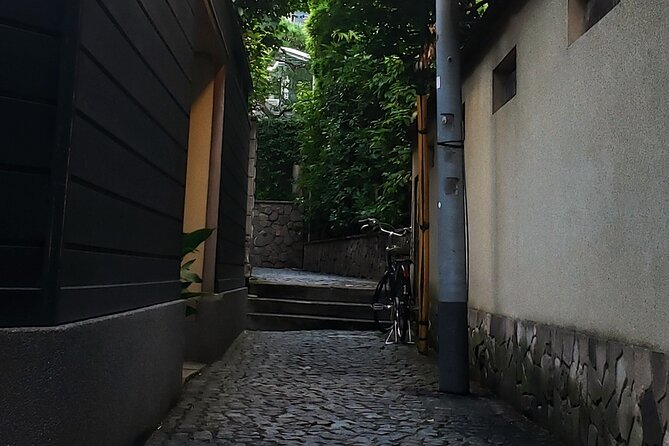
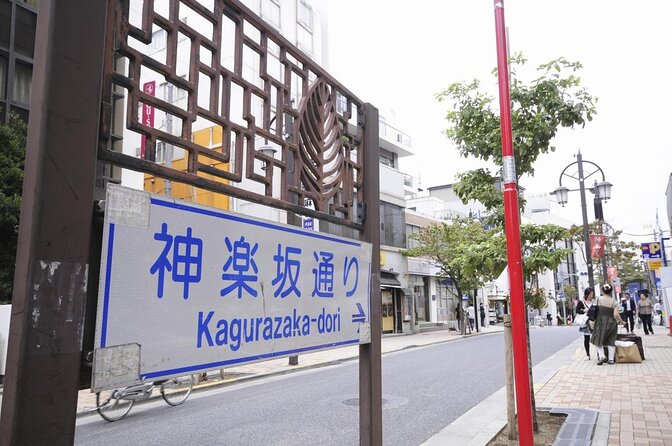
Then you move into Kagurazaka, about 30 minutes, again with no admission ticket required. The vibe description is specific: it’s where Edo-period traces and a more Paris-like sophistication feel share the same blocks.
This stop is less about a single landmark and more about atmosphere. You’re walking through a neighborhood that kept older textures while also adopting a refined, fashionable reputation. That contrast is exactly why the stop belongs on an Edo-themed art route. It shows you how history doesn’t disappear—it gets repackaged, worn differently, and still shapes daily life.
A licensed guide helps here because street atmosphere can be tricky to interpret alone. Without context, you might just enjoy the look. With context, you start to understand what parts echo older Tokyo rhythms and what parts signal newer tastes.
One practical tip: this is the kind of area where you can easily drift into side streets. That can be fun, but keep an eye on the guide and the group pace so you don’t lose time before the final stop.
You can also read our reviews of more private tours in Tokyo


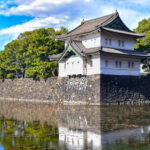
Ushigome Mitsuke near Idabashi: samurai-era heritage without the museum walls
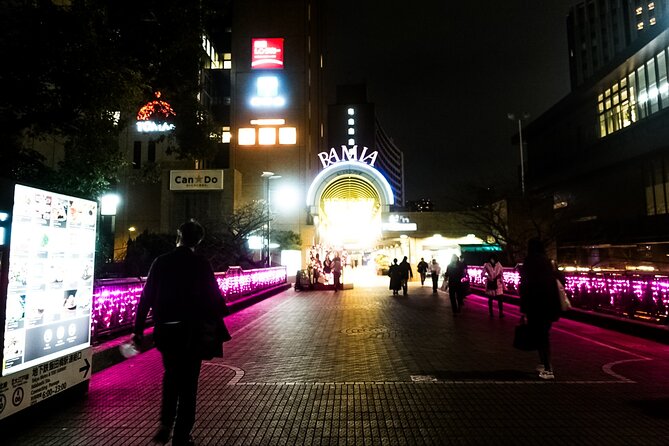
The last part brings you to Ushigome Mitsuke, described as a samurai-era heritage point. The tour duration at this stop is about 20 minutes, and it’s free.
Your ending location is listed as near Edo Castle Ushigome-Mitsuke, close to Idabashi Station on the JR line. That matters because it gives you a natural transit landing point if you want to continue exploring right after the tour.
I like this finish for a simple reason: it grounds the story. Earlier stops are museum and design-focused. Here, the guide can connect the idea of Edo Tokyo to physical remnants and neighborhood layout, so the “Tokyo (Edo)” theme doesn’t feel like a label—it feels like you understand why it belongs.
If you’re a history-minded traveler, this is a satisfying capstone. If you’re more art-driven, you may still enjoy the way it translates art history into city history, and then into what you can see outside.
Price and logistics: what $46.05 buys you
Let’s talk value, because this tour’s cost only makes sense when you understand what’s included. You’re paying $46.05 per person for a private 2.5-hour experience with a licensed guide, plus Yayoi Kusama Museum admission included for the first stop.
That museum entry can be the make-or-break value point. Without it, you’d still be paying for guided time. With it, you’re basically getting your guidance plus one paid attraction, at a fixed, human-sized duration.
Scheduling-wise, you’ll start at 2:30 pm. The meeting point is at FamilyMart Evergrace Haramachi, 1-chōme-13-13 Haramachi, Shinjuku City, Tokyo 162-0053. The tour ends at 2 Chome-9 Fujimi, Chiyoda City, Tokyo 102-0071, near Idabashi Station.
The tour uses a mobile ticket, and confirmation is received at booking time. It’s also described as near public transportation, which is great for Tokyo. You’re not committing to a car-only route.
Free cancellation is available up to 24 hours before the experience start time for a full refund. If you’re deciding between a few afternoon plans, that flexibility helps.
One more practical note: the itinerary mixes indoor and outdoor time. Plan for walking between stops and bring a layer just in case the weather changes faster than your excitement.
The guide factor: why the right explanations matter
Because this is a guided art experience, your day depends on how your guide interprets what you see. The best scenarios are when the guide doesn’t just point at labels and move on.
From past experiences with this tour, the strongest praise centers on guides who explain Kusama and connect it to Japanese context, plus who keep the pace conversational and interesting. Nao is one name that came up, with people describing him as knowledgeable about Kusama, Japan’s history, and shrine and temple context, and as easy to talk with.
At the same time, there’s a caution worth taking seriously: a guided tour can feel wrong if your expectations are art-focused and the guide approach stays surface-level. If you’re paying for an art tour, ask yourself what you want most—bigger-picture interpretation, or lots of museum reading time. If you want deep art storytelling, set that expectation with your guide early in the meeting.
Who should book this private Kagurazaka art tour
This tour is a great fit if:
- You’re a Kusama fan who wants to pair the museum with Edo-themed context.
- You like architecture and design as part of travel, not just the scenery.
- You want an afternoon plan that shows Tokyo’s layers without turning into a long marathon.
- You prefer a private format where your guide can respond to your interests.
You might want to skip or adjust plans if:
- You want a very long museum visit or a slow, study-by-study art lecture.
- You’re only interested in one type of site (only art museums, only temples, or only neighborhood wandering).
Should you book it?
If your ideal Tokyo day is part art, part city atmosphere, and you like getting explanations that connect the dots, I’d book it. The inclusion of the Yayoi Kusama Museum admission, paired with Edo-feeling stops like Kagurazaka and Ushigome Mitsuke, makes the $46.05 per person feel like guided value rather than just a walking tour.
But if you’re the kind of traveler who wants hours in one place, treat the tour as a strong sampler. Afterward, you can always linger on your favorite streets or revisit the museum areas that grabbed you most.
FAQ
FAQ
What’s the duration of the Tokyo Private Art Tour in Kagurazaka Shinjuku?
It lasts about 2 hours 30 minutes.
How much does the tour cost?
The price is $46.05 per person.
Is this tour private?
Yes. It’s a private tour/activity, so only your group participates.
What time does the tour start?
The start time is 2:30 pm.
Where do I meet the guide?
Meet at FamilyMart Evergrace Haramachi, 1-chōme-13-13 Haramachi, Shinjuku City, Tokyo 162-0053.
Where does the tour end?
It ends at 2 Chome-9 Fujimi, Chiyoda City, Tokyo 102-0071, near Edo Castle Ushigome-Mitsuke and Idabashi Station on the JR line.
Is the museum admission included?
Yes. Yayoi Kusama Museum admission is included for the first stop.
Are there any paid admissions on later stops?
Akomeya Tokyo is listed as admission ticket free, and Akagi Shrine, Kagurazaka, and Ushigome Mitsuke are also listed as admission ticket free.
What ticket method is used?
You’ll receive a mobile ticket.
Can I cancel for a full refund?
Yes. You can cancel up to 24 hours in advance for a full refund.
Is it common to book this tour far ahead?
It’s typically booked about 46 days in advance on average.
If you want, tell me your interests (Kusama only vs. architecture/shrines vs. Edo streets), and I’ll help you decide whether this timing and mix fits your day.