REVIEW · TOKYO
Tokyo: Asakusa Walking Tour with Japanese Comedian
Book on Viator →Operated by Karate Comic Ryo · Bookable on Viator
Asakusa gets fun with comedy in your ears. This 90-minute walk through old Tokyo pairs Karate Comic Ryo with a tight route of Buddhist and Shinto sights, so you get stories as you go, not homework later. I love the way the stand-up-comedian style keeps the history moving, especially around Senso-ji.
I also love that the pace is efficient without feeling rushed: you hit major spots like Kaminarimon and the temple gates, then you still get a quick snack stop on Nishi-sando. One possible drawback is that you’re packing in a lot of stops into 1.5 hours, so if you want long hangs for photos at every doorway, this tour may feel a bit too time-compressed during busy periods.
In This Review
- Key highlights
- Why Karate Comic Ryo Makes Asakusa Feel Effortless
- Route Map in Words: From the 8th-Floor View to the Senso-ji Finish
- Entering Asakusa: Kaminarimon Gate and Nakamise Street
- Bentendo to Bell of Time to Nisombutsu: Meaning Behind the Details
- Nitenmon Gate to Asakusa Shrine and the Quieter Senso-ji Corners
- Nishi-sando Snack Time and the Melon-Bread Stop at Kagetsu-do
- Pacing, Crowd Strategy, and What to Bring for 90 Minutes
- Price and Value of $37.99: What You’re Actually Paying For
- Should You Book This Asakusa Comedian Walking Tour?
- FAQ
- How long is the Asakusa walking tour?
- What is the price per person?
- Where does the tour start?
- Where does the tour end?
- How many people are in the group?
- Do the stops have admission fees?
- Is there a mobile ticket?
- Are service animals allowed?
- What’s the cancellation policy?
Key highlights
- Small-group size (capped) for a calmer experience
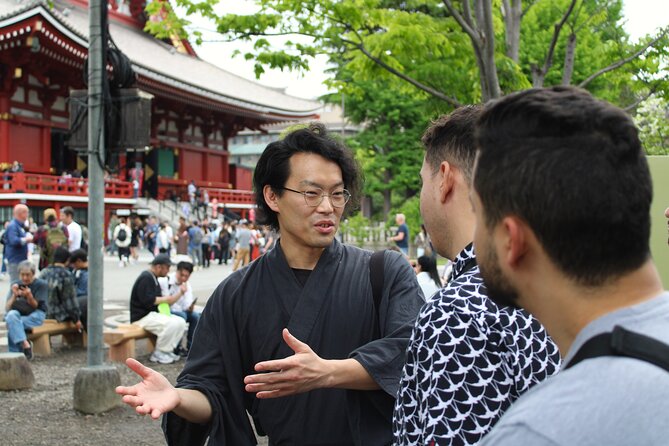
- Stand-up comedian guide who explains what you’re looking at
- Free-entry stops across temples, gates, shrines, and viewpoints
- A route that strings together Senso-ji complex details plus Asakusa shopping streets
- Nishi-sando snack time, including melon-bread at Kagetsu-do
- Crowd strategy that works well with early morning starts
Why Karate Comic Ryo Makes Asakusa Feel Effortless
The big idea here is simple: Asakusa is packed with temples, gates, and side alleys, and it’s easy to wander in circles. This tour uses a comedian guide to keep you oriented while you’re absorbing cultural details, so you’re not just watching people pray or pose for photos—you’re understanding why that place matters.
Ryo’s style comes through in the reviews as conversational, funny, and question-friendly. That matters in a place like Senso-ji, where you’ll see statues, carvings, and gate designs that look impressive but can feel like visual clutter if nobody explains the symbolism. A guide who can switch from stand-up timing to patient Q&A is a practical advantage.
The best part for first-timers is that you don’t need to decide what to prioritize. You get a structured walk through the key layers of Asakusa: gate-by-gate approach, then temple-side explanations, then shrine context, finishing at Senso-ji’s main area.
You can also read our reviews of more walking tours in Tokyo


Route Map in Words: From the 8th-Floor View to the Senso-ji Finish
The tour starts at Tokyo Cruise Asakusa Pier (1-chōme-1-1 Hanakawado, Taito City). If you like getting your bearings fast, the first stop helps: you’ll visit the Asakusa Culture Tourist Information Center and take in the view from the 8th floor. Even with limited time, that kind of overhead look makes the walking route feel logical—like you’re stepping into a map instead of chasing signs.
From there, you move toward the Senso-ji area and the main walking spine of Asakusa. The tour ends in front of the main hall of Senso-ji Temple. That matters because Senso-ji is the big finish: after your guided walk, you’ll already know where to look and what you’re seeing, instead of arriving cold and overwhelmed.
Duration is about 1 hour 30 minutes, so think of it as a focused orientation session. You’ll see a lot of points, but you won’t have hours to slowly linger at every corner.
Entering Asakusa: Kaminarimon Gate and Nakamise Street
You enter the historic core through Kaminarimon, the iconic gate of Asakusa and the main entrance corridor for Senso-ji. This is the moment where the area shifts from city streets into temple-town rhythm, with vendors and shoppers clustered around the approach.
Next comes Nakamise Shopping Street, where you’ll get a quick walk through the shopping atmosphere that most people picture when they think of Asakusa. It’s not just retail; it’s the cultural corridor leading you toward the temple complex. The tour keeps this stop short, which is useful—by design, you get the vibe without getting trapped in slow browsing.
A practical note: if you care about photos without crowds, early timing helps. One review specifically recommends starting at 8am to beat congestion. If you can, treat early morning as your crowd-control tool.
Bentendo to Bell of Time to Nisombutsu: Meaning Behind the Details
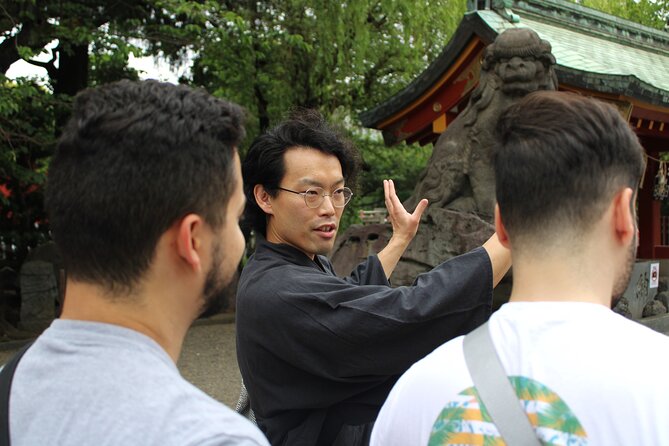
This is where the tour earns its value. Instead of tossing facts at you, it points you toward specific objects in the Senso-ji area that you’d otherwise gloss over.
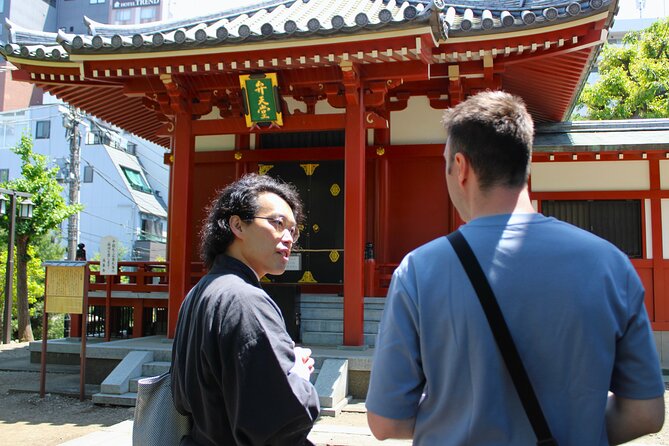
You’ll first look at Senso-ji Temple Bentendo, tied to the deity of art and prosperity. If you’ve ever wondered why certain parts of a temple feel more personal or themed, this is the kind of detail that answers that.
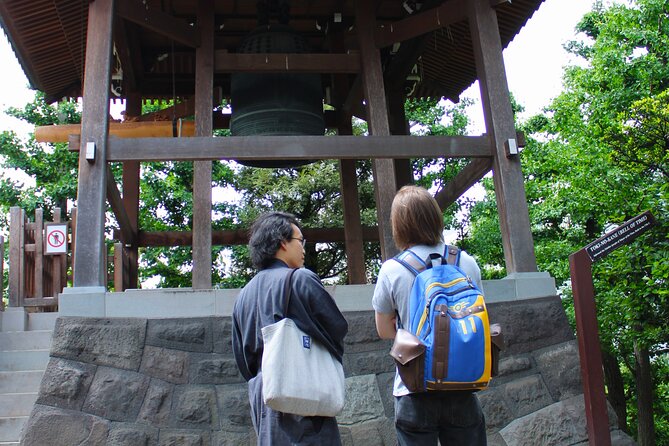
Then you’ll step next to the Bell of Time. The tour frames it as something that monks used during the Edo period (from the 16th to 18th century) to mark time. That historical angle makes the bell feel less like decoration and more like a functional piece of everyday life.
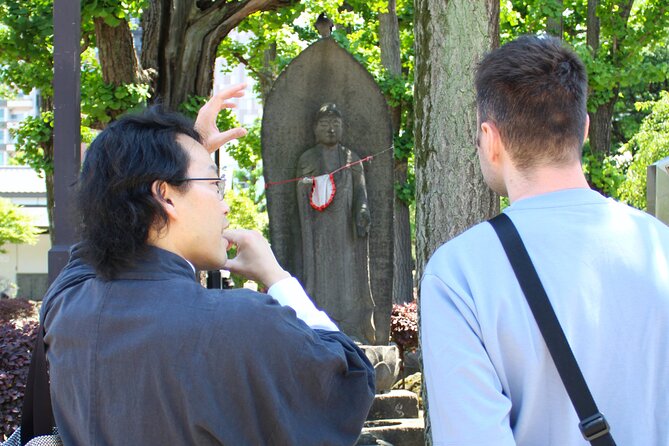
After that comes a quieter stop: Senso-ji Temple Nisombutsu. Here you’ll see bronze and stone statues of Buddhist deities constructed in the 17th century. This is the kind of location that can be easy to miss while you’re busy taking broad shots of the main hall. With a guide pointing out the exact spot and what it represents, you get a more complete sense of what “temple complex” means in practice.
What I like about this part of the route is that it trains your eye. You start noticing smaller markers—structures, statues, and gate placements—so when you return on your own later, the whole area feels less mysterious.
Nitenmon Gate to Asakusa Shrine and the Quieter Senso-ji Corners
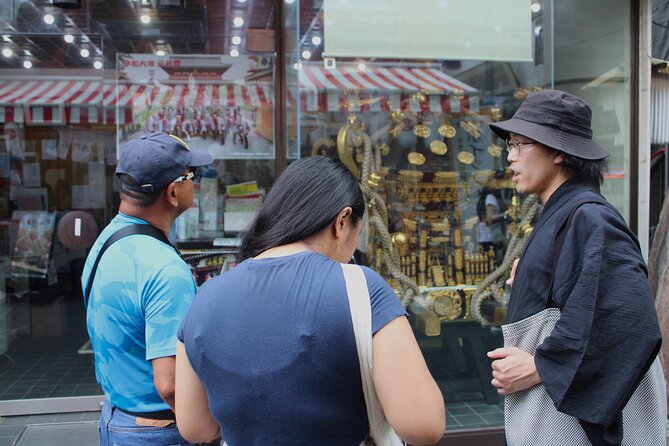
Next up is Nitenmon Gate, described as a National Cultural Property in Japan. The tour explains its role as the Shogun’s gate, with access restricted to the general. That’s one of those details that makes a gate feel powerful in a way you can’t get from a quick glance.
From the gate area, the walk continues to Asakusa Shrine, where you’ll learn about three deities connected to the origin of Senso-ji. There’s also mention of a garage for three big portable shrines carried through local tradition. It’s an important contrast to the temple side because it reminds you Asakusa isn’t only one religious layer—it’s a mix of Buddhist and Shinto presence living close together.
Then you’ll pass through additional Senso-ji stops:
- Yogodo Temple, a short look at another part of the complex
- Awashimado, another doorway/spot you’d likely walk past without guidance
- Hozomon Gate, known for its pair of guardian statues in front of the temple
Even when the time at each stop is brief, the order matters. You move from gates (political and historical meaning), to shrine context (religious origin links), to smaller temple points and guardian figures (visual motifs that repeat across the complex). That sequencing is what makes the tour feel like a story instead of a checklist.






Nishi-sando Snack Time and the Melon-Bread Stop at Kagetsu-do
Asakusa isn’t just architecture; it’s also street food and shopping streets. The tour includes a stop at Asakusa Nishisando, where you can sample Japanese sweets, including melon-bread at 花月堂 (Kagetsu-do).
This is a good place to slow down for a minute. The walk is structured, but you still get a real break in the middle of temple-heavy sightseeing. If you’re traveling with family or teens who get bored by long explanations, this snack stop is often the easiest win.
One review strongly recommends the melon pan from Kagetsu-do as so sweet and delicious. Even if you don’t go for the specific item, you’ll be in the right pocket of Asakusa to taste something local while the area is fresh and easy to navigate.
Pacing, Crowd Strategy, and What to Bring for 90 Minutes
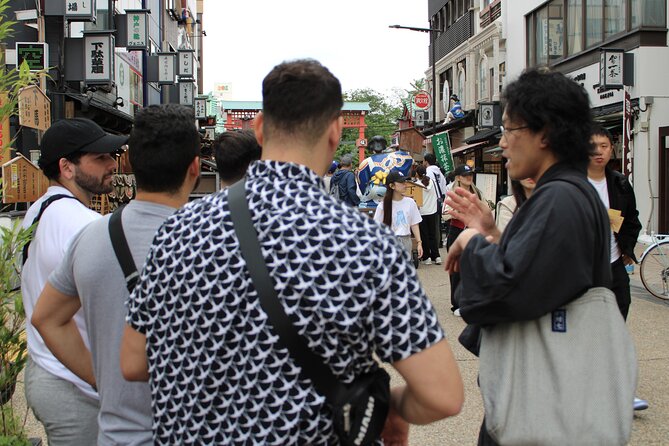
The tour is about efficiency, and that’s not automatically a bad thing. In 1 hour 30 minutes, you see a chain of highlights that form the heart of Asakusa’s temple complex, plus the approach streets. But the trade-off is that each stop is relatively short, so you’ll want to be ready to move.
Crowds can be a factor at Senso-ji. One review notes that a start time around 8am can help you keep the place calmer before the market buzz ramps up later in the morning. If your schedule allows, that early start can make the experience feel more personal.
What to bring is straightforward:
- Comfortable shoes for walking and standing near gates and halls
- Water, especially if you’re visiting in warmer months
- A charged phone or camera for the gate and statue details (you’ll have plenty of chances)
Also, if you’re the type who asks lots of questions, this format works well. Reviews highlight that Ryo answers questions patiently and is willing to adjust to what you want to focus on.
Price and Value of $37.99: What You’re Actually Paying For
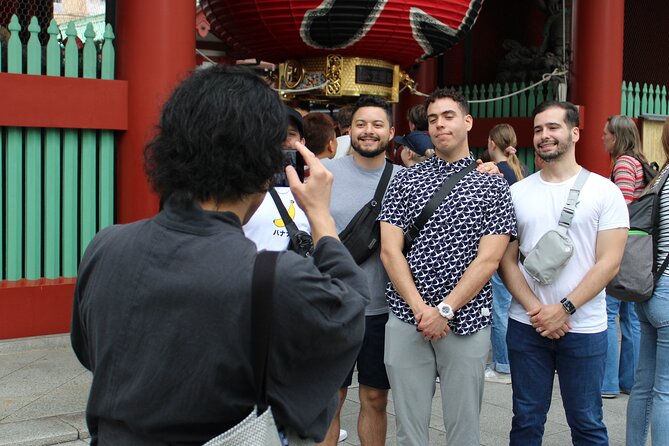
At $37.99 per person for about 90 minutes, the math looks simple: you’re paying for guide time plus the structure. Many of the stops are listed as free admission (including the main Senso-ji approach gates and several temple-side points). That helps keep your total daily cost under control.
But the real value is less about entry fees and more about interpretation. Without a guide, you can see the gates, take photos, and enjoy the atmosphere. With this tour, you get a guided read on why specific places exist—like the Bell of Time’s Edo-era timekeeping role, or what the Bentendo deity theme points toward.
Group size is also part of the value story. The experience is described as a small group, capped at six people in the feature list, and the overall tour size is listed with a maximum of eight travelers. Either way, you’re not lost in a mass walking line, which makes questions easier and explanations clearer.
If you want to get the most out of your limited Tokyo time, this tour is a strong “orientation first” choice. It’s not trying to replace hours of independent temple wandering. It helps you do that wandering with better context afterward.
Should You Book This Asakusa Comedian Walking Tour?
If you’re short on time, new to Asakusa, or you like your travel with both laughs and meaning, I think you’ll enjoy this. It’s especially well-suited for:
- First-time visitors who want Senso-ji and the approach streets without planning
- Families who want an engaging guide and short stops
- People who enjoy asking questions and hearing stories, not just reading signs
Skip it if you prefer a slow, quiet, no-schedule stroll where you can spend 30 minutes on just one structure. With 1.5 hours and many points on the route, you’ll want to treat it as a highlight loop, then go back on your own for slower exploration.
If you do book, aim for an early start when possible, wear comfortable shoes, and come with curiosity. The route is designed to make Asakusa feel readable fast—and that’s a real gift when Tokyo is moving around you.
FAQ
How long is the Asakusa walking tour?
It’s about 1 hour 30 minutes.
What is the price per person?
The price is $37.99 per person.
Where does the tour start?
The start point is Tokyo Cruise Asakusa Pier, 1-chōme-1-1 Hanakawado, Taito City, Tokyo 111-0033, Japan.
Where does the tour end?
The tour ends in front of the main hall of Sensō-ji Temple, at 2-chōme-3-1 Asakusa, Taito City, Tokyo 111-0032, Japan.
How many people are in the group?
The tour is described as a small-group experience capped at six people, with a maximum of eight travelers listed.
Do the stops have admission fees?
The listed admissions for the stops are free.
Is there a mobile ticket?
Yes, the tour includes a mobile ticket.
Are service animals allowed?
Yes, service animals are allowed.
What’s the cancellation policy?
Free cancellation is available up to 24 hours in advance for a full refund. If you cancel less than 24 hours before the start time, the amount paid is not refunded.