REVIEW · TOKYO
Tokyo: Asakusa Walking Tour with Japanese Comedian
Book on GetYourGuide →Operated by Karate Comic Ryo · Bookable on GetYourGuide
Comedy meets temples in old Asakusa. I like this tour because it uses real local context, not just sightseeing checklists, and Ryo keeps the story moving with comedy. You get a guided path through Sensō-ji and the surrounding shrine-temple area, with explanations that make the place feel understandable fast.
My second favorite part is how you’re set up with quick landmark moments before you hit the main temple zone, so you don’t feel lost on your first visit. The only drawback I’d flag is that the pacing and delivery can feel more informative than high-energy, so if you expect big stand-up-style theatrics the whole time, this might not fit your taste.
In This Review
- Key points worth knowing before you go
- Why Asakusa feels easier with a comedian’s explanations
- Meeting at Tokyo Cruise: the logistics that save time
- Sumida Park plus skyline-style landmarks before the main temple zone
- Kaminarimon Gate: photo stop with a story behind the symbolism
- Asakusa Shrine and the Buddhism–Shinto overlap
- Sensō-ji Temple: getting the meaning, not just the must-see photos
- Nakamise Shopping Street: origin stories before the snack stops
- Price and value: is $31 worth 90 minutes?
- Who this tour fits best (and who might skip it)
- If you want to make the most of it
- Should you book this Asakusa tour with comedian Ryo?
- FAQ
- How long is the Asakusa walking tour with Ryo?
- How big is the group?
- What languages are available for the guide?
- Where do we meet for the tour?
- Does the tour skip lines at Sensō-ji?
- Will we stop for food or souvenirs during the walk?
- Is the tour wheelchair accessible?
Key points worth knowing before you go
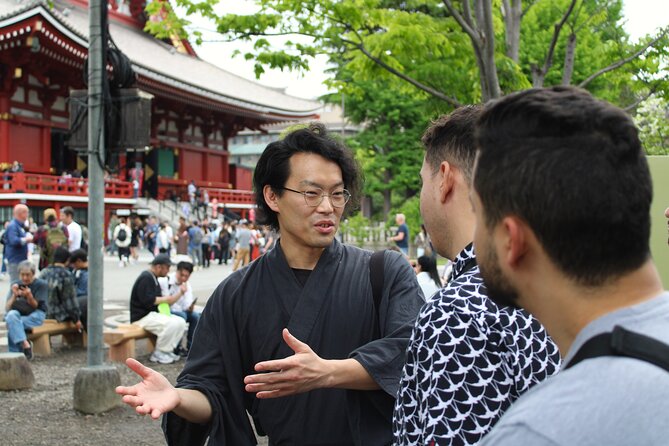
- Comedian guide, bilingual delivery: Live tour with English and Japanese from Karate Comic Ryo
- Small group size (max 8): Easier questions, calmer walking, and more back-and-forth
- You get orientation before the temple crowd: Skytree and Asakusa viewpoint stops help you place the area in your head
- Religions side-by-side, explained clearly: Buddhist temple and Shinto shrine in the same neighborhood, plus deities and meaning
- Skip the ticket line: Less time queuing, more time walking and learning
- No stop-for-food shopping loop: You’ll get the history and structure first, then recommendations afterward
Why Asakusa feels easier with a comedian’s explanations
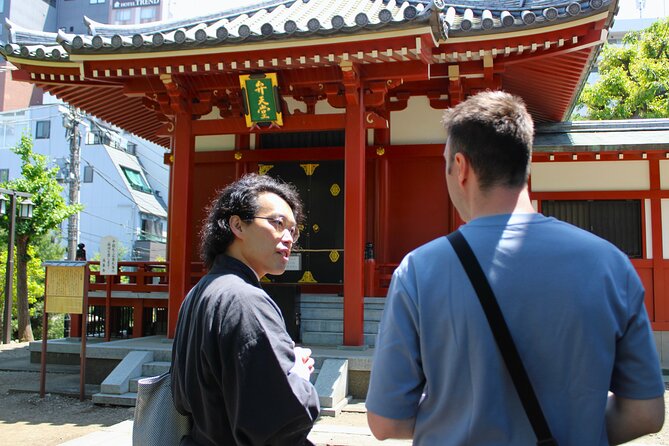
Asakusa can be one of those Tokyo places where the sights are famous but the meaning is hard to decode. What I like about this Asakusa walking tour is that it doesn’t treat temples like museum pieces. It connects what you see—gates, halls, shrines, statues—to how people in Japan think about religion, luck, and community.
Ryo’s comedy angle matters because it changes the tone. Instead of one lecture after another, you get humor used as a bridge to culture. You’re not just memorizing terms like Kaminarimon or Sensō-ji—you’re getting why they matter.
The other reason this works is the sequence. You’re guided through the landmark approach and then into the temple zone in a way that helps you build a mental map while you still have energy.
You can also read our reviews of more walking tours in Tokyo


Meeting at Tokyo Cruise: the logistics that save time
The meeting point is in front of Tokyo Cruise, the water bus station at the Asakusa pier. It’s about a 1–2 minute walk from Asakusa Station on the Tokyo Metro Ginza Line, which makes it workable even if you’re juggling trains and short connections.
Plan to arrive about 5 minutes early. This tour starts on time, and there’s no waiting for late arrivals. Also keep in mind this is not a hotel pickup. You meet at the pier, then the group parts ways after the walk.
If you want a smooth first day in Tokyo, that matters. The faster you get oriented in one neighborhood, the less you’ll wander in circles later.
Sumida Park plus skyline-style landmarks before the main temple zone
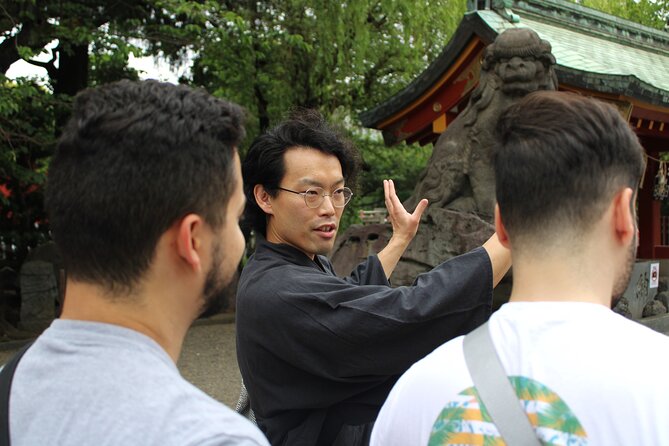
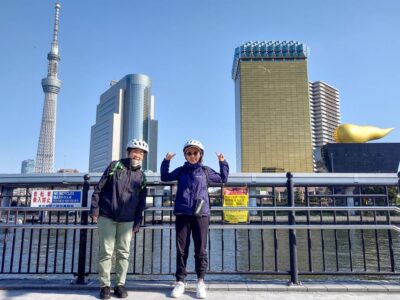
A smart trick in this tour is the warm-up before Sensō-ji. Before you dive into the famous temple area, Ryo shows landmarks around the broader Asakusa view, including Tokyo Skytree and the Asahi Beer Company. You also get a free viewpoint from a nearby building to help you read where everything sits.
Then you head toward Sumida Park. This area gives you breathing space and context. Instead of walking straight into the most photographed spots, you first get a feel for the river-and-streets layout that shapes how Asakusa feels.
For a first-time visitor, these small positioning moments pay off. They turn the later stops—Kaminarimon, Nakamise, shrine and temple halls—into a route you can remember, not just a series of snapshots.
Kaminarimon Gate: photo stop with a story behind the symbolism
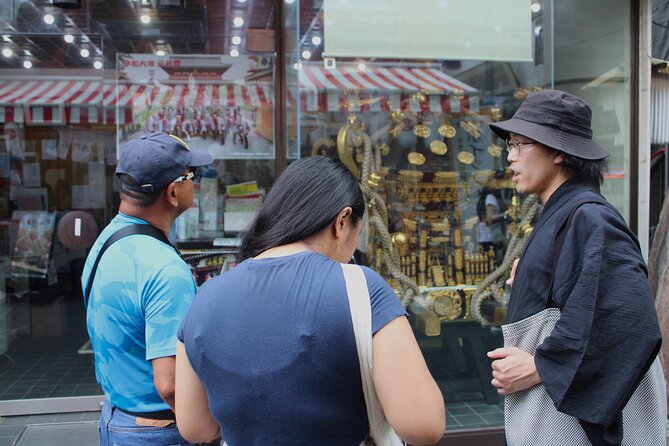
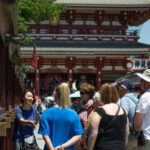
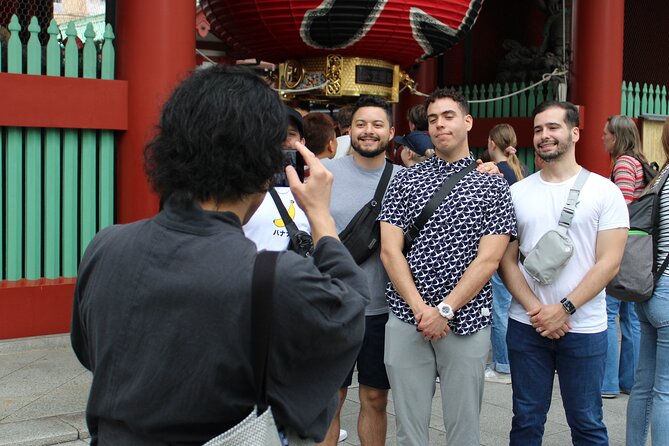
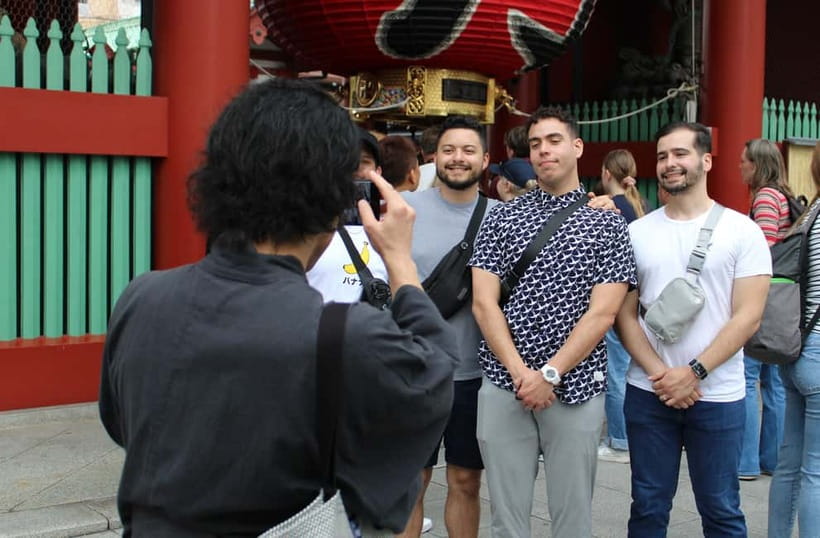
Next comes Kaminarimon, the iconic gate you’ve probably seen in photos countless times. Here you get a photo stop plus guided context, which is the difference between seeing a gate and understanding why it’s a gate that people treat as a landmark.
Ryo also helps you connect the gate to the broader Sensō-ji area. That matters because the entrance isn’t just decoration—it’s a threshold. In a guided format, you’ll get explanations that help you notice details you might otherwise skip, like how the area is arranged once you move past the gate.
This is also where many people start forming their own pace. If you like slowing down for pictures, Kaminarimon is a good place to do it. If you prefer to keep moving, the guide’s structure keeps you from losing time.
Asakusa Shrine and the Buddhism–Shinto overlap
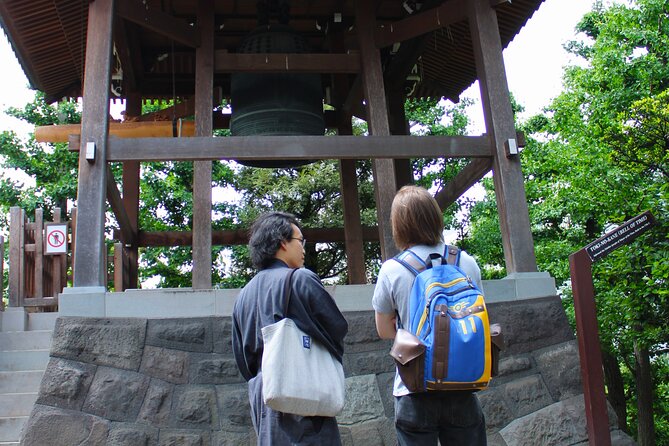
One of Asakusa’s defining traits is that it mixes traditions side by side. This tour leans into that, and I think that’s the main reason it feels culturally richer than a basic walking loop.
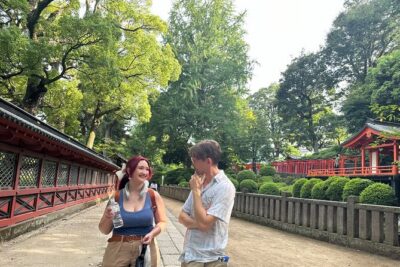
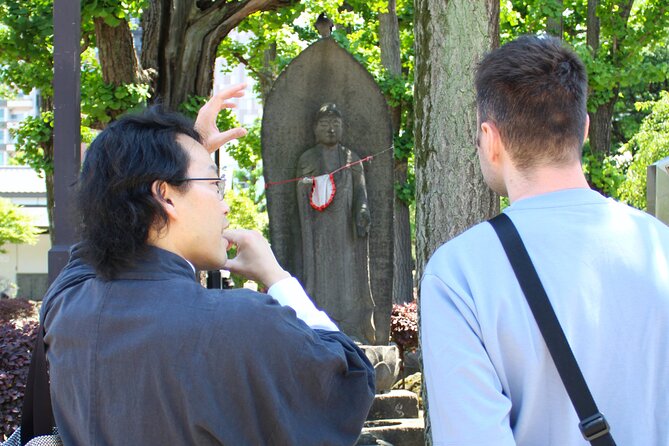
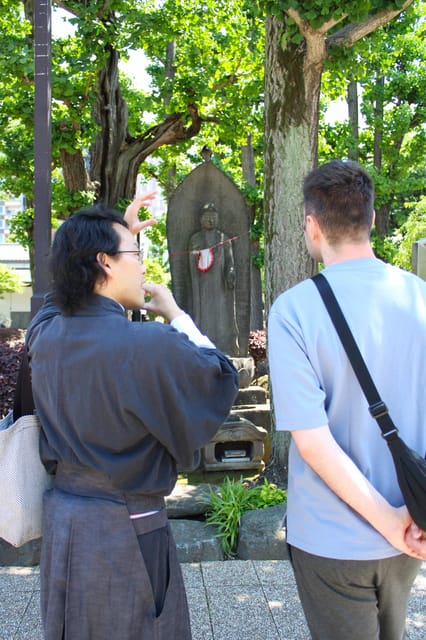
You’ll visit Asakusa Shrine, and the guide explains religious views among Japanese people in a practical way—how beliefs show up in public life and in places people return to. Ryo also points out the area’s statues of Buddhist deities and introduces what they mean.
Even if you don’t consider yourself religious, these explanations help you read the visual language. You start noticing symbols and figure out what people are likely doing there and why.
A small caution: if you’re sensitive to worship spaces where people are praying, stay aware and keep your movements respectful. A guided group helps with timing, but you still need to match the local vibe.




Sensō-ji Temple: getting the meaning, not just the must-see photos
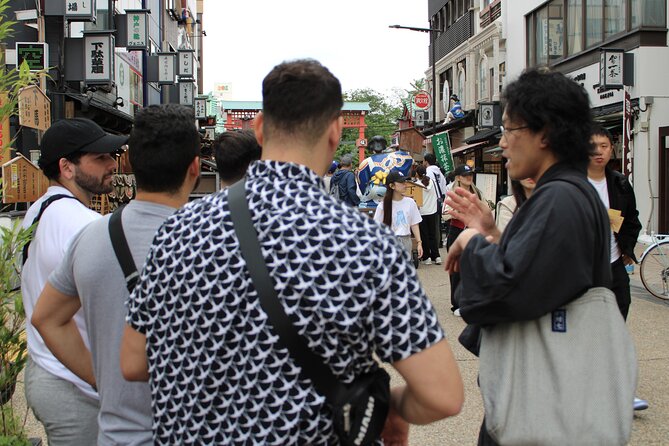
Sensō-ji is the headline, and this walk is designed to deliver it without turning it into pure crowd navigation. You’ll have guided stops around the temple area with explanations that cover more than what it looks like.
Ryo’s approach focuses on significance—what the different places are for, and how the neighborhood developed around this sacred site. If you like understanding a place’s logic, you’ll appreciate this part most. You won’t just hear dates; you’ll hear why the area formed the way it did.
There’s also a guided explanation style that uses humor without turning the topic into a joke. That balance is hard to find. Here it tends to make the stories easier to follow, especially if you’re traveling alone or just trying to make sense of a new culture quickly.
The tour finishes at the main hall area (the Hondo). That ending point is useful. You’re not left wandering at random; you end at the central experience.
Nakamise Shopping Street: origin stories before the snack stops
After the shrine-temple portion, you head to Nakamise Shopping Street. This is where Asakusa becomes sensory fast—souvenir stalls, snack smells, and people moving in every direction.
What makes this tour different is the framing. Ryo explains the origin of Sensō-ji Temple and shares the story with illustrations, which gives the street a context beyond shopping. You also learn how the temple was supported over time, including involvement from locals and historical generals from different periods.
If you’ve ever felt stuck in shopping streets that don’t explain anything, this is the fix. You get to understand why the street exists and how the temple draws people across generations.
One more practical note: the tour is designed not to stop for food or souvenir shopping during the walk. That’s great if you want the history to stay primary. It also means you should plan to do snacks or shopping on your own right after, using Ryo’s recommendations if you want help choosing what to buy.
Price and value: is $31 worth 90 minutes?
At $31 per person for a 90-minute guided walk, the value mostly comes down to what you hate most on a Tokyo visit: confusion, long lines, or paying for generic narration.
This tour gives you several clear cost-justifiers:
- A live guide with English and Japanese
- Small group size (limited to 8), which helps with questions
- Skip the ticket line, which can save real time in high-traffic temple areas
- A guided route that covers major points like Kaminarimon, Nakamise, Asakusa Shrine, and Sensō-ji
You’re also paying for something less measurable: a local’s story style. Ryo has worked in Asakusa for years as a rickshaw driver, and that background shows in how he points out what matters and what visitors often miss.
Would I call it cheap? No. But for a first-time Asakusa visit, it can be a smart use of money because it saves hours of figuring things out—and it improves your enjoyment once you’re on your own.
Who this tour fits best (and who might skip it)
This experience is a strong match if you want an easy start to Asakusa. You’ll likely enjoy it if you:
- want a guided orientation that helps you navigate famous spots
- like culture and context, especially around Buddhism and Shinto
- appreciate humor in a serious setting
It’s also a good option for travelers who don’t want a big group. With a small group limit, the experience feels more personal and you’re not just part of a moving crowd.
If you’re the type who wants total freedom with zero structure, you might find the fixed route less appealing. Also, if you’re only interested in shopping, note that the guide won’t turn the walk into a food run or souvenir stop. The focus stays on temples, shrines, and history.
If you want to make the most of it
Come with one mindset: treat it like a guided path, not a fast sightseeing sprint. Since you’ll be covering multiple stops, you’ll enjoy it more if you let the guide lead the pace and you use your time well at the photo moments.
After the tour, take advantage of the recommendations for snacks and souvenirs. You’ll get better results when you know what to look for. A lot of the fun in Asakusa is what you do after you understand what you’re looking at.
Also, wear shoes you can walk in. This is a walking tour, and the temple area plus Nakamise can mean steady steps and tight spacing at points.
Should you book this Asakusa tour with comedian Ryo?
I’d book it if it’s your first time in Asakusa and you want a guided route that makes Sensō-ji and the shrine-temple overlap feel understandable. The small group size, English/Japanese live guide, and ticket-line skip add practical value, and Ryo’s comedic storytelling helps the cultural lessons land without sounding like a lecture.
I’d think twice if you’re expecting nonstop stand-up energy or if you’re only in Asakusa for quick photos and shopping with no interest in religious or historical context. In that case, you might prefer a self-guided route.
For most visitors, though, this is a well-shaped way to start your Tokyo trip in a neighborhood that’s both famous and deeply specific.
FAQ
How long is the Asakusa walking tour with Ryo?
The tour lasts 90 minutes.
How big is the group?
The tour is limited to a small group of up to 8 participants.
What languages are available for the guide?
The live guide speaks English and Japanese.
Where do we meet for the tour?
Meet in front of Tokyo Cruise, the water bus station at the Asakusa pier.
Does the tour skip lines at Sensō-ji?
Yes, it includes skip-the-ticket-line entry.
Will we stop for food or souvenirs during the walk?
No. The tour has a specific route and does not stop for food or souvenirs. The guide can recommend places after the tour.
Is the tour wheelchair accessible?
Yes, the tour is wheelchair accessible.