REVIEW · TOKYO
Tokyo 2-Day Private Walking Tour with Licensed Guide
Book on Viator →Operated by Japan Guide Agency · Bookable on Viator
Tokyo feels huge. This tour keeps it sane.
What makes this experience work is two consecutive days with a licensed English-speaking guide who helps you plan efficient routes in one of the world’s biggest cities. You’ll also get to pick 3 to 4 stops each day from a menu, so you’re not stuck with a rigid checklist while Tokyo goes right on being Tokyo.
I like two things a lot here. First, the setup lets you build a custom itinerary: 3–4 sites per 6 hours each day, pulled from the provided lists. Second, it’s not just “see the sights” tour energy; the guide focus is clear in the feedback. Guides like Yasuho Suzuki and Yoshi were praised for knowledge, answering questions, and keeping a good pace while still hitting the places you actually asked for.
One consideration: this isn’t a full package with tickets and rides. Entrance fees and transport aren’t included, and some famous stops have limits (like Imperial Palace inside access, and Tokyo Tower top deck not included). If you’re budgeting only for the tour price, you’ll want to plan extra for whatever paid entry you choose.
In This Review
- Key highlights you’ll feel right away
- Two 6-hour days in Tokyo: how the flow really works
- Why the “same guide” detail matters
- Building your itinerary: choosing 3–4 spots without overpacking
- My practical tip for choosing your 3–4
- Day 1 in Tokyo options: Asakusa, Akihabara, Tsukiji, and old downtown
- Asakusa + Senso-ji Temple (the old Tokyo centerpiece)
- Imperial Palace (see the exterior, not inside)
- Tokyo National Museum (art, artifacts, and a good pause)
- Tsukiji Fish Market (historic market vibes)
- Akihabara (electronics and geek Tokyo)
- Hama Rikyu Gardens (a garden with tide-fed ponds)
- Shibamata and Nezu (old downtown flavor)
- Ueno Park (multiple attractions in one zone)
- Day 2 in Tokyo options: gardens, Harajuku, Shibuya, Tokyo Tower, and Odaiba
- Shinjuku Gyoen National Garden (big park reset)
- Rikugien Garden (a garden built for Edo-era taste)
- Yoyogi Park (picnic lawns and easy outdoor time)
- Takeshita Street and Harajuku (youth fashion on foot)
- Meiji Jingu (a shrine right by the bustle)
- Shibuya Crossing (Tokyo’s famous intersection)
- Koishikawa Korakuen (Edo-period garden calm)
- Kabukicho / Golden Gai (nightlife area, daytime reality)
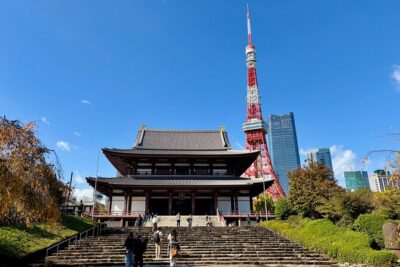
- Tokyo Tower (main deck only)
- Odaiba (Tokyo Bay shopping and entertainment island)
- Logistics and budget: what the $286.16 really covers
- Plan for walking time and heat
- Where the itinerary shines: temples, markets, and garden contrasts
- Guide quality that shows up in the details
- Who should book this, and who might skip it
- Should you book this 2-day private Tokyo walking tour?
- FAQ
- How long is the tour each day?
- Do I keep the same guide for both days?
- Can I choose the attractions I want to see?
- Is this tour private?
- Is pickup included?
- Are transportation and meals included?
- Are entrance fees included?
- Is access to the Imperial Palace inside included?
- Is Tokyo Tower top deck included?
- What if the tour is canceled due to weather?
Key highlights you’ll feel right away
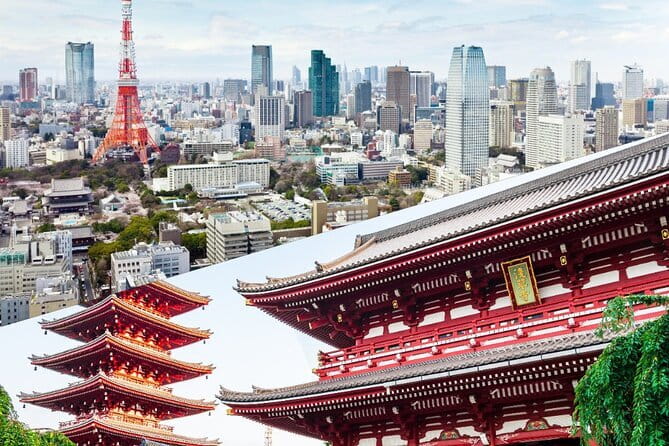
- One guide for both days so you don’t start over
- Pick 3–4 sights from the day menus
- A private Tokyo walking tour format (only your group)
- Licensed, English-speaking local guidance
- A mix of temples, markets, neighborhoods, and big-city viewpoints
- Time built in: two days at about 6 hours each, not one frantic day
Two 6-hour days in Tokyo: how the flow really works

This is a Tokyo private walking tour designed for reality. Tokyo is large, and trying to “do everything” in one day usually means walking fast, taking photos, and missing the meaning. Here, you get two consecutive days, and the big win is that you keep the same guide across both. That continuity matters more than it sounds.
The tour day is built around about 6 hours of guided time. In practice, that lets you see major sights without turning your day into a sprint. You’ll still be walking (it’s a walking tour), but the guide can help you order stops for efficiency—especially when you’re mixing areas like Asakusa, Ueno, Akihabara, and Tsukiji on Day 1 options, then pivoting to Shinjuku/Harajuku/Shibuya or Tokyo Bay choices on Day 2.
You can also read our reviews of more walking tours in Tokyo

Why the “same guide” detail matters
When you have the same guide both days, you can ask questions early and get better answers later. In the feedback, guides like Yoshi and Kazu were described as not only friendly, but also tuned into practical routing—getting you to requested places in an efficient order. That’s the difference between “a guide who explains” and “a guide who plans.”
Building your itinerary: choosing 3–4 spots without overpacking
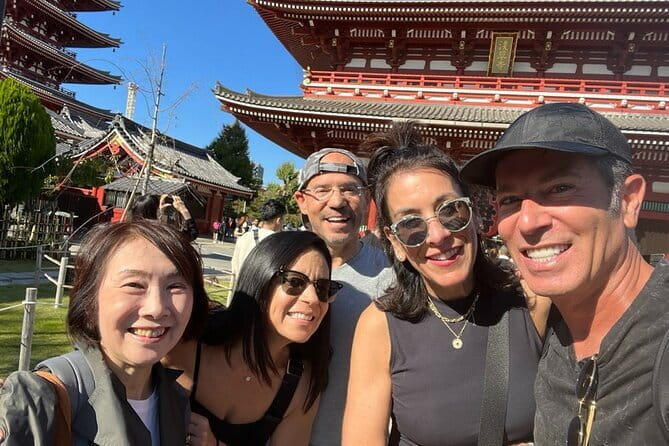
Tokyo menus are great—until you pick too much. The format here is built to prevent that. You choose 3 to 4 sites per day from the list, and you can mix and match between Day 1 and Day 2 options.
That means you can tailor your trip to your interests instead of forcing every traveler to do the same path. Want more tradition? Lean into Asakusa/Senso-ji, Shibamata, Nezu, Ueno. Want modern Tokyo and pop culture? Add Akihabara, Shibuya Crossing, Takeshita Street, and Harajuku-area stops.
My practical tip for choosing your 3–4
Pick one “anchor” area per day. For example:
- Anchor Day 1 in east Tokyo (Asakusa/Senso-ji + nearby neighborhoods like Nezu or Ueno)
- Anchor Day 2 in west Tokyo (Shinjuku + Harajuku + Meiji Jingu, with Shibuya as your big finale)
Then fill the other 1–2 spots with one of these categories:
- A market or museum option (Tsukiji Fish Market or Tokyo National Museum)
- A garden pause (Hama Rikyu, Shinjuku Gyoen, Rikugien, Koishikawa Korakuen)
- A “small-town feel in Tokyo” option (Shibamata or Nezu)
You’ll end up with a day that feels like a story, not a checklist.
Day 1 in Tokyo options: Asakusa, Akihabara, Tsukiji, and old downtown
Day 1 is where you can lean into classic Tokyo scenes, the kind you’ll recognize even if it’s your first trip. The stop list is packed with strong contrasts: temple streets, museum-grade art and artifacts, a historic fish market area, electronics shopping, and garden breaks.
Here’s what each option offers, plus the tradeoffs to think about when you choose your 3–4.
You can also read our reviews of more guided tours in Tokyo

Asakusa + Senso-ji Temple (the old Tokyo centerpiece)
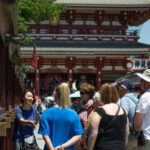
Asakusa is one of the easiest places to “get” Tokyo fast. You start with the area and then hit Senso-ji, one of the city’s most colorful and popular Buddhist temples. The focus here is atmosphere: temple grounds, surrounding street energy, and the sense that this area has its own rhythm.
Good to know: admission is listed as free for both the Asakusa meeting area and the Senso-ji stop, so you’re mostly paying in time, not ticket cost. The main drawback is crowding. If you’re sensitive to people and lines, consider how you’ll balance this with quieter spots later that day.
Imperial Palace (see the exterior, not inside)
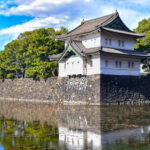
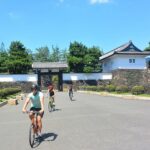
Imperial Palace is an obvious Tokyo “big deal” stop. In this tour, access to the inside of the Imperial Palace isn’t included. What you will get is time around the palace area—useful for context, especially if you’re interested in how the Tokugawa-era Edo Castle footprint shaped today’s city.
If you want museums and gardens, the Imperial Palace stop can work as a calm, structured transition between busier neighborhoods.
Tokyo National Museum (art, artifacts, and a good pause)
The Tokyo National Museum is the oldest and largest of Japan’s top-level national museums. It’s a great option if you’d rather spend some time indoors and learn what you’re looking at instead of only photographing.
But admission is marked as not included, so this can add cost. Also, plan your day balance: if you choose the museum on top of Senso-ji and market time, you may feel “sight heavy” unless your garden or neighborhood stop is quieter.
Tsukiji Fish Market (historic market vibes)
Tsukiji Fish Market is a short stop option here, positioned as a way to explore the old market area in Tokyo. Expect food-world energy and the kind of sights you can’t really replicate at home.
Admission is listed as free, which helps keep your budget stable. Time is also tight—so I’d treat it as a taste of the market scene rather than the whole day around fish.
Akihabara (electronics and geek Tokyo)
Akihabara is a district known for electronics shops. It’s also linked with Japan’s popular culture fandom energy in recent years. If you like gadgets, anime culture, game systems, or just the visual overload, this is one of Tokyo’s simplest “yes” stops.
Admission is listed as free, but the cost is often your own shopping choices. If you want to keep spending down, ask your guide to help you set a limit before you go in.
Hama Rikyu Gardens (a garden with tide-fed ponds)
Hama Rikyu Gardens is on Tokyo Bay and features seawater ponds that change level with the tides. That detail alone makes it worth considering if you like Japanese gardens but want something a little different from the standard “pretty landscaping photo.”
Admission is marked as not included, so budget a ticket if you choose it. The payoff is a quieter reset between dense urban blocks.
Shibamata and Nezu (old downtown flavor)
Shibamata and Nezu are both “old downtown” style options, the kind that show Tokyo wasn’t always built like this. Shibamata has kept old-school charm from earlier times, especially around the Edogawa River area. Nezu is part of shitamachi (old Tokyo) and is described as having survived major damage during wars and disasters, retaining a last-century feel.
Admission is listed as free for both options. The drawback is timing: these kinds of neighborhoods shine when you have room to wander. If you pack in a museum and a market too, you might not slow down enough to enjoy the vibe.
Ueno Park (multiple attractions in one zone)
Ueno Park gives you options even if you don’t pick a specific museum. It’s known for museums, a zoo, and a Toshogu shrine, plus Shinobazu Pond. It’s also noted as a cherry blossom party spot.
Admission isn’t included for the Ueno Park stop itself, which means if you go into museums, you’ll likely pay separately. Still, as a walking-tour “gear shift” away from heavy ticket attractions, it’s a strong choice.
Day 2 in Tokyo options: gardens, Harajuku, Shibuya, Tokyo Tower, and Odaiba
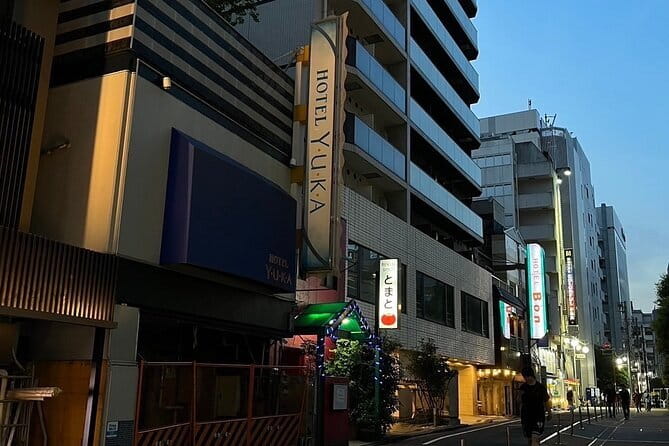
Day 2 options are about variety: big-city icons (Shibuya Crossing, Tokyo Tower), youth fashion zones (Harajuku/Takeshita Street), and park time to keep the walking comfortable.
Again, you pick 3–4 from this list, so you can shape the personality of Day 2.
Shinjuku Gyoen National Garden (big park reset)
Shinjuku Gyoen is one of Tokyo’s largest and most popular parks, with lawns, walking paths, and tranquil scenery. If you want a real break from crowds, this is one of the best ways to do it.
Admission isn’t included, so budget a ticket. The plus is that it gives you a “breathing day” without leaving Tokyo behind.
Rikugien Garden (a garden built for Edo-era taste)
Rikugien is often considered one of Tokyo’s most beautiful Japanese landscape gardens. It was built around 1700 for the 5th Tokugawa Shogun, which makes it a strong choice if you like gardens that have a story behind the design.
Admission isn’t included. If you like gardens, pairing Rikugien with something modern like Shibuya Crossing can make for a well-rounded day.
Yoyogi Park (picnic lawns and easy outdoor time)
Yoyogi Park is a large city park with lawns, ponds, and wooded areas. It’s a good stop when you want to reset between Harajuku and Meiji Jingu, or just to break up your sightseeing pace.
Admission is free for this stop. It’s also flexible: you can spend the time stretching your legs, or just enjoy the greenery while staying on schedule.
Takeshita Street and Harajuku (youth fashion on foot)
Takeshita Street is in the Harajuku area and is known for extreme teenage cultures and fashion styles. It’s one of those Tokyo stops that’s more about people-watching and energy than “one landmark.”
Admission is free, but it’s also the kind of place where shopping can quietly add up. If you’re not a shopper, you may still enjoy it for the sensory Tokyo feeling.
Meiji Jingu (a shrine right by the bustle)
Meiji Jingu is dedicated to the deified spirits of Emperor Meiji and Empress Shoken. It’s conveniently close to busy Harajuku station, so you can go from the modern street scene to a calmer shrine atmosphere without losing the day.
Admission is listed as free. The 30-minute stop makes it doable even if you want to pack in Shibuya after.
Shibuya Crossing (Tokyo’s famous intersection)
Shibuya Crossing is exactly what the name suggests: the iconic intersection you’ve seen in photos and videos. This is where you see Tokyo’s motion in real time.
Admission is free. The consideration is crowd levels and navigation. A guide can help you cross, pick good viewing time, and avoid wandering in circles.
Koishikawa Korakuen (Edo-period garden calm)
Koishikawa Korakuen is one of Tokyo’s oldest and best Japanese gardens, built in the early Edo Period at the Mito branch of the ruling family’s residence. Admission isn’t included, so this is a more “ticket budget” choice.
If you like gardens and you already chose a garden on Day 1, you might still enjoy it as a different style. If you’d rather keep spending lower, replace it with a free outdoor stop like Yoyogi Park.
Kabukicho / Golden Gai (nightlife area, daytime reality)
Kabukicho and the Golden Gai area are tied to eating and drinking spots, including a back-alley vibe that’s often associated with old-school Tokyo nightlife energy. The stop time is about 1 hour, and the admission is listed as free.
If you’re visiting mostly during daytime, you might treat this as a photo-walk through the atmosphere rather than a full nightlife plan.
Tokyo Tower (main deck only)
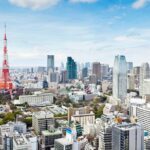
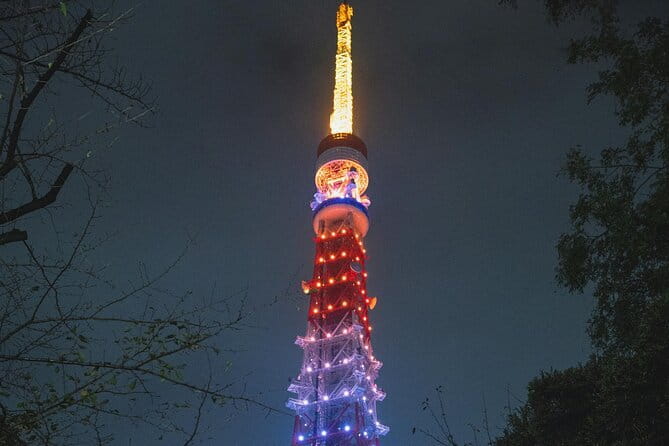
Tokyo Tower is the “retro cute” version of the Tokyo Skytree concept, and it’s listed here with the note that only the main deck is included. Top deck access isn’t included.
Admission is not included, which means plan for ticket cost if you want to go up. The key detail: you can’t plan on the top deck with this tour.
Odaiba (Tokyo Bay shopping and entertainment island)
Odaiba is a popular shopping and entertainment district on a man-made island in Tokyo Bay. It originated from small fort islands built toward the end of the 19th century, which gives it a bit of historical texture even if you’re mainly going for views and modern Tokyo energy.
Admission is listed as free. If you love skyline views, this pairs nicely with a daytime Shibuya or Tokyo Tower stop.
Logistics and budget: what the $286.16 really covers
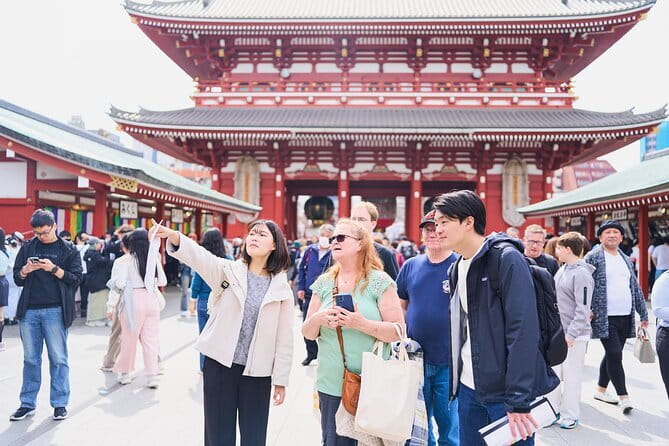
The price is $286.16 per person for two days, and that’s not just “someone walks with you.” It includes a licensed local English-speaking guide, a customizable itinerary where you select 3–4 sites per day, and a private tour format that’s only for your group.
What it does not include is just as important. You should expect:
- Accommodation and meals
- Transportation fees
- Entrance fees
- Any personal expenses
- Private vehicle (not included)
Also note: guide entry fees are only covered for sights that are part of your chosen list. That means if you decide to add a stop on the fly that isn’t in the plan, you may end up paying for it yourself.
Plan for walking time and heat
Tokyo walking can feel relentless in warm weather. In the guide feedback, one note mentioned severe heat, humidity, and strong sunshine during the tour period. So bring water, wear breathable clothing, and think about shade breaks when you choose your mix of temples, gardens, and commercial areas.
Where the itinerary shines: temples, markets, and garden contrasts
One of the best parts of this kind of Tokyo private walking tour is contrast. You get multiple “modes” in a single trip—old religion, old neighborhoods, indoor museums, and then modern city icons.
Here’s how to make those contrasts work for you:
- Pair a high-atmosphere temple stop (like Senso-ji) with a garden later (like Hama Rikyu or Shinjuku Gyoen) so your eyes and feet get a break.
- Use markets or shopping districts (Tsukiji, Akihabara, Takeshita Street) as “short, high-impact” moments rather than long marathons.
- Treat neighborhoods like Nezu or Shibamata as the slowdown section of your day. They’re the places where Tokyo feels more like a human-scale city.
If you’re the type who likes to understand what you’re seeing, the museum option on Day 1 (Tokyo National Museum) is a smart way to bring context into the middle of all the street scenes.
Guide quality that shows up in the details
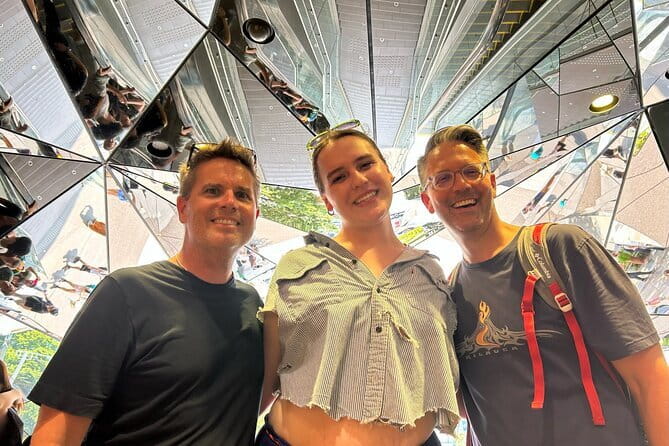
This experience is built around licensed English-speaking guides, and the feedback makes it clear that the best guiding here is practical. Yasuho Suzuki was praised for knowing the sights and answering questions, even researching a specific store request that he didn’t initially know. Yoshi was described as fun, easygoing, and good at mixing iconic sites of culture and history with insight into today’s social life. Kazu Hakata was singled out for efficient pacing across two days and even arranged a tea ceremony in a past tour.
Two takeaways for you:
- You’ll get better results if you show the guide your priorities upfront and let them sequence the day.
- If you have a special request—food stop, shop, or a niche interest—this format can actually handle it. In at least some past tours, guides treated that curiosity as part of the job.
Who should book this, and who might skip it
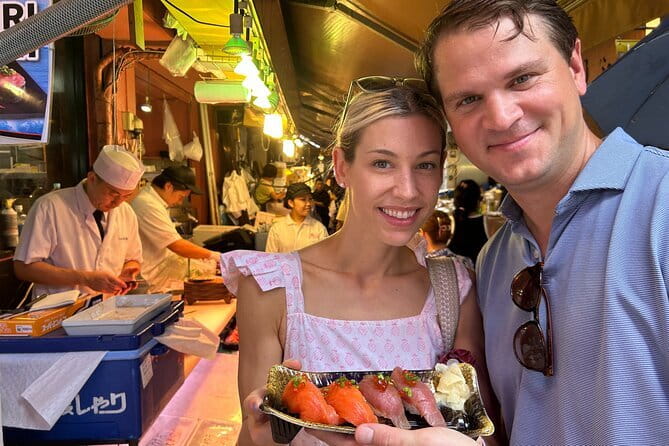
This Tokyo private walking tour is a good fit if you:
- Have only two days and want real efficiency
- Prefer a custom plan instead of a fixed group route
- Like a mix of modern Tokyo icons and traditional neighborhoods
- Value a licensed English-speaking guide for navigation and context
You might skip it if you:
- Want a full transport-and-ticket package
- Expect to go inside Imperial Palace or up Tokyo Tower top deck (those limits apply)
- Don’t like walking and changing areas often
Also, because it requires good weather and can be offered on a different date or refunded if canceled due to poor conditions, it helps if your schedule is flexible.
Should you book this 2-day private Tokyo walking tour?
I’d book this tour if you want two days that feel planned, not chaotic. The value is strongest when you actually use the customization: pick 3–4 stops that create a clear story for each day, then let the licensed guide handle the routing.
If your budget can cover entrance tickets and transit on top of the tour price, you’ll get a smoother trip. If you’re trying to do Tokyo on “tour price only,” you’ll likely feel the ticket gaps at Imperial Palace (inside access not included), Tokyo National Museum, gardens, and Tokyo Tower main deck.
FAQ
How long is the tour each day?
The tour runs for 2 days total, with each day listed as approximately 6 hours.
Do I keep the same guide for both days?
Yes. The booking is for two consecutive days and the tour is designed so you have the same guide for both days.
Can I choose the attractions I want to see?
Yes. You select your must-see spots from the provided lists, choosing 3 to 4 sites on each day.
Is this tour private?
Yes. It’s a private tour/activity, and only your group participates.
Is pickup included?
Pickup is offered (and the tour also notes a meet-up on foot within a designated area of Tokyo).
Are transportation and meals included?
No. Transportation fees and meals aren’t included.
Are entrance fees included?
No. Entrance fees are not included, except that guide entry fees are only covered for sights listed under what to expect.
Is access to the Imperial Palace inside included?
No. The tour does not include access to the inside of the Imperial Palace.
Is Tokyo Tower top deck included?
No. The tour includes up to the main deck, and the top deck is not included.
What if the tour is canceled due to weather?
The experience requires good weather. If it’s canceled due to poor weather, you’ll be offered a different date or a full refund.