REVIEW · TOKYO
Shibuya: Crossing, Hachiko & Shibuya Sky Guided Tour
Book on GetYourGuide →Operated by Actors合同会社 · Bookable on GetYourGuide
Shibuya hits fast and stays loud. This guided loop strings together Shibuya Sky panoramas with street-level icons, so you get the view and the atmosphere in one go. I like how the schedule stays compact without rushing the key photo moments.
Two things I really like are the 360-degree skyline at Shibuya Sky and the classic Hachiko-to-Scramble stretch that makes Tokyo feel instantly real. One consideration: Shibuya Sky can restrict entry during severe weather like strong winds or lightning, so keep your expectations flexible.
In This Review
- Key tour takeaways
- Hachiko to the Scramble: the easiest way to get oriented fast
- Shibuya Sky’s 360-degree views: what you’ll actually look for
- Center Gai (Basketball Street): how to feel the trend engine
- Shibuya Parco and CyberSpace: pop culture for Nintendo and Pokémon fans
- Timing and pace: why 2 hours can work (and when it won’t)
- Price and value: is $87 reasonable for this mix?
- Guides and photo help: what makes this feel easy in practice
- Who should book this Shibuya Sky and icons tour
- Should you book it? My practical call
- FAQ
- How long is the Shibuya Crossing, Hachiko & Shibuya Sky guided tour?
- Where do I meet the guide?
- What do we do at Shibuya Sky?
- Is Shibuya Scramble Crossing included?
- How much time is spent in each area?
- What languages are available for the guide?
- Is the tour wheelchair accessible and does it involve walking?
Key tour takeaways
- Shibuya Sky first, then street chaos: you see the scramble from above before joining it below.
- Hachiko and the crossing are side-by-side: easy rhythm from story to iconic photo.
- Center Gai is youth fashion at walking speed: quick look at the district’s trend engine.
- Shibuya Parco’s “CyberSpace” is the pop-culture magnet: Nintendo Tokyo and Pokémon Center are built into the stop.
- Guides focus on practical photos and local context: names like Seiji, Kai, and Hiro show up for a reason.
Hachiko to the Scramble: the easiest way to get oriented fast
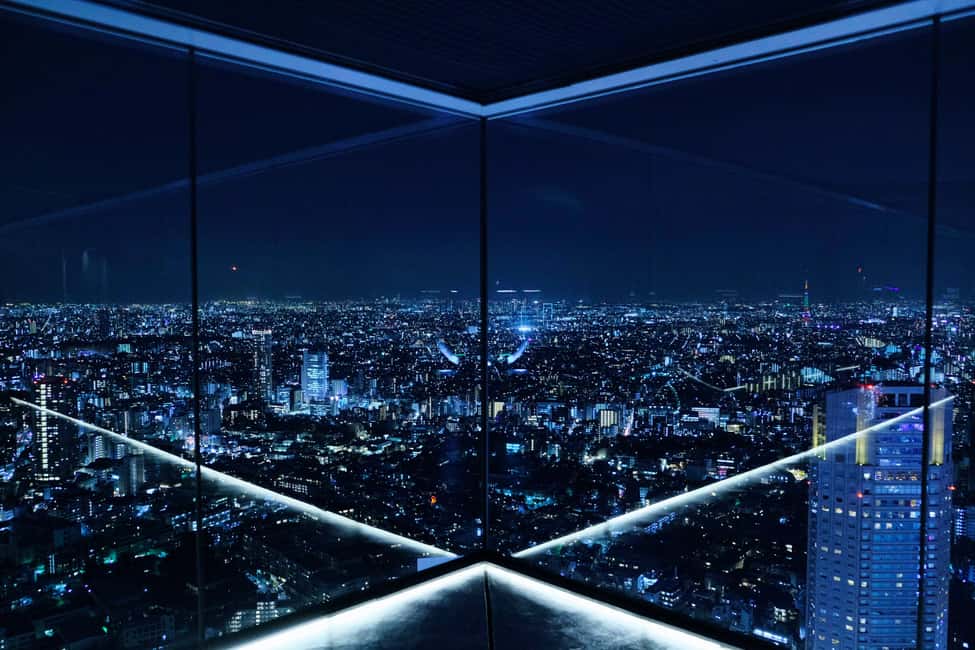
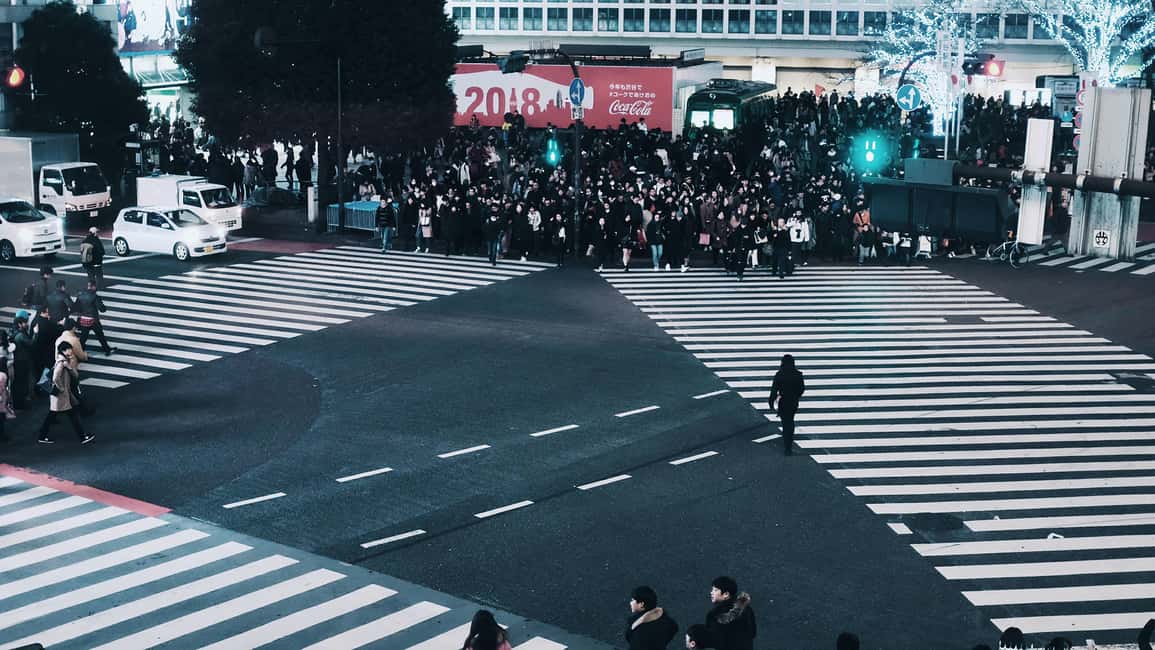
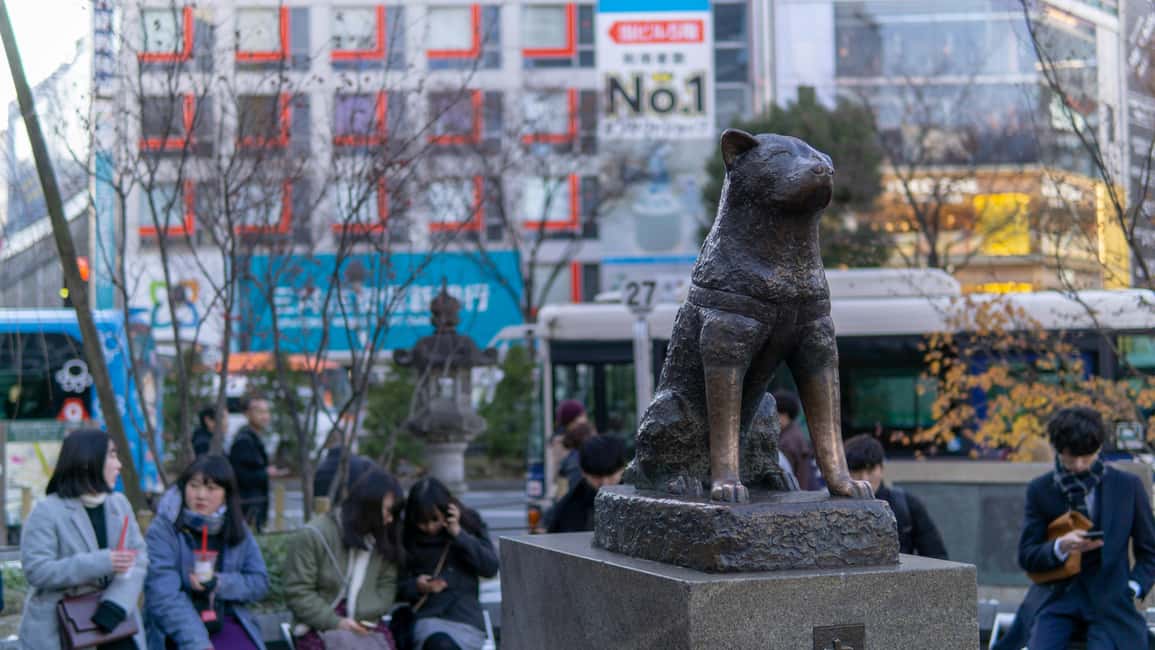
If Tokyo has a postcard spot that still feels alive, it’s Shibuya Scramble Crossing. This tour starts right at the famous Hachiko Statue outside Shibuya Station, which is a smart move because it gives you a landmark before the crowds blur into one stream. You’ll hear the story of Hachiko and why he matters in Japanese culture, not just his fame.
Then you’re right by the scramble itself, close enough to understand scale. The guide helps you turn it into a moment, not a mad dash. When the group crosses together with the signal timing and hundreds of people moving in every direction, it’s chaotic in the best way. It’s also one of those Tokyo scenes where a good timing tip matters for photos.
A small caution: the area around Shibuya Station gets busy fast. Even with a guide, it’s still a place to watch your footing and keep your phone secure while you wait for your turn.
You can also read our reviews of more guided tours in Tokyo

Shibuya Sky’s 360-degree views: what you’ll actually look for
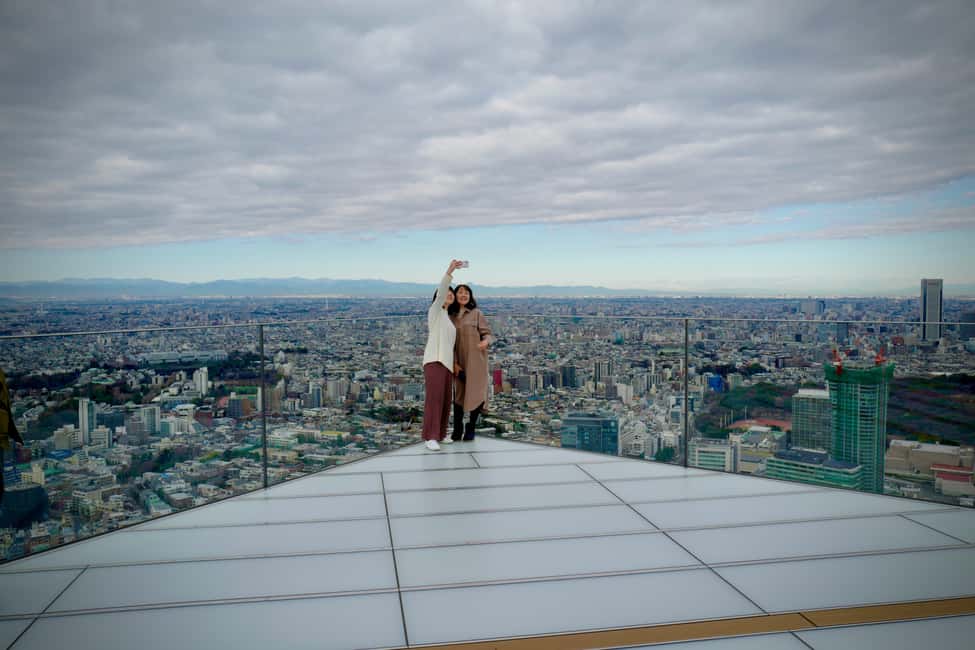
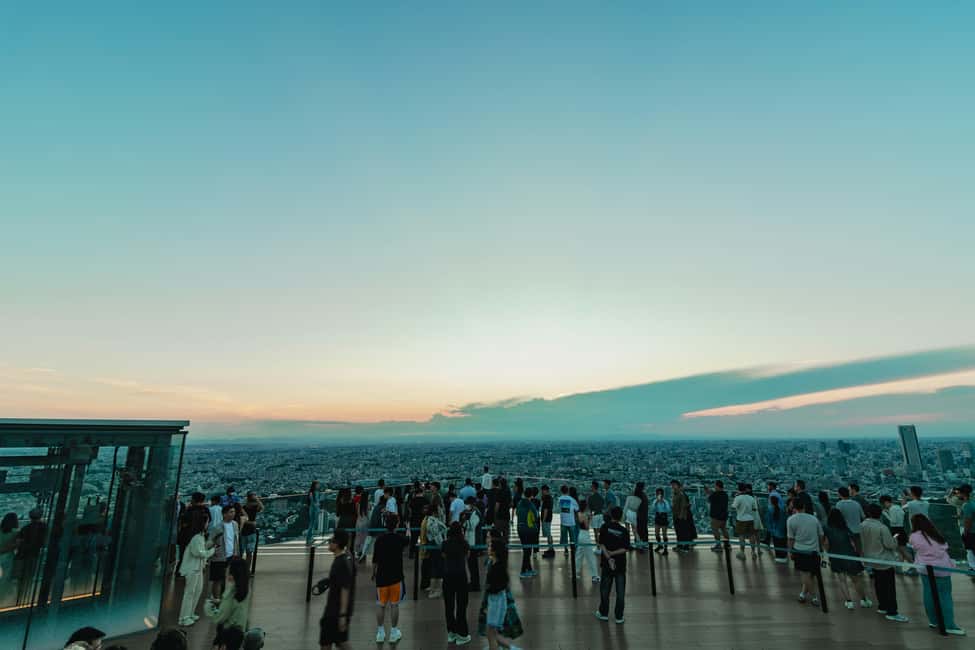
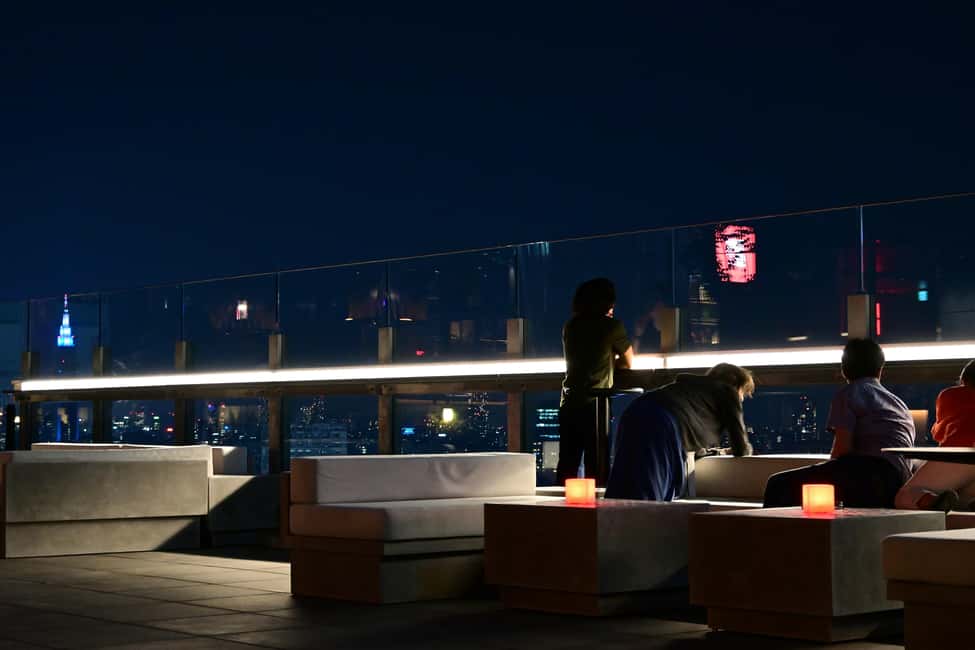
Shibuya Sky is where the tour slows down, because you need a little time to scan the city. You’ll get about 45 minutes at the open-air observation deck, which is long enough to find a good spot, take multiple angles, and still not feel trapped in one view.
The highlight is the 360-degree panorama. You can see Tokyo Tower, and on clear days you may even catch Mt. Fuji. From up there, the Shibuya Scramble looks like a living pattern, and you can connect what you just walked through to the city grid. It’s also one of the easiest ways to understand where you are in Tokyo without getting on a map every five seconds.
Practical note: Shibuya Sky may restrict entry or temporarily close due to severe weather such as strong winds or lightning. If that happens during your tour window, you might not get the deck access, so plan your day with a bit of flexibility. Bring the mindset that the tour still works even if the sky portion changes.
Center Gai (Basketball Street): how to feel the trend engine
Once you’re back on the ground, the tour shifts from skyline to street life with a stop at Center Gai, sometimes called Basketball Street. This narrow strip is one of Shibuya’s busiest trend corridors, packed with youth-focused fashion shops and fast food. It’s not a museum stop. It’s a real slice of how the district signals what’s cool right now.
You’ll walk through with a guide who can point out local customs and help you interpret what you’re seeing. If you’re curious about fashion trends, this is the time to ask. Even without shopping, you’ll notice details like how storefronts target different styles, and how the energy changes block to block.
The time here is about 30 minutes, so treat it like a guided “taste.” You’ll get a feel for the neighborhood, but you won’t have time to try on outfits or browse every store. If you love fashion browsing, Shibuya rewards a second trip on your own.
Shibuya Parco and CyberSpace: pop culture for Nintendo and Pokémon fans
The last major stop is Shibuya Parco, which is more than a mall stop on this tour. It’s positioned as Tokyo pop-culture central, especially through the 6th floor CyberSpace area. This is where the official Nintendo Tokyo store and Pokémon Center are, along with other anime and manga shops that tend to pull in serious fans.
For you, this means the tour ends in a place where you can actually spend money or satisfy your curiosity on your own terms. The guided portion helps you reach the right floor and focuses the experience so you don’t wander a maze without a plan. Then you get time to look around and decide what’s worth it.
One practical tip: if you’re bringing home character goods or collectibles, keep an eye on how much you’re carrying. Shibuya Station areas are easy for getting around, but you don’t want to finish your tour with sore shoulders and too many bags.
Timing and pace: why 2 hours can work (and when it won’t)
This is a 2-hour walking tour, so you’re choosing focus over deep exploration. That’s a good deal if your priorities are iconic highlights: Hachiko, the Scramble, Shibuya Sky, and then the Center Gai and Parco stops. It also suits first-timers who want structure in a neighborhood that can feel overwhelming.
The drawback is simple: there’s not enough time to fully shop Center Gai or Parco the way dedicated fans might want. You get guided direction and photo moments, then you’re free to keep exploring afterward. If you love lingering, you’ll treat this as the “starter playlist,” not the whole concert.
Because it’s conducted on foot and suitable for all ages, it’s also worth wearing comfortable shoes. Shibuya is famous for walking, not just standing for photos. You’ll be moving through busy areas, and comfortable footwear makes the difference between fun and fatigue.






Price and value: is $87 reasonable for this mix?
At $87 per person, you’re paying for a guided route that compresses five recognizable Shibuya anchor experiences into one block of time. The value depends on how the Shibuya Sky entry ticket is handled in your specific plan. The tour says Shibuya Sky visit is included, while also noting ticket inclusion can vary by your selected package.
If your plan covers Shibuya Sky entry, this price starts to look more like convenience plus local context, not just sightseeing. You’re also paying for the guide to manage transitions so you arrive at each stop ready to use your time well. That matters because Shibuya’s best moments are timing-based: the scramble photo, choosing your view spot, and getting to the right floor in Parco.
If the Sky ticket is not included in your chosen option, double-check before you book. In that case, your total cost might drift upward, and you’d want to compare that to what you’d pay if you visited on your own with no guidance.
Either way, the biggest value isn’t a single landmark. It’s the way the tour stitches the district together so you understand the geography in a short time.
Guides and photo help: what makes this feel easy in practice
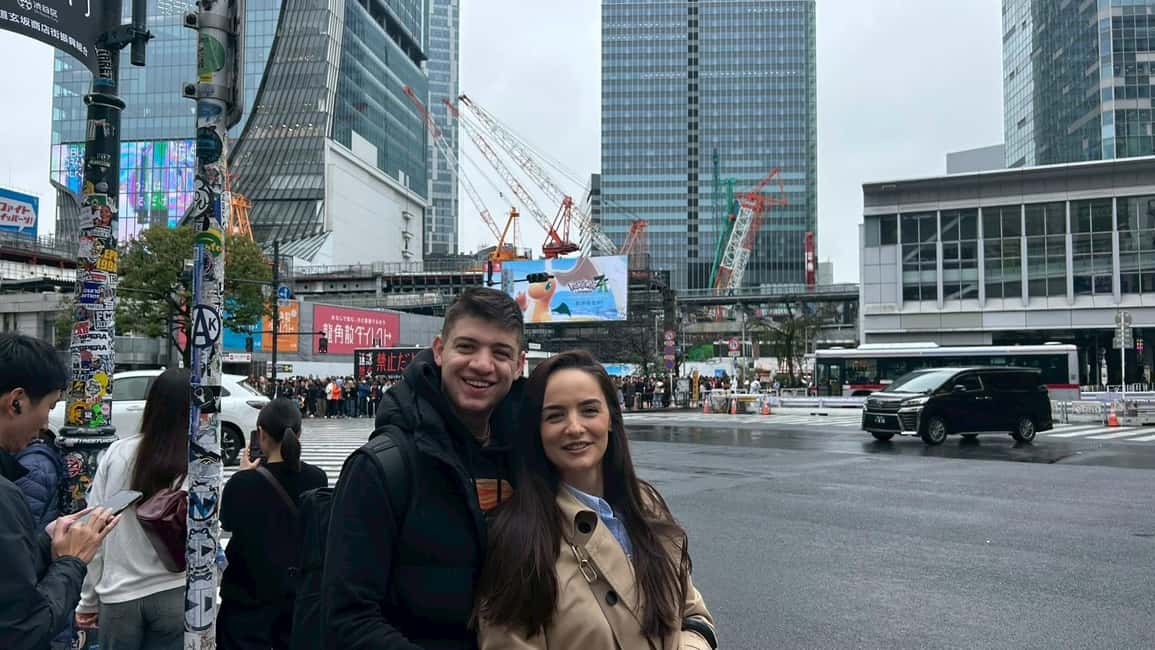
A tour like this lives or dies on how the guide handles crowd flow and timing. The good news is the tour is known for guides who pay attention to small details, like helping with photos and keeping the group moving at a pace that still allows good shots.
You’ll see that kind of care reflected in the names that come up often for this experience, including Seiji, Kai, and Hiro. Whether it’s finding a photo angle near Shibuya Crossing or explaining what you’re looking at from Shibuya Sky, the goal is the same: help you feel confident, not rushed.
Also, the tour provides English, Japanese, and Korean live guidance. Even if you’re traveling with mixed language comfort, having a guide who can explain what matters makes the experience much more than just following a route.
Finally, this is a private group tour, which usually means less waiting and a more controlled pace than large group departures. If you prefer a calmer dynamic in crowded districts, that’s a real plus.
Who should book this Shibuya Sky and icons tour
This tour fits you if you want a high-impact Shibuya primer. It’s especially good for:
- First-time visitors who want the must-see icons quickly
- People who care about skyline views as much as street scenes
- Fans of Nintendo, Pokémon, anime, and manga shopping in one focused stop
- Travelers who like structure and hate “lost in a crowd” energy
It may not fit if you’re the type who wants to spend an hour in one store or you’re shopping as your main activity. In that case, you might do better picking one or two zones solo and using this tour only if you truly want the Skyline and scramble context.
Wheelchair accessibility is listed, which is helpful for mobility planning. Still, it’s a walking tour, so the route comfort will depend on your needs and the day’s crowd conditions.
Should you book it? My practical call
If your Shibuya priorities are Hachiko + the Scramble, Shibuya Sky, and then a quick hit of Center Gai and Shibuya Parco, this tour is a strong value at $87—especially because it gives you structure in one of Tokyo’s most complicated-feeling neighborhoods. The layout is efficient: landmark, street chaos, skyline, then pop culture shopping.
I’d book it if you want an easy “two hours and I get it” experience. I’d also keep your plan flexible for the Shibuya Sky weather factor. If winds or lightning roll in, you’ll want Plan B energy for your day.
FAQ
How long is the Shibuya Crossing, Hachiko & Shibuya Sky guided tour?
The tour lasts 2 hours.
Where do I meet the guide?
You meet the guide in front of the Hachiko Statue (忠犬ハチ公像).
What do we do at Shibuya Sky?
You visit Shibuya Sky for a photo stop and time to enjoy the 360-degree views. The tour notes that Sky entry may be ticketed depending on your plan, and it can close temporarily for severe weather.
Is Shibuya Scramble Crossing included?
Yes. The tour includes a guided visit and time to take photos at Shibuya Scramble Crossing, and you’ll cross together with the crowd.
How much time is spent in each area?
Shibuya Sky is about 45 minutes. The Shibuya Crossing photo stop is about 15 minutes. Center Gai is about 30 minutes, and Shibuya Parco is about 30 minutes.
What languages are available for the guide?
The live guide is available in English, Japanese, and Korean.
Is the tour wheelchair accessible and does it involve walking?
Yes, the tour is listed as wheelchair accessible, and it is conducted on foot, so comfortable shoes are important.