REVIEW · TOKYO
Casual Japanese sake tasting and snack experience, Kabukicho
Book on GetYourGuide →Operated by Bancre Inc. · Bookable on GetYourGuide
Eight sips, one smart Shinjuku lesson. This casual Kabukicho sake tasting is built around comparing 8 carefully chosen sakes side by side, with traditional snacks that make the differences easier to notice. Two things I really like: the tasting order that starts with lower-alcohol options, and the friendly, simple explanations that keep it fun even if it’s your first time with sake. One consideration: it’s not wheelchair accessible because there’s no elevator.
I also appreciate how practical the whole setup feels. You meet just outside the Shinjuku Station area and head a few minutes along Kabukicho Central Road toward TOHO Cinemas. From there, you’re in a small group (max 6), guided in English or Japanese, and you’ll be tasting more than just “a glass of something.” You’ll actually learn how to compare.
In This Review
- Key points at a glance
- Where You Meet in Kabukicho (and How to Find the Right Bar)
- The $38 Value: What You Actually Get for the Price
- How the Tasting Flows: Low Alcohol First, Then the Stronger Stuff
- Snack Pairings That Make the Differences Easier to Taste
- The Amazake Dessert Finish: A Sweet, Fermented Way to End
- Guides, Language, and the Small-Group Feel
- What to Expect from 8 Sakes: Comparing Like a Pro (Without Pretending)
- Practical Details That Affect Your Night
- Who This Kabukicho Sake Tasting Is Best For
- Who Might Skip This One
- Should You Book This Kabukicho Sake Comparison?
- FAQ
- How long is the sake tasting experience?
- How many sake drinks will I taste?
- Is this experience good for a first-time sake drinker?
- What food is included?
- What does the price include?
- Where do I meet?
- What languages are offered?
- Is it wheelchair accessible?
Key points at a glance
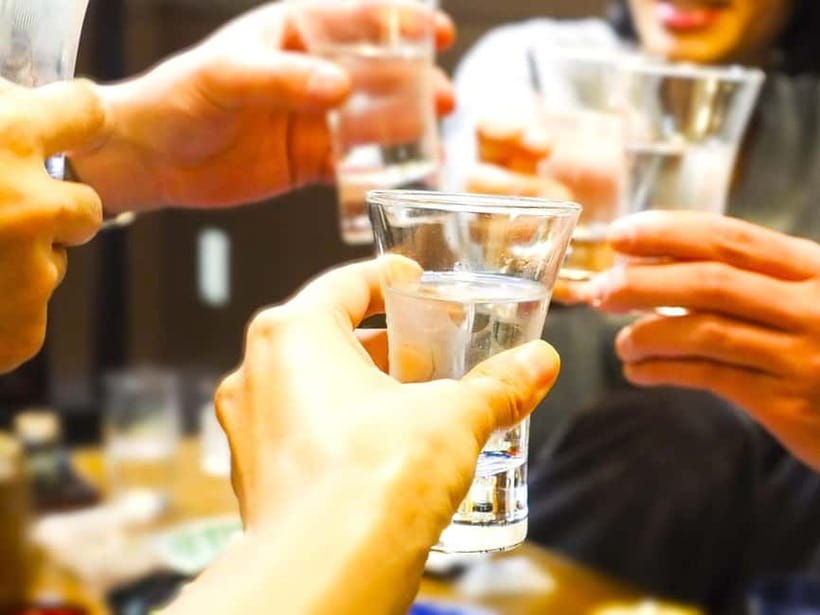
- 8 sake varieties to compare, including different styles like cold, hot, and a sake-style cocktail
- Lower-alcohol first so your palate warms up before you taste the stronger bottles
- Snack pairings included to help you understand what sake tastes like with food
- A small group (6 max) that makes it easy to ask questions
- A sweet ending with amazake dessert, made from fermented rice malt
Where You Meet in Kabukicho (and How to Find the Right Bar)
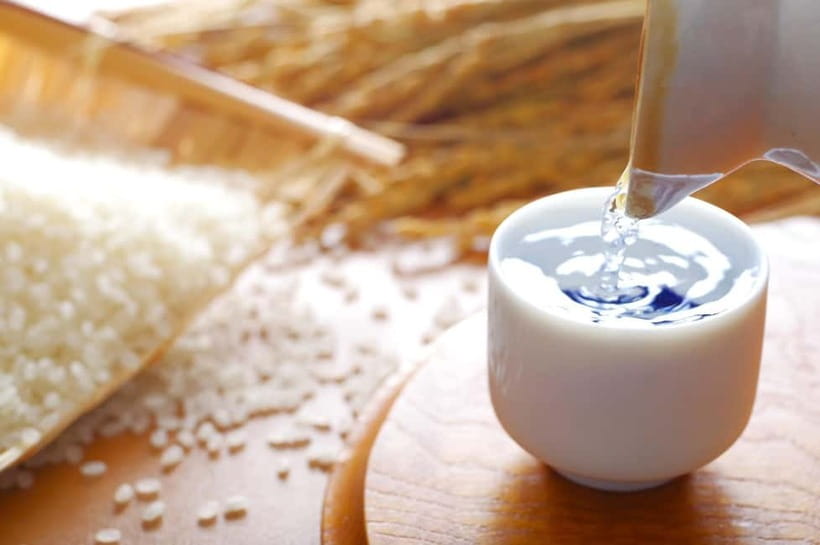
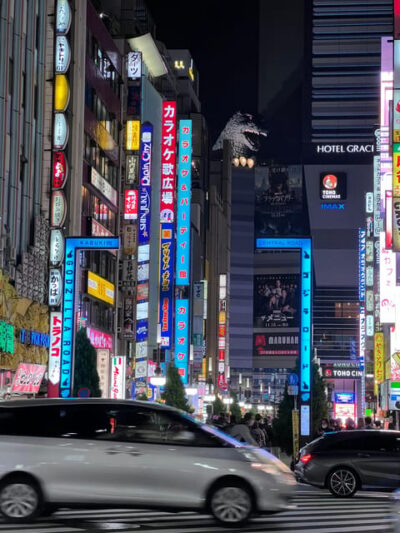
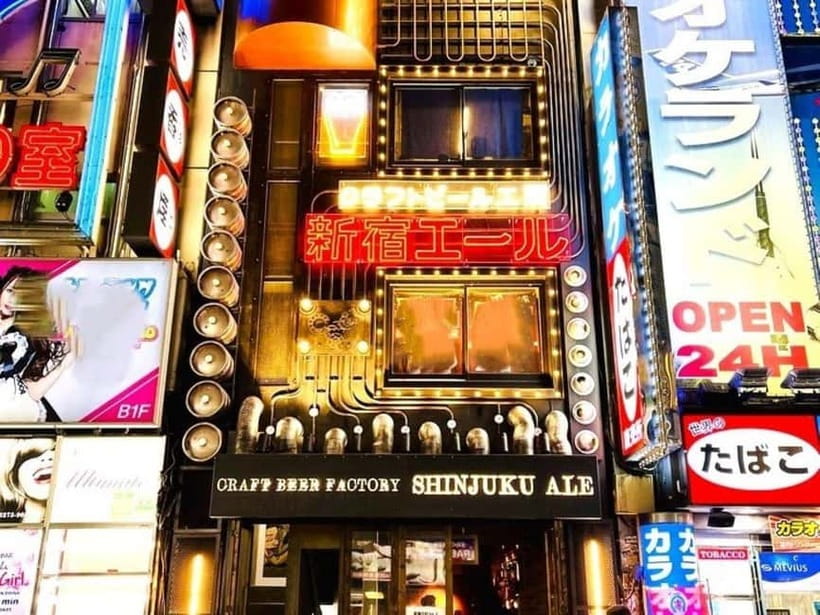
This experience starts in Shinjuku, in the Kabukicho zone where you’ll see plenty of neon and plenty of choices. The good news: the meeting point is straightforward. Plan to meet about 5 minutes’ walk from Shinjuku Station on the JR Yamanote Line.
Walk along Kabukicho Central Road toward TOHO Cinemas. Look for Shinjuku Ale next to Karaoke 747 on your right. If you like pin-to-map directions, the plus code is MPV2+VR Shinjuku City, Tokyo.
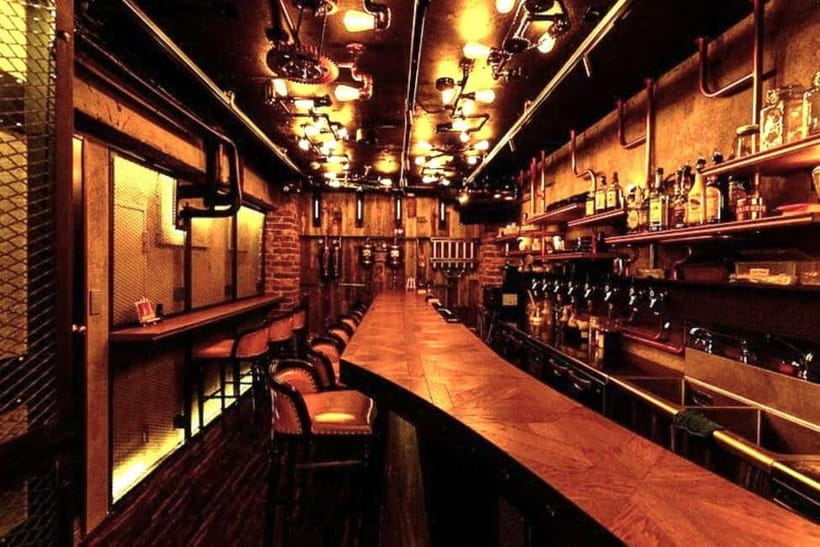
One detail that matters for your timing: several reviews note the tasting happens on the 2nd floor of the bar. If you arrive and don’t see it right away, check upstairs. Also, there’s no elevator, so you’ll be using stairs. That’s a deal-breaker for some people, but it’s also one of those “just know before you go” things.
You can also read our reviews of more food & drink experiences in Tokyo



The $38 Value: What You Actually Get for the Price
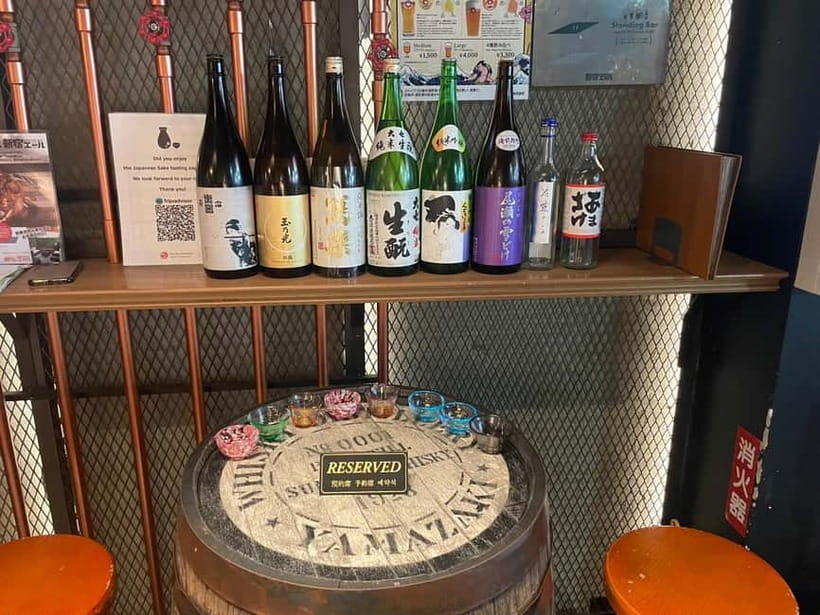
At $38 per person, this isn’t the cheapest “drink something” option in Shinjuku. But it also isn’t trying to be a formal, white-glove sake ceremony. You’re paying for a guided comparison: all fees and taxes are included, and the experience is built around tasting 8 different varieties plus traditional snacks and amazake at the end.
Here’s why that value holds up:
- You get a structured tasting, not random pours.
- The group stays small (max 6), so you’re not lost in a crowd.
- You’re tasting multiple styles and strengths, so you can build a real sense of what you like.
One more practical note: the package doesn’t include extra meals or additional drinks. If you arrive hungry and you have a big appetite, you might want to eat lightly before you go. The snacks are part of the experience, but they may not replace dinner for everyone.
How the Tasting Flows: Low Alcohol First, Then the Stronger Stuff
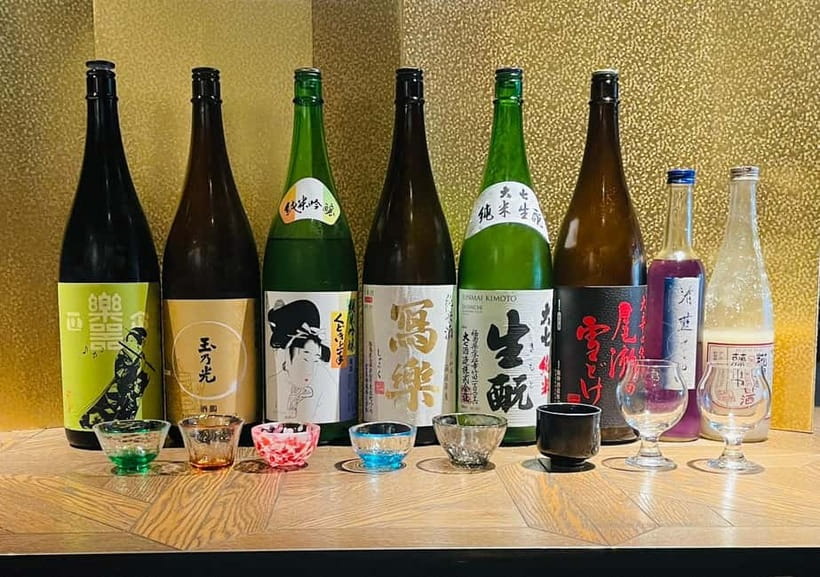
Sake can be tricky at first. It’s not wine, and it’s not beer. The alcohol shows up, the flavor shifts with temperature, and the whole thing can feel unfamiliar fast. This experience tackles that head-on with a simple approach: you start with sake that has a lower alcohol content.
The info you’ll be working with is this: the average alcohol content of sake is around 15–16%, though individual bottles can be lower or higher. By moving gradually from lighter to stronger, you’re less likely to get overwhelmed early. Your palate gets a warm-up, and the comparisons make more sense as the tasting progresses.
You’ll also notice that the selection includes different serving styles. One reviewer called out cold, hot, and a sake-style cocktail, which is exactly the kind of variety that helps you stop thinking of sake as one fixed taste. Instead, you start hearing the bigger idea: sake is a category, and style changes the way it feels.
Snack Pairings That Make the Differences Easier to Taste
The tasting isn’t just drink-drink-drink. It includes traditional Japanese snacks designed to pair with the sakes you’re trying.
This matters more than it sounds. Food changes the way alcohol and aroma land on your tongue. A snack can:
- soften harsh edges
- highlight sweetness or saltiness
- make the next pour easier to evaluate
You’ll get the best results if you pace yourself. Take small bites, sip slowly, and try to notice how the food affects the same sake. When you do this, you stop relying on guesswork like I think this is sweeter and start making cleaner comparisons.
Even if you’re not a big foodie, the pairings are one of the reasons the experience works for first-timers. You don’t need to have a “sake vocabulary” yet. The snacks do part of the teaching for you.
The Amazake Dessert Finish: A Sweet, Fermented Way to End
Most tastings end on a hard alcohol note. This one makes room for a gentler finish: amazake.
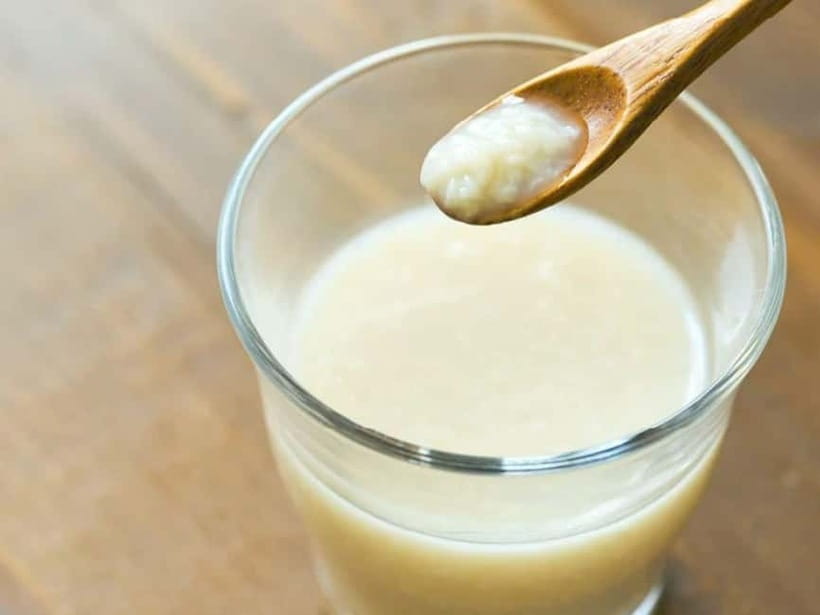
Amazake is a sweet, fermented rice drink made from rice malt. Think of it as a dessert-style stop that helps you reset your palate after tasting multiple sakes, including some stronger options. It’s also a nice cultural touch. If you’ve only ever tried sake as an adult drink, amazake gives you a different side of the rice-fermentation story.
This is where you can quietly decide what you actually liked. By the time dessert shows up, you’ve already compared, so the final sweetness is less about masking flavors and more about rounding the experience out.
You can also read our reviews of more drinking tours in Tokyo


Guides, Language, and the Small-Group Feel
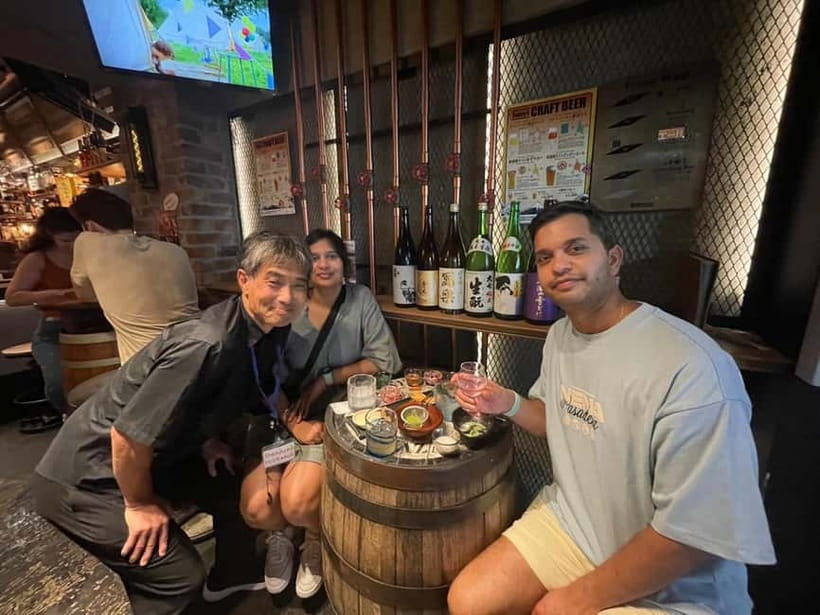
This is an instructor-led experience with English and Japanese support. The group is limited to 6 participants, which is a big deal in a bar setting. Small groups mean you can ask questions without shouting across the table.
The staff friendliness shows up strongly in the reviews. People specifically noted that explanations felt simple and progressive, and that the guide was welcoming and easy to talk with. One guide named Mai was mentioned in a review as particularly friendly, which lines up with the overall vibe you’re hoping for: you should feel comfortable learning in real time, not performing knowledge on command.
Language note: some staff may not be strong in English, so a translator machine might be used. That’s not a problem if your goal is understanding, and it’s usually the kind of practical solution that keeps things moving.
What to Expect from 8 Sakes: Comparing Like a Pro (Without Pretending)
The highlight is comparing carefully selected sake varieties. You’ll taste 8 types, which is enough to create patterns without turning the whole evening into a blur.
Here’s how to make the comparisons count:
- Start with the question you care about: Do I like this style better hot or cold? Do I prefer smoother or more assertive?
- Don’t judge after one sip. Your first impression can be influenced by temperature and alcohol level.
- Take notes in your head. You don’t need fancy wine-critic skills. Just remember two or three “winner” moments.
Because the tasting order typically begins with lower alcohol, your later sakes can feel more intense in a controlled way. That’s helpful. It means you’re not comparing a strong pour against a totally fresh palate.
Also, since the alcohol range can vary (average around 15–16%), the stronger options can taste different even if the sweetness feels similar. When you notice that, you’re basically doing sake literacy in real time.
Practical Details That Affect Your Night
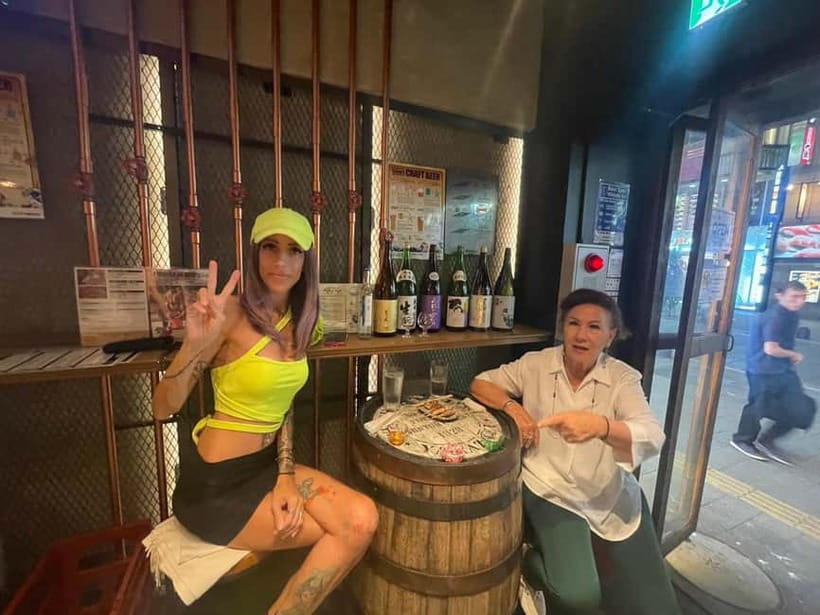
A few logistics can make or break the experience—mostly because it takes place in a bar environment.
- Meeting point: 5 minutes from Shinjuku Station (JR Yamanote Line). Kabukicho Central Road toward TOHO Cinemas.
- Signage: One review suggested the venue sign could be easier to see. If you’re walking and nothing looks obvious, slow down and check closely for Shinjuku Ale by Karaoke 747.
- Floor level: It’s on the 2nd floor. No elevator.
- Pace: You’ll be drinking multiple small tastings. If you’re not used to alcohol, take your time. Let the snacks work for you.
- Group size: Max 6 means you’ll have a calmer, more conversational feel than larger tastings.
Kabukicho can feel intense. That doesn’t mean the activity itself is scary. It’s just a reminder to arrive a little early so you’re not rushing and scanning signs while already feeling jet-lagged.
Who This Kabukicho Sake Tasting Is Best For
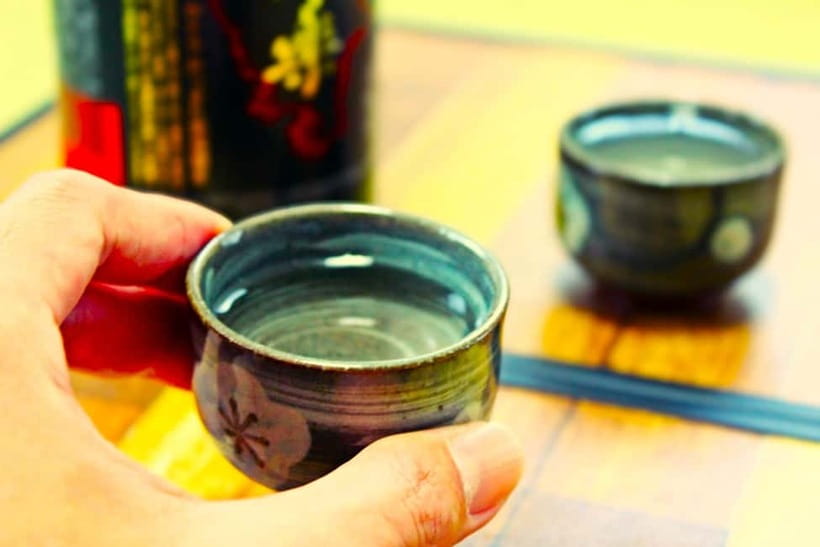
I’d point you toward this experience if you want an honest, low-pressure way to learn about sake without committing to something complicated or formal.
It’s especially a good fit if:
- You’re curious but it’s your first time tasting sake
- You want a structured comparison across 8 varieties
- You like learning through food, not just lectures
- You’re staying near Shinjuku and want something that’s easy to reach
The small group also suits people who don’t want a huge crowd dynamic. You’ll have more chances to ask questions and get answers on the spot.
Who Might Skip This One
This tasting is straightforward, but it’s still an alcohol experience. The info you should respect:
- Not suitable for people under 20
- Not suitable for pregnant women
- Not wheelchair accessible due to no elevator
If you want a long, multi-stop tour format—like a full neighborhood crawl or a sake brewery visit—this may feel too focused and short. It’s built specifically for tasting and enjoying, not for big sightseeing.
Should You Book This Kabukicho Sake Comparison?
If your goal is a fun, guided intro to sake, I think you should book it. The value is strongest for first-timers: the progressive tasting order, the included snack pairings, and the chance to compare 8 types in one sitting make it much more useful than random sampling.
Also, the atmosphere matters. Reviews highlight friendly staff and simple explanations, including conversations with guides like Mai. That’s exactly what you want in a first tasting: clarity, not intimidation.
So here’s the decision test:
- If you’re happy with a bar-based experience on the 2nd floor and you can handle a multi-sake tasting, this is a smart choice.
- If mobility is a concern or alcohol isn’t an option for you, look for a different kind of Japan food-and-drink experience.
FAQ
How long is the sake tasting experience?
The experience is listed as 1 day. You can check availability for starting times.
How many sake drinks will I taste?
You’ll taste 8 carefully selected sake varieties.
Is this experience good for a first-time sake drinker?
Yes. It’s described as enjoyable even if it’s your first time drinking sake, and the tasting is structured to start with lower alcohol.
What food is included?
The experience includes traditional Japanese snacks paired with the sake. You can also enjoy amazake as a dessert.
What does the price include?
The price includes all fees and taxes. It does not include additional meals and drinks.
Where do I meet?
Meet about 5 minutes from Shinjuku Station on the JR Yamanote Line. Walk along Kabukicho Central Road toward TOHO Cinemas and look for Shinjuku Ale next to Karaoke 747.
What languages are offered?
The instructor supports English and Japanese. A translator machine may be used if some staff have limited English.
Is it wheelchair accessible?
No. It is not wheelchair accessible because there is no elevator.