REVIEW · TOKYO
One Day Tour to Oishi Park and Fruit Picking in Mt. Fuji Tokyo
Book on Viator →Operated by Trevopedia Wonders · Bookable on Viator
There’s something satisfying about a day trip that mixes real countryside fun with Mt. Fuji views. This tour pairs all-you-can-eat seasonal fruit picking in Yamanashi with big “Japan postcard” stops around Lake Kawaguchi and Mt. Fuji. You get guided time on the farm, a panoramic ride up the mountain area, and a look at the 5th Station from the Sky Palace area.
I like that the day is built around two flavors of wonder: one is hands-on orchard time, and the other is serious views from Mt. Fuji’s iconic viewpoints. The lunch also helps—Yamanashi houtou noodles are hearty, regional, and not just an afterthought between stops.
The main drawback to plan around is weather and routing. If Mt. Fuji is hard to reach due to conditions, the schedule can shift to other nearby sights, and visibility may be limited.
In This Review
- Key highlights you’ll actually feel during the day
- A day trip that blends farm time with Mt. Fuji viewpoints
- Getting from Shinjuku to Yamanashi without turning your morning into chaos
- Stop 1 in Yamanashi: the farm tour and fruit picking time
- Fruit picking expectations: how to make it fun instead of stressful
- Stop 2 at Oishi Park: Lake Kawaguchi flowers with Mt. Fuji as a backdrop
- Ropeway time: the Mt. Fuji Panoramic Ropeway viewpoint at 1,075 meters
- The 5th Station Police Box area: Sky Palace views and observation deck time
- Lunch in Yamanashi: houtou noodles that actually fill you up
- Timing, traffic, and how flexible you should be
- Price and value: what $125.39 buys you in a one-day format
- Who should book this tour (and who might want to choose differently)
- Should you book this Mt. Fuji orchard and Oishi Park tour?
- FAQ
- What fruits can I pick on this tour?
- How long is the tour?
- What does the tour include for admission and food?
- What happens if Mt. Fuji 5th Station can’t be reached?
- Where do I meet the group in Tokyo?
- What languages are available during the day?
Key highlights you’ll actually feel during the day
- Fruit picking that changes by season: strawberries, cherries, peaches, grapes, and more, plus an all-you-can-eat setup
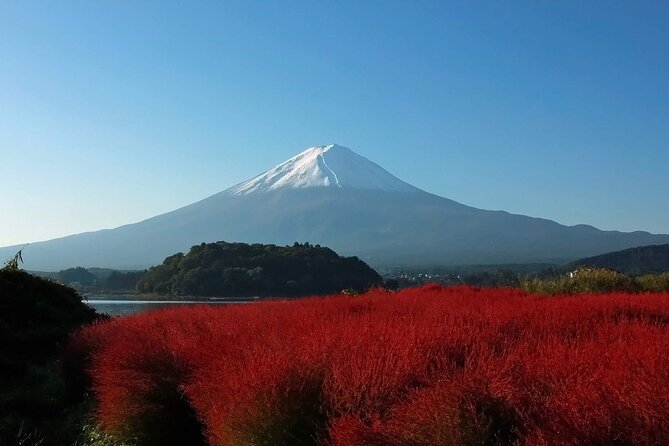
- Oishi Park on Lake Kawaguchi: flower fields with Mt. Fuji in the background (varies by time of year)
- Panoramic Ropeway: a 360-degree style experience at 1,075 meters
- Mt. Fuji 5th Station Police Box area: an easy-to-navigate “Sky Palace” stop with observation deck time
- Regional lunch: Yamanashi-style houtou pot set with pork and seasonal vegetables
A day trip that blends farm time with Mt. Fuji viewpoints
This is the kind of outing that works when you want more than one “tour bus photo” moment. The day is scheduled for about 9 to 10 hours, starting at 8:00 am in Nishishinjuku and ending back in the same area of Tokyo. The format is straightforward: bus ride, orchard experience, Lake Kawaguchi strolls, then Mt. Fuji viewpoints.
What makes it interesting is the balance. You’re not only riding to scenery—you’re also getting a guided farm segment where you learn about farming practices and then pick fruit that’s grown in the region. Then the day shifts to high-viewpoint drama: Lake Kawaguchi, Mt. Fuji’s northern side vibes, a ropeway ride, and finally the 5th Station Police Box area.
The other thing I like: this tour is designed to be language-friendly. You travel with a Japanese-speaking professional driver/guide, plus a Chinese/English-speaking guide, and translation services on the bus. For a Tokyo-based trip, that reduces a lot of the usual stress.
You can also read our reviews of more tours and experiences in Tokyo



Getting from Shinjuku to Yamanashi without turning your morning into chaos
Your pickup is at the Robert Indiana sculpture LOVE, at 6-chōme-5-1 Nishishinjuku. You return to Tokyo Mode Gakuenモード学園総合校舎コクーンタワ, at 1-chōme-7-3 Nishishinjuku. There’s no shuttle included, so you’ll want to plan your own commute to the meeting point.
The group size can be up to 100 travelers, which matters for how fast you move through lines and how full your bus feels. The operator also notes that if the minimum participant number isn’t reached, the tour may not operate. If there are fewer people, you might depart by mini van. In other words, the experience should still run, but the bus situation can change.
One practical point: Japan requires seat belts on the tour bus, and this tour explicitly asks you to wear yours. It sounds minor, but it’s the kind of thing that’s easy to forget when you’re half-asleep before 8:00.
Stop 1 in Yamanashi: the farm tour and fruit picking time
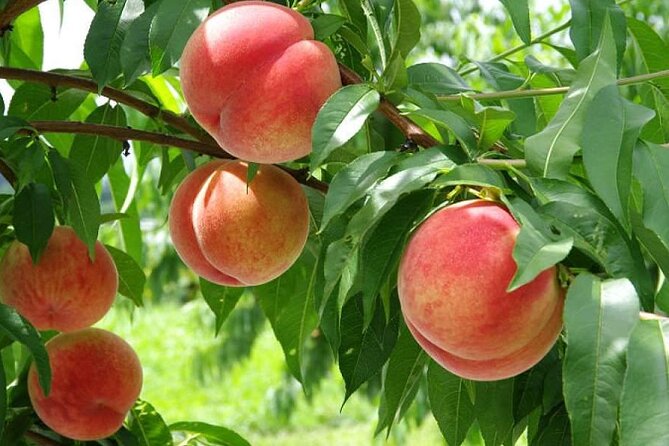
The day starts at a Yamanashi Farm with about 3 hours on site. You’ll get a guided tour around the farm, plus hands-on activities and a look at organic farming practices. There’s also an animal component mentioned in the plan, so it’s not just “walk in, pick fruit, walk out.”
Then comes the main event: fruit picking or exploring orchards, depending on season. The tour has clear seasonal windows for what you can pick, including:
- Late December to early May: sweet strawberries
- May to June: Japanese cherries
- July to August: sweet peaches
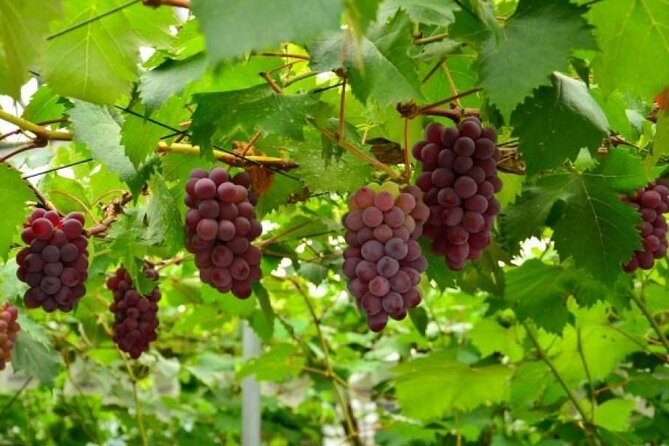
- August to early October: grapes
- Early October to mid-November: various berries
- You may also experience apple or orange picking, depending on availability
The all-you-can-eat angle is important, because fruit picking costs can add up fast if you do this independently. Here, the plan explicitly includes all-you-can-eat seasonal fruit picking.
A detail worth knowing: fruit selection depends on ripeness and growing conditions. The tour notes there’s a chance fruit picked in advance may be shared as part of a tasting plate or given as a souvenir. So if you’re hoping for the exact same fruit experience every day, plan to be flexible. This is farm reality, not a factory.
Fruit picking expectations: how to make it fun instead of stressful
Fruit picking is one of those activities where the payoff is proportional to how you approach it. The biggest tip is to treat it like a guided activity, not a shopping spree. Listen to instructions, pick with care, and take breaks if your hands get sticky or your basket gets heavy.
Because the farm visit is structured—guided tour first, then picking/exploring—you’re less likely to feel lost than you would at a self-guided orchard. And the tour’s language support helps you understand what you’re doing as you do it, instead of guessing.
This stop also works well if you’re traveling with kids or with food-focused travelers. Even if you don’t go hard on picking, you’re getting the orchard setting plus educational farm time.
Stop 2 at Oishi Park: Lake Kawaguchi flowers with Mt. Fuji as a backdrop
After lunch (actually scheduled after this park stop), Oishi Park is the Lake Kawaguchi “big view” moment. The plan gives about 2 hours, and it’s located along the northern shores of Lake Kawaguchi.
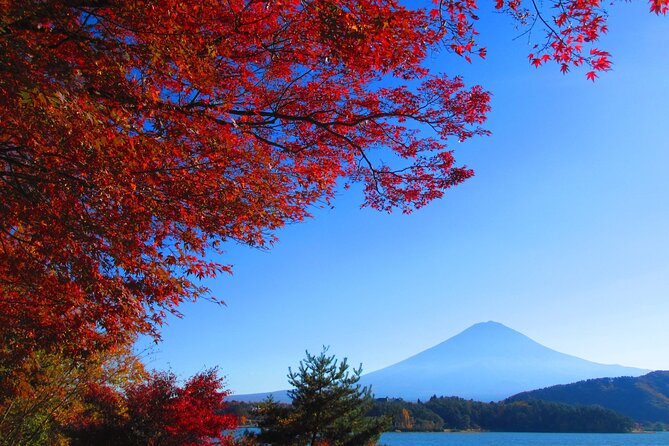
What you’re looking for here is a classic pairing: flower fields in the foreground and Mt. Fuji in the background. The tour points out that the scenery changes by season, and the itinerary itself may shift around peak times like cherry blossom or autumn leaves.
Your seasonal flower expectations are:
- April: cherry blossoms
- Late June to mid-July: lavender
- October: kochia
- November: autumn leaves
And there’s also a seasonal alternative mentioned for other times of year. In winter, the tour may visit Saiko Iyashi no Sato (a healing village with traditional atmosphere and Mt. Fuji views). In spring, it may include Kawaguchiko Sakura. In late April to late May, you might get the Fuji Shibazakura Festival at Motosu Lake Resort. For summer (June to July), lavender in Oishi Park with Mt. Fuji is the focus. In autumn (October to November), you may see autumn foliage around Oishi Park or the Momiji Corridor (maple leaf tunnel).
So yes, you might get a different “flower highlight” depending on your travel month. But that’s also the point: you’re traveling around Mt. Fuji as the seasons change, not just ticking off one static landmark.




Ropeway time: the Mt. Fuji Panoramic Ropeway viewpoint at 1,075 meters
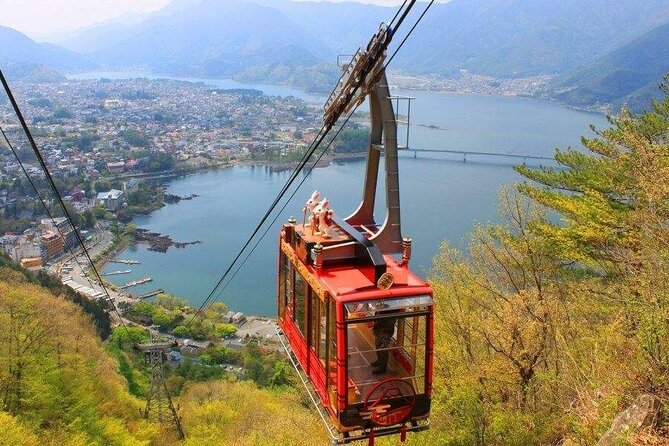
Next you’ll ride the Mt. Fuji Panoramic Ropeway, with about 1 hour 30 minutes allocated including admission. The headline detail here is altitude: 1,075 meters, and the plan describes the ride as giving a 360-degree panorama.
This is one of the best “value per minute” parts of a one-day itinerary. You’re getting wide-angle mountain views without spending time hiking up from scratch. It’s also a great buffer if the weather is changeable—because the ride timing can still give you impressive views even when conditions aren’t perfect.
The ropeway stop is also one of the moments where you’ll want to manage your pace: people tend to cluster for photos at peak angles, so it helps to wander a bit once you’re at the best viewing areas rather than staying parked at the busiest spot.
The 5th Station Police Box area: Sky Palace views and observation deck time
The final major viewpoint stop is the Mt. Fuji 5th Station Police Box, sometimes called the Sky Palace. The schedule allows about 3 hours here, which is generous for a “bus day” and helps if you want to take photos, use observation areas, and still breathe.
This is where Mt. Fuji stops feeling like a distant icon. You’re up at one of the most famous access points, with plenty of vantage angles from the observation deck area. The tour also frames this stop through the mountain’s significance and folklore, though you’ll get most of that through guide explanation and what’s available on-site.
Important reality check: visibility isn’t guaranteed. The tour notes that if road access to the 5th Station isn’t possible due to bad weather or congestion, the plan may swap to a Fuji Visitors Center or Oshino Hakkai instead. And even in cases where you still visit the 5th Station area, Mt. Fuji may not be visible due to conditions. If that happens, the tour says it will not cancel and you won’t get a refund.
If your whole trip depends on seeing a clear, dramatic Mt. Fuji, treat this as a “try your luck with a plan” day, not a guaranteed mountain reveal.
Lunch in Yamanashi: houtou noodles that actually fill you up
You’ll stop for lunch around the Lake Kawaguchi / Yamanashi area. The lunch included in the tour is described as Yamanashi-style houtou noodles, served as a set with pork and fresh seasonal vegetables.
Houtou is thick, comforting, and very regional—more like a stew-noodle style meal than a fast noodle bowl. That matters because you’re going to be walking around parks and standing around viewpoints. If you’re prone to getting hungry between attractions, this is the kind of lunch that keeps you steady.
There’s also a note that lunch time isn’t counted as a separate timed segment in the itinerary (about 30 minutes). In practice, that means you should expect a short break, eat when it’s your turn, and don’t plan to squeeze in shopping right after you sit down.
Timing, traffic, and how flexible you should be
This tour runs on a fixed schedule, but it’s explicitly subject to change due to traffic congestion and other uncontrollable reasons. In those cases, sightseeing time at each stop may be shortened, or the schedule may shift.
You also need to plan for seasonal routing variations. The itinerary can change for cherry blossom and autumn leaves in particular, and there are season-specific highlights around Oishi Park and nearby Lake Kawaguchi areas.
I like this kind of flexibility because it acknowledges the real world: mountain access routes get busy, and weather doesn’t ask permission. The key is setting expectations: the day is designed around Mt. Fuji and Yamanashi, but the exact scenery highlight can change.
Price and value: what $125.39 buys you in a one-day format
At about $125.39 per person, this is not the cheapest way to do Mt. Fuji from Tokyo. But the value looks better when you break down what’s covered:
- Admission to the Mt. Fuji Panoramic Ropeway
- All-you-can-eat seasonal fruit picking
- A regional lunch featuring houtou noodles
- Guides plus Chinese/English translation support
- Admission details noted as free for the 5th Station Police Box area
The part I’d watch is the “time efficiency” vs. “risk of changes.” If Mt. Fuji visibility is limited or the route shifts, you still get meaningful stops (orchards, a flower park area, ropeway, alternative sights). But you might not get the exact scenic payoff you pictured.
Still, for people who want one organized day—without driving, booking multiple parts, and negotiating language barriers—this kind of package can be a smart use of time.
Who should book this tour (and who might want to choose differently)
This fits best if you:
- Want a single-day plan from Tokyo that includes Mt. Fuji viewpoints plus a hands-on farm activity
- Like seasonal food experiences and want all-you-can-eat fruit picking rather than a small tasting
- Prefer guided transport and on-the-bus language support
You might think twice if:
- You need Mt. Fuji to be visible for your dream photos, no matter what
- You strongly dislike itinerary changes due to weather or traffic
- You’re looking for lots of free time for independent wandering (this is scheduled and guided)
Should you book this Mt. Fuji orchard and Oishi Park tour?
If your goal is a well-rounded day—fruit picking in Yamanashi, flower views at Oishi Park, ropeway panoramas, and a real look at the 5th Station area—this tour has the right ingredients. The included food and the guided farm segment make it feel more personal than a pure sightseeing bus loop.
I’d book it if you’re flexible about seasonal scenery and you can handle the idea that Mt. Fuji visibility depends on conditions. If getting a crystal-clear Mt. Fuji view is your top priority above everything else, you may want a backup plan for what you’ll do if the mountain is hidden.
FAQ
What fruits can I pick on this tour?
The fruit picking is seasonal: strawberries (late Dec–early May), Japanese cherries (May–June), peaches (July–August), grapes (mid-August–early October), and berries (early October–mid-November). You may also experience apple or orange picking depending on availability.
How long is the tour?
The duration is about 9 to 10 hours.
What does the tour include for admission and food?
It includes admission to the Mt. Fuji Panoramic Ropeway, lunch (Yamanashi houtou pot set with pork and seasonal vegetables), and all-you-can-eat seasonal fruit picking. The Mt. Fuji 5th Station Police Box area admission is listed as free.
What happens if Mt. Fuji 5th Station can’t be reached?
If the road to the 5th Station can’t be passed due to bad weather or traffic, the schedule may change to visit Fuji Visitors Center or Oshino Hakkai instead. The tour also notes there’s a chance Mt. Fuji cannot be seen in bad weather, and it won’t be canceled or refunded for that reason.
Where do I meet the group in Tokyo?
The meeting point is the Robert Indiana sculpture LOVE at 6-chōme-5-1 Nishishinjuku, Shinjuku City. The end point is Tokyo Mode Gakuenモード学園総合校舎コクーンタワ, 1-chōme-7-3 Nishishinjuku.
What languages are available during the day?
You’ll have a Japanese-speaking professional driver/guide, plus a Chinese/English-speaking guide. There is also English or Chinese translation service on the bus.
If you tell me what month you’re going, I can help you match the best seasonal fruit + Oishi Park flower expectations to your dates.