REVIEW · TOKYO
Nikko Private Tour by public transportation
Book on Viator →Operated by Fulfilling Inc. · Bookable on Viator
Nikko is close enough to feel spontaneous. This private tour turns a Tokyo-to-Nikko day into a guided, customizable route using public transportation, with hotel lobby pickup included and a plan that keeps you moving without feeling rushed. You’ll hit the big-name sights like Shinkyo Bridge, Nikko Tosho-gu, and then head up toward Lake Chuzenji and Kegon Falls.
I especially like the hotel transfers. It removes the annoying start-of-day hassle in Tokyo, so you can focus on getting out of the city and into the mountains. The second thing I like: you get to experience the region in one coherent day, with a guide to explain what you’re seeing while the train does the heavy lifting.
One practical consideration: the tour price does not include entry/admission and the public-transport costs for you are extra, so your final spend can climb a bit depending on what you choose to pay for on the day.
In This Review
- Key points before you go
- The “private” part matters more than you think
- Where the day starts: Hilton Tokyo pickup and a clear timeline
- Stop 1: Shinkyo Bridge and the sacred entrance feeling
- Stop 2: Nikko Tosho-gu and Tokugawa Ieyasu up close
- Stop 3: Lake Chuzenji at altitude and the change of seasons
- Stop 4: Kegon Falls and the 97-meter drop
- How the guide can change your day (and why it’s not just “translation”)
- Value and price: is $208.11 a fair deal?
- Getting your money’s worth on a 10-hour schedule
- Small risks to plan around
- Who should book this Nikko private public-transport tour?
- Should you book this tour?
- FAQ
- How long is the Nikko private tour by public transportation?
- What time does the tour start?
- Where do you meet and where does the tour end?
- Is pickup from my hotel included?
- What’s included in the price?
- Are entry fees and transportation included?
- Is there a mobile ticket?
- What if weather is bad?
- Is this a group tour or private?
Key points before you go
- Hotel lobby meeting and pickup included: Less Tokyo chaos, more time for Nikko.
- Private, customizable route: You can shape the pacing and choices to your group.
- UNESCO-grade sights: Nikko Tosho-gu and the area’s iconic spots are built into the plan.
- Mountain altitude time: Lake Chuzenji and Kegon Falls add a high-country feel to the day.
- Public transport options for your budget: The tour can be arranged using different transit choices.
- Expected expenses on top of the base price: Entry fees and some transport costs aren’t part of the listed amount.
The “private” part matters more than you think
A private day trip sounds like a luxury add-on, but it also solves real problems. In Nikko, you’re dealing with crowds at the most famous stops and long walking stretches once you’re there. Having your own guide means you can plan around your pace and your interests instead of matching the slowest (or fastest) group in the mix.
This one also leans into a smart compromise: you still use Japan’s efficient transit, but you’re not left to figure out the route and timing alone. That matters when you’re trying to do four major areas—bridge, shrine complex, lake, and falls—within roughly a 10-hour window.
You can also read our reviews of more private tours in Tokyo

Where the day starts: Hilton Tokyo pickup and a clear timeline
Your morning begins at 8:00 am, with the tour ending back at the same meeting point. The meeting location is listed as Hilton Tokyo (Nishishinjuku, Shinjuku City). You’re picked up from the hotel lobby, which is huge in Tokyo: it cuts down on the usual “meet me somewhere near the station” stress.
Because this is built around public transportation, the itinerary rhythm is likely more tied to train and bus schedules than to “free time whenever.” That’s not a bad thing. It often creates a more realistic day in Japan: you ride at good times, arrive before peak congestion, and still have enough daylight for the mountain stops.
If you’re the type who likes to use a day trip to see a lot without planning every minute, this setup tends to fit that style.
Stop 1: Shinkyo Bridge and the sacred entrance feeling
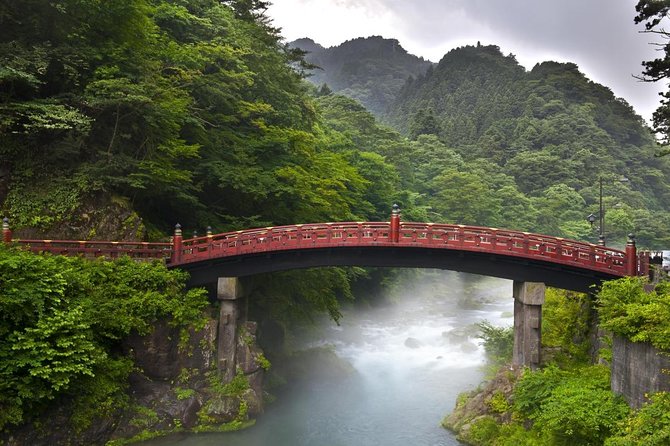
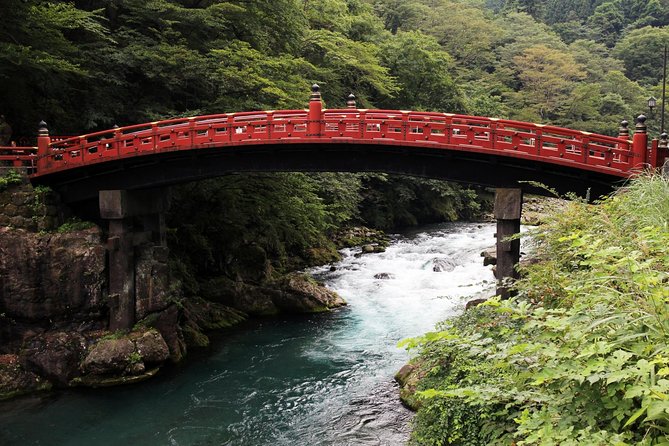
Shinkyo Bridge is the dramatic red gateway image most people picture when they think of Nikko. It’s a wooden vermillion bridge over the entrance of Nikko Mountain, and the story around it connects to older Japanese tradition. The bridge is honored as a sacred bridge, including the idea that it was bridged through mysterious tradition around the end of the Nara era.
What you’ll get from a guided stop here is context. You’re not just taking photos of a postcard bridge—you’re learning why it’s important as a ceremonial threshold. Even with a short visit window, that kind of framing makes the place feel more meaningful.
Practical tip: plan on some waiting time to get the best angles, especially if the light is busy or the crowd moves in waves. If your group enjoys photos, this is one of the stops where that effort pays off.
Stop 2: Nikko Tosho-gu and Tokugawa Ieyasu up close
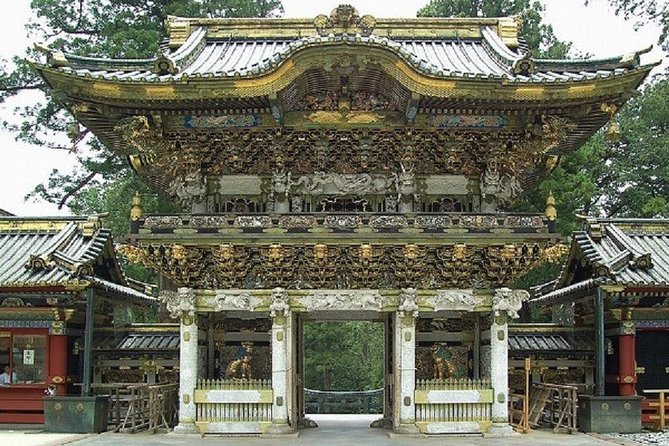
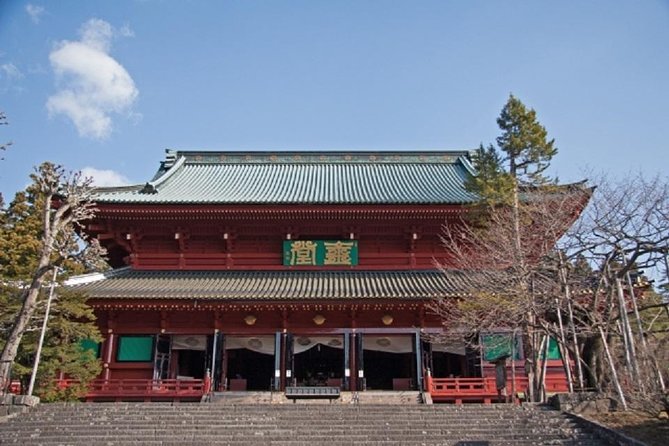
Nikko Tosho-gu is the heavyweight stop on the Nikko circuit. It’s the shrine dedicated to Shogun Tokugawa Ieyasu, and it’s recognized as a national treasure and part of UNESCO cultural heritage.
What stands out isn’t just the scale—it’s the density of details. The shrine buildings are described as lacquered and rich, and the result is that you can easily spend more time than planned if you don’t manage your pace. A guide helps because you’re not guessing what you’re looking at. You get the meaning behind key elements, which makes your time feel focused rather than like a quick walk-through.
One detail worth noting from the people connected to this experience: the guides are often praised for being on time and clear. For example, Yoki Nakajima has been described as punctual, knowledgeable, and understanding—exactly the kind of guide you want at Tosho-gu, where timing and interpretation matter.
If you care about Japanese history, you’ll likely enjoy Tosho-gu the most. If you’re more into nature and views, you can still appreciate it, but you may want to keep your pace steady so you don’t lose the rest of the mountain day.
Stop 3: Lake Chuzenji at altitude and the change of seasons
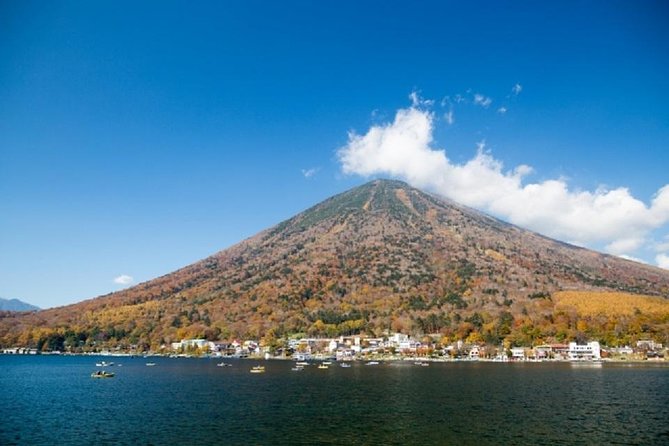
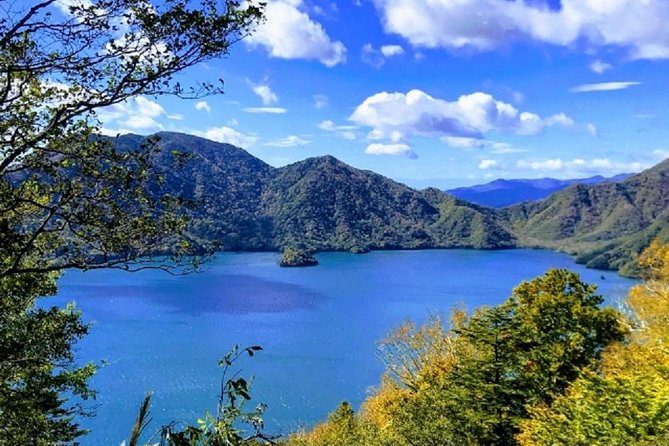
Lake Chuzenji is a different mood from the shrine complex. You’re at 1,296 meters above sea level, which changes the air and the feel of the day. It’s also a place where seasonal timing matters.
The tour information points out two seasonal pulls:
- Azaleas blossom in early summer.
- Autumn leaves are a recommended time too.
Even if you’re traveling outside those peak windows, the lake stop is valuable because it gives your day a breath of fresh air. It also transitions you from the cultural center of Nikko into the high-altitude nature area that leads to the famous falls.
This stop is scheduled for about 1 hour. That’s enough to take in the setting and get a few photos, but not enough to turn it into a long hike day. If your group loves walking, ask your guide about the closest viewpoints and whether you should prioritize speed or scenic wandering.






Stop 4: Kegon Falls and the 97-meter drop
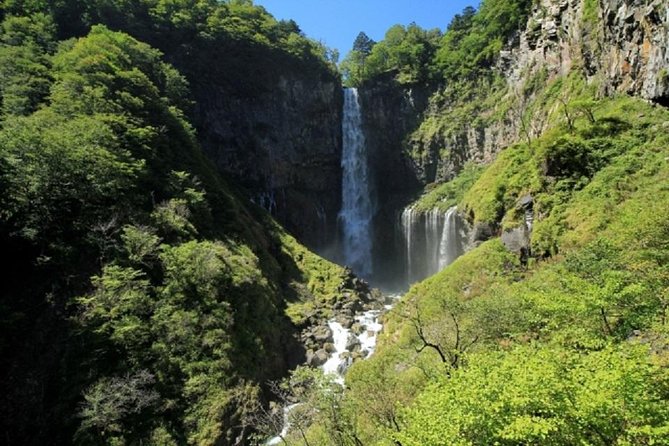
Kegon Falls is often the “wow” moment in Nikko. There are said to be 48 waterfalls in the area, but Kegon is the most famous. The description you’ll hear is that the water from Lake Chuzenji drops down a quay at about 97 meters in height.
A good guide here doesn’t just say the number; they help you understand the layout so you can position yourself for the best sightlines. You’ll also appreciate the storytelling link: you start the day at Shinkyo Bridge, then you move into Toshogu’s ceremonial world, then the water theme returns through Lake Chuzenji feeding the falls.
If you’re sensitive to cold or drizzle, bring a layer. Waterfalls and high elevations can feel cooler than the city, even in otherwise mild weather.
How the guide can change your day (and why it’s not just “translation”)
This is a private tour with a professional guide, and the difference shows up most in how you move through the stops. In Nikko, “what you see” is half the experience. “What it means” is the other half, and that comes from guidance.
The experience is also described as customizable. In practice, that usually means your guide can help you adjust pacing—how long you linger at Shinkyo Bridge versus Tosho-gu, or whether you want to focus more on nature at Lake Chuzenji and Kegon Falls.
Two guide-related themes come through in how people describe the experience:
- Guides are expected to be punctual and easy to work with.
- Guides are described as kind and able to explain the area clearly.
That combination matters. You’ll spend enough time on transit and walking that a guide who keeps things smooth can make the whole day feel calmer.
Value and price: is $208.11 a fair deal?
At $208.11 per person, this is priced like a true private day trip from Tokyo rather than a budget group shuttle. The value depends on what you compare it to.
Here’s the realistic math:
- You’re paying for a private guide and a custom day plan.
- You’re getting hotel pickup/meeting at Hilton Tokyo.
- You’re still using public transportation to reduce the “everything by taxi” cost.
But the listing also makes it clear that transport costs and entry fees are extra. So if you add paid admissions at the shrine/area sites and any transit segments that fall outside what’s covered, your total can rise.
Still, for many people, the value comes from reduced planning stress. You’re not just paying for someone to walk beside you—you’re paying for route knowledge, timing help, and a way to see the main Nikko highlights without building a logistics spreadsheet.
If your group is comfortable paying extra for convenience, this price starts to make sense. If you want the cheapest possible Nikko day, you’ll likely find cheaper options without a private guide.
Getting your money’s worth on a 10-hour schedule
A 10-hour tour can feel either perfect or too short, depending on your pace. The route here is built around four key targets. That means you won’t be doing long detours.
Here’s how to get the most:
- Treat Shinkyo Bridge and Tosho-gu as your “slow sightseeing” moments.
- Use Lake Chuzenji and Kegon Falls as your “nature payoff” blocks.
- Keep comfortable shoes non-negotiable, especially once you reach shrine grounds.
One smart way to think about this day: it’s designed to maximize recognition. You’ll see the places most visitors come for, but with enough guidance that you’re not just checking boxes.
Small risks to plan around
No matter how well a day is planned, Nikko days can turn on timing and conditions.
Your biggest practical risk here isn’t the idea of Nikko—it’s the friction of adding extra costs and managing your own paid entries. If you expect everything to be included, you’ll be surprised. If you treat the base price as “guide + structure,” and you budget for entry fees and add-on transit, the day usually feels fair.
Also, because this is built for a full schedule, late starts or long stops can compress the rest of your itinerary. The good news: the guides connected with this experience are described as punctual, which helps protect the schedule.
Who should book this Nikko private public-transport tour?
I’d point you to this if you:
- Want a guided Nikko day but prefer using Japan’s public transit.
- Like the idea of a private route where pacing can match your group.
- Are staying in Tokyo and want hotel pickup without figuring out the full route yourself.
- Want both cultural highlights (Tosho-gu) and mountain nature time (Lake Chuzenji and Kegon Falls) in one shot.
It may not be the best fit if you:
- Are trying to keep costs extremely low after the base price.
- Don’t want to manage any extra entry and transport expenses.
- Prefer long free time for hiking or wandering without a structured plan.
Should you book this tour?
If you want Nikko highlights in one day, with a guide who can explain what you’re seeing and a schedule that keeps you moving, this booking is a strong choice. The hotel pickup removes a major Tokyo friction point, and the mix of Shinkyo Bridge, Tosho-gu, Lake Chuzenji, and Kegon Falls gives you both culture and altitude nature.
I’d say book it when your group values convenience and interpretation, not when your goal is the absolute cheapest transportation. If you can budget for extra admissions and you’ll wear comfortable shoes, you’ll likely feel like the day was worth the money.
Also, consider booking with enough lead time. This experience is typically booked about 79 days in advance, which suggests it can fill up when people line up Tokyo stays with popular day-trip dates.
FAQ
How long is the Nikko private tour by public transportation?
It runs for about 10 hours.
What time does the tour start?
The start time is 8:00 am.
Where do you meet and where does the tour end?
The meeting point is the Hilton Tokyo in Nishishinjuku, Shinjuku. The tour ends back at the meeting point.
Is pickup from my hotel included?
Yes. Meeting is in the hotel lobby and pickup is offered.
What’s included in the price?
A professional guide, a private tour, and meeting in the hotel lobby are included.
Are entry fees and transportation included?
No. Entry/admission fees and public transportation to/from are not included, and transport costs and entry fees are listed as extra.
Is there a mobile ticket?
Yes, the experience includes a mobile ticket.
What if weather is bad?
This experience requires good weather. If canceled due to poor weather, you’ll be offered a different date or a full refund.
Is this a group tour or private?
It’s private. Only your group participates.
If you want, tell me your travel month and whether you prefer more shrine time or more nature time. I can suggest how to pace the day so the 10 hours feel comfortable.