REVIEW · TOKYO
Mochi Making at a Private Studio in Tokyo
Book on Viator →Operated by Simply Oishii Wagashi School · Bookable on Viator
Mochi feels simple until you make it. This hands-on class in a private studio near Meguro Station turns that sticky rice mystery into something you can actually repeat at home, plus you’ll make multiple styles, not just one.
I really like the way the English-speaking instructor pairs practical steps with real context about mochi traditions and festivals. A possible drawback: it gets messy. If you’re short on patience or you hate sticky hands, wear clothes you don’t mind adjusting after the session.
In This Review
- Key Highlights to Know Before You Go
- Your Mochi Workshop Starts in a Real Tokyo Home Studio
- Time and pacing: about two hours
- The Opening Lesson: Why Mochi Shows Up in Japanese Life
- What You Actually Make: Strawberry Daifuku, Dango, and Warabi Mochi
- Strawberry daifuku mochi
- Three-color dango (mochi on skewers)
- Warabi mochi
- Savory Break: Grilled Mochi with Soy Sauce and Nori
- Mochi Ice Cream: The Demo That Changes How You Think About Mochi
- Dairy-free option
- The Tasting: Eat What You Made, With Tea
- English Recipe Sheet and Aprons: Small Things That Make a Big Difference
- Price and Value: What $79.26 Really Buys You
- Logistics Made Simple: Getting There and Getting Out
- Who This Class Fits Best
- Should You Book This Mochi Making Class?
- FAQ
- Where is the mochi class located?
- How long is the class?
- How much does it cost?
- How many people are in the class?
- Is the class offered in the morning and afternoon?
- What mochi styles will we learn?
- Do you include savory food?
- What drinks are included?
- Can they accommodate dairy-free needs for mochi ice cream?
- What’s the minimum age to attend?
- Is hotel pickup included?
- Is cancellation free?
- Should You Book This Mochi Making Class?
Key Highlights to Know Before You Go
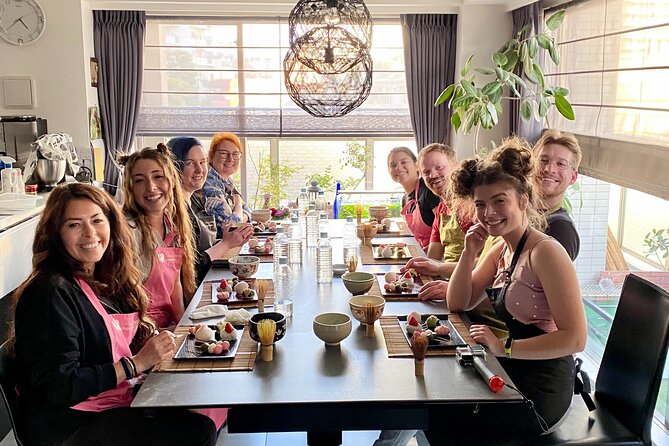
- Small-group limit (up to six), which means you get help while you’re kneading and shaping
- Multiple mochi styles you’ll make, including strawberry daifuku, dango, warabi mochi, and a mochi ice cream demo
- Savory mochi + classic toppings, like soy sauce and nori seaweed, not just dessert mochi
- Certified wagashi instruction in English, with instructors reported by name in past sessions (Chef Michiko-san, Ayumi, Owa, Waka-san, Miho)
- Tea tasting at the end with green tea, hojicha, or coffee, so you finish by actually eating what you made
Your Mochi Workshop Starts in a Real Tokyo Home Studio
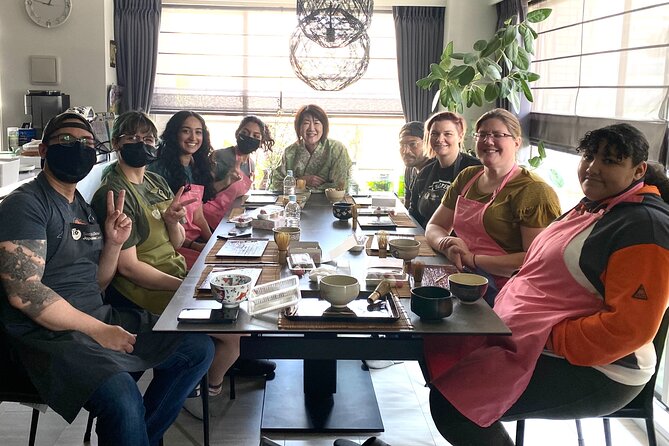
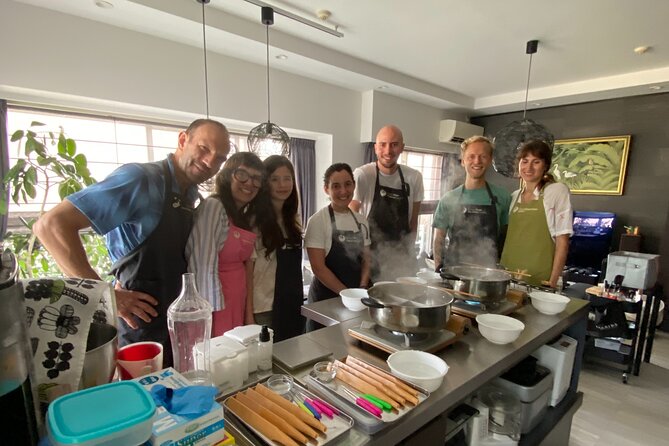
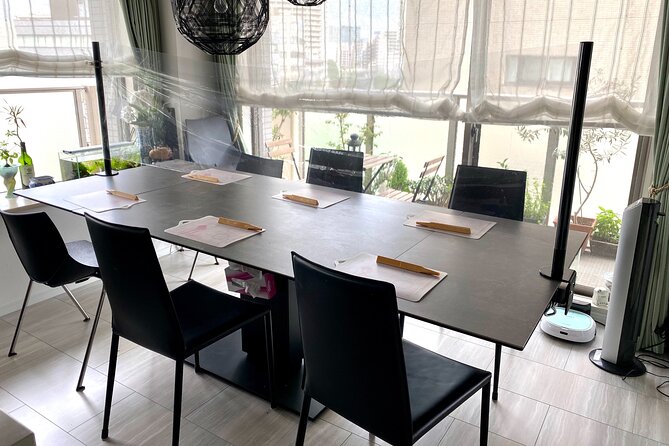
This isn’t a big, factory-style class with rows of people. You meet at a private studio near Meguro Station (JR Yamanote Line and also subway access is nearby), then the instructor walks you into the rhythm of mochi making. The location is convenient enough that you can tack this onto a day of sightseeing without losing half your afternoon to transfers.
What makes the studio setup valuable is how it changes the learning curve. Mochi dough is forgiving in theory and fiddly in practice. In a small space, with a small group, you can ask questions mid-step instead of waiting for the instructor to finish demonstrating.
You can also read our reviews of more private tours in Tokyo



Time and pacing: about two hours
Plan on roughly two hours. That’s long enough to make several items and taste everything, but short enough that you’re not stuck in a long kitchen marathon.
It also helps that the class offers either a morning or an afternoon departure. If you’re touring Tokyo on your first day, an afternoon slot can work well as a break from walking in the heat.
The Opening Lesson: Why Mochi Shows Up in Japanese Life
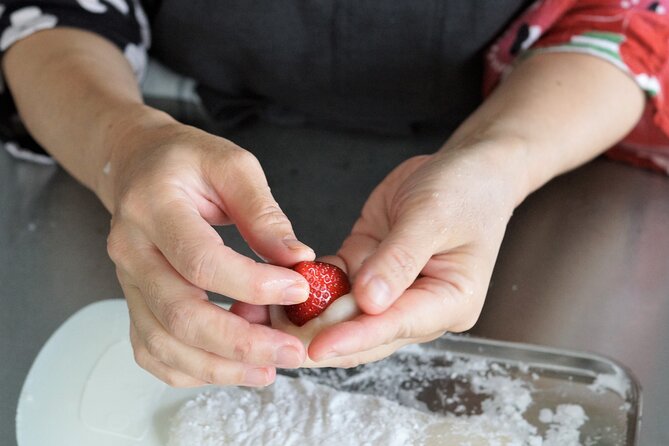
Before you touch any rice dough, you get a short presentation about mochi traditions and festivals, plus why it’s important in Japanese culture. This isn’t a lecture designed to impress. It’s more like getting the story behind what you’re about to make, which makes the steps feel purposeful.
In past sessions, instructors like Chef Michiko-san, Ayumi, Owa, Waka-san, and Miho have been praised for combining that background with practical guidance. When you know that mochi shows up in seasonal moments and celebrations, you start paying attention to details like texture and how different styles are served.
You also get a chance to chat about local life in Tokyo. The instructor is fluent in English, and you may get advice on where to shop and what to see—useful if your itinerary is still loose.
What You Actually Make: Strawberry Daifuku, Dango, and Warabi Mochi
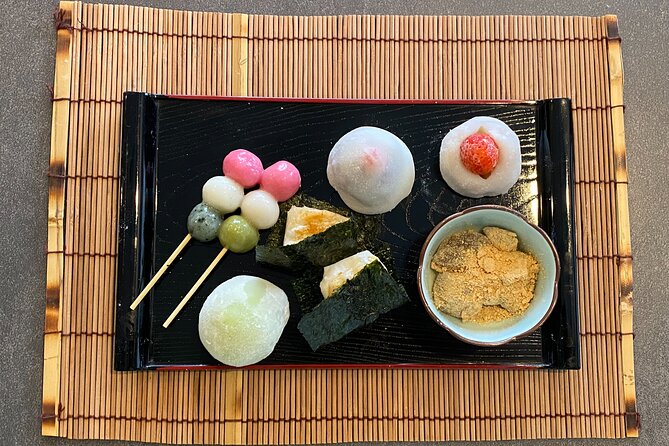
This is the heart of the experience: you don’t just watch. You make a set of mochi items that cover different textures and serving styles. The exact items listed may vary slightly by session, but the core set is typically these:
Strawberry daifuku mochi
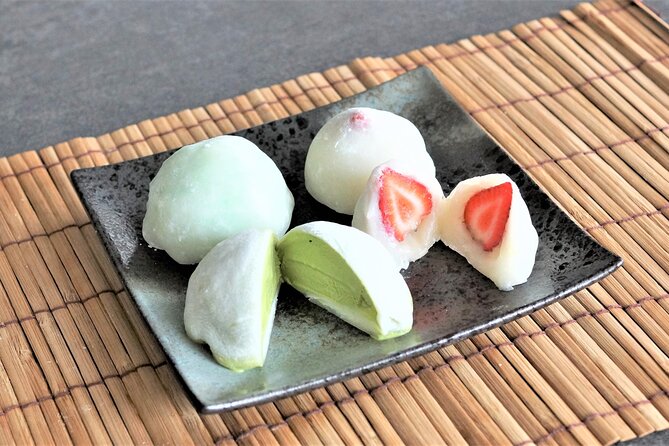
You’ll make strawberry daifuku, which is one of the most popular mochi formats. The lesson here is technique. You’ll learn how to handle the sticky dough, shape it cleanly, and manage filling without turning everything into a single blob.
If you’ve never worked with glutinous rice dough, expect it to cling to fingers. That’s normal. The best part of a small class is that you can get tips on how to handle it before frustration sets in.






Three-color dango (mochi on skewers)
Next comes three-color dango, often described as mochi on skewers. Dango is less about precision molding and more about shaping and cooking consistency. It gives you a different angle on mochi beyond the classic sweet cake look.
Dango also tends to be easier to photograph and share with others, because the skewers make each piece feel more structured.
Warabi mochi
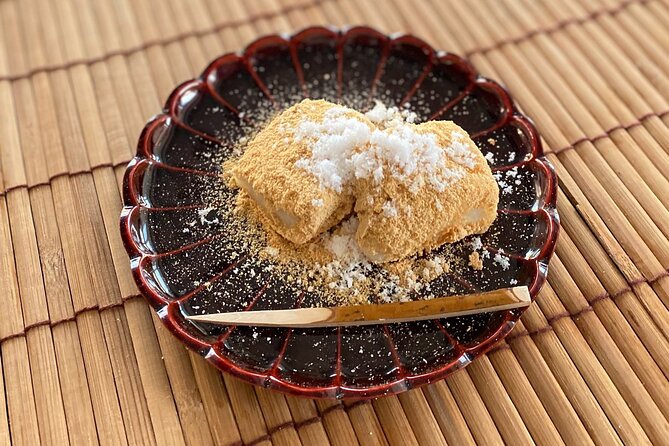
Then you make warabi mochi, a mochi style that’s known for its softer, springier feel. This part matters because it shows mochi isn’t one texture. It’s a family of treats that can look different on the plate.
Warabi mochi also helps you connect the dots between “sticky rice” and the variety of sweets Japan makes from it.
Savory Break: Grilled Mochi with Soy Sauce and Nori
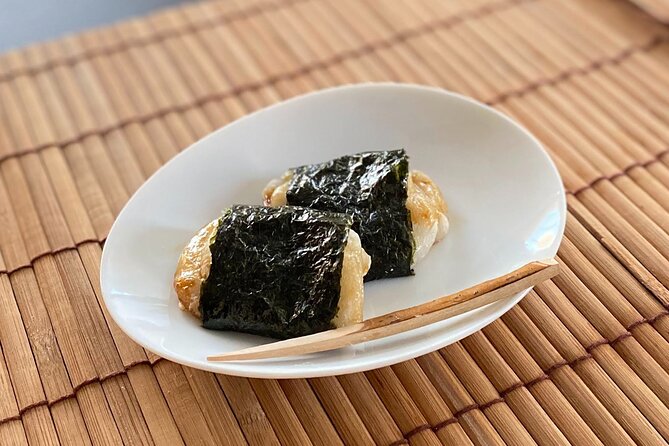
Not all mochi is dessert. You’ll be served savory grilled mochi with soy sauce and nori seaweed. This is a great reality check if you only associate mochi with sweet bean fillings and candy-style desserts.
Even if you end up liking the sweet versions more, the savory course teaches you how the same core ingredient behaves with salty flavors. It’s also a nice pause from the sugar rhythm of making multiple sweets back to back.
Mochi Ice Cream: The Demo That Changes How You Think About Mochi
There’s a demonstration for how to make mochi ice cream. Even if you don’t cook the entire process yourself, this is a valuable window into how mochi dough is handled when it wraps cold ice cream.
This matters for your take-home learning. The most common question after any mochi class is: how do you keep it from turning into a sticky mess once ice cream enters the equation? The demo format gives you a clear visual on what changes during assembly and timing.
Also, the class includes a tasting at the end with drinks like green tea, hojicha, or coffee—so you’ll be able to compare textures and flavors immediately.
Dairy-free option
If you need it, a dairy-free ice cream version can be prepared upon request. That’s a practical detail that makes the class feel more inclusive.
The Tasting: Eat What You Made, With Tea
The class wraps up with a tasting session served with green tea and/or coffee (and hojicha is listed as another option). This is one of the reasons the experience is more than a snack-making hobby.
Tea isn’t just a nice touch. It cuts sweetness, refreshes your palate, and makes it easier to taste each mochi style as its own thing instead of one continuous sugar wave.
You may also receive helpful materials like an English recipe sheet and, in some cases reported by past participants, containers so you can take any extra mochi home. Don’t count on take-home containers every time, but the class does include practical wrap-up items like recipes and aprons.
English Recipe Sheet and Aprons: Small Things That Make a Big Difference
You’ll get an English recipe sheet and aprons for the class. These are the unglamorous items that turn your memories into a skill.
Here’s the practical angle: mochi is one of those foods where a tiny step can throw off the texture. Written instructions in English help you translate what you did in the studio into something you can reproduce later without guessing.
And aprons matter because you’re working with sticky dough. You don’t want your nice clothes as collateral damage.
Price and Value: What $79.26 Really Buys You
At about $79.26 per person for a roughly two-hour private-studio class, the value is in the full package:
- Hands-on making of multiple mochi styles
- A cultural introduction (traditions and festivals)
- Savory and sweet tastings
- English support and a recipe sheet
- Drinks like tea or coffee included
Cooking classes in Tokyo can range widely, and the best ones justify the cost by keeping group size small and giving you enough to eat and enough guidance to learn. This one hits both. You’re not paying mainly for a room and a demo. You’re paying for time at the bench, guidance while you work, and a final tasting that lets you evaluate your results.
Logistics Made Simple: Getting There and Getting Out
The studio is within walking distance of Meguro Station (JR Yamanote Line) and the metro station is also nearby. That’s the sweet spot for a class like this. You don’t want to spend your energy hunting for the building when you’re already dealing with sticky dough.
The class ends back at the meeting point, so you’re free to walk to your next stop right after you taste.
Two small notes worth planning for:
- Minimum age is 4 years (younger kids aren’t allowed for safety reasons)
- The studio is non-smoking, which matters if you’re sensitive to odors
Who This Class Fits Best
This is a strong choice if:
- You want a hands-on food experience indoors without needing cooking confidence
- You’re into Japanese sweets but want both sweet and savory mochi
- You like cultural context, not just recipes
- You’re traveling with family and want a clear activity you can finish in about two hours
It’s also a good fit for first-time Japan visitors who want a local conversation. The instructor is English-fluent, and you can ask questions about Tokyo life and sightseeing.
Should You Book This Mochi Making Class?
Yes, if you want more than a one-item dessert lesson. The mix of multiple mochi styles, a savory grilled mochi course, and an ice cream wrapping demo gives you a rounded view of what mochi can be.
Book it especially if you value small-group help. Mochi dough doesn’t forgive rushed hands, and this format gives you the guidance you need without turning the class into a production line.
FAQ
Where is the mochi class located?
It takes place in a private studio in Tokyo near Meguro Station on the JR Yamanote Line, with metro access nearby.
How long is the class?
The duration is about 2 hours.
How much does it cost?
The price is listed as $79.26 per person.
How many people are in the class?
It’s a small-group class with a maximum of six people, and the overall activity has a maximum of 12 travelers.
Is the class offered in the morning and afternoon?
Yes. You can choose a morning or afternoon departure.
What mochi styles will we learn?
You’ll learn to make strawberry daifuku mochi, three-color dango, and warabi mochi, plus there’s a demonstration for mochi ice cream.
Do you include savory food?
Yes. You’ll be served savory grilled mochi with soy sauce and nori seaweed.
What drinks are included?
Green tea, hojicha, or coffee are included with the tasting.
Can they accommodate dairy-free needs for mochi ice cream?
A dairy-free ice cream can be prepared upon request.
What’s the minimum age to attend?
The minimum age is 4 years. Children under 4 aren’t allowed for safety reasons.
Is hotel pickup included?
No. Hotel pickup and drop-off are not included.
Is cancellation free?
Cancellation is free up to 24 hours in advance for a full refund.
Should You Book This Mochi Making Class?
If you enjoy hands-on food work and want a small-group, English-friendly experience, this is an easy yes. The combination of multiple mochi styles plus tasting and recipe support makes it more practical than many short food activities, and the private studio setting keeps it personal. If you dislike mess or want only sweets, consider whether the sticky hands and savory component fit your taste.