REVIEW · TOKYO
Japanese Traditional Music Show in Tokyo
Book on GetYourGuide →Operated by Zakuro Show · Bookable on GetYourGuide
Small room, big Japanese sound. In Tokyo, ZAKURO SHOW turns wagakki into a one-hour concert you watch up close, with history and context folded between pieces. I love the way the host keeps things clear in English and Japanese, and I also love the program mix of older traditional tunes and newer material, capped with a western cover that feels like a fun curveball. One thing to plan for: the ticket does not include food or drinks, so you’ll want to eat first.
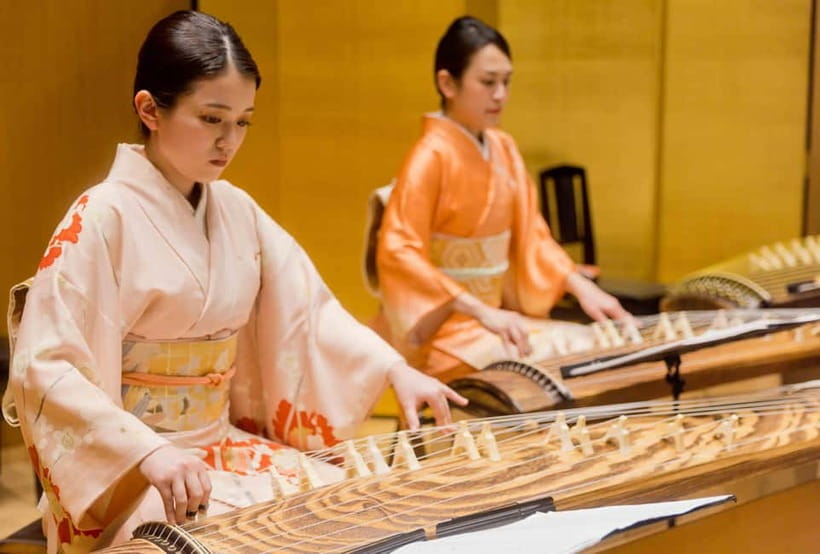
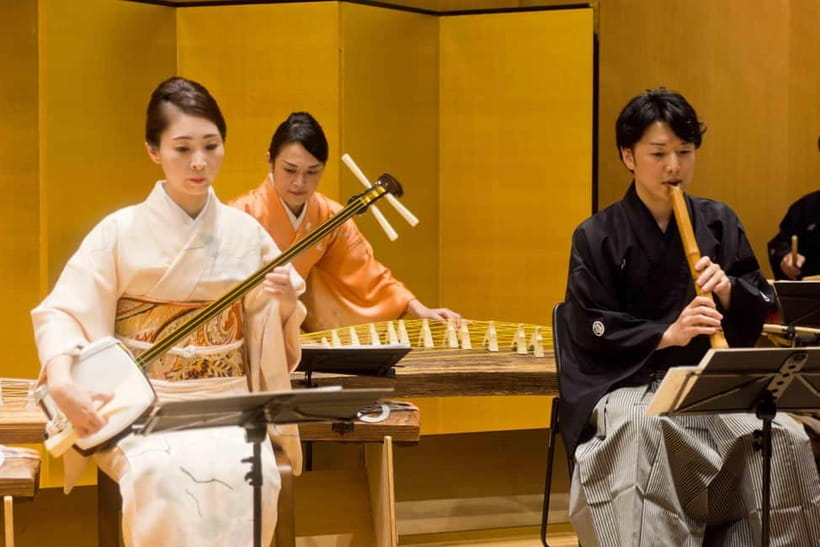
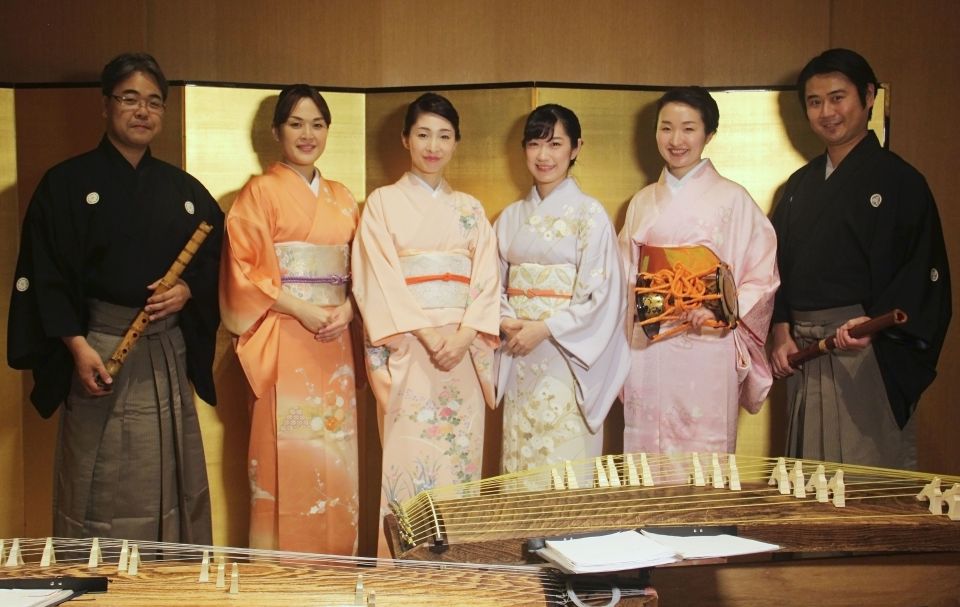
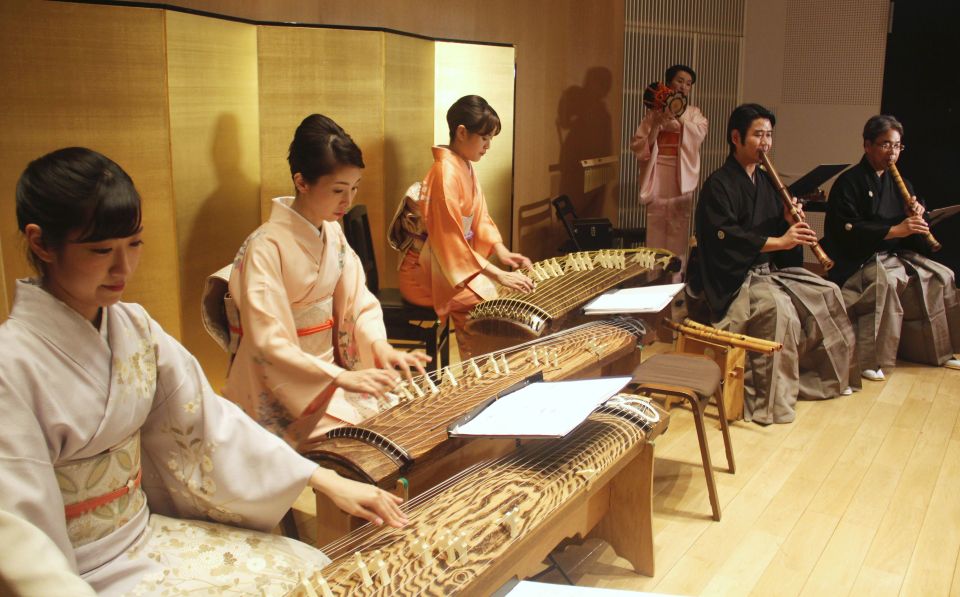
The best part is the intimacy. Musicians in kimono and their instruments sit right in front of a small, numbered audience, so you don’t get lost in “tourist distance.” And yes, you can take photos and videos during the show, then grab pictures beside the performers afterward.
In This Review
- ZAKURO Show at Hall 60: Finding the venue fast
- Price and seating: Is $38 good value for wagakki?
- Instruments up close: koto, shamisen, shakuhachi, taiko
- The host makes it work: translation plus instrument history
- The one-hour timeline: what happens during the concert
- Photos and videos: how to capture it without ruining it
- Where this show fits in your Tokyo trip
- Who should book this, and who might pause?
- Quick booking checklist before you go
- Should you book ZAKURO Show in Tokyo?
- FAQ
- Where is the meeting point for the Japanese Traditional Music Show?
- How long is the concert?
- What languages are used during the show?
- Can I take photos and videos during the performance?
- Is food or drinks included with the ticket?
- Is the venue wheelchair accessible?
ZAKURO Show at Hall 60: Finding the venue fast
You’ll meet at Hall 60, a short walk from Meiji-Jingumae Station (Exit 7)—about 1 minute on foot. If you’re coming from JR Harajuku Station, use Omotesando Exit; it’s roughly a 5-minute walk. That’s handy in Tokyo, where one wrong turn can add 10 minutes fast.
Why this matters: this show is only one hour, so arriving a little early helps you settle in before the music starts. With reserved seats, you’ll be grateful you’re not sprinting through the last block.
Price and seating: Is $38 good value for wagakki?
At $38 per person for a 1-hour concert, ZAKURO Show is priced like a “special evening,” but it’s not a big-production theater ticket. You’re paying for a compact performance format: reserved seating, skip-the-ticket-line entry, and musicians who are close enough that you can really watch technique.
Also, the value is in the structure, not just the music. This isn’t a sit-and-hope situation. The host works in English and Japanese, guiding you through instrument history and what you’re hearing—so even if you only know one or two Japanese instruments by name, you’ll still follow along.
A quick reality check: you’re not getting a meal here, and there’s no included merchandise. If you want snacks or dinner, do that outside the hall. (The show itself is the main event.)
You can also read our reviews of more tours and experiences in Tokyo


Instruments up close: koto, shamisen, shakuhachi, taiko
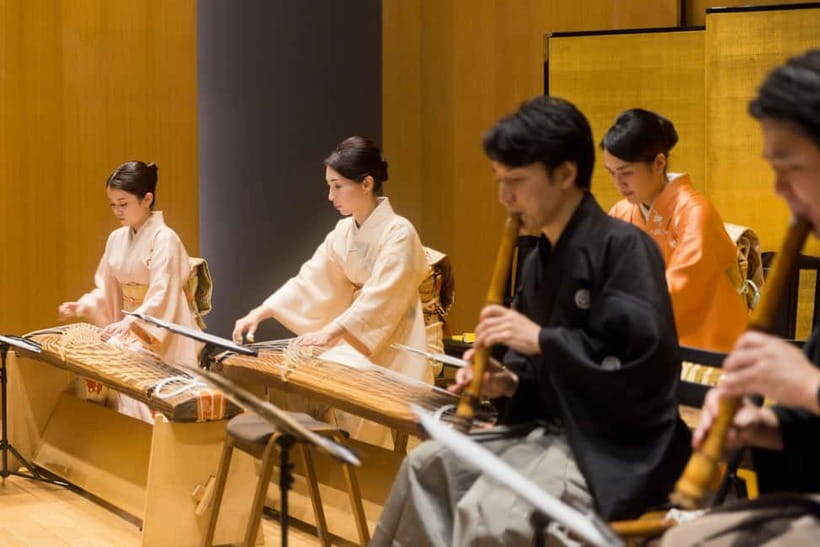
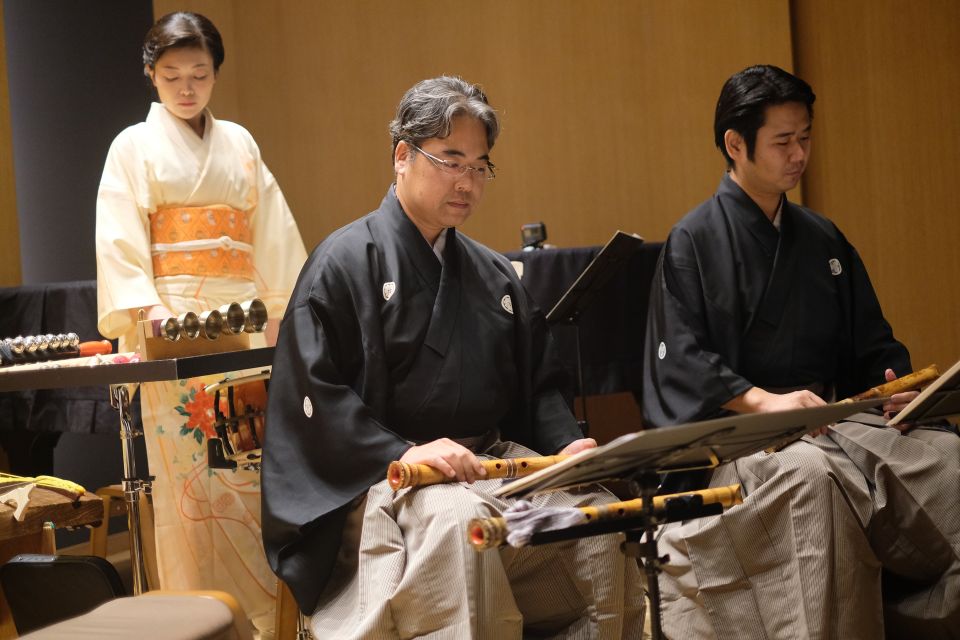
This is a proper wagakki program, meaning you hear traditional Japanese instruments played live, not “sounds inspired by Japan.” The show includes:
- Koto (Japanese harp): You’ll notice the distinct plucked, gliding character that can sound both delicate and dramatic.
- Shamisen: Expect fast, expressive playing that feels rhythm-forward, even when the melody is subtle.
- Shakuhachi (flute): This one tends to bring a breathy, atmospheric tone—music that feels like it’s shaped as much by silence as by notes.
- Taiko (drums): When the taiko hits, it’s physical. Even in a small room, the energy lands.
Here’s the practical benefit for you: when instruments are performed by different players, and the host explains what’s unique about each one, your brain can start connecting sound to technique. You stop thinking of the music as a blur and start hearing patterns.
The host makes it work: translation plus instrument history
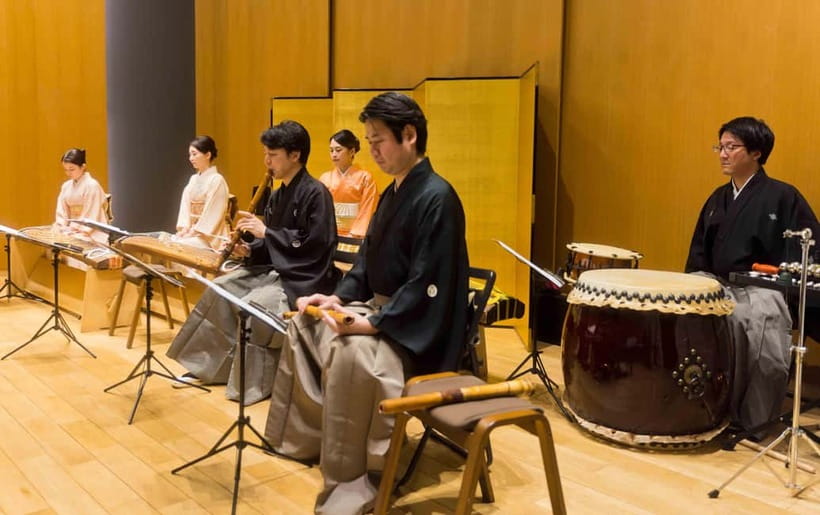
The show is designed for both tourists and Japanese residents, with a host or greeter speaking English and Japanese. What stood out in the feedback is that the explanation is not tacked on. It’s built into the flow—history of the instruments and context for the performed pieces, then music again, then another layer of meaning.
That format is a big deal if you’re not fluent in Japanese. You get a clear pathway:
1) What instrument is this?
2) How does it work?
3) Why does this piece matter?
4) Then you hear it performed right in front of you.
It also helps with listening. When you understand what creates the sound—like how the koto is plucked or how breath shapes the shakuhachi—you’re not just enjoying a concert. You’re learning how to listen.
The one-hour timeline: what happens during the concert
You’re looking at a 1-hour concert program from start to finish. There aren’t multiple venues or long walking segments—this is a focused, seated experience. The “itinerary,” such as it is, happens inside the hall.
Here’s the flow you should expect:
1) You take your reserved seat at Hall 60
You’ll enter smoothly thanks to skip-the-ticket-line access, then settle into your numbered place. Since the musicians are close, you’ll want your phone camera ready and batteries topped up.
2) Instrument introductions and context between pieces
The host explains the instruments and ties each tune to its background. The show is built around thoughtful selection, including both ancient and modern Japanese traditional music. That matters because it prevents the program from feeling like a museum lecture disguised as a concert.
3) Live wagakki performances in sequence
You’ll hear the instruments as performers shift between them: koto and shamisen interplay, shakuhachi adds its breathy phrasing, and taiko brings rhythmic force. Because they’re right in front of the audience, you can watch hands, breath, and posture—small details that make the sound make sense.
4) A western cover as a deliberate contrast
A key feature is a cover of a western hit. This is not random novelty. The point is to let you hear how Japanese instruments handle melodies people may recognize from home. If you’re thinking, I don’t know Japanese music, this is where the show becomes friendly without turning shallow.
5) Final moments with photos with the musicians
After the music wraps, you have a chance for photos with the performers. Since the audience space is limited, the vibe stays personal rather than chaotic.
Photos and videos: how to capture it without ruining it
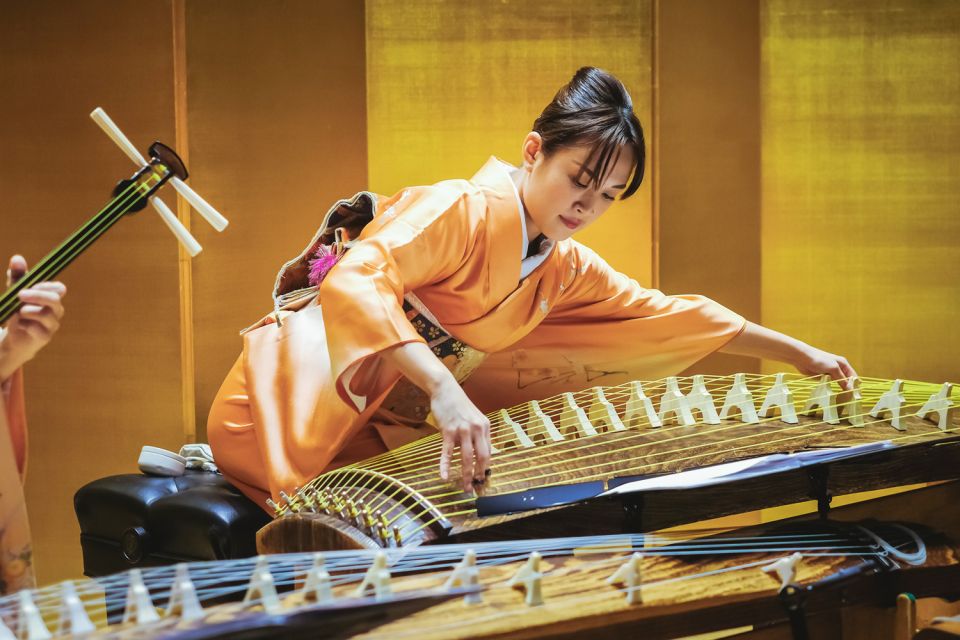
You’re allowed to take photos and videos during the show, and you can also take pictures with the musicians afterward. That’s great for preserving the moment, but there’s one practical tip: keep your phone steady and avoid blocking anyone’s view.
Because it’s an intimate space, even small movements stand out. I recommend you treat filming like seasoning, not the whole meal—shoot a few key moments, then look up and listen.
If you’re bringing teens or anyone who likes recording, plan to capture the instrument “switch points” (when a new instrument comes in). Those moments tend to be the most interesting visually.





Where this show fits in your Tokyo trip
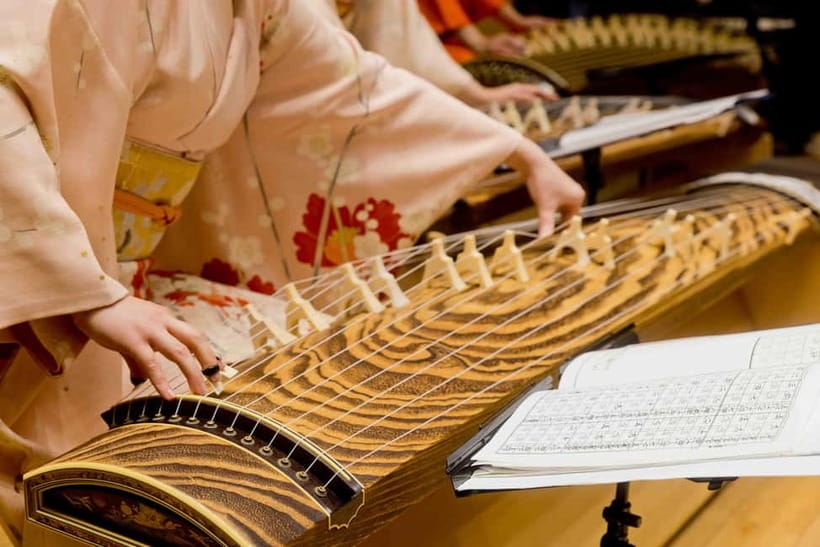
ZAKURO Show is the type of activity that works well on a Japan trip because it’s:
- Low effort: no complicated transfers or multi-stop itinerary.
- High payoff: the music plus the explanations help you understand what you’re hearing.
- Time-friendly: a clean one-hour block.
It’s especially good if you want Japanese culture without spending hours researching etiquette or language. It’s also a strong family option. The show’s close-up setup means kids and teens can still feel engaged, and the host’s translation makes it easier to follow than many performances.
If you’re the kind of traveler who loves learning through demonstrations, this format is a win. The music isn’t separated from the story; the story is woven between pieces.
Who should book this, and who might pause?
I’d strongly recommend ZAKURO Show if you:
- Want to hear wagakki live in a small room, not from far away.
- Like concerts that explain what you’re experiencing.
- Prefer an organized experience with English and Japanese hosting.
- Want a cultural evening that doesn’t require advanced knowledge.
You might pause if:
- You’re hoping for a long workshop-style experience. This is a one-hour concert, so the explanations are thoughtful but not endless.
- You’re looking for a full package with dinner or drinks. Food and drinks are not included.
Still, for most people, the compact format is exactly the charm.
Quick booking checklist before you go
If you’re heading to Hall 60, here’s what to keep in mind based on what’s offered:
- You get a reserved seat and smooth entry with skip-the-ticket-line access.
- The show runs for one hour.
- The host speaks English and Japanese.
- The venue is wheelchair accessible.
- Bring your camera or phone since photos and videos are allowed during the show and after.
If you like planning ahead, it’s also worth noting the show has a 5/5 average rating from 72 verified bookings, which is a solid sign the format works for a wide range of visitors.
Should you book ZAKURO Show in Tokyo?
Yes, I think you should book it if you want a meaningful first encounter with Japanese traditional music. For the money, you’re getting close-up performances of koto, shamisen, shakuhachi, and taiko, plus a host-led explanation that makes the tunes easier to appreciate right away. The mix of traditional pieces and a western cover is especially good if you’re new to wagakki and want something that meets you where you are.
If your schedule is tight, this is one of the easiest “quality culture hours” you can add to your Tokyo plan—walk in, take your seat, and let the instruments do the talking.
FAQ
Where is the meeting point for the Japanese Traditional Music Show?
The meeting point is Hall 60. It’s about a 1-minute walk from Meiji-Jingumae Station (Exit 7), or about a 5-minute walk from JR Harajuku Station (Omotesando Exit).
How long is the concert?
The concert program lasts 1 hour.
What languages are used during the show?
The show is conducted in English and Japanese.
Can I take photos and videos during the performance?
Yes. You can take photos and videos during the show, and you can also take photos together with the musicians afterward.
Is food or drinks included with the ticket?
No. Food and drinks are not included.
Is the venue wheelchair accessible?
Yes. The venue is listed as wheelchair accessible.