REVIEW · TOKYO
Bonsai Tour & Experience at the Most Sacred City for Bonsai in JP
Book on Viator →Operated by beautiful day tours · Bookable on Viator
Pruning mini trees beats sightseeing. This Bonsai-cho day trip turns a classic Japanese craft into something you can actually touch, guided start to finish. You’ll see top bonsai displays around Saitama’s Bonsai-cho area, then shift gears to learn pruning and shaping techniques that make a tree look like it belongs on a postcard.
I especially like two parts: the way Jun connects the craft to the place, and the hands-on session where you practice important maintenance moves. The group stays small (max 10), so questions don’t get lost, and you’re not just watching from the back row.
One thing to plan for: you’ll pay extra for snacks or a required cafe order during the hands-on portion, and the Bonsai Art Museum has a separate admission fee. Also, the experience is non-refundable, so pick your date carefully.
In This Review
- Key points before you go
- Bonsai-cho: the Saitama “Bonsai City” that makes bonsai feel real
- From Toro Station to the first garden stop: seeing bonsai like a craft, not a collection
- Two hands-on goals: pruning and shaping that you can feel in your hands
- Why Jun’s teaching style matters more than the garden photos
- Price and value: what $55.52 covers (and what you’ll still pay)
- Timing, tickets, and how to make the most of the 2.5 hours
- Who should book this bonsai workshop in Bonsai-cho
- Should you book?
- FAQ
- How long is the bonsai tour?
- What is the group size?
- Where does the tour meet?
- What time does the tour start?
- What’s included in the price?
- Do I need to pay extra during the experience?
- Is there an age requirement?
- What is the cancellation policy?
Key points before you go
- Bonsai-cho history built around the Great Kanto Earthquake, not just a random craft district
- Max 10 people means you get real back-and-forth instead of quiet nodding
- Hands-on pruning and shaping plus tool-use guidance during the workshop portion
- You’ll see multiple bonsai gardens and nurseries, with guided commentary as you walk
- Extras to budget for: cafe order and optional Bonsai Art Museum admission
Bonsai-cho: the Saitama “Bonsai City” that makes bonsai feel real
Bonsai doesn’t need to stay behind ropes and glass. This tour takes you out of Tokyo to Bonsai-cho, which literally translates to Bonsai City, and that name is earned. The area was established about 100 years ago by bonsai gardeners after the Great Kanto Earthquake, which gives the whole place a grounded, community story rather than a tourist gimmick.
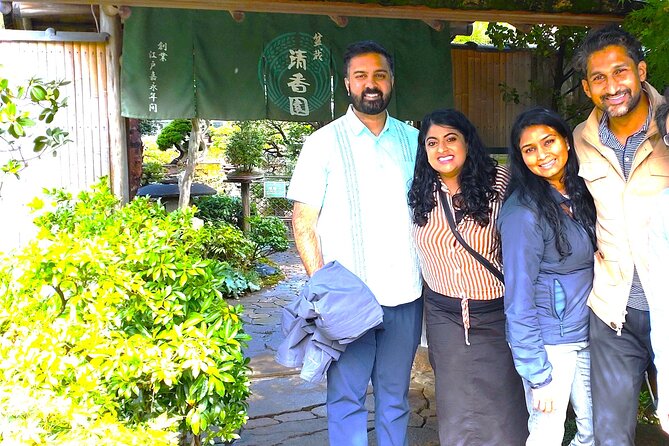
What you’re really buying here is context. You’ll be in an area surrounded by greenery and home to long-running bonsai gardens, so the craft feels like daily work, not a one-time show. And because there are multiple gardens to see, your eyes get trained fast: you start spotting differences in branch structure, trunk character, and how artists control growth with careful maintenance.
This is a great fit if you want bonsai in a way that’s understandable. You’ll learn what bonsai is, why Japanese craft traditions matter, and how the art connects to how the Japanese view nature.
You can also read our reviews of more city tours in Tokyo


From Toro Station to the first garden stop: seeing bonsai like a craft, not a collection
You start at Toro Station (Torocho, Kita Ward, Saitama) at 10:00 am, and the day ends back at the meeting point. The location is close to public transportation, which matters because you don’t want half your day lost to getting lost. Once you link up with your instructor, the tour shifts from logistics into the real point: understanding bonsai through what you’re seeing.
The first session is basically your “sightseeing” period, and it’s not just a stroll. You visit an outdoor bonsai garden to see works of art, and the guide adds commentary at prominent bonsai nurseries. That matters because bonsai pieces only look like magic until someone explains what you’re looking at. You start learning to read the tree: where the lines want to go, what the pruning is trying to achieve, and how artists shape growth over time.
Also, this is the kind of tour where the pacing is built for questions. The guide doesn’t treat history like trivia. You get time to ask about bonsai and Japan in general, which helps if you’re a beginner, or if you’ve just started to notice how much patience this craft requires.
From the vibe on the day, it can even feel more personal than the normal small-group setting. If the group is smaller, you get more direct attention while walking and comparing trees.
Two hands-on goals: pruning and shaping that you can feel in your hands
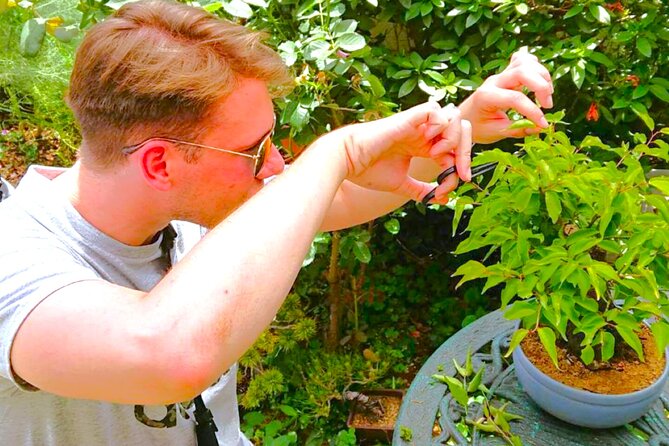
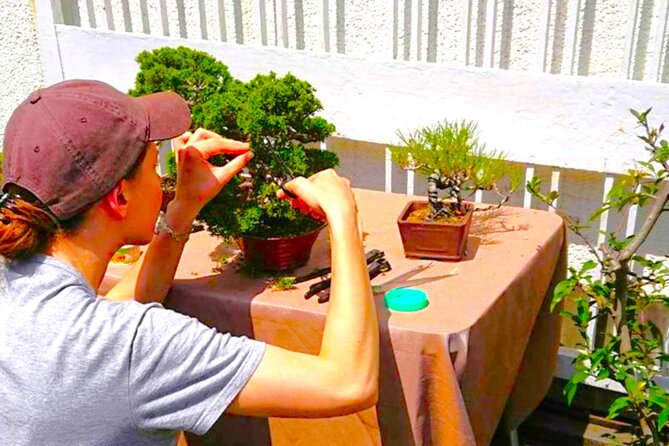
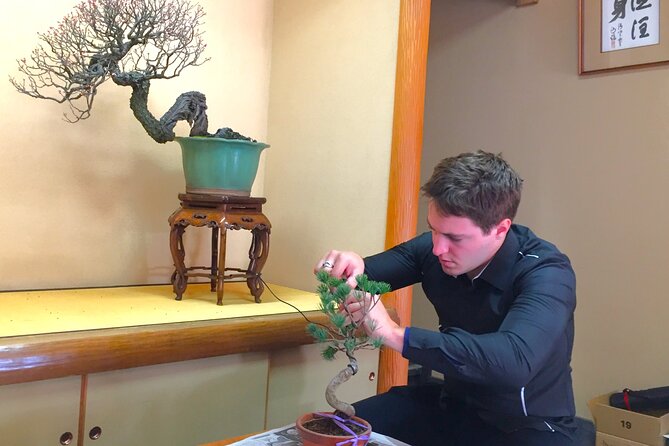
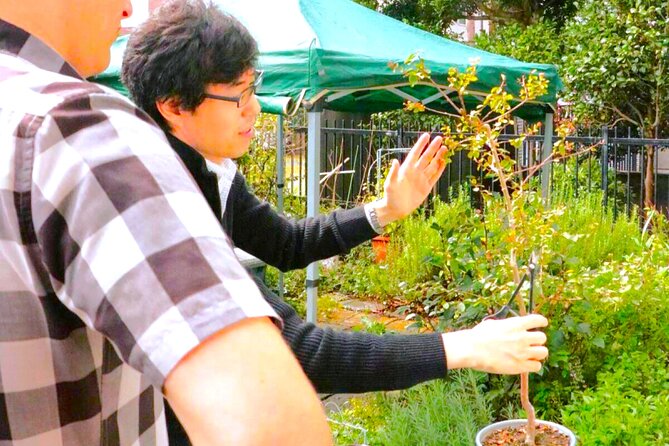
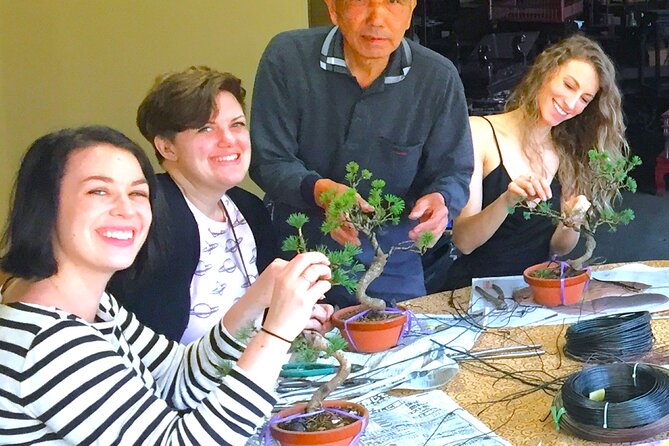
The workshop portion is where this tour earns its keep. In the second session, you try hands-on techniques for maintaining bonsai, especially pruning and shaping. This is not a passive demonstration where you clap at the end. You get to practice core maintenance moves and learn how tools are used for the job.
There’s also a practical reality to this part: bonsai work happens in a working setting. The tour notes that the bonsai work is done in a cafe area, and you should plan to order something there (the listing suggests around 450 JPY and up, roughly $3 and up). It’s a small cost, but it keeps everything grounded in real life rather than a staged studio.
You’ll use the provided bonsai tools, and the tool-usage fee is included. That’s one of those details that can save you from extra payments or awkward misunderstandings. If you’re worried about not having the right gear, this tour takes that off your plate.
From what’s been shared about the experience, the guide talks through techniques with real specificity. Expect explanations around trimming and shaping, and in some cases even techniques like wire cutting (used to guide branches). The point is to understand the logic behind each cut, not just copy a move.
A key thing you’ll likely walk away with: bonsai is both art and science. The art is visible in the final shape. The science is how maintenance choices control future growth.
Why Jun’s teaching style matters more than the garden photos
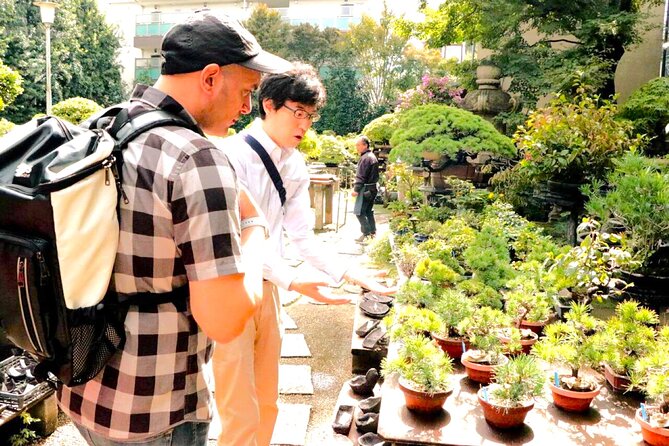
Plenty of tours show gardens. This one leans hard into the person guiding you. Reviews consistently highlight Jun as the kind of instructor who gives clear explanations and stays patient with questions. You’re not stuck with vague answers like it’s all about taste. You get guidance on why certain steps matter and what to look for when you’re learning.
One detail that makes a difference: Jun meets you at the train station and walks with you early in the day, giving a brief history while you’re moving between spots. That’s smart teaching. You’re not trying to absorb everything while sitting still and listening. You’re seeing context in real time.
In a max-10 group, your questions have room to land. Beginners often need a translator for what they’re seeing. More advanced visitors sometimes want sharper technical answers, like what the guide thinks about specific branch choices or maintenance timing. A small group makes that possible.
And yes, if you’ve been to Japan before and want to ask general questions, this is the kind of tour where those can fit naturally. The overall goal is to leave with a clearer sense of how bonsai connects to Japanese culture, not just with photos of cute mini trees.
Price and value: what $55.52 covers (and what you’ll still pay)
The listed price is about $55.52 per person for a tour around 2 hours 30 minutes. For a small-group format with an instructor, that’s a fair deal, especially because tool usage is included and consumption tax is included too.
Here’s what’s covered:
- Instructor time
- Bonsai tool usage fee
- Consumption tax
Here’s what’s not covered:
- A cafe order during the hands-on portion (the listing suggests 450 JPY and up)
- Bonsai Art Museum admission if you choose to enter (310 JPY)
So the real budgeting question is simple: are you planning to add the museum? If yes, add 310 JPY. If no, just be ready for the cafe order. Either way, you should expect a minor extra spend during the class portion.
Also note a practical add-on rule. If you want to enter a shop on your own without participating in the class, there’s an additional fee that needs to be requested in advance. That’s worth knowing so you don’t get surprised at the venue.
As for refunds and changes, the tour is non-refundable and can’t be changed for any reason. That’s not unusual in this kind of hands-on class, but it does mean you should lock in your date only when you’re sure.






Timing, tickets, and how to make the most of the 2.5 hours
This runs about 2 hours 30 minutes, starting at 10:00 am. You’ll have enough time to see bonsai, ask questions, and actually practice pruning/shaping, but not so much time that the day turns into a slow slog.
The tour uses a mobile ticket, which is convenient if you prefer not to manage paper. Since the meeting point is near public transportation, your best move is to arrive early enough to settle in, find the right platform area, and be ready to start walking.
Because your hands will likely be involved in the workshop portion, you’ll feel better if you keep your day plan simple. Bring what you need for comfort, and avoid cramming the tour in between other demanding commitments.
If you’re the type who likes to repeat what you learn the same day, this is a great choice. The guidance you get during pruning and shaping is exactly the kind of knowledge that sticks better when you apply it right away.
Who should book this bonsai workshop in Bonsai-cho
Book this if:
- You’re a bonsai beginner and want a guided, structured introduction
- You want hands-on pruning and shaping, not just photos
- You like small groups (max 10) where questions are welcomed
- You’re curious about the Bonsai-cho area and why it exists
Consider skipping or comparing if:
- You only want museum-style indoor viewing and nothing hands-on
- You need a tour with full refunds for schedule changes
- You’re not willing to pay a small cafe order during the class portion
Should you book?
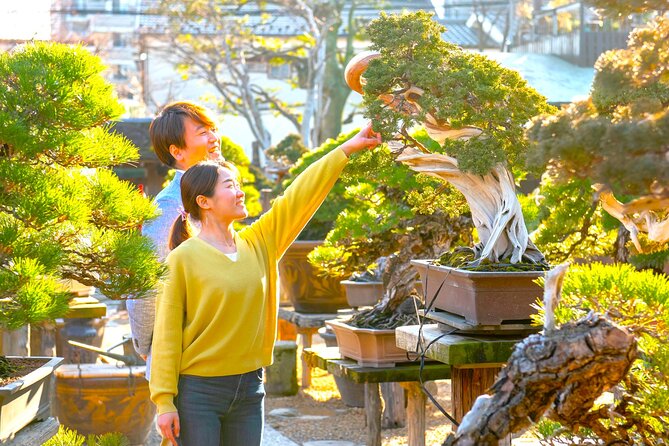
I think you should book it if you want the fastest route to understanding bonsai as a living craft. The mix of garden sightseeing plus a tool-in-your-hands workshop is the right ratio for most people. You’ll see bonsai as art, then learn the maintenance choices that create that art over time.
Also, you’re not just getting a generic guided walk. The tour’s small size and Jun’s teaching approach make the explanations practical, and that’s where beginners often feel the biggest relief.
If the non-refundable rule scares you, double-check your date first. If you’re comfortable with a small extra cafe order and an optional museum fee, this is a good value way to spend a half-day with real craft guidance in Saitama.
FAQ
How long is the bonsai tour?
It runs for about 2 hours 30 minutes.
What is the group size?
The group is limited to a maximum of 10 travelers.
Where does the tour meet?
You meet at Toro Station 1 Chome, Torocho, Kita Ward, Saitama 331-0804, Japan.
What time does the tour start?
The start time is 10:00 am.
What’s included in the price?
The price includes an instructor, bonsai tool usage fee, and consumption tax.
Do I need to pay extra during the experience?
Yes. The bonsai work is done in a cafe, and you must order something (the listing suggests 450 JPY and up). The Bonsai Art Museum admission fee is also not included (310 JPY).
Is there an age requirement?
Participants must be at least 13 years old. Anyone under 18 must be accompanied by an adult.
What is the cancellation policy?
This experience is non-refundable and cannot be changed for any reason.