REVIEW · TOKYO
Tokyo: Tsukiji Fish Market Seafood & Street Eats
Book on Viator →Operated by With Japan · Bookable on Viator
Tsukiji is a sensory shortcut. This 2.5-hour morning walk turns Japan’s seafood culture into something you can actually handle—temple first, then market stops with your guide steering you toward good bites. I like the small group size, which makes questions practical, not awkward. I also like that the tour is timed for a busy morning, so you’re not giving up half a day just to sample seafood.
My favorite part is the guide focus: you get an English-speaking, local Japanese guide who can explain what you’re seeing and help you order without guessing. Another big win is the pacing—Tsukiji Fish Market for history and sights, then a second stop for street-food-style choices at Tsukiji Jogai Market. That combination works whether you’re a seafood fan or just curious.
The only real consideration: food is not included. You’ll need to budget for what you choose to eat, and the best spots can involve lines. If you have strict spending limits, you’ll want a plan before you step inside.
In This Review
- Key points to know before you go
- Tsukiji in 2.5 hours: the logic behind the timing
- Tsukiji Hongwanji Temple: a calm start before the seafood chaos
- Tsukiji Fish Market: tuna culture and what you should expect
- Tsukiji Jogai Market: your street-food ticket to actual choices
- The guide factor: English clarity, smart ordering, and queue help
- Price and value: $42 buys structure, not seafood
- What to eat (and how to not overspend in the moment)
- Group size and walking: how the tour actually feels on your feet
- Who should book this Tsukiji seafood walk?
- Should you book this Tsukiji Fish Market seafood and street eats tour?
- FAQ
- How long is the Tsukiji Fish Market seafood and street eats tour?
- Is food included in the tour price?
- How many people are in the group?
- What are the main stops on the tour?
- Does the tour have an English-speaking guide?
- Is it hard to reach the meeting point using public transportation?
- What if the weather is bad?
- Can I get a full refund if I cancel?
Key points to know before you go
- English support with a local guide so market talk turns into real ordering help
- Max 10 people, which keeps the group tight and questions easier
- Two market stops: Tsukiji Fish Market plus Tsukiji Jogai Market
- Food is extra, so you control how much you spend and what you try
- Short duration (about 2.5 hours), ideal for fitting into a full Tokyo schedule
- Mobile ticket and easy access via public transportation
Tsukiji in 2.5 hours: the logic behind the timing
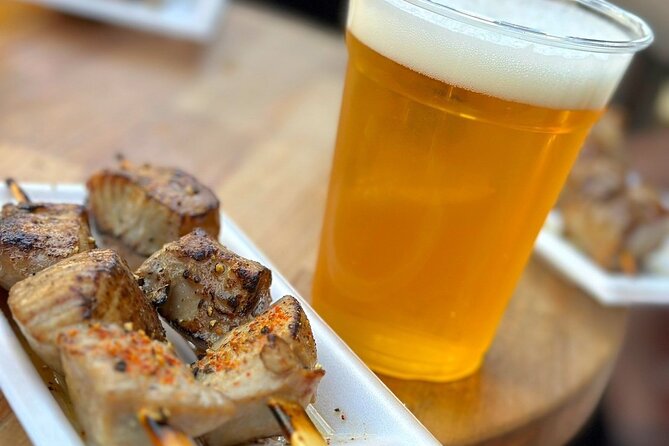
Tsukiji can feel like sensory overload if you show up on your own. That’s the good reason this tour keeps things short and structured. You get a guided route through key areas in about 2 hours 30 minutes, which is exactly what I want on a tight Tokyo itinerary.
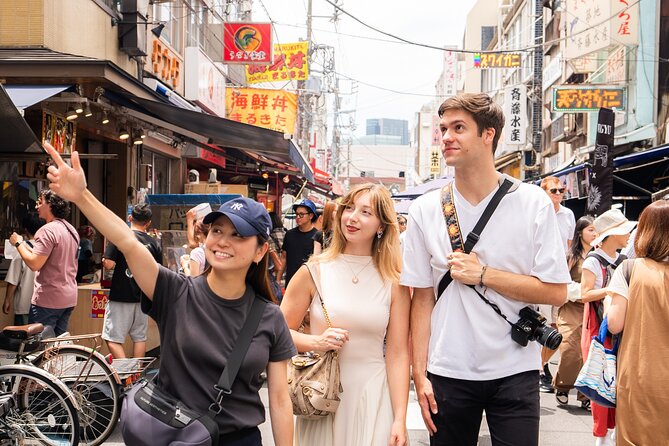
This is also why the morning timing matters. You’re walking when the market energy is high and people are actually shopping and eating. The guide’s job is to help you interpret what you’re seeing—like how tuna culture fits into the market’s identity—so your time doesn’t vanish into a blur of stalls and signage.
And because the group tops out at 10, you’re not stuck behind a crowd that moves like a school bus. You can slow down when something catches your attention, then catch up without stress.
You can also read our reviews of more shopping tours in Tokyo


Tsukiji Hongwanji Temple: a calm start before the seafood chaos
Most Tsukiji experiences start with food. This one starts with 築地本願寺 (Tsukiji Hongwanji Temple), and that’s a smart move. The temple stop gives you a breather before the market compresses your senses. It also helps you understand the area beyond seafood, so you’re not only thinking with your stomach.
You’ll visit with an English-speaking local guide, and the tour includes entry to the temple. Even if you’re not a “temple person,” I think this stop is worth it because it gives you context. Markets aren’t separate from neighborhoods and traditions—Tsukiji is part of Tokyo life, and the temple stop nudges you to see that.
The main practical advantage: you begin the walk in a calmer pace, then shift into market mode.
Tsukiji Fish Market: tuna culture and what you should expect
After the temple, you head into Tsukiji Fish Market, where you’ll spend about 1 hour 30 minutes exploring with your local English-speaking guide. This is where the tour earns its reputation: you get guided time, not just wandering time.
The market focus includes the history and culture of Tsukiji, and the tour points to famous tuna auctions as part of what makes the area internationally known. You’ll also have time to “devour delicious food,” but food sampling is a self-pay choice, not included in the tour price.
Here’s how to make the most of this segment:
- Watch what the stalls are doing, then ask your guide what’s most worth your money.
- If you’re not sure what to order, start with something straightforward. The guide can help you match your taste and budget.
- If you see lines, don’t automatically panic. A good guide can help you decide where waiting makes sense.
One more detail that matters: this stop can involve queues at popular spots. The group stays small, and the guide can help you navigate which places are efficient versus which ones will chew up your time.
Tsukiji Jogai Market: your street-food ticket to actual choices
Next comes Tsukiji Jogai Market, around 1 hour. This is the stop that tends to feel like the payoff. It’s packed with shops and stalls selling fresh seafood and Japanese street food, and it’s where your ordering options get real.
The tour includes entry for Tsukiji Jogai Market, so you’re not worrying about another ticket step. And because this portion is specifically described as a walking through stalls-and-shops kind of experience, you can sample more than one bite without committing to a single full meal.
If you like variety, this is where you’ll feel happy. If you’re a “one thing only” person, you can still make it work—you just choose one standout item and stop there. Either way, you stay in control of your spending.
The street-food style also means you should expect smaller portions and quicker decisions. I recommend you set your own mini budget before you reach this stop, then let the guide help you spend that money well.
The guide factor: English clarity, smart ordering, and queue help
This tour’s biggest strength is the people leading it. It’s not just an English-speaking guide who reads a script. You’re getting local guidance that helps you understand what you’re looking at and how to order efficiently.
The reviews highlight a few very specific strengths that match what you want from a market guide:
- Haru is praised for being early and handling real-life chaos with patience, including re-routing when a family got lost after needing accessibility exit adjustments on the subway.
- Toko is noted for being friendly and patient with kids, which matters if your group includes younger eaters who need extra reassurance.
- Ryo stands out for focusing on food first—finding the best tastes and helping with long queues so you don’t burn time standing around.
Even without those exact names in your group, the pattern is clear: guides here are practical. They help you move through the market without turning your morning into a puzzle.
Also, the small-group limit of 10 is not a marketing detail. It’s what gives the guide time to answer questions, clarify menu items, and guide decisions on the spot.
You can also read our reviews of more tours and experiences in Tokyo



Price and value: $42 buys structure, not seafood
At $42 per person, this is priced like a guided experience through a top Tokyo food zone. The key value point is what’s included: guide time, entry for Tsukiji Hongwanji Temple and Tsukiji Jogai Market, plus guided market access. You’re paying for order-and-understand support, not for the food itself.
And that’s the one place where you should be honest with your own expectations. Food and drinks are explicitly not included. That means your final spend depends on how adventurous you get and how often you add extra bites.
But here’s the balancing argument in favor of the tour: if you come alone, you still pay for food. The tour just helps you avoid the expensive mistakes—like ordering something you don’t understand, or wasting money on a place that’s popular but not the best value at that moment.
If you want maximum value, set a plan:
- Decide how many items you want across the two market stops.
- Tell the guide you’re budget-conscious or you’re ready to splurge a bit.
- Use the guide to pick the “most worth trying” options rather than sampling everything.
In short, the tour is a structure purchase. You supply the appetite.
What to eat (and how to not overspend in the moment)
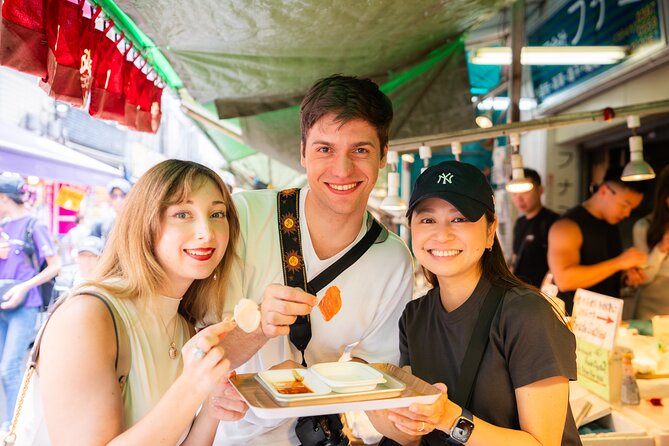
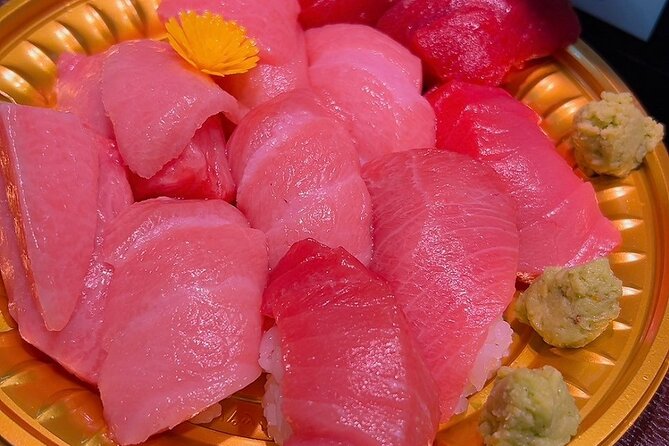
Since food is extra, your best strategy is to shop with intent. Tsukiji has a reputation for tuna, and the tour’s focus on tuna culture means that tuna options will likely be a major theme as your guide recommends what to try.
The reviews give a strong sense of what people end up enjoying in this market environment:
- Super fresh tuna sashimi, including different fatty cuts
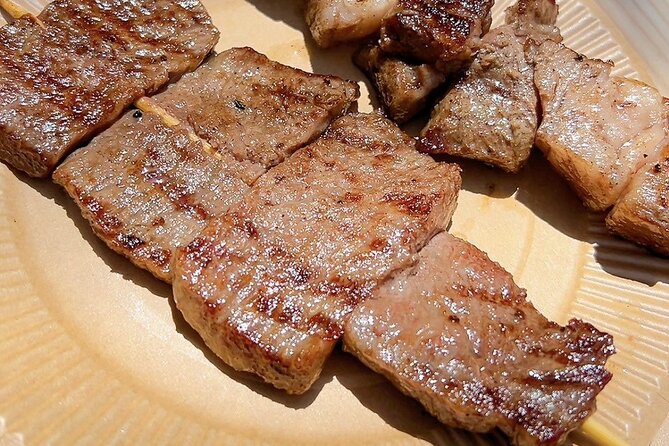
- Tuna kabobs
- Seafood rice crackers
- Eel and scallops
- Even sit-down dishes like giant crab in some meal stops
You might not eat all of that. But you can use the menu “categories” as a starting map:
- One raw or semi-raw seafood bite (if you eat it)
- One cooked seafood or grilled item
- One snack you can carry through the walk
Portions and prices vary by stall, so you’ll be making small choices fast. That’s exactly where a guide helps: they can steer you to stalls where the line is worth it and the staff can handle your ordering needs.
One more practical tip: if you’re with kids, choose simple favorites first. The tour includes guidance that’s been praised for working well with children, which usually means fewer awkward moments and more successful bites.
Group size and walking: how the tour actually feels on your feet
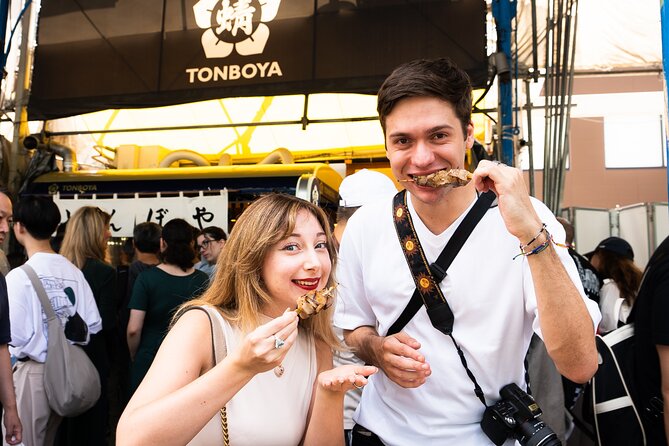
This is a walking tour with two focused market segments and a temple start. The total time is about 2 hours 30 minutes, so it’s active but not exhausting.
Because the maximum group size is 10 travelers, you’ll likely have an easier time pacing than with larger mass tours. Small groups also matter in markets, where turning corners and stepping aside for vendors can slow big crowds down. Here, your guide can keep everyone moving and adjust if someone needs a moment.
You’ll also benefit from the fact that the meeting point is in a part of Tokyo that’s near public transportation. That helps if your day already includes multiple neighborhoods and you’re juggling trains.
If you’re sensitive to crowds, start calm. Tsukiji will feel crowded because it is a fish market area, not a quiet museum. But the guide’s route and the small group size help keep it from turning into a free-for-all.
Who should book this Tsukiji seafood walk?
I’d book this if you want:
- A short morning plan that fits into a busy Tokyo schedule
- An English-speaking guide who can explain what matters and help you choose food
- A small group experience where your questions actually get answered
It’s also a good fit for families, based on real feedback about guides being patient with kids. If your group includes people who want “food first,” the guide style is described as practical and focused on getting good eats rather than turning it into a classroom.
Where I’d hesitate:
- If you don’t want to spend extra on food at all
- If you’re very strict about spending and don’t want to make on-the-spot decisions
- If your day is already jam-packed and you hate walking in crowded areas
Should you book this Tsukiji Fish Market seafood and street eats tour?
If you’re planning a Tokyo food-focused morning and you’re okay paying for what you eat, I think this is a smart purchase. For $42, you get guided structure, included entries for key stops, and local direction in a market that can be confusing without help.
I’d book it if you want to:
- Get your bearings fast in Tsukiji
- Try standout seafood without guessing every menu item
- Keep the experience short and morning-friendly
Skip it only if food extra costs will make you nervous. The tour price covers the guide and access; your appetite decides the final bill.
FAQ
How long is the Tsukiji Fish Market seafood and street eats tour?
The tour runs about 2 hours 30 minutes (approx.).
Is food included in the tour price?
No. Foods and drinks are not included, and you purchase what you want at your own expense.
How many people are in the group?
The tour has a maximum of 10 travelers.
What are the main stops on the tour?
You visit Tsukiji Hongwanji Temple, Tsukiji Fish Market, and Tsukiji Jogai Market.
Does the tour have an English-speaking guide?
Yes. The tour includes a local Japanese English-speaking guide.
Is it hard to reach the meeting point using public transportation?
The meeting point is near public transportation.
What if the weather is bad?
The tour requires good weather. If it’s canceled due to poor weather, you’ll be offered a different date or a full refund.
Can I get a full refund if I cancel?
Yes. You can cancel for a full refund up to 24 hours in advance of the experience’s start time.