REVIEW · TOKYO
Tokyo Tsukiji Fish Market Food&Culture Walking Tour With a LOCAL!
Book on Viator →Operated by 38TOURS · Bookable on Viator
Tsukiji turns from maze to meal with help. This 3-hour small-group walk guides you through Tsukiji’s busy food lanes with temple and shrine stops, a short luggage storage setup, and a quick survival Japanese lesson before you start sampling on your own.
I like that there are no preset food inclusions, so you skip anything you don’t feel like eating and only pay for the dishes you actually want. You’ll still get guidance on what to try, but your shopping stays flexible instead of forced.
One consideration: it’s a walking tour with about two hours on your feet, so it may not suit you if long stretches are hard.
In This Review
- Key highlights worth your time
- Why This Tsukiji Tour Works Better Than Going Solo
- Meeting at Tsukiji Hongan-ji Temple: Etiquette and Survival Japanese
- 38KIOSK Setup: Luggage Storage and a Simple Starting Plan
- Jogai Market: Fresh Ingredients, Knife Culture, and What to Look For
- Namiyoke Shrine and Temple Etiquette: Culture You Can Actually Feel
- Lunch at 38KIOSK: What the Meal Stop Is Really For
- Price and Logistics: Is $75 Good Value?
- Tips to Get More From Your Tsukiji Morning
- Who Should Book This Tour (and Who Should Skip)
- Final Verdict: Should You Book This Tsukiji Food and Culture Walk?
- FAQ
- How long is the Tsukiji Fish Market food and culture walking tour?
- Where do I meet the guide, and where does the tour end?
- Is luggage storage available during the tour?
- Is lunch included in the price?
- Is this tour limited to a small group?
- What if weather is poor?
Key highlights worth your time
- Hongwanji Temple start with a brief intro to Buddhist rituals and on-site etiquette
- Luggage storage included so you don’t drag a suitcase through the market
- Tsukiji Jogai Market focus on ingredients, plus traditional knives and tools passed down over generations
- Namiyoke Shrine visit with entrance included as part of the cultural route
- 38KIOSK lunch stop in a quiet alley setting, powered by what you saw in the market
- Max six people for a more personal pace and easier ordering help
Why This Tsukiji Tour Works Better Than Going Solo
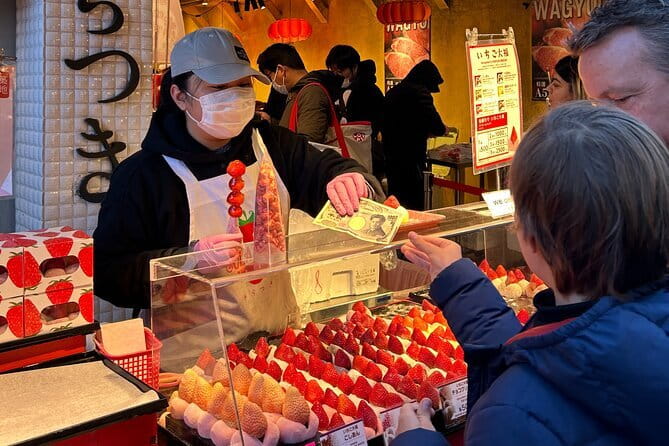
Tsukiji is famous for a reason, but it can also feel like a pinball machine of noise, signs, and crowded lanes. If you go without a plan, you may find yourself standing in front of stalls wondering what to order, where to stand, and how not to get in the way.
This tour keeps things practical. You get help getting your footing fast—literally at the meeting point—and then guidance that’s built for real food shopping: how to spot what’s fresh, how to behave around vendors, and how to ask for what you want. The group stays capped at six, which matters because Tsukiji moves at a different speed than most sightseeing neighborhoods. A smaller group helps the guide keep an eye on everyone and helps you keep moving.
The other big win is that you control your plate. Since there are no fixed food inclusions, you’re not paying for dishes you don’t want. That’s a better way to budget in a market where prices vary stall to stall and day to day.
If you’ve ever heard friends say Tsukiji is only worth it if you have a local helping you, this is that idea—scaled to a 3-hour walk that doesn’t eat your whole morning.
You can also read our reviews of more walking tours in Tokyo


Meeting at Tsukiji Hongan-ji Temple: Etiquette and Survival Japanese
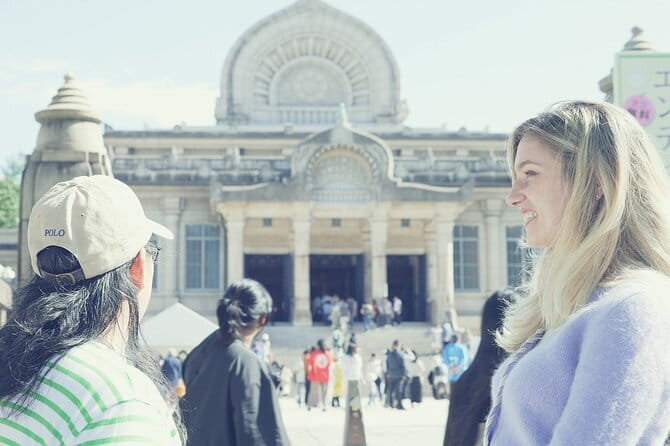
The tour starts at Tsukiji Hongan-ji Temple (3-chōme-15-1 Tsukiji). You’ll meet at the main gate area and get a brief cultural primer before you head into the market. This isn’t a long lecture. It’s the kind of quick orientation that helps you avoid awkward moments later—especially around temple spaces where people expect calm and basic respect.
The guide also includes a short survival Japanese lesson. You’re not trying to become fluent in 15 minutes. You’re aiming for the useful bits: how to get attention, how to communicate politely, and how to make ordering smoother when you’re standing in line. When you’re looking at a menu board covered in unfamiliar terms (or no menu at all), even a few phrases can save you time.
One more detail I really appreciate: the tour uses the temple setting as a reminder that Tsukiji isn’t just about eating. It’s a working area tied to traditions. Learning the tone first—quiet, respectful, patient—makes the rest of the walk feel easier.
38KIOSK Setup: Luggage Storage and a Simple Starting Plan
Right after the temple time, you move to 38KIOSK, which acts as a hub. This is where you’ll get the tour intro and where the tour handles free luggage storage. The wording is clear: small suit cases and similar bags can be stored during the tour, which is a huge comfort upgrade.
Why that matters: Tsukiji’s streets and indoor lanes are not built for dragging rolling luggage behind you. Even if you’re the kind of person who can manage it, you’ll spend energy getting around instead of enjoying what you came for. Luggage storage means you can carry only what you need—water, your phone, a small bag for bites—and keep your hands free for tastings.
38KIOSK also helps you start with less guesswork. Instead of walking straight into the busiest market corridors right away, you get a warm-up: what you’ll be seeing, how the group will move, and how to approach tasting without feeling rushed.
There’s a practical scheduling rhythm here too: short early segments that keep you from losing steam before the food part begins.
Jogai Market: Fresh Ingredients, Knife Culture, and What to Look For
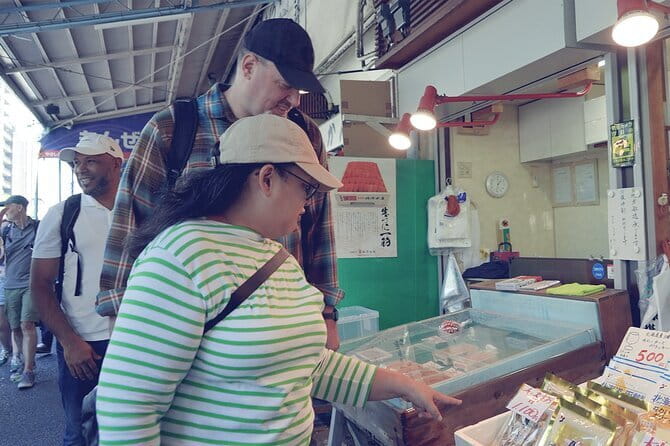
The heart of the walk is the Tsukiji Jogai Market, where the time blocks are designed for actual exploring—about 1 hour 20 minutes of guided wandering. Entrance fees are included, so you’re not juggling one more transaction while you’re already trying to decide what smells best.
This stop has two layers. First is the food side: ingredients and stalls where you can taste your way through Tsukiji’s flavors. Your guide will steer you toward good choices like fresh sushi and popular meat items (including Wagyu skewers), plus other dishes you might want to try.
Second is the tools side, and it’s a thoughtful touch. You’ll learn about handcrafted knives and market tools passed down through generations. Even if you’re not buying anything, this adds context. It explains why some vendors and kitchens take precision so seriously—and why “fresh” in Tsukiji isn’t only about seafood. It’s also about preparation.
How the guide improves your experience here is mostly invisible. You’ll spend less time standing around and more time making quick decisions with confidence. When you’re surrounded by people and unfamiliar signage, that confidence is the difference between a fun bite-hunt and a stressful scavenger hunt.
Also, remember the tour’s meal style. There are no preset food inclusions, so you’ll likely order a handful of items across the market rather than one big fixed meal. This lets you follow your own appetite and budget.
Namiyoke Shrine and Temple Etiquette: Culture You Can Actually Feel
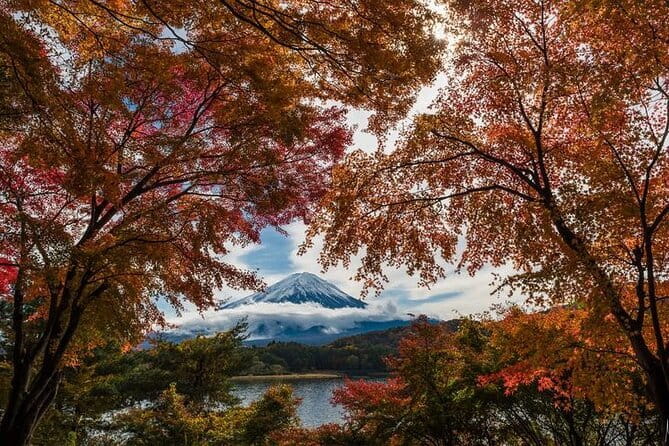
In addition to the Hongan-ji Temple start, the tour includes entrance to Namiyoke Shrine. That matters because many food walks stop after you’ve eaten. Here, you get a short cultural reset, which helps the market feel less like a chaotic food court and more like a place with real daily rhythm.
At shrine and temple spaces, the key is respect and quiet attention. Since the tour already gives you a brief etiquette foundation at the start, you’ll likely know what to do without guessing. The walk moves you from a sacred space into a working food market, and that contrast is part of why Tsukiji feels unique.
This isn’t about turning you into a scholar. It’s about giving you enough context that you feel comfortable while you’re there—especially if you don’t know Japanese customs.
You can also read our reviews of more food & drink experiences in Tokyo




Lunch at 38KIOSK: What the Meal Stop Is Really For
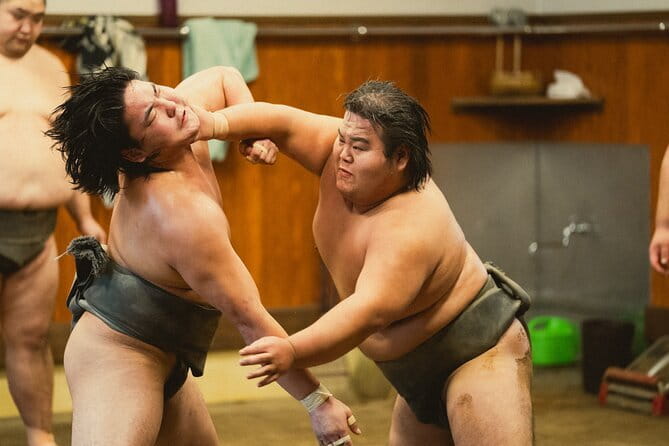
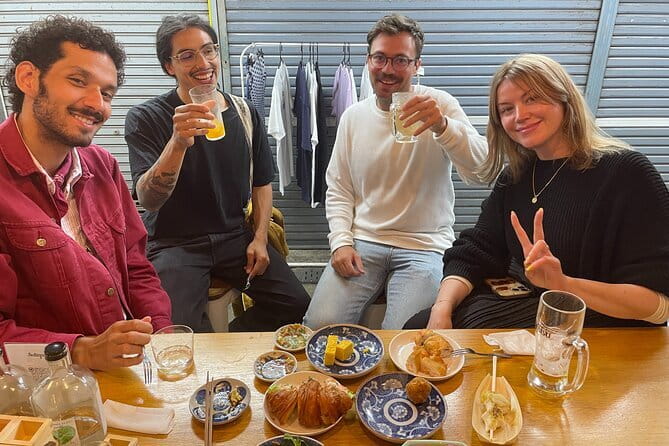
Lunch is handled at 38KIOSK. The tour schedule includes about 1 hour here, and the idea is “market to table.” The lunch is described as a party-style meal featuring fresh ingredients sourced during the market tour.
One important money note: lunch isn’t listed as included in the tour price. So you should plan on paying for what you eat and drink at 38KIOSK. The benefit is that your guide helps you hunt for the best options once you’ve already seen the ingredients earlier.
38KIOSK is tucked away in an alley, which sounds small until you’re standing in Tsukiji lanes. Getting a quieter space for your meal helps you slow down. You can compare tastes you tried earlier, decide what to repeat, and refuel without constantly scanning the market for the next stop.
This is also a smart way to keep your morning from stretching too long. A 3-hour total tour is short enough to fit into a busy Tokyo day, and lunch happens at a predictable point so you don’t lose time trying to find somewhere suitable on your own.
Price and Logistics: Is $75 Good Value?
At $75 per person, this tour is priced like a quality small-group experience in central Tokyo. The value isn’t the food itself, since you’re paying for the dishes you choose. The real value is in what you’re buying around the food.
You’re getting:
- Local professional guidance through Tsukiji’s confusing corridors
- Entrance fees included for Tsukiji Hongan-ji Temple, Namiyoke Shrine, Tsukiji Fish Market, and Jogai market
- A quick survival Japanese lesson
- Free luggage storage during the tour
- A group cap of six people, which improves attention and pacing
That combination is what makes the price feel reasonable. Without a guide, you’d still pay for attractions and likely spend extra time figuring out where to go and what to order. With a guide, you spend that time eating and learning.
One more practical angle: this tour is typically booked in advance (on average about 24 days). That’s a sign of demand, especially for the small-group format. If you’re traveling on a weekend or near a holiday, book sooner rather than later.
Tips to Get More From Your Tsukiji Morning
A few things will help your experience feel smoother and more like a guided hunt than a chore:
- Go in with a snack strategy. Since there are no preset food inclusions, you’ll likely want smaller bites at multiple stalls rather than one giant meal too early.
- Pack light if you can. Even though luggage storage is included, having fewer items makes moving easier.
- Wear shoes for long standing and uneven floors. The tour is not just quick walking; it involves extended walking time.
- Use the Japanese lesson. Even minimal phrases can help you get service faster and politely signal what you want.
- Choose your timing smartly. One practical note: Saturdays can be busy but still manageable earlier in the day, while crowds build as the morning goes on. If you have flexibility, prioritize the earlier start window.
And don’t forget: alcohol isn’t included. If you want a pairing drink, ask your guide what makes sense with the bites you’re ordering.
Who Should Book This Tour (and Who Should Skip)
This tour is a great match if you want Tsukiji food without the stress of navigating on your own. The small group size makes it especially good for people who like questions, want help ordering, or just don’t want to get lost in the maze of stalls.
It’s also a solid option if you care about food culture, not just food calories. Temple and shrine entrance plus etiquette guidance help you understand why the area has more meaning than a photo stop.
On the other hand, it may not be ideal if you have trouble walking for extended periods. The tour isn’t labeled accessible for people with limited walking stamina, and the schedule suggests about two hours on your feet.
Dietary needs are supported with planning: vegetarian, gluten-free, and other allergies or religious needs can be accommodated if you specify when booking. If you have strict restrictions, be clear ahead of time so the guide can steer you correctly.
Final Verdict: Should You Book This Tsukiji Food and Culture Walk?
If you’re aiming for Tsukiji that actually feels doable—food you choose, cultural context you can respect, and a guide who helps you find the right stalls fast—this is an easy yes. The small-group cap, luggage storage, and included temple/shrine entrances are the kind of extras that make the $75 feel less like a price tag and more like a shortcut to a better morning.
Skip it if long walking is a problem for you, or if you’d rather wander completely on your own with no guide. Also keep weather in mind: the experience requires good weather, so have a backup mindset if conditions don’t cooperate.
Overall, this is the kind of tour that turns Tsukiji from confusing to comfortable—so you can focus on what matters most: eating well, asking smart questions, and leaving with the sense that you understood the place, not just passed through it.
FAQ
How long is the Tsukiji Fish Market food and culture walking tour?
It runs about 3 hours.
Where do I meet the guide, and where does the tour end?
You meet at Tsukiji Hongan-ji Temple (3-chōme-15-1 Tsukiji, Chuo City). The tour ends at 38KIOSK in Tsukiji (4-chōme1014 加藤ビル).
Is luggage storage available during the tour?
Yes. There’s free luggage storage during the tour for small suit cases and similar bags.
Is lunch included in the price?
Lunch is not included. There is a lunch stop at 38KIOSK where your guide can help you choose what to eat.
Is this tour limited to a small group?
Yes. The maximum group size is 6 people.
What if weather is poor?
The experience requires good weather. If it’s canceled due to poor weather, you’ll be offered a different date or a full refund.