REVIEW · TOKYO
Tokyo Sushi Making Class : Sake Ceremony & Matcha Experience
Book on Viator →Operated by Sushi Meets Matcha · Bookable on Viator
Sushi class starts with a sake ritual. In Asakusa, you begin with kagami-biraki barrel opening and a group toast, then shift right into hands-on nigiri training with friendly, step-by-step coaching. It’s part kitchen class, part little celebration, with chants that pull you in fast.
One thing to keep in mind: this is not a quiet, sit-there-and-watch lesson. You’ll be making 6–12 pieces (nigiri plus rolls) and there’s a torched salmon mayo gunkan step, so it helps if you’re up for active cooking and strong flavors.
In This Review
- Key highlights at a glance
- Asakusa first: kagami-biraki sake barrel opening and the group toast
- Nigiri essentials that help you shape rice with confidence
- A practical note on pace
- WASSHOI torched salmon mayo gunkan: the Tokyo twist and the photo moment
- Making matcha for the finish: DIY whisking and a calm landing
- What you’ll actually do with your hands (and what you’ll eat)
- Price and value: is $45.77 fair for 90 minutes?
- Small group size and how it affects your learning
- Where this fits best (and where it might not)
- Practical details that help your day go smoothly
- Should you book Tokyo Sushi Making Class: Sake Ceremony and Matcha?
- FAQ
- What is the duration of the Tokyo sushi class?
- Where does the experience take place in Tokyo?
- What do I make during the workshop?
- Is there a non-alcohol option during the sake barrel opening?
- How many people are in the group?
- Can I cancel for a full refund?
Key highlights at a glance
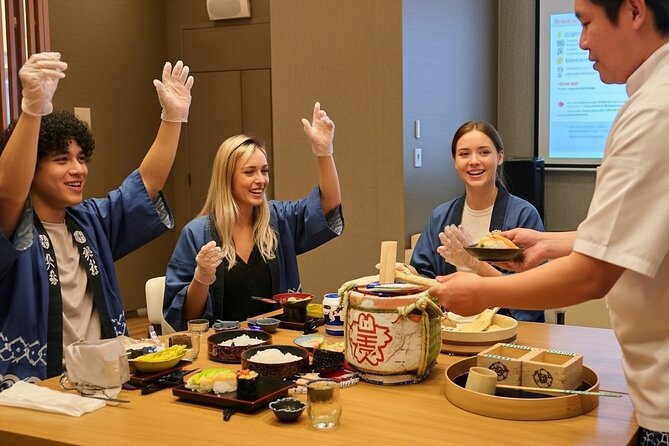
- Kagami-biraki start with the Yoisho chant and a shared toast, including a non-alcohol option (water or warm Japanese tea)
- Nigiri fundamentals that focus on rice shaping pressure and confident fish/topping placement
- WASSHOI torched salmon mayo gunkan with a Tokyo-style twist and a photo moment timed to the chant
- Matcha at the end where you whisk your own bowl for a smooth, foamy finish
- Small group size (max 20) that keeps the class interactive and beginner-friendly
Asakusa first: kagami-biraki sake barrel opening and the group toast
The class meeting point is in Asakusa, at 1-chōme-10-16 Hanakawado, Taito City, Tokyo 111-0033. It’s also described as near public transportation, which matters because you want your day in Tokyo to start on time, not with a stressed sprint through sidestreets.
What really sets the tone here is the opening tradition: kagami-biraki, the sake barrel opening for new beginnings. You’re not just hearing about it. You join the group, you chant Yoisho (repeated three times), and you take part in a toast. That shared rhythm does something practical too: it gets everyone loose and paying attention before you handle any food.
And yes, there’s an alcohol-free path. The toast can be water or warm Japanese tea, so you can participate fully without feeling locked into sake. For me, that balance is a big part of the value of the experience. It’s culture plus comfort.
You can also read our reviews of more food & drink experiences in Tokyo


Nigiri essentials that help you shape rice with confidence
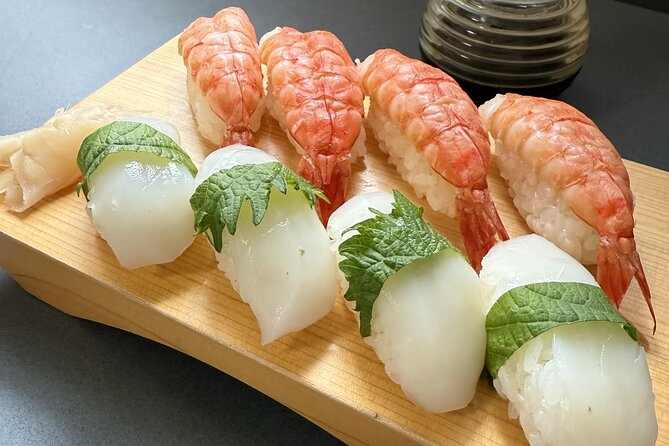
Once the ceremony energy settles, the focus turns to nigiri. This is where you learn the small mechanics that make sushi look right and taste right. The coaching is step-by-step and designed for beginners, which is important because sushi can feel intimidating when you’re watching chefs who move like robots.
You’ll work on core skills like:
- how to shape rice with the right pressure
- how to handle toppings without tearing or sliding
- how to place fish cleanly and confidently
The point isn’t perfection. The point is learning the process you can copy later. When someone shows you what to do, then puts you at the rice, you start understanding why sushi chefs talk about texture, firmness, and balance. Your hands learn the feel. Your eyes learn what good rice looks like.
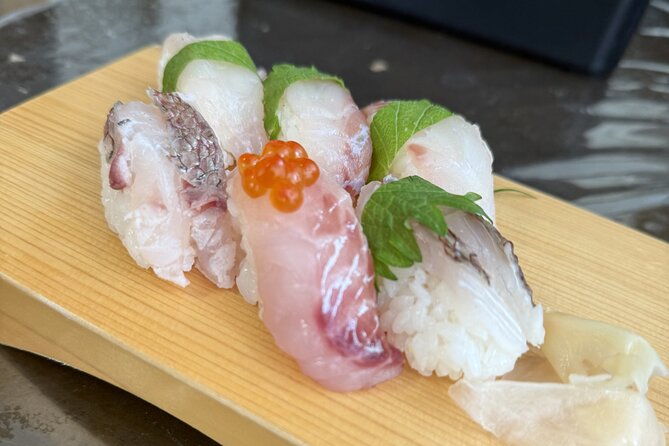
Also, this isn’t one of those classes where you just plate something and leave. You’re making real pieces. The experience is designed so you’ll end up with 6–12 pieces by the time everything wraps up. That’s enough volume to actually get practice, but not so much that you’ll lose the thread.
A practical note on pace
The class runs about 1 hour 30 minutes. That’s a tight window, so you’ll likely move through steps fairly quickly. For most people, that’s a good thing. In a shorter class, you stay focused and finish with a result you can eat and share.
If you prefer very slow, ultra-refined instruction, this might feel brisk. But if you want momentum and a hands-on win, it’s a smart format.
WASSHOI torched salmon mayo gunkan: the Tokyo twist and the photo moment
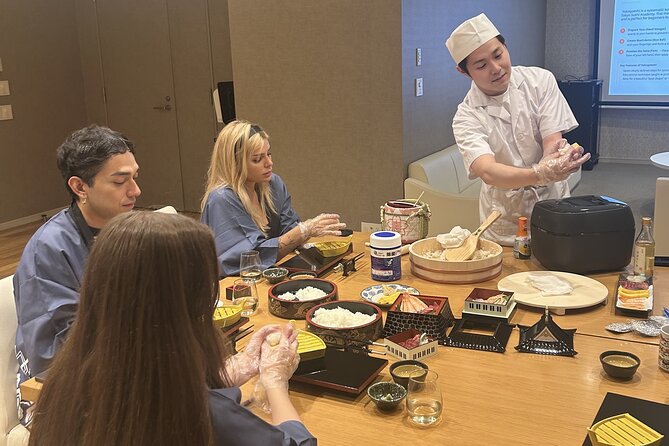
After nigiri basics, you hit the crowd favorite: WASSHOI-style torched salmon mayo gunkan. This is explicitly described as not traditional Edomae, meaning you’re getting both classic technique and a modern Tokyo flavor direction.
The build is part art, part theater:
- salmon piled high
- zigzag mayo
- then a quick torch finish for smoky, creamy umami
Two things I like about this step. First, the flavor logic is straightforward: warm, smoky, creamy, rich. Second, the visual payoff is huge. You can take your sushi seriously and still enjoy the process.
They also time a chant and a photo moment. You’ll chant WASSHOI three times and snap photos at the best moment. That’s not just for fun. It helps you remember what you learned and gives you something tangible beyond taste.
If you’re deciding whether to book, consider whether you’re okay with a torch step and salmon mayo as the signature flavor. If you don’t eat seafood or don’t like smoky heat, this might not be your ideal centerpiece. But if you’re open to modern Tokyo sushi energy, this is the moment that usually sticks in your memory.
Making matcha for the finish: DIY whisking and a calm landing
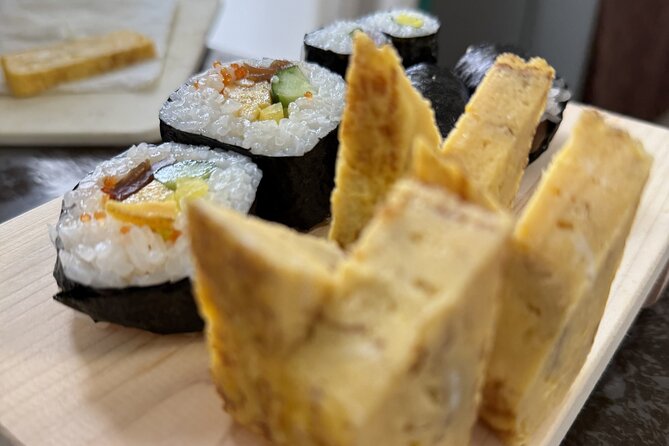
The final phase shifts gears from cooking to calm. You’ll make matcha yourself by whisking it properly to get a smooth, foamy bowl. Then you enjoy your fresh matcha as the finale to the sushi experience.
This part matters because it balances the whole session. Cooking can be loud, quick, and hands-on. Matcha gives you a short reset. It also teaches a skill you can repeat at home, not just a flavor you tasted once in Tokyo.
If you’ve ever tried matcha at cafés and wondered why some cups look frothier than others, this gives you the method behind that difference. You’re not guessing. You’re being shown how to whisk and what “good” looks like in the bowl.
And since you already spent the class shaping rice and building sushi pieces, finishing with a different kind of technique makes the whole day feel complete.
You can also read our reviews of more drinking tours in Tokyo


What you’ll actually do with your hands (and what you’ll eat)
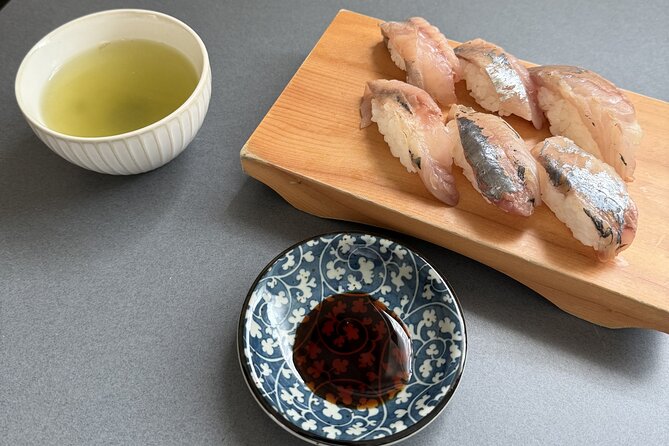
This class is hands-on by design. You’re not watching someone else cook while you hold your phone. You’re doing the rice, assembling pieces, and finishing with matcha.
By the end, you should expect:
- a mix of nigiri and rolls
- total production of 6–12 pieces
- time to eat what you made
- photos taken during the WASSHOI moment
The “6–12 pieces” target is a smart sweet spot. Too few and you feel like a passenger. Too many and you get rushed. Here, it’s enough practice to learn the mechanics, and enough food to justify the time.
Also, the class structure uses multiple parts—sake ceremony, nigiri practice, torching gunkan, matcha whisking. That keeps you from getting bored mid-lesson. One activity bleeds into the next, so you stay switched on.
Price and value: is $45.77 fair for 90 minutes?
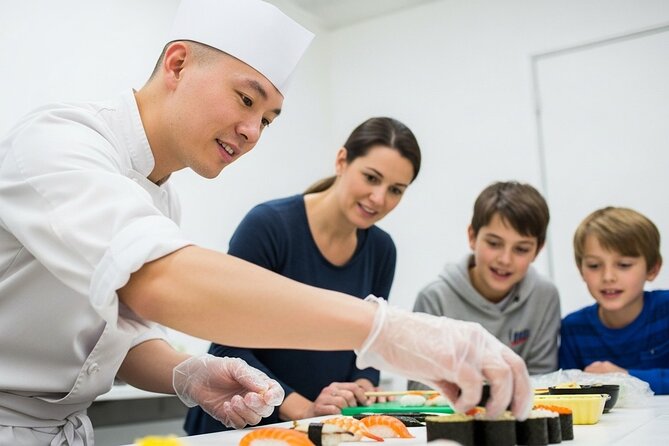
At $45.77 per person, you’re paying for more than sushi. You’re paying for a guided experience that includes multiple cultural components and hands-on making time.
Here’s why the value makes sense:
- You get coaching that focuses on technique, not just presentation.
- You produce a meal worth eating: 6–12 pieces, plus matcha.
- You get a built-in cultural segment (kagami-biraki and a group toast with alcohol-free option).
- You get the “Tokyo twist” element (torched salmon mayo gunkan) with a timed photo moment.
Could you buy sushi in Asakusa for less? Sure. But you’d miss the skill-transfer part: rice pressure, topping handling, and assembling with confidence. That’s the main payoff of a class like this. You leave with repeatable technique, not only a full stomach.
So, if your goal is to experience Tokyo food culture in a way you can recreate later, the price feels reasonable for what you do in the 1.5-hour session.
Small group size and how it affects your learning
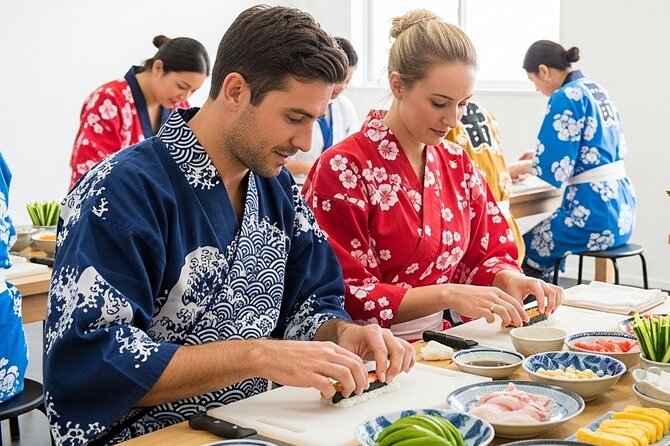
The class caps at 20 travelers. That number matters more than people think. A smaller group makes it easier for instructors to notice if you’re pressing rice too lightly or placing toppings in a way that won’t hold together.
It also affects the vibe. You get the ceremony energy, then you’re actively in the work. With a group that isn’t huge, it stays social without turning into a crowded line at a counter.
And the reviews highlight something consistent: the instructor approach seems to be part of why people rate this experience highly. The feedback points to a fun, welcoming teaching style that goes beyond basic directions and helps you enjoy the process while you learn.
Where this fits best (and where it might not)
This works especially well if:
- you’re a beginner who wants clear, friendly instruction
- you want to learn technique you can use again at home
- you like experiences that mix food with culture (not only cooking)
- you want a photo-friendly, memorable Tokyo food moment
It might be less ideal if:
- you prefer a slow-paced, strictly traditional Edomae-only lesson
- you don’t eat salmon or prefer to avoid torched preparations
- you hate any kind of active, chant-and-participate element
The good news is that even with the sake barrel start, the toast can be water or warm Japanese tea. So you can still fully join the ritual without alcohol.
Practical details that help your day go smoothly
The class runs about 1 hour 30 minutes, so it’s a great slot when you want something scheduled but not all-day long. It also ends back at the meeting point, which simplifies your next move in Asakusa.
They use a mobile ticket, so you can plan with less paper stress. Since the location is near public transportation, it’s also easier to connect it to other Asakusa stops without building a whole separate route.
If you’re the type who likes to plan meals after activities, build around the fact you’ll be eating what you make. That means you may not want a heavy dinner immediately afterward.
Should you book Tokyo Sushi Making Class: Sake Ceremony and Matcha?
I’d book it if you want Tokyo food culture in one guided session that actually teaches you how to assemble sushi. The combination of kagami-biraki, nigiri fundamentals, WASSHOI torched salmon mayo gunkan, and a hands-on matcha finish is unusually complete for a class that lasts about 1.5 hours.
You get a cultural start, real technique, and a modern flavor moment plus a calm ending. That mix is exactly why this kind of class earns top marks.
If you want only quiet watching, or if torched salmon isn’t your thing, then pass. But for most people who want a fun, structured Tokyo experience they can repeat later, this one is worth your time.
FAQ
What is the duration of the Tokyo sushi class?
The class runs about 1 hour 30 minutes.
Where does the experience take place in Tokyo?
It starts at Sushi Meets Matcha, 1-chōme-10-16 Hanakawado, Taito City, Tokyo 111-0033, Japan, and ends back at the meeting point.
What do I make during the workshop?
You’ll make 6–12 pieces, including nigiri and rolls, and you’ll also make matcha at the end.
Is there a non-alcohol option during the sake barrel opening?
Yes. During the toast, you can choose non-alcohol options such as water or warm Japanese tea.
How many people are in the group?
The experience has a maximum of 20 travelers.
Can I cancel for a full refund?
Yes. You can cancel up to 24 hours in advance for a full refund. If you cancel less than 24 hours before the start time, the amount paid is not refunded.