REVIEW · TOKYO
Tokyo: Shinjuku Walking Tour with Godzilla Head
Book on GetYourGuide →Operated by Exsighting Tokyo · Bookable on GetYourGuide
Shinjuku rewards you for looking up. This 2-hour Shinjuku walk strings together Godzilla Head rooftop spectacle with the Golden Gai alley maze, and it all makes sense as one day-to-night neighborhood story. I like how the tour keeps you moving through famous spots without feeling like a checklist.
My second favorite is the contrast: bright, modern oddities like the 3D cat, then right into cramped, character-heavy backstreets like Golden Gai. One thing to consider: Don Quijote is loud and packed, so if crowds stress you out, expect the tour to feel a bit chaotic during that stop.
In This Review
- Key highlights you should care about
- Kickoff at Shinjuku East Exit Cat: your futuristic wayfinding
- Don Quijote Shinjuku Kabukicho: shopping your way through the loud stuff
- Golden Gai’s narrow lanes: where Tokyo nightlife shrinks to scale
- Your 2-hour game plan: when to look up, when to pause
- Rooftop Godzilla Head: the roar trick that makes photos work
- Tokyu Kabukicho Tower: modern Shinjuku between worlds
- Omoide Yokocho at the finish: yakitori lanes and post-war atmosphere
- Price and value: why $32 for 2 hours feels fair here
- Who this Shinjuku walk suits best
- Should you book this Godzilla Shinjuku walking tour?
- FAQ
- Where is the meeting point for the tour?
- How long is the Shinjuku Walking Tour with Godzilla Head?
- What stops are included on the tour?
- Are food and drinks included?
- Do I need to pay any entrance fees for the stops?
- Is free cancellation available?
Key highlights you should care about
- Shinjuku East Exit 3D Cat: a playful, futuristic landmark that doubles as a quick orientation point
- Don Quijote Kabukicho chaos: floor-to-ceiling shopping for snacks and souvenirs, with plenty to laugh at
- Golden Gai’s 200 tiny bars: narrow lanes where Tokyo nightlife culture shows up in miniature form
- Godzilla Head rooftop roar: Godzilla roars every hour, so timing (and looking up) matters
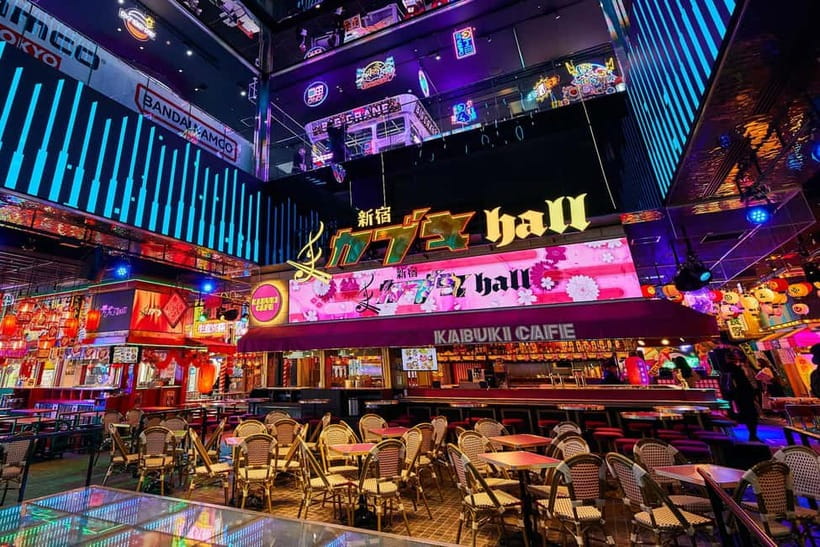
- Tokyu Kabukicho Tower peek: a modern architectural moment inside Shinjuku’s noise
- Omoide Yokocho yakitori maze: smoky, post-war-feeling lanes that are begging for nighttime return
Kickoff at Shinjuku East Exit Cat: your futuristic wayfinding
Your walk starts near Shinjuku East Exit with a giant 3D cat that looks like it belongs in the next movie version of Tokyo. It’s a fun first sight because it’s instantly recognizable, and it sets the tone: this area doesn’t do subtle. You’ll also get a practical start to the day because the guide—often identified as the man holding a blue A4-sized board—helps you get oriented fast.
This isn’t just a photo stop. Starting with the cat is useful because it helps you understand the layout of Shinjuku’s streets and exits before you hit the narrower, more confusing lanes later. Also, the tour runs in two languages (English and Japanese), which matters when you want real explanations rather than just directions.
Tip from my perspective: arrive ready to look up. Shinjuku has plenty of signage and plenty of distractions, and the 3D cat is your early cue that the city loves rooftop and upper-level surprises.
You can also read our reviews of more walking tours in Tokyo

Don Quijote Shinjuku Kabukicho: shopping your way through the loud stuff
Next up is Don Quijote Shinjuku Kabukicho, a discount store famous for its sensory overload. Think: narrow aisles of random-to-genius variety, shelves stacked high, and surprises around almost every corner. The tour frames it the right way—less as a formal shopping task and more as a chance to see how Tokyo’s retail chaos works when you’re not stuck wandering alone.
This stop is especially valuable if you want practical souvenirs without spending time hunting one-by-one. You’ll have a chance to shop for snacks and small gifts, but remember the tour does not include food or drinks. That’s actually good planning: you can decide if you want something sweet, something salty, or just a couple of easy items to carry for later.
Downside? If you hate tight crowds or loud retail environments, this is the part of the tour that can feel like a squeeze. Wear comfortable shoes and don’t overcommit to buying at first glance. Browse for a few minutes, then decide—your future self will thank you when you’re calmer in the next streets.
Golden Gai’s narrow lanes: where Tokyo nightlife shrinks to scale
Then the tour shifts into Shinjuku Golden Gai, a pocket of Tokyo nightlife made of narrow alleys and tiny bars—over 200 of them. Golden Gai feels like Tokyo compressing into a few blocks: close walls, tight passages, and the sense that every doorway hides a different mood.
What I love about Golden Gai on a guided walk is pacing. It’s easy to get turned around in alleys like these, and it can also be easy to walk past the places that make Golden Gai feel unique. With a guide, you get context while you’re still moving—so you’re not just looking, you’re understanding why the area has that legendary reputation.
Daylight also changes the feel. Even if you’re seeing it earlier, the “nostalgic heart” of Tokyo nightlife is still there in the details: the scale, the old-world texture, and the way the lanes pull you through instead of letting you browse at a distance.
This is a great stop for photography, but it’s also a great stop for just slowing down once in a while. Step aside when you need to regroup, look across alley openings, and let the geometry of the lane do the storytelling.
Your 2-hour game plan: when to look up, when to pause
This tour is short by design—2 hours is enough time to hit several iconic Shinjuku landmarks without turning your day into a marathon. That makes good practical sense if you’ve got more Tokyo to squeeze in later, because Shinjuku has plenty of transit and plenty of onward plans.
Here’s how I’d run your attention:
- Start upbeat: the cat and Don Quijote are high-energy openers.
- Shift gears around Golden Gai: this is where you’ll benefit most from a guide’s explanations and from slowing down.
- Aim for the Godzilla moment: Godzilla roars every hour, so if your stop lines up, it’s pure fun.
- End with Omoide Yokocho: it’s the kind of place you’ll want to return to when the lights and smells turn the volume up.
Also, since entrance fees aren’t required for any stop and everything is within walking distance, you’re mostly paying for time with a live guide and for not getting lost in the hardest streets. In a compact area like Shinjuku, that value shows up quickly.
Rooftop Godzilla Head: the roar trick that makes photos work
One of the tour’s biggest draws is the Godzilla Head moment. You’ll be looking up at Godzilla from a rooftop view, and he roars every hour. The tour builds the expectation in a simple way: you might hear it, and when you do, it’s one of those “yep, this is Tokyo” moments that’s hard to replicate alone.
This stop is more than a gimmick because it changes how you experience the neighborhood. Shinjuku can feel like signage and street-level crowds, but Godzilla reminds you that Tokyo also talks from above. The guide helps you position yourself at the right time and place, so you’re not just wandering around hoping for the best angle.
Practical tip: if you arrive early at the Godzilla Head stop, don’t rush to grab the photo and leave. Stick around for the roar window. It’s scheduled hourly, so waiting a few minutes can pay off with a moment that feels like part of a show—not just a sight.




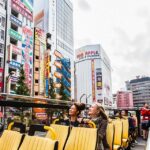
Tokyu Kabukicho Tower: modern Shinjuku between worlds
After the Godzilla spectacle, the tour moves to Tokyu Kabukicho Tower. You’ll get a peek inside, which is a nice way to break the “street then alley then street” rhythm. This stop matters because it shows another side of Shinjuku: newer structures pushing upward in the middle of Kabukicho’s chaos.
Even if you’re not a architecture buff, it’s a good mental reset. You go from the comic-monster rooftop moment to a landmark that feels designed for the modern city—then you immediately head back into old-school-feeling lanes at the end.
This contrast is what makes the tour satisfying. Instead of only chasing themed places, you see how Tokyo layers different eras next to each other. It’s the same neighborhood, just different moods.
Omoide Yokocho at the finish: yakitori lanes and post-war atmosphere
The walk ends in Omoide Yokocho, a smoky maze of yakitori stalls with a strong post-war feel. This is the kind of place where Tokyo’s nostalgia isn’t locked behind a museum wall—it’s in the street layout, the stall vibe, and the way the lanes create that “small world” feeling.
The tour’s ending here is smart. Earlier stops are about sights and shopping; the finish is about mood. You’ll likely feel the urge to come back at night, because Omoide Yokocho is one of those areas where evening changes everything: light, sound, and the overall energy shift.
Even though the tour does not include food and drinks, this ending still helps your day. You get the lay of the land so later, when you’re hungry, you know exactly where to go without playing guessing games. If you want to snack during your Tokyo day, you’ll know what kind of experience you’re looking for.
Price and value: why $32 for 2 hours feels fair here
At $32 per person for about 2 hours, this tour is priced like a practical Shinjuku orientation plus a few headline stops. The value comes from two things: the live guide and the fact that you’re moving through multiple areas that can be confusing on your own.
Entrance fees aren’t required for any stop, so the money you pay is mainly for timing, explanations, and keeping you from wandering in circles—especially in Golden Gai and around the Omoide Yokocho lanes. The tour also includes multiple iconic targets: the Shinjuku East Exit 3D cat, Don Quijote Shinjuku Kabukicho store, Golden Gai, Godzilla Head, Tokyu Kabukicho Tower, and Omoide Yokocho.
Also, the guide experience stands out in the way you want it to: people find the guide on time, friendly, and able to customize the walk. That matters if you want a little more time on shopping or a little less, or if you want the explanation style to match your interests.
If you’re trying to sample a lot of Shinjuku without committing to a half-day plan, this is a solid deal.
Who this Shinjuku walk suits best
This tour is ideal if you like Tokyo that’s playful and a little weird—Godzilla, a 3D cat, chaotic discount shopping, and alley nightlife in the same two-hour window. It’s also a strong fit if you want help making sense of Shinjuku on foot, because the places are close but the streets can still feel like a maze.
It works well for:
- First-time visitors who want quick orientation in Shinjuku
- People who prefer a guide’s explanations over reading signs alone
- Fans of pop culture details and street-level city texture
- Anyone who wants a short plan that still ends with a great night-potential spot (Omoide Yokocho)
It may be less ideal if you strongly dislike crowding and noise, since Don Quijote can feel packed and loud. It’s manageable, but it’s not the calmest stretch of the day.
Should you book this Godzilla Shinjuku walking tour?
Yes, I’d book it if your Tokyo plan includes Shinjuku and you want more than photos. The combination is the point: you get the rooftop Godzilla roar moment, the alley realism of Golden Gai, and a finish in Omoide Yokocho that practically asks you to return after dark. For $32 and two hours, it’s a good way to get variety without burning half your day on transit or wandering.
I’d think twice only if you’re sensitive to loud, crowded retail spaces. If that part sounds stressful, you can still enjoy the rest—just go in with the right expectations and plan to take quick breaks when you need them.
FAQ
Where is the meeting point for the tour?
You’ll meet the guide as the man holding a blue A4-sized board.
How long is the Shinjuku Walking Tour with Godzilla Head?
The tour lasts 2 hours.
What stops are included on the tour?
The tour includes visits to the Shinjuku East Exit Cat, Don Quijote Shinjuku Kabukicho Store, Shinjuku Golden Gai, Godzilla Head, Tokyu Kabukicho Tower, and Omoide Yokocho.
Are food and drinks included?
No. Food and drinks are not included.
Do I need to pay any entrance fees for the stops?
No. There are no entrance fees required for any of the locations.
Is free cancellation available?
Yes. You can cancel up to 24 hours in advance for a full refund.