REVIEW · TOKYO
Tokyo City Attractive One Day Tour
Book on Viator →Operated by Sato · Bookable on Viator
Tokyo can feel like a video game you started on hard mode. This private 9-hour city tour gets you to the big cultural, historic, and architectural hits without making you plan every turn on your own.
I especially like the easy logistics: round-trip hotel transfers, an air-conditioned vehicle, and a mobile ticket so you’re not juggling papers. I also like that the itinerary is built for first-time orientation—think Asakusa Sensoji, peaceful Meiji Jingu, and high-energy Shibuya in one day.
One thing to keep in mind: Skytree and Tokyo Tower entry tickets are not included, so you’ll want to budget for them and think about timing for lines.
In This Review
- Key points before you go
- A private Tokyo day with air-conditioned pickup and a driver-guide
- Price and value for a group of up to 5
- Asakusa and Sensoji: Tokyo’s oldest temple plus a souvenir mission
- Tokyo Skytree and Solamachi: skyline views without losing the fun
- Tokyo Tower: the 1950s symbol still pulling power
- Tsukiji Outer Market: food culture you can actually snack through
- Shinjuku Gyoen National Garden: a breather from the city’s pace
- Meiji Jingu Shrine: modern Japan’s turning point in a calm setting
- Shibuya Scramble, Hachiko, and Harajuku: neon Tokyo with built-in variety
- Timing and ticket strategy for Skytree and Tokyo Tower
- What I’d pack for a day like this
- Who this tour fits best
- Book it or skip it? My take
- FAQ
- How long is the Tokyo City Attractive One Day Tour?
- What is the group size and price?
- Is hotel pickup and drop-off included?
- Are tickets for Tokyo Skytree and Tokyo Tower included?
- Is lunch included in the price?
- What is the cancellation window for a full refund?
Key points before you go
- Private, adjustable day: you can tailor the route since it’s a private tour
- Air-conditioned vehicle + transfers: comfortable transport with round-trip hotel pickups
- A well-mixed route: temple, gardens, markets, skyline towers, and youth districts
- Skytree and Tokyo Tower aren’t free: plan for entry fees ($12 and $7 USD listed)
- Your driver acts as your guide: expect history and context on the ride between stops
A private Tokyo day with air-conditioned pickup and a driver-guide
This is designed for one main goal: help you get your bearings fast, then enjoy Tokyo instead of battling it. The format is private, so you’re not squeezed into a giant group bus. And because it includes round-trip hotel transfers, you’re not spending your morning figuring out trains, transfers, and station exits.
A practical twist: the tour provider states that the driver is the guide. That matters. In a good way. You’ll likely get the story behind what you’re seeing while you’re moving between neighborhoods, not just at a stop where everyone gets rushed through photos. It also means you’ll get the most out of the day if you mention what matters to you at the start—like whether you want more time near shopping streets or more time at viewpoints.
The schedule runs about 9 hours (with specific stop durations like 1 hour blocks and shorter segments in busier areas). That’s plenty for a highlights day, but not enough for deep, slow wandering in every neighborhood. If you’re the type who needs “two hours minimum” for each place, this tour works best as a sampler—then you return later on your own.
You can also read our reviews of more city tours in Tokyo

Price and value for a group of up to 5
The price is $500 per group (up to 5 people). That’s not cheap in a per-person sense—especially if you’re traveling solo—but it can be strong value if you’re splitting the cost. The tour bundles the biggest real-world expenses that tourists often end up piecing together: a private vehicle, round-trip hotel transfers, and a guided, organized route across multiple areas of Tokyo.
Entry fees are the main extra costs you should plan for: Tokyo Skytree ($12 USD) and Tokyo Tower ($7 USD) are not included. Lunch and dinner aren’t included either, so you’ll rely on snacks or meals you choose around the route.
If you’re traveling with 2–5 people and you want a stress-reduced day that still hits Tokyo’s signature places, this is the kind of tour that can save time and avoid “logistics fatigue.” If you’re traveling alone, the value depends on whether you’d rather pay for privacy and guided routing or spend the money on sights you control more directly.
Asakusa and Sensoji: Tokyo’s oldest temple plus a souvenir mission
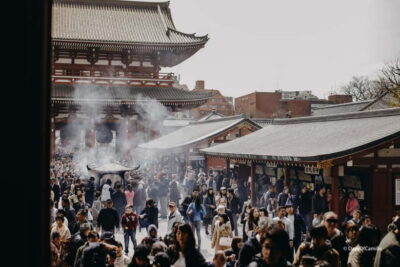
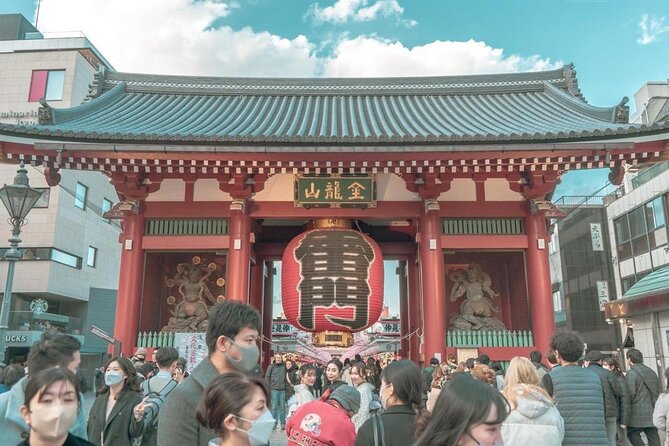
Your day begins in Asakusa at Sensoji (Sensōji), a Buddhist temple that’s often described as one of Tokyo’s most colorful and popular. The lore is part of why it feels special: the legend says brothers in 628 found a Kannon (goddess of mercy) statue in the Sumida River, and it kept returning to them—so the temple was built nearby. Sensoji was completed in 645, and it’s considered Tokyo’s oldest temple.
What I like about this stop is that you don’t just “see” the temple—you move through a whole atmosphere. From the outer gate you walk the Nakamise shopping street, a stretch of more than 200 meters. It’s the classic place to pick up Japanese snacks and souvenirs without needing a strategy.
The likely drawback is crowding. Sensoji and Nakamise can be packed, and that’s the trade for going to a top highlight. If your group likes slower sightseeing, arrive with patience and plan to enjoy the movement more than hunting for a quiet corner.
Tip: Use this first stop to settle into Tokyo rhythm. Get your bearings, walk your legs in easy mode, then your later stops feel easier.
Tokyo Skytree and Solamachi: skyline views without losing the fun
Next up is Tokyo Skytree, the world’s highest free-standing broadcast tower at 634 meters. It has two observation decks at 350 meters and 450 meters, which means you can choose how high you want to go based on time, weather, and energy. On the lower deck, you’ll find a restaurant, cafe, and souvenir options—so you’re not stuck in “stand and stare” mode.
Skytree is also part of Skytree Town, especially the Solamachi complex. Solamachi adds variety so your visit isn’t just about the view. It includes:
- a craft-focused retail area called Sumida Machidokoro
- an exhibition space tied to robot technology
- Sumida Aquarium, with penguins
- and a big mix of restaurants and shops
Admission to the tower itself is not included. The tour gives you the target—what you pay for is the observation decks. Based on real-world experience, this is where you’ll feel the impact of lines. Your best bet is to keep an eye on when you arrive and, if there’s any choice, think about booking timed entry in advance so your day doesn’t lose time.
Possible drawback: If you’re tired or it’s a hot day, the tower can feel like a “slow funnel” (lines, elevators, crowds). But the upside is the combination: skyline + shopping + family-friendly distractions if the line eats a little time.
Tokyo Tower: the 1950s symbol still pulling power
After Skytree, the tour swings to Tokyo Tower in central Tokyo. It reaches 333 meters, and it’s described as the world’s tallest self-supported steel tower—about 3 meters taller than the Eiffel Tower (its model). Tokyo Tower matters historically too: it was Japan’s tallest structure after its completion in 1958 until 2012, when Skytree took over.
In practice, Tokyo Tower works well for photos and quick orientation. You get a different skyline vibe than Skytree: less airy “super-tall needle,” more classic landmark energy. The tower also serves as a broadcast antenna, which is a neat reminder that Tokyo’s icons often have jobs beyond sightseeing.
Again, entry tickets aren’t included ($7 USD listed). If your group wants the views, budget for it. If your group is more about photos outside, you might not need to spend extra inside—though that’s your call.
You can also read our reviews of more tours and experiences in Tokyo




Tsukiji Outer Market: food culture you can actually snack through
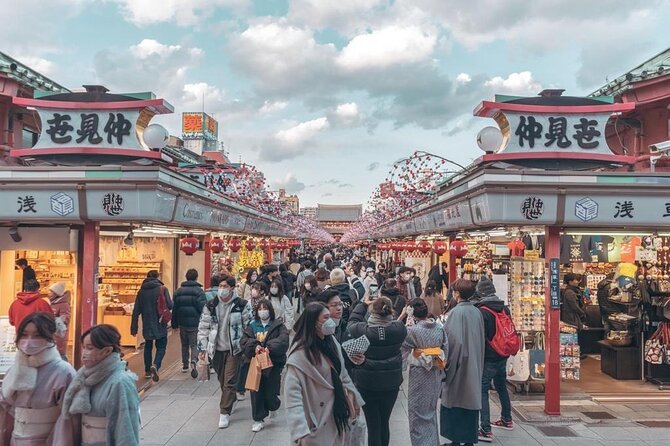
Then comes Tsukiji Fish Market, specifically the Outer Market, which is often called Japan’s Food Town. The big value here is that it’s both traditional and practical for short time. Instead of wholesale-only chaos that’s meant for professionals, the Outer Market is set up for visitors to browse and eat.
One smart detail: many items used to be too large for small households. Now, some vendors have shifted toward smaller retail portions—so you can sample without buying a family feast. You’ll see a mix of shops and restaurants, and the descriptions make clear this is where traditional food meets newer trends.
The entrance is noted as free, which helps you keep the day feeling affordable even with the paid tower tickets.
Possible drawback: It can be intense. It’s popular, and it’s crowded. If you’re sensitive to busy markets or smells, plan to treat this as a tasting walk rather than an hours-long browse. If you’re hungry, great—this stop rewards you fast.
Shinjuku Gyoen National Garden: a breather from the city’s pace
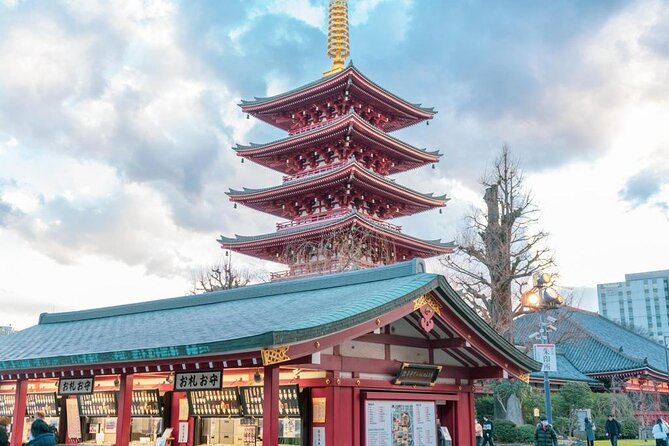
Next is Shinjuku Gyoen National Garden, one of Tokyo’s largest and most popular parks, close to Shinjuku Station. The key benefit is simple: it’s a quiet change of pace after dense neighborhoods. You get spacious lawns, walking paths, and calmer scenery.
One reason this garden is worth a slot is seasonal timing. The information specifically calls out spring, when it becomes one of the city’s best places to see cherry blossoms. Even if you visit outside peak season, it’s still valuable because it gives your day contrast—Tokyo is not only concrete and crowds.
Admission is free for this stop.
Possible drawback: Because this tour is a fixed “highlights” day, your time here is limited to about an hour. If gardens are your thing, you might feel like you’re walking through at speed. Still, it’s a great reset stop to keep the energy level from collapsing later at Shibuya and Harajuku.
Meiji Jingu Shrine: modern Japan’s turning point in a calm setting
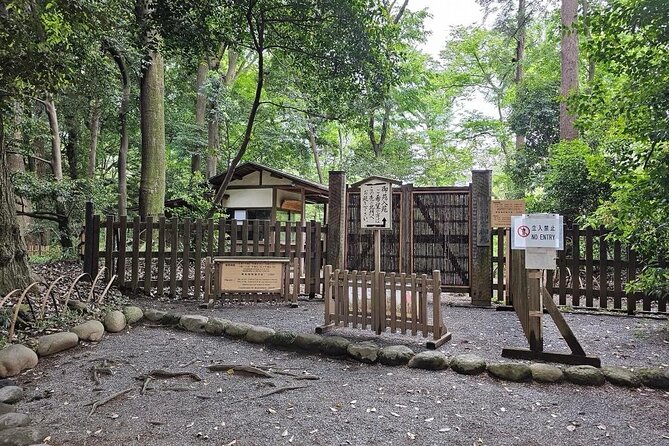
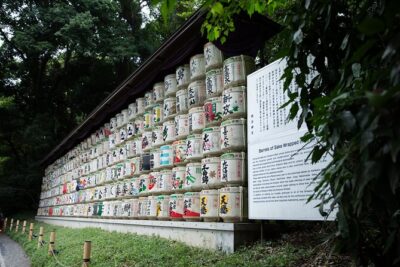
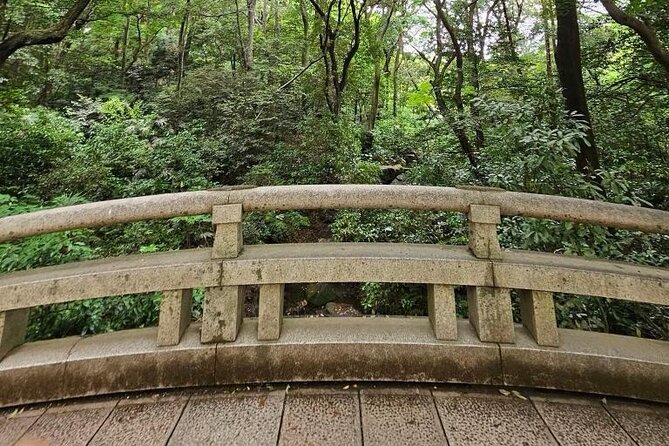
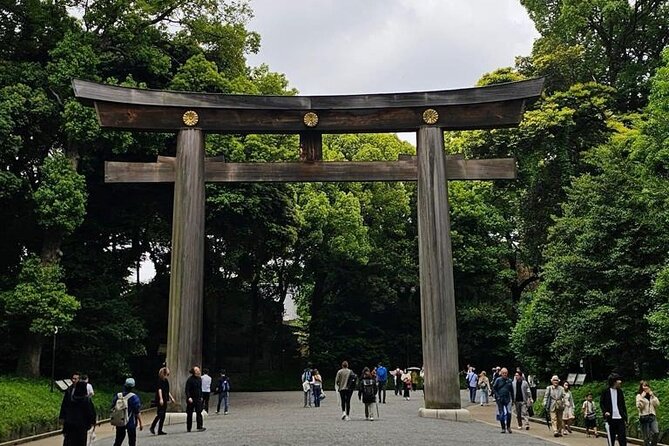
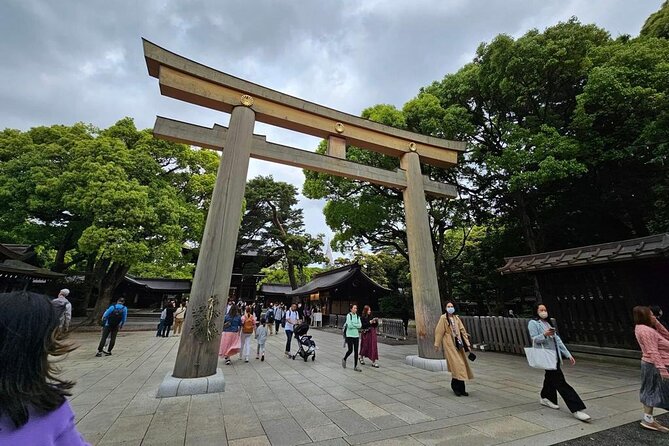
Then you head to Meiji Jingu Shrine, dedicated to Emperor Meiji and Empress Shoken. The shrine was completed and dedicated in 1920—and then rebuilt after destruction during the war. The background matters because it helps you understand why this place feels both spiritual and deeply national.
Emperor Meiji was the first emperor of modern Japan. He was born in 1852, ascended in 1867, and rose to prominence during the Meiji Restoration, when Japan moved away from its feudal era and restored the emperor’s political role. The information also notes modernization efforts—Japan modernized herself to join the world’s major powers. Emperor Meiji passed away in 1912.
This stop is free, and that’s part of its value: you get a meaningful context stop without extra cost.
Possible drawback: Because it’s a shrine visit in a busy city, it can also be crowded at peak times. But it’s the kind of crowd that often feels orderly. Plan to slow down your pace here; it’s one of the few parts of the tour that really asks you to exhale.
Shibuya Scramble, Hachiko, and Harajuku: neon Tokyo with built-in variety
The late-day cluster is Tokyo’s famous “contrast zone.”
First is Shibuya Scramble Square, built around the Shibuya crossing. The tour description highlights the scale and design of the chaos: 10 lanes of traffic and five major crosswalks converge along a canyon of neon-colored buildings. This is the kind of place where you feel Tokyo’s pace before you fully process it.
Then you stop at Hachiko, the faithful dog statue tied to Shibuya. Hachiko is said to have been born in November 1923 in Odate, Akita Prefecture, and then adopted by professor Hidesaburo Ueno. Hachiko waited for Ueno every day at Shibuya Station even after Ueno died in 1925, and Hachiko died in 1935. It’s also connected to the 2009 U.S. film Hachi: A Dog’s Tale.
Finally comes Harajuku, specifically the area around Harajuku Station and Takeshita Street. This stop is built for youth culture and fashion browsing. The tour notes that weekend and holiday crowds are common and that groups of high school students and visitors often gather near the street entrance.
Takeshita Street is lined with clothing shops, cafes, dessert shops, and unusual memorabilia. You can also find accessory stores and budget-friendly trends—one example given is Paris Kids, described as a first-stop name you’ll likely see along the walk.
All of these stops are marked free, and that’s great for budgeting. The drawback is that this section is the busiest part of the whole day. It compresses three energy-heavy neighborhoods into a limited time, so it’s best for people who enjoy Tokyo in “show mode” rather than “slow calm mode.”
Practical tip: If you want photos without a fight, use the crossings early, then spend more time walking Takeshita Street in the gaps rather than trying to linger at the single most photographed spot.
Timing and ticket strategy for Skytree and Tokyo Tower
The only paid sights in the plan are Skytree and Tokyo Tower, and the tour doesn’t include either entry. Here’s how I’d handle it to keep the day fun instead of stressful:
- Decide early whether your group wants the observation decks or is happy with outside views.
- If you do want decks, treat it like a timed commitment. Long lines can eat time, and the tour is moving.
- If you care about the exact order, tell your guide at the start. The tour is private, so there’s at least room to adjust priority.
Also keep in mind that the schedule includes temple and garden stops (Asakusa, Shinjuku Gyoen, Meiji Jingu) and heavy crowd zones (Tsukiji, Shibuya, Harajuku). That’s not a problem. It’s the reason it feels like Tokyo’s full personality in one day. But it means your “paid time” needs to be efficient.
What I’d pack for a day like this
With a car tour, you still walk a fair amount. Wear comfortable shoes, obviously, but also plan for real Tokyo conditions:
- water and small snacks in your bag
- a light layer for indoor/outdoor temperature swings
- cash or a card for market snacks and shopping streets
- a phone charged for maps and your mobile ticket
Since lunch and dinner aren’t included, expect to eat on the go. Tsukiji Outer Market and Harajuku are the kind of places where you can grab something without derailing the day.
Who this tour fits best
This tour is ideal for:
- first-time visitors who want Tokyo highlights without building a route from scratch
- people short on time who still want culture, architecture, and “modern Tokyo energy”
- small groups up to five who want private transport and a guided narrative between areas
If you’re someone who loves one neighborhood deeply, you’ll probably want to use this tour as your starter plan, then add a return visit with extra time on your own. The stops are timed to keep the day moving, not to turn each area into a full day of wandering.
Also, the tour is private, and service animals are allowed. If your group has a special need, the driver-guide setup makes clear you should communicate early so the day fits you.
Book it or skip it? My take
Book this tour if you want a guided, efficient Tokyo highlights day with private transportation, hotel transfers, and the main “wow stops” covered in one run. The ratings are strong (it’s averaging 4.9 with 92% recommended), and the structure makes sense for people who don’t want to plan five different neighborhoods across half a week.
Skip or adjust expectations if you strongly prefer slow travel, because you’ll have limited time at each place—especially in the crowd magnets like Shibuya and Harajuku. And if you’re sensitive to waiting, plan your Skytree and Tokyo Tower priorities ahead since entry fees aren’t included.
If you go in with the right mindset—sampler day, not vacation day—this route is a smart way to see a lot of Tokyo without feeling lost.
FAQ
How long is the Tokyo City Attractive One Day Tour?
The tour runs about 9 hours.
What is the group size and price?
It’s $500 per group, up to 5 people.
Is hotel pickup and drop-off included?
Yes. The tour includes handy round-trip hotel transfers, and it starts and ends at the Tokyo Station Hotel meeting point.
Are tickets for Tokyo Skytree and Tokyo Tower included?
No. Skytree and Tokyo Tower entry tickets are not included. Skytree is listed at $12 USD and Tokyo Tower at $7 USD.
Is lunch included in the price?
No. Lunch and dinner are not included.
What is the cancellation window for a full refund?
You can cancel up to 24 hours in advance for a full refund.