REVIEW · TOKYO
Mt Fuji Private Day Trip from Tokyo with English Speaking Driver
Book on Viator →Operated by Yujin Group Co., Ltd. · Bookable on Viator
Mt. Fuji without the commute stress. This private Mt. Fuji day trip from Tokyo is built for people who want the highlights without stitching together trains and bus transfers. I especially like the way you can spend energy on the scenery—think Oshino Hakkai, the Chureito Pagoda, and Lake Kawaguchiko—rather than timing connections all morning. The ride also comes with an in-car Wi‑Fi hotspot when available, so the long drive doesn’t feel dead time.
The main thing to consider is that the day runs on a schedule. With multiple stops and a couple of attractions where tickets aren’t included, you’ll want to move promptly when you arrive.
I also liked the human factor: this is truly a small-group setup (up to 5), and the English-speaking driver experience often includes real guidance on where to go next. Names that came through in past tours include Hridoy, Orko, Sham, Haju, and Sakib, which tells me you’re getting care—not just a drive-and-drop.
In This Review
- Key points to know before you go
- Why a private Mt. Fuji day beats DIY planning
- The 8:00 am start and how the 10-hour day is paced
- Oshino Hakkai: the eight-pond stop where the pace feels calmer
- Chureito Pagoda in Arakurayama Sengen Park: iconic view, tight timing
- Lake Kawaguchiko and Oishi Park: where Fuji reflections become the goal
- The Kachikachi Ropeway at Mt. Fuji: plan for the extra ticket
- Saiko Lake and Iyashi no Sato Nenba: the slower side of the Fuji Five Lakes
- Money talk: is $423.90 per group really good value?
- Weather and timing: the stuff that can make or break the day
- Who this tour suits best (and who should tweak plans)
- Should you book this Mt. Fuji Private Day Trip from Tokyo?
- FAQ
- What is the duration of the Mt. Fuji private day trip?
- How many people can be in the group?
- What time does the tour start?
- Does the tour include pickup in Tokyo?
- Is onboard Wi-Fi included?
- Are entrance fees included for all stops?
- Is the Mt. Fuji panoramic ropeway ticket included?
- What if weather is poor?
Key points to know before you go
- Private, door-to-adventure pacing: Pickup and a full day in your own air-conditioned vehicle, starting at 8:00 am
- Fuji highlights in one route: Oshino Hakkai, Chureito Pagoda, Lake Kawaguchiko, Oishi Park, Saiko Lake, and a traditional village area
- On-the-road Wi‑Fi hotspot (when available): Useful for maps, translation, and keeping everyone sane on the drive
- Ropeway and some village tickets cost extra: The Kachikachi Ropeway ticket is not included
- Good-weather matters: This tour requires good weather, since visibility is the whole point
Why a private Mt. Fuji day beats DIY planning
Tokyo to Mt. Fuji is one of those trips that sounds simple until you’re actually doing it. Trains, transfers, schedules, and then finding parking or the right pickup spot—suddenly it’s a planning project. On this tour, the big win is that you skip most of that stress. You get a dedicated vehicle (air-conditioned) and private transportation for the full day, with meet and greet support.
That changes how the day feels. You can start the morning thinking about what you want to photograph and what season-specific sights you’re hoping for, instead of studying timetables. You also get more mental slack for the day itself. When the driver handles the route, you can focus on the places with the best payoff, like the Fuji views from the Lake Kawaguchiko area.
And if you’re the kind of person who likes having a plan but hates being boxed in, this strikes a decent balance: it’s structured, but it’s still private. You’re not trying to herd a big group through crowded viewpoints.
You can also read our reviews of more private tours in Tokyo

The 8:00 am start and how the 10-hour day is paced
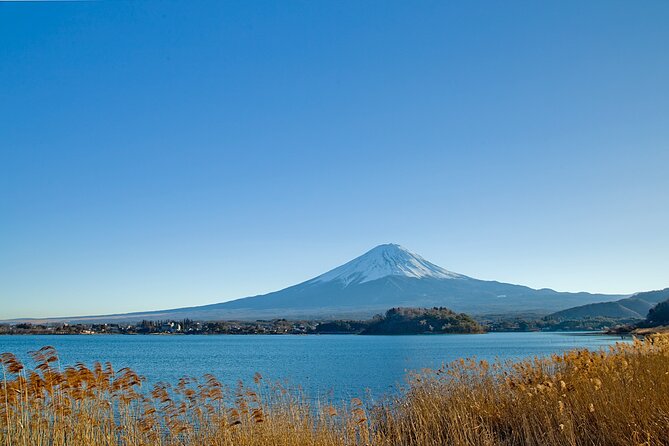
The tour runs about 10 hours. Pickup is offered, with a start time of 8:00 am, so you’re out early enough to make the most of daylight around the Fuji Five Lakes region.
Here’s what that pacing means for you:
- You’ll move through several key areas across the Fuji Five Lakes.
- You should plan to stay flexible if weather shifts or visibility is less than ideal.
- The day is long enough that comfort matters, which is why the air-conditioned vehicle is more than a small perk.
Also, you’ll have practical support during the drive. A Wi‑Fi hotspot is included when available, and you’ll have a mobile ticket. If you’re traveling with family or a small group, that helps too because it’s one less thing everyone needs to figure out separately.
One practical note: even though several stops list free admission, your time at each location still needs to be respected. This itinerary works best when you’re ready to hop out, see the sights, and move on.
Oshino Hakkai: the eight-pond stop where the pace feels calmer
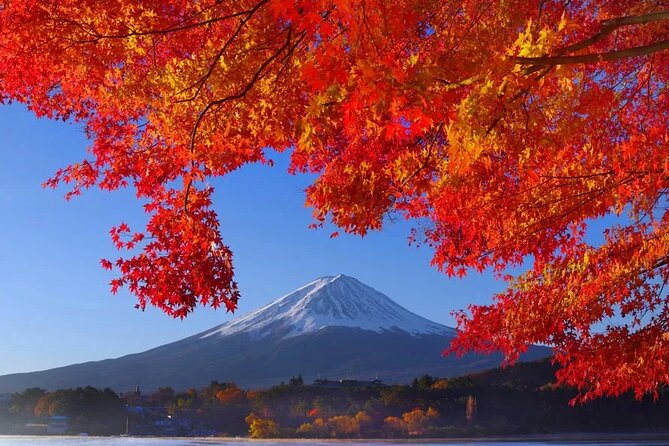
Oshino Hakkai is a classic Mt. Fuji area visit for a reason. It’s a historic, picturesque village near Mount Fuji, centered around spring ponds—specifically eight clear ponds fed by the mountain’s natural water.
With about 3 hours here, this is the “slow down” part of the day. It’s not just a photo stop. You’ll have enough time to walk around, take in the calm atmosphere, and get a real sense of why this place is so tied to the Fuji landscape. The ponds themselves are the star, but the surrounding village feel adds to the experience.
Things to keep in mind:
- If the weather is clear, this area often feels extra refreshing because it’s visually light and open.
- If it’s rainy, you’ll still likely enjoy the setting, but you’ll want waterproof shoes or at least something with decent grip.
Admission is free per the tour info, which is a nice way to balance the extra paid items later—like the ropeway.
Chureito Pagoda in Arakurayama Sengen Park: iconic view, tight timing
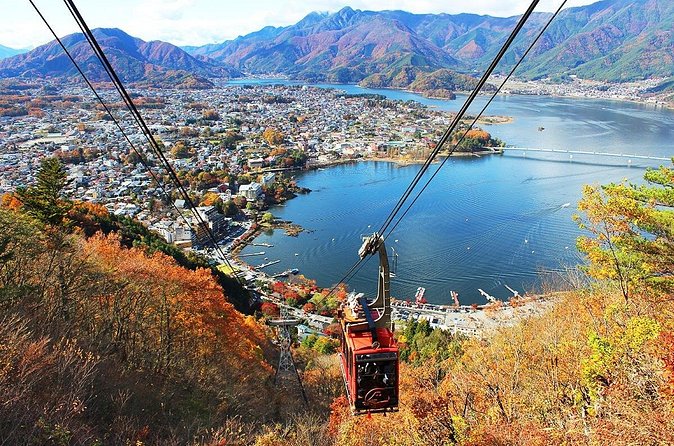
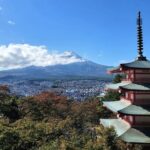
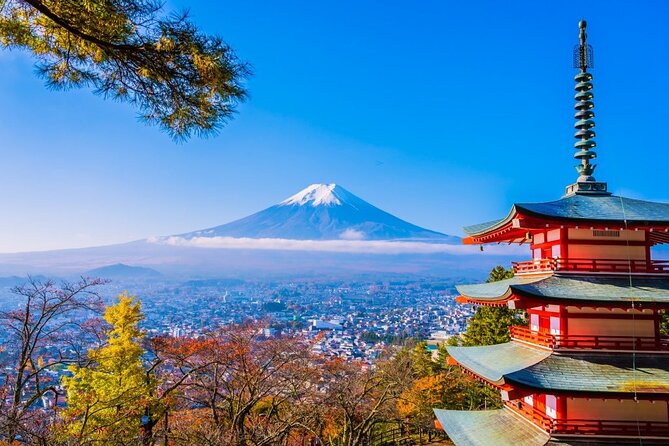
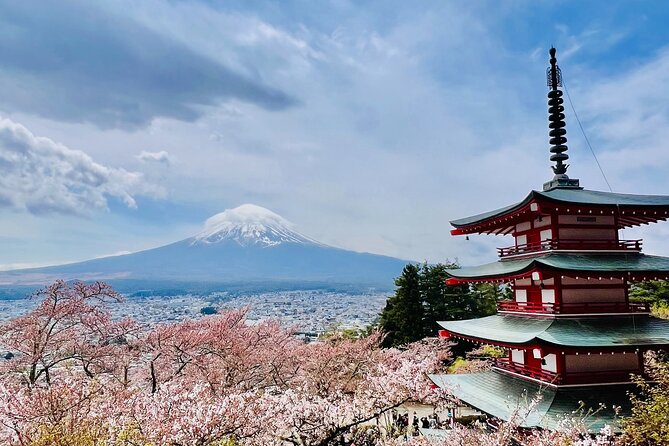
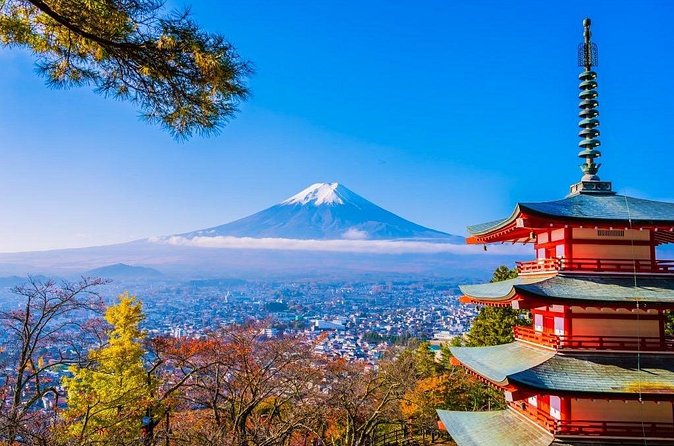
Next up is the Chureito Pagoda, the five-storied pagoda located in Arakurayama Sengen Park in Fujiyoshida City. This is one of those places that gets attention for good reason: it’s a recognizable landmark with views that put Mt. Fuji into the story when conditions are right.
Your time here is about 1 hour, and admission is free. That short window is the tradeoff of a packed day. The upside is you get the payoff without losing the whole morning.
How to get the most from this stop:
- Arrive ready to walk. Even in an hour, you’ll want to pick a viewpoint quickly.
- If visibility isn’t perfect, don’t panic. The pagoda still has visual strength on its own, and the driver can help you make smart choices about where to stand.
If you’re a first-time Mt. Fuji visitor, this is a great “check the box” stop. If you’re on a tight schedule, it’s also efficient.
Lake Kawaguchiko and Oishi Park: where Fuji reflections become the goal
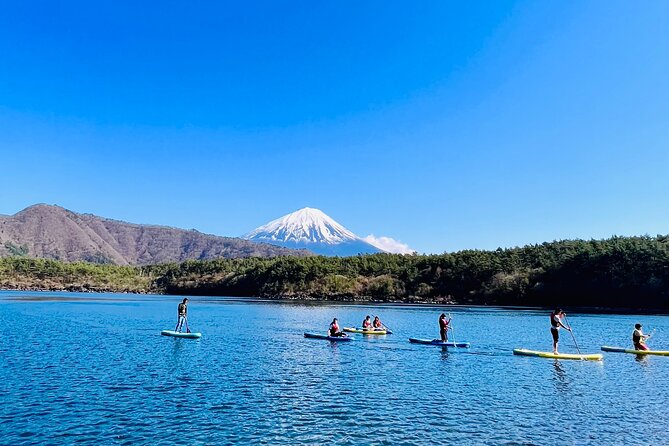
Lake Kawaguchiko is the big name in the Fuji Five Lakes region. It’s known for scenic views of Mt. Fuji, including famous reflections when conditions cooperate. It’s also linked with seasonal flowers and hot spring resort areas, which adds variety even if you’re not going to soak.
On this tour, you’ll spend about 1 hour at Lake Kawaguchiko. Then you’ll head to Oishi Park (also about 1 hour), which sits on the northern shores and is another strong Mt. Fuji viewpoint zone.
Here’s the reality: Fuji visibility is weather-dependent. So the best mindset is to treat these stops like your main “window” for a clear-sky payoff. When it’s sunny, you’ll see why people chase this view. When it’s cloudy, you can still enjoy the lake setting, but your expectation should shift from perfect reflections to scenic views.
Practical advice for your camera:
- Don’t spend too long comparing angles. Instead, pick one or two solid viewpoints and let the weather do what it does.
- Use the extra time you save by having a private driver to keep your day moving.
Also, because these stops are right in the same region, you’re not wasting time crossing the peninsula. That efficiency is exactly why this tour format works.
You can also read our reviews of more tours and experiences in Tokyo





The Kachikachi Ropeway at Mt. Fuji: plan for the extra ticket
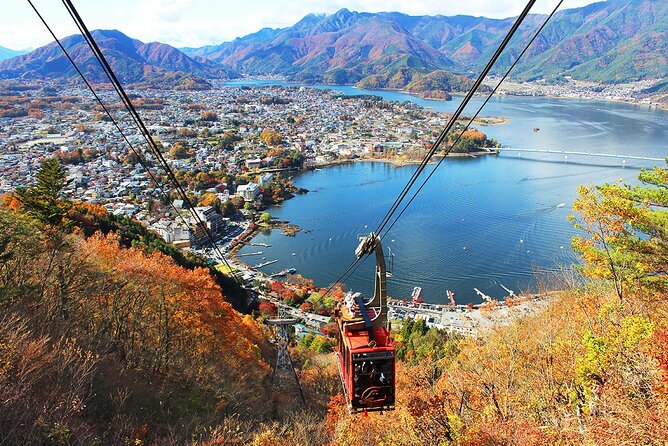
You’ll have a stop at the Mt. Fuji Panoramic Ropeway, commonly associated with the Kachikachi Ropeway near Lake Kawaguchiko. The ropeway ride is about 1 hour, but here’s the key part: the ticket is not included. The tour info estimates around JPY 1,000 per person.
This is one of the few spots where your experience depends on what you’re willing to pay for a higher viewpoint. If you enjoy panoramic viewpoints and you don’t want to rely only on ground-level views, the ropeway is usually worth it.
A few things to keep in mind:
- Build the ticket cost into your budget. Since it’s per person, the price changes with your group size.
- Keep your timing flexible. Ropeway schedules and lines can affect how much time you have at the top.
If you’re traveling with someone who wants a “wow” view that’s different from the lakeside viewpoints, this ropeway stop gives you that. Just remember: it’s extra, so budget accordingly.
Saiko Lake and Iyashi no Sato Nenba: the slower side of the Fuji Five Lakes
After the main Kawaguchiko area, the route moves toward Saiko Lake and Saiko Iyashi no Sato Nenba (Iyashi no Sato Nenba). These stops are a nice change of pace because they feel less like the busiest highlight circuit and more like a chance to slow down and look around.
You’ll spend about 1 hour at Saiko Lake. Then you’ll spend around 2 hours at Iyashi no Sato Nenba, which is a traditional Japanese village setting near Lake Saiko. The name Iyashi no Sato means Healing Village, and it’s described as a reconstructed village, which helps you understand what you’re going to see—historic-feeling streets and buildings designed to recreate the traditional atmosphere.
Admission at Saiko Lake is listed as free. For Iyashi no Sato Nenba, the tour info says the admission is not included.
How to get value here:
- Treat it as a cultural break between viewpoint stops.
- If the weather is rough, a traditional village can still feel enjoyable because it’s less dependent on seeing Mt. Fuji perfectly in the background.
This pair of stops is also helpful if you’re doing Mt. Fuji in a single day and you don’t want the whole day to be only photo viewpoints. You’ll end up with variety.
Money talk: is $423.90 per group really good value?
The price is $423.90 per group (up to 5 people) for about 10 hours. That’s a simple way to think about it: you’re paying for private transportation across multiple locations, plus the driver time to make it all work in one day.
What you get that helps justify the cost:
- Air-conditioned vehicle and private transportation for a long day
- Meet and greet and pickup offered
- Wi‑Fi hotspot in the vehicle when available
- Tolls and gas included
And then there are the parts where you don’t have to pay extra at every stop:
- Oshino Hakkai (free)
- Chureito Pagoda (free)
- Lake Kawaguchiko (free)
- Oishi Park (free)
- Saiko Lake (free)
Extra costs to expect:
- The ropeway ticket (estimated around JPY 1,000 per person)
- Iyashi no Sato Nenba admission is not included
- There’s also a note about Mt. Fuji 5th Station entry fee (JPY 2,100 for the group/vehicle) not included. If your day includes that stop, factor it in.
How I’d judge value for you:
- If you’re splitting the cost among 3–5 people, the private logistics become easier to justify versus buying multiple train tickets plus taxis plus the time lost.
- If you’re solo, it can still make sense if you really hate transit wrangling and want the day to feel effortless.
Food and drinks aren’t included, so keep a little cash or card ready for lunch.
Weather and timing: the stuff that can make or break the day
This tour requires good weather. That matters because Mt. Fuji visibility is the whole point, especially around the lake viewpoints and any elevated viewing. If the day is clear, you’ll feel like you’re in the right place at the right time. If it’s foggy or rainy, you’ll still have the itinerary, but the “Fuji moment” might be muted.
What I recommend you bring:
- Layers. It can feel cooler on the drive and at viewpoints.
- A rain layer. Even if you’re hopeful, Japan weather can turn quickly.
- Comfort shoes. Some viewpoints and village areas involve walking.
Also, be ready for the schedule reality: even free admission doesn’t mean unlimited time. When you’re aiming to hit Oshino Hakkai, the pagoda, two lake areas, a ropeway, and the Saiko side, you need to move when it’s time.
Who this tour suits best (and who should tweak plans)
This tour is a strong fit if:
- You want the Mt. Fuji highlight set without building a transit plan from scratch
- You’re traveling with up to 5 people and prefer a private vehicle
- You like having someone else handle driving and routing so you can focus on views
It might be less ideal if:
- You want lots of free time at only one or two locations
- You’re allergic to paying extra for ropeway or village admission
For first-timers who only have a short window in Japan, this is the kind of day that helps you feel like you actually saw Mt. Fuji, not just passed through it.
Should you book this Mt. Fuji Private Day Trip from Tokyo?
If your priority is an efficient, low-stress Mt. Fuji day with multiple iconic stops, I’d lean yes. The biggest value is the private vehicle and the way it reduces transit headaches while still giving you time at key places like Oshino Hakkai and the Chureito Pagoda. The ropeway and village admission being extra is a minor downside, but it’s also predictable—just budget for it and you won’t feel surprised.
If you’re the type who wants maximum flexibility and you’d rather not commit to a fixed route, you might consider building your own plan. But if you’d rather spend your energy on the sights than on schedules, this private day trip is exactly the kind of shortcut that feels worth the money.
FAQ
What is the duration of the Mt. Fuji private day trip?
The tour is listed as approximately 10 hours.
How many people can be in the group?
It’s a private tour for your group, up to 5 people.
What time does the tour start?
The start time is 8:00 am.
Does the tour include pickup in Tokyo?
Pickup is offered, and the tour includes meet and greet.
Is onboard Wi-Fi included?
Yes. A Wi‑Fi hotspot in the vehicle is included when available.
Are entrance fees included for all stops?
Several stops are listed as free (Oshino Hakkai, Chureito Pagoda, Lake Kawaguchiko, Oishi Park, and Saiko Lake). The ropeway ticket is not included, and admission for Saiko Iyashi no Sato Nenba is not included. There is also a note that the Mt. Fuji 5th Station entry fee is not included (JPY 2,100 for the group/vehicle).
Is the Mt. Fuji panoramic ropeway ticket included?
No. Tickets for the Panoramic Ropeway are not included, with an estimate of around JPY 1,000 per person.
What if weather is poor?
This experience requires good weather. If it’s canceled due to poor weather, you’ll be offered a different date or a full refund.