REVIEW · TOKYO
One Day Private Tour to Kamakura with English Speaking Driver
Book on Viator →Operated by Yujin Group Co., Ltd. · Bookable on Viator
Bamboo, bronze, and ocean air in one day. This private Kamakura outing pairs a friendly English-speaking driver with classic medieval landmarks, temple gardens, and sea views on Enoshima. You’ll spend your time where you can actually slow down and look, not rush through stops on a bus full of strangers.
What I like most is the pace. You get generous time at each attraction, with enough room to read, wander, and take photos without feeling dragged along. I also really appreciated the human touch—when my driver, hridoy, kept the mood upbeat and the ride entertaining, the day felt lighter.
One drawback to plan for: key temple entry fees are not included (Hokoku-ji, Hase-dera, and Kotoku-in). If you’re watching your budget, you’ll want to set aside extra money for admissions.
In This Review
- Key things to know before you go
- A private Kamakura day that actually feels like a day
- Price and what makes it good value (or not)
- Pickup, timing, and the rhythm of a 10-hour loop
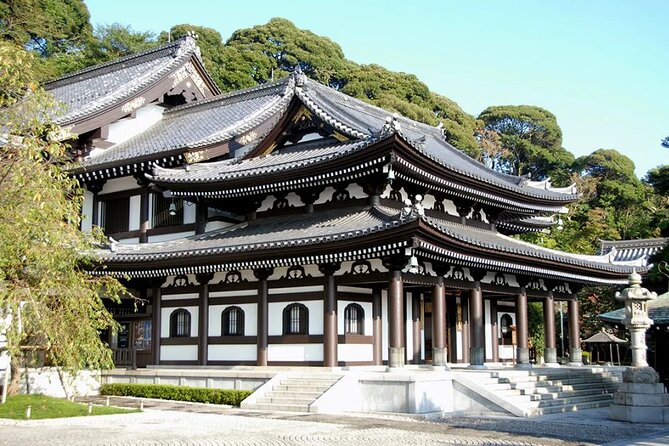
- Hokoku-ji: bamboo calm and a temple that slows your steps
- Hase-dera: gardens, incense, and stone steps
- Kotoku-in Great Buddha: the 13-meter bronze moment
- Tsurugaoka Hachimangu: shrine culture without an entry fee
- Enoshima: sea air, gardens, and Mount Fuji views
- Food planning for a long day without meals included
- Comfort, pacing, and why the driver matters
- Weather expectations: why the day depends on it
- Who this tour suits best
- Should you book this Kamakura private tour?
- FAQ
- What is the duration of the Kamakura private tour?
- How much does it cost, and what is the group size?
- Do I need to buy tickets for all the stops?
- Is pickup available from Tokyo?
- What time does the tour start?
- Is food included in the price?
- What happens if the weather is poor?
Key things to know before you go
- Private, up to 3 people: one group, your own schedule flow
- English-speaking driver + meet-and-greet: helpful for pickup and timing
- 10 hours from about 8:00 am: a full day that still leaves time to breathe
- Entry fees are separate for Hokoku-ji, Hase-dera, and Kotoku-in
- Enoshima and Tsurugaoka Hachimangu are free (so you can spend more on the paid stops)
- Wifi hotspot in the vehicle when available: handy for maps and messaging
A private Kamakura day that actually feels like a day
Kamakura is the kind of place that works best at walking speed. This tour is built around that idea: you travel from Tokyo with a driver, then you’re given time at each stop to look around instead of sprinting.
The big win is the pairing. You get temple calm in the morning, a major bronze landmark at Kotoku-in, shrine culture at Tsurugaoka Hachimangu, and then a sea break on Enoshima. It’s a single loop of mood shifts that still stays practical for a one-day trip.
You’ll also appreciate how the private setup changes your experience. Instead of guessing train times or standing around waiting for connections, you’re in an air-conditioned vehicle with a planned order and pickup support.
You can also read our reviews of more private tours in Tokyo

Price and what makes it good value (or not)
This tour costs $391.22 per group for up to 3 people. That’s not cheap if you’re traveling solo, but it can be solid value if you’re traveling as a small group.
Here’s the math mindset that helps: if you use the full group size, you’re splitting the cost across three seats. That usually makes a private driver feel more reasonable compared with paying individual train tickets plus time lost.
Also, the price includes the real-world costs that often get added later—tolls, petrol/gas, and private transportation—plus a meet-and-greet and a mobile ticket. You’re paying for convenience and control as much as you’re paying for the sights.
Where it might feel less worth it: if you don’t mind planning transit on your own, you may find it easier to save money by building your route. But if you want the day to run on rails, this setup is made for that.
Pickup, timing, and the rhythm of a 10-hour loop
The day starts around 8:00 am and runs about 10 hours. That matters because Kamakura has a natural “morning to afternoon” flow. Temples and shrines are best when you can take your time, and Enoshima is more enjoyable when the light is decent for views and photos.
You’ll also get a meet-and-greet style start, and the operator notes that the pickup area is near public transportation. In plain terms: you’re not wandering around a maze to find your driver.
In the vehicle, you may have access to a wifi hotspot (when available). That’s useful for quick coordination, map checks, or figuring out where to eat later—especially since you’ll need to plan food since it’s not included.
Hokoku-ji: bamboo calm and a temple that slows your steps
Your first major stop is Hokoku-ji Temple, with about 2 hours on site. The headline here is the bamboo forest. You’re not just seeing trees—you’re walking through a space where the atmosphere feels quieter and more contemplative than the outside world.
This is a good place to reset after travel. Give yourself time to pause and look up. Bamboo corridors look different as the light changes, and you’ll get more from the visit if you’re not treating it like a quick photo stop.
Budget note: Hokoku-ji is one of the paid admissions in this itinerary. Plan on paying separately here, and keep that money ready so you’re not stuck hunting for payment at the gate.
Hase-dera: gardens, incense, and stone steps
Next comes Hase-dera Temple, again with about 2 hours. If Hokoku-ji is the quiet bamboo moment, Hase-dera leans more into gardens and spiritual atmosphere. The visit includes ascending stone steps to reach the grounds, and that changes the feel of the time there—you earn the views and the temple spaces by walking.
You’ll likely want comfortable shoes. The itinerary doesn’t spell out walking distance, but you can infer the effort from the stone steps. Also, since there’s incense mentioned as part of the feel, it’s a place where you’ll notice details even if you don’t speak Japanese.
Same entry-fee reality: Hase-dera’s admission is also not included. If you’re sensitive to costs, this is the second “add-on” you’ll pay before the day is over.
You can also read our reviews of more tours and experiences in Tokyo




Kotoku-in Great Buddha: the 13-meter bronze moment
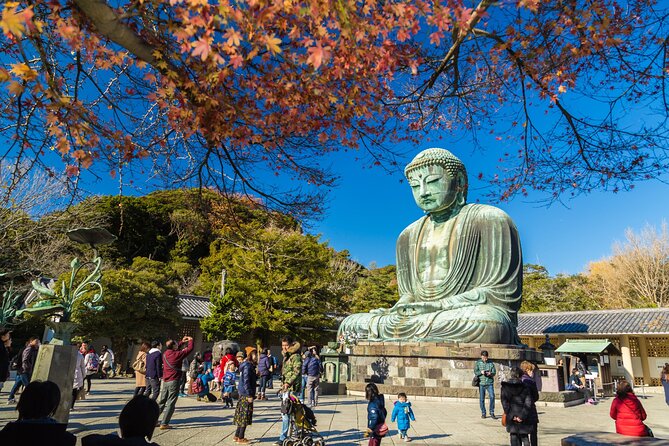
The centerpiece stop is Kotoku-in (Great Buddha of Kamakura), with about 2 hours. This is your “yes, I’ve made it” landmark: a bronze statue over 13 meters tall, tied to the 13th century.
When you’re standing near a statue that size, it’s hard not to get perspective. The value here isn’t just ticking off an attraction. It’s watching how the grounds frame the Buddha—how people naturally slow down when they see it.
This is also a paid admission stop. Kotoku-in’s entry fee isn’t included, so budget for it. The upside is that this is the one stop most people remember clearly after the day ends. If you only care about one dramatic photo moment, it’s usually this one.
Practical tip: give yourself a little margin within the 2 hours. People tend to linger around the statue area, and you may want extra time to wander the nearby temple space rather than spending the whole visit in a single spot.
Tsurugaoka Hachimangu: shrine culture without an entry fee
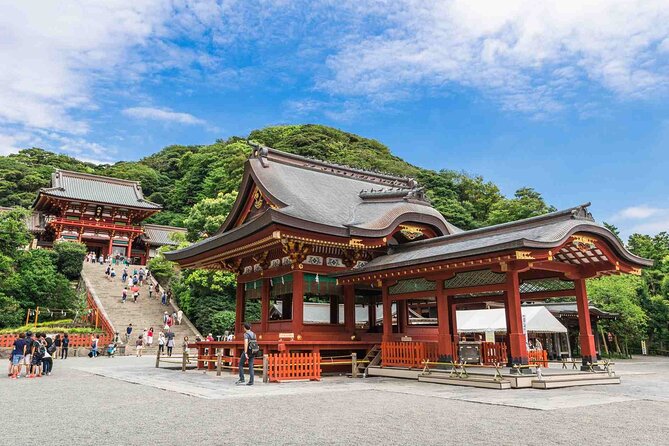
Then you head to Tsurugaoka Hachimangu Shrine, about 2 hours, and this one is free. The dedication matters: it’s dedicated to Hachiman, the Shinto god of war, and it’s described as the patron deity of samurai.
Even if you’re not a mythology expert, the shrine’s purpose is clear from the dedication. You’ll be able to connect the symbolism to Japan’s medieval warrior era, without needing a long lecture.
Because the admission is free, you can treat this stop as “flex time.” If you want to browse calmly or pause for photos, you won’t feel like every minute costs more.
One consideration: shrines often involve walking through multiple areas. You’ll want to keep your energy for Enoshima afterward, so don’t let this stop turn into a marathon.
Enoshima: sea air, gardens, and Mount Fuji views
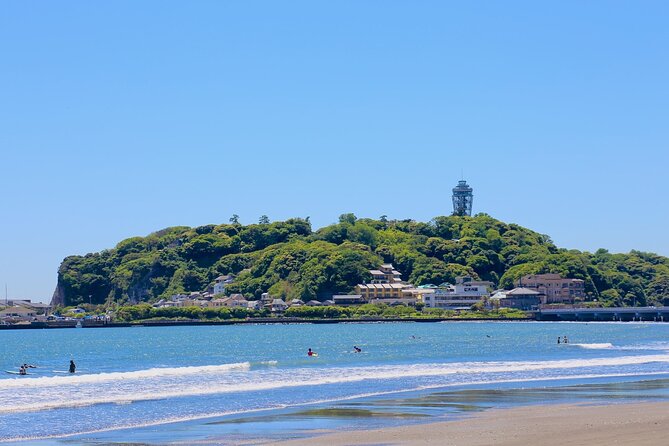
Finally, you arrive at Enoshima, an island area just off the coast. You get about 2 hours, and it’s listed as free.
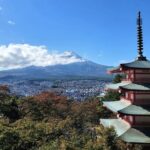
Enoshima is described as offering beaches, gardens, and views of Mount Fuji. Even when you can’t see Fuji clearly, the island is still a nice change of pace. The value is that you shift from temple/shrine time into open-air walking and sea views.
This is also where you’ll likely want to slow down and enjoy the details: small shops and cafes are mentioned as part of the island’s streets, and there are historic shrines and temples to explore. Since food isn’t included on the tour, this stop is a great time to handle lunch or a snack break.
If you want Mount Fuji views, keep your expectations tied to the weather. The tour notes that it requires good weather, and while that doesn’t guarantee a perfect view of Fuji, it does mean the operator is aiming for better outdoor conditions.
Food planning for a long day without meals included
Because food and drinks aren’t included, you’ll need a simple plan. You’re out for about 10 hours, so skipping meals usually leads to cranky legs and bad decisions later.
A practical approach:
- Eat earlier rather than waiting for the last stop.
- Use Enoshima as a flexible point for snacks and drinks.
- If you prefer sitting down, look for a calm cafe option so you can recharge.
You’ll likely move through multiple settings (temple grounds, shrine areas, then an island), and having a plan helps you avoid grabbing whatever is closest just because you’re tired.
Also remember: you’ll pay separate temple admissions, so keep some spare cash or payment options available.
Comfort, pacing, and why the driver matters
For a one-day tour, comfort and pacing are not extras—they’re the difference between a fun day and a tiring one.
You’ll have private transportation in an air-conditioned vehicle. That’s a big deal on a full-day loop from Tokyo, especially if the weather is hot or humid. You’re also protected from the uncertainty of coordinating multiple transit transfers on your own.
The driver can make a noticeable difference in how the day feels. In one example, hridoy brought enthusiasm and humor to the ride, which kept the energy up between stops. That matters because the schedule is packed enough that you’ll appreciate downtime that isn’t awkward.
And because this is private, you only have your group moving through the day. No waiting for other parties, no shuffling around someone else’s pace.
Weather expectations: why the day depends on it
This tour requires good weather. If conditions are poor, it can be rescheduled to a different date or you can get a full refund.
In practical terms, that’s because much of the experience happens outdoors: bamboo grounds, stone step temple areas, shrine walking, and especially Enoshima’s island time and views. If the weather is bad, the day loses part of what makes it special.
So if you’re booking, check forecasts for the travel day and keep your plans flexible.
Who this tour suits best
I think this fits best if you:
- Want a private English-speaking driver and a smooth schedule with pickup support
- Like seeing the classics without building your own transit route
- Are traveling in a small group (up to 3) and can split the cost
- Care about both temple/shrine culture and a seaside break at Enoshima
It’s also a good choice if you don’t want to manage entrance timing and transport between sites. The itinerary is simple and the time blocks are generous, so you can explore at your own speed.
If you’re a solo traveler on a strict budget, the per-person cost may feel heavy. But if you’re paying for time, convenience, and comfort, it can still make sense.
Should you book this Kamakura private tour?
Book it if you want a straightforward, full-day Kamakura experience with private logistics done for you. The structure gives you time at Hokoku-ji, Hase-dera, and Kotoku-in, then keeps the day balanced with free stops at Tsurugaoka Hachimangu and Enoshima.
I’d hesitate if you hate paying separate entry fees for multiple temples. Since Hokoku-ji, Hase-dera, and Kotoku-in aren’t included, make sure you’re comfortable with that extra spend. Also, if you can’t travel on a day with decent weather, this one is more likely to be affected.
If you match those two points, this is a strong way to experience Kamakura without turning your day into a transportation puzzle.
FAQ
What is the duration of the Kamakura private tour?
The tour lasts about 10 hours.
How much does it cost, and what is the group size?
It costs $391.22 per group for up to 3 people.
Do I need to buy tickets for all the stops?
No. Entry fees are not included for Hokoku-ji, Hase-dera, and Kotoku-in. Tsurugaoka Hachimangu and Enoshima are listed as free.
Is pickup available from Tokyo?
Pickup is offered, and there is a meet-and-greet.
What time does the tour start?
The start time is 8:00 am.
Is food included in the price?
No. Food and drinks are not included.
What happens if the weather is poor?
This experience requires good weather. If it’s canceled due to poor weather, you’ll be offered a different date or a full refund.
If you tell me your travel date and whether you’re solo or with 2 others, I can help you sanity-check the value and what to budget for temple admissions.