REVIEW · TOKYO
Okonomiyaki making experience~Japanese popular food
Book on Viator →Operated by Bancre Inc. · Bookable on Viator
Flip a Japanese griddle pancake in Tokyo. This private okonomiyaki making experience is a hands-on way to understand Japanese soul food, with the fun part being cooking it on a hot griddle while you build the batter and toppings. I especially like the clear English support (including Nina as translator) and the choice between meat or seafood styles, so you can match the flavor to your mood. The only real drawback is the time: at about 1 hour, you’ll want to stay focused and enjoy the pace instead of treating it like a slow cooking workshop.
The class is priced at $39.02 per person and includes all fees and tax, so what you’re paying for is the cooking instruction plus the ingredients for your okonomiyaki. You’ll use a mobile ticket, and the meeting point is in Shinjuku near public transportation, then the activity ends back where you started.
In This Review
- Key Points to Know Before You Go
- Okonomiyaki on the Hot Griddle in Shinjuku
- Price and Value: What $39.02 Covers (And What It Doesn’t)
- Where to Meet: Getting Started at 3-Chōme Shinjuku
- The 1-Hour Flow: From Batter to First Bite
- Meat vs Seafood: Choosing Your Okonomiyaki Style
- Condiments That Matter: Sauce, Mayo, and Aonori
- English-Speaking Help and the Role of Nina the Translator
- How Much Food You Should Expect (And What to Plan for)
- Who This Okonomiyaki Class Is Best For
- Weather, Timing, and Booking Smart
- Should You Book This Okonomiyaki Making Experience?
- FAQ
- How long is the okonomiyaki making experience?
- How much does it cost per person?
- Is this experience private?
- What types of okonomiyaki can I choose from?
- What is included in the price?
- What is not included?
- Where is the meeting point?
- Will I need Japanese to participate?
- Does weather affect the class?
- How do I get my ticket?
Key Points to Know Before You Go
- Private small-group feel: only your group participates, so you’re not stuck watching from the back row.
- English help is part of the package: you’ll have friendly English-speaking guides alongside the chef, including Nina as translator.
- Meat or seafood choice: you decide which flavor direction you want, then cook your pancake around that choice.
- Real griddle cooking: you’ll learn how the batter comes together and how to cook it on a griddle until it’s ready to eat.
- Toppings make it feel Japanese: sauce, mayonnaise, and aonori (dried seaweed) turn your pancake into the real thing.
- You may get extra to take home: in some sessions, people have been able to make a second okonomiyaki, depending on timing.
Okonomiyaki on the Hot Griddle in Shinjuku
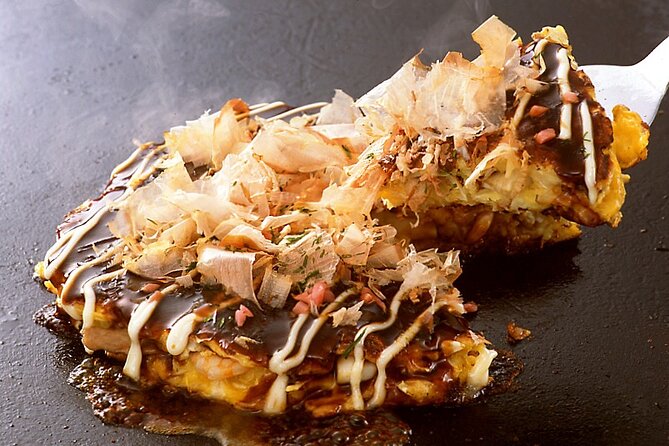
If you’ve ever wondered what makes okonomiyaki taste so comforting, this class answers it the practical way: you make the batter, you cook it on a griddle, and you add the classic condiments that give it that familiar flavor. Okonomiyaki is often described as a Japanese soul food, and for good reason. It’s flexible—served at home, at festivals, and in restaurants—and it feels like you’re building a personalized pancake.
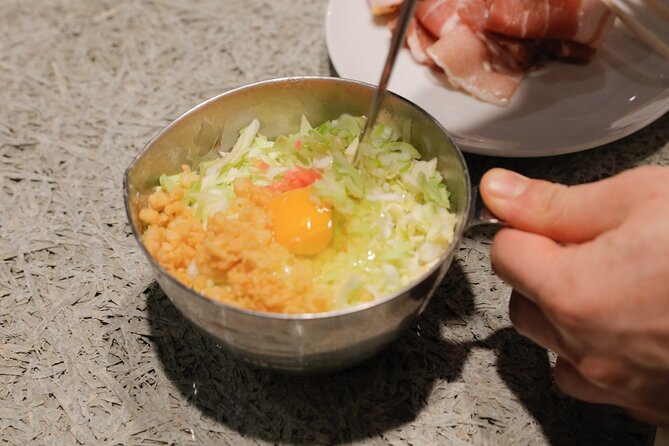
What I like about doing it in a class setting is that you’re not just eating food you could order later. You learn the basic structure: flour and eggs come together with cabbage and other fillings, and the batter is cooked until it becomes a cohesive, savory pancake. Then you finish it with sauce, mayonnaise, and aonori so it tastes like the okonomiyaki you see in Japan.
One more plus: the vibe tends to be friendly and upbeat, not stiff. The class includes a chef plus English-speaking guides, so you can ask questions without playing charades.
You can also read our reviews of more food & drink experiences in Tokyo


Price and Value: What $39.02 Covers (And What It Doesn’t)
At $39.02 per person, this is fairly priced for a Tokyo food class—especially because it includes all fees and tax. You’re paying for instruction, ingredients, and the cooking setup, which is exactly what you want when you’re trying something that’s part technique and part timing.
What’s not included is also important. Bottled water is not included, and the class does not cover additional meals or drinks, nor lunch or dinner. So treat this as a food experience that gives you your okonomiyaki portion, not as a full meal plan for the day. If you’re hungry before you arrive, eat something light nearby. If you’re the type who needs a big dinner later, plan for that too.
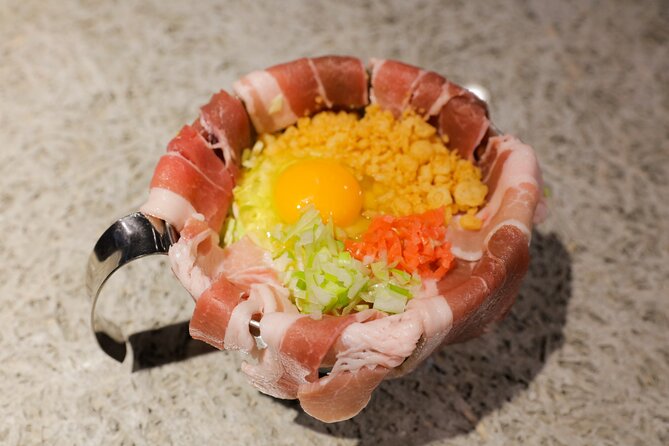
One smart way to think about the value: okonomiyaki is customizable. Making your own means you can choose meat or seafood, then taste the difference in a way you simply can’t get from one menu item.
Where to Meet: Getting Started at 3-Chōme Shinjuku
The meeting point is a specific building in Shinjuku, with an address listed as: 3-chōme 67 Dai 6 Sanwa Building, 4th floor (第6三和ビル 4階). The landmark description is a house with flowers.
This matters because “Shinjuku” is huge, and you’ll want a clean arrival. The good news is the location is stated as near public transportation, so you can plan around trains and short walks rather than long taxi rides.
A simple strategy: arrive a little early, stand near the entrance, and double-check you’re on the correct floor. Once you’re in, the class start typically moves fast—so getting your bearings before you begin will make the experience smoother.
The 1-Hour Flow: From Batter to First Bite
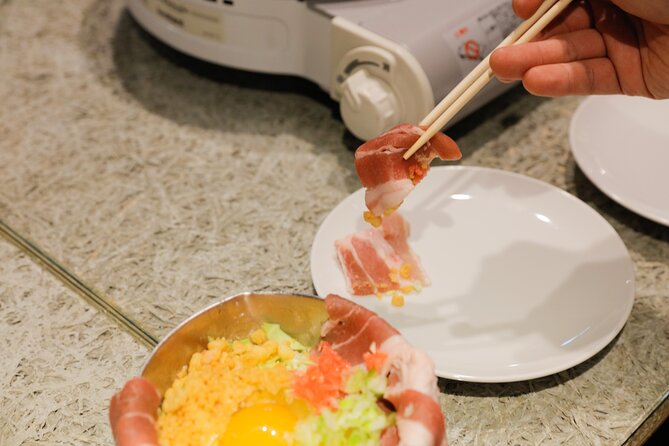
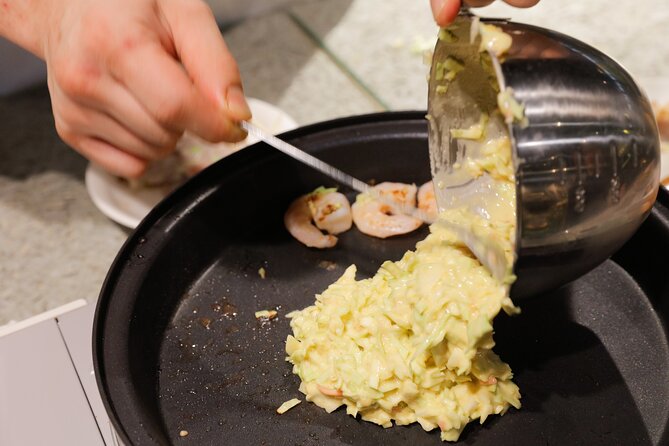
This experience runs about 1 hour (approx.), and it’s structured around action. Expect a step-by-step cooking process rather than a lecture. You’ll work with a batter that starts with flour and water, then includes additional ingredients like eggs, cabbage, and your chosen filling (meat or seafood).
Here’s what the flow is meant to do for you:
- you get a guided start so the technique makes sense quickly,
- you cook on the griddle under supervision,
- you finish with the classic condiments.
In a class like this, timing is everything. Pancake batter can go from perfect to too cooked if you lose track. The upside is that the guides and chef keep things moving, so even if you’ve never used a griddle before, you’ll still end up with an edible, satisfying okonomiyaki.
If you want a mental checklist, focus on three moments: mixing, griddle cooking, and finishing with toppings. That’s where the flavor is built.
Meat vs Seafood: Choosing Your Okonomiyaki Style
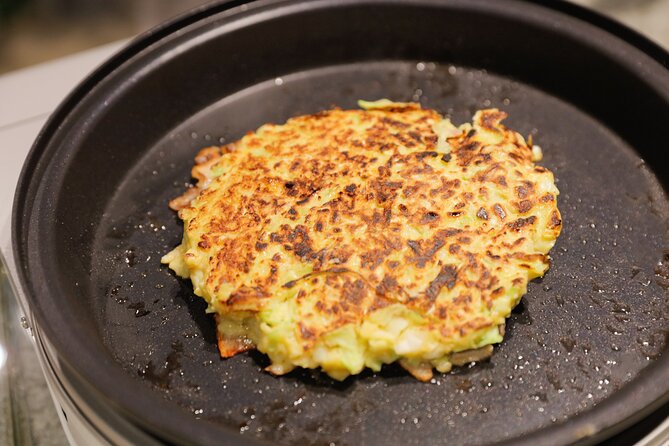
You get two main taste directions: seafood and meat. That choice isn’t just a menu option; it affects what goes into your pancake and what you’ll taste in the end.
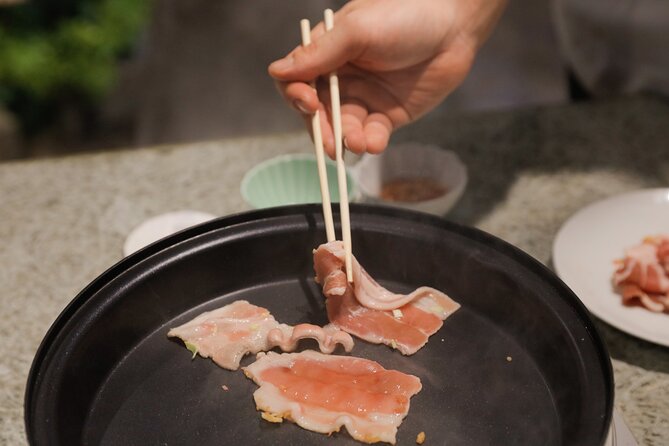
Why this matters for your day: okonomiyaki is a “comfort” food, but it can still shift dramatically depending on the mix-ins. Meat versions tend to feel hearty and savory. Seafood versions lean into briny, ocean-y flavor. If you’re unsure, think about what you want most—deep savory warmth or lighter seafood tang—then pick the one that matches your mood.
In the class, you’ll be guided in adding the ingredients to the batter. The chef and English-speaking guides help keep the process straightforward, so you’re not left guessing which step comes next.
You can also read our reviews of more tours and experiences in Tokyo


Condiments That Matter: Sauce, Mayo, and Aonori
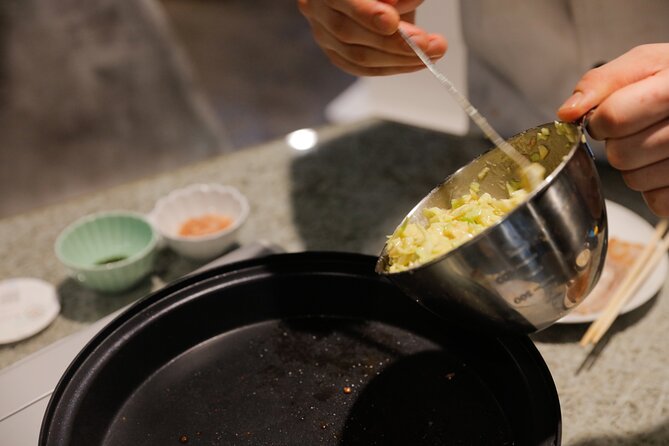
The last step is where okonomiyaki becomes unmistakably Japanese. You’ll serve it with condiments like sauce, mayonnaise, and aonori (dried seaweed). This isn’t just garnish. These toppings create the signature flavor balance: tangy sauce, creamy mayo, and that seaweed aroma that makes the whole thing feel complete.
If you’re the kind of person who usually asks what’s in the sauce at restaurants, this part gives you control. You can see how the toppings are applied and how they change the overall bite. It also makes the final product feel like something you made at home, but with restaurant-style finishing.
Practical tip: take a moment before your first bite to smell the aonori and look at the way the sauce and mayo sit on top. Small details are part of the fun here.
English-Speaking Help and the Role of Nina the Translator
This class is designed for people who don’t speak Japanese. The experience includes guides who speak English, plus a chef. One translator name mentioned is Nina, and she’s described as ensuring everyone was having a good time.
What that means for you on the day: you won’t be stuck translating every instruction yourself. You can focus on cooking rather than decoding. You can also ask follow-up questions if something doesn’t click, which is the difference between merely eating and actually learning.
I also like that the guides are described as friendly and helpful. Food classes can sometimes feel overly formal. Here, the tone sounds supportive, so you can make mistakes and still end up with something delicious.
How Much Food You Should Expect (And What to Plan for)
The experience description is clear that it’s a cooking class, and it does not include lunch or dinner. So your main edible payoff is your okonomiyaki, not a multi-course meal.
In terms of portion and variety, you should expect to cook and eat your selected style (meat or seafood). One important note from the experience details: in at least one recent session, someone was able to make a second okonomiyaki to take home. You shouldn’t count on extra time as guaranteed, but it’s a good possibility to ask about on arrival.
For your schedule, plan like this:
- Eat lightly beforehand if you arrive hungry.
- Budget a snack after if you’re expecting this to be your full dinner.
- If you’re the type who loves trying food multiple times, this is a great first stop before you continue exploring Shinjuku food streets.
Who This Okonomiyaki Class Is Best For
This is the kind of activity that works for a lot of people, because the core idea is simple: hands-on cooking. Most people can participate, and it’s private, meaning only your group joins.
I’d especially recommend it if:
- you want a fun, interactive Tokyo food experience that isn’t just standing in line,
- you’re traveling solo and want structure plus friendly guidance,
- you’re coming with friends and want a shared activity with a satisfying result,
- you’ve eaten okonomiyaki before and want to understand what’s happening behind the scenes.
It’s also ideal if you’re short on time. About an hour is easy to fit into an afternoon plan in Shinjuku.
Weather, Timing, and Booking Smart
This experience requires good weather, which matters because classes can be affected by how the venue operates. If weather forces a change, you’ll be offered a different date or a full refund, so you’re not stuck.
You’ll also likely want to book ahead. On average, this is booked about 14 days in advance. That’s not extreme, but it does suggest it’s popular, and private slots may not last long when dates fill.
Timing tip: since the class ends back at the meeting point, it’s easier to pair with nearby sightseeing. Build in buffer time so you don’t feel rushed grabbing trains afterward.
Should You Book This Okonomiyaki Making Experience?
Yes, you should book it if you want a genuine food activity in Tokyo where you actually cook—not just watch and eat. The best part is the combination of hands-on griddle cooking and English support, including Nina as translator, which keeps the experience fun and understandable. You also get a clear choice between meat and seafood, and the classic condiments (sauce, mayonnaise, aonori) make the final result taste like the real deal.
Skip or rethink it if you’re looking for a long cooking workshop or a full meal included in the price. This is about an hour, and lunch and dinner are not included. Also, if weather is questionable during your dates, keep flexibility in your schedule.
If your goal is a short, memorable, delicious Tokyo food class that you’ll talk about later, this one fits the bill.
FAQ
How long is the okonomiyaki making experience?
It lasts about 1 hour (approx.).
How much does it cost per person?
The price is $39.02 per person.
Is this experience private?
Yes. It’s a private tour/activity, and only your group participates.
What types of okonomiyaki can I choose from?
There are two taste options: seafood and meat. You can choose which you prefer.
What is included in the price?
All fees and tax are included.
What is not included?
Bottled water, additional meals and drinks, and transportation expenses to the meeting place are not included. Lunch and dinner are also not included.
Where is the meeting point?
The meeting point is at a house with flowers at Japan, 160-0022 Tokyo, Shinjuku City, Shinjuku, 3-chōme 67 第6三和ビル 4階.
Will I need Japanese to participate?
No. The class includes English-speaking guides, and there is an English translator (Nina) mentioned in the experience.
Does weather affect the class?
Yes. Good weather is required, and if it’s canceled due to poor weather, you’ll be offered a different date or a full refund.
How do I get my ticket?
You’ll receive a mobile ticket.