REVIEW · TOKYO
Mt. Fuji to Lake Kawaguchi, Lake Yamanaka and Onsen Day Tour
Book on Viator →Operated by TREVOPEDIA · Bookable on Viator
Fuji views, minus the stress. This day tour strings together the big Mount Fuji moments with comfortable air-conditioned transport and a smooth hit list of Lake Kawaguchi and Lake Yamanaka with guide commentary along the way. One thing to watch: the tour depends on good weather for clear views, and the onsen entry can be extra (plus there’s a tattoo entry rule).
I like how it manages your time. You get a first stop at Mt. Fuji 5th Station, then shrine-and-park views at Arakurayama Sengen areas, followed by the lakes with short, purposeful breaks for photos and walking.
My only caution is expectations around the onsen. Even though you stop at Awara Onsen, you’ll still need to budget for the onsen ticket, and if you have tattoos you may need skin-color stickers or you might be turned away.
Quick Take: What Makes This Tour Worth Your Day
- Mt. Fuji 5th Station (40 minutes, ticket included): A high-altitude viewpoint without needing to climb the mountain.
- Arakurayama Sengen Park/Shrine views: Great for iconic Mt. Fuji framing over the city-and-valley side.
- Two lakes in one run (Kawaguchi + Yamanaka): You see more than the usual one-lake circuit.
- Seasonal flower and foliage stops: Shibazakura and the Lake Kawaguchi Maple Corridor can change your whole experience by month.
- Awara Onsen stop: A real Japanese hot-spring reset, but plan for the entry fee and tattoo rules.
- Small tour cap (max 40): Enough to meet people, not so many that you lose the day.
In This Review
- How This Day Tour Cuts Tokyo-to-Fuji Headaches
- Mt. Fuji 5th Station: The High View Without the Summit Push
- Arakurayama Sengen Park and Shrine: The Photo Angle That’s Done Right
- Lake Kawaguchi: Big Views, Real Walking Time
- Oishi Park and the Seasonal Stops: How Your Month Changes the Scenery
- Fuji Shibazakura Festival (optional, seasonal)
- Lake Kawaguchi Maple Corridor (autumn-focused)
- Lake Yamanaka: Bigger, Calmer, and Worth the Second Lake
- Awara Onsen: A Real Hot-Spring Stop, With Two Big Caveats
- What You’re Really Paying for (It’s Not Just “Transportation”)
- Weather: The Not-So-Secret Factor for Clear Mt. Fuji
- Group Size and Pacing: Comfortable, But Still a Full Schedule
- Who Should Book This Tour (and Who Might Not)
- Tips to Make Your Fuji Day Feel Easier
- Should You Book This Mt. Fuji to Lake Kawaguchi, Lake Yamanaka and Onsen Day Tour?
- FAQ
- How long is the Mt. Fuji to Lake Kawaguchi, Lake Yamanaka and Onsen Day Tour?
- What does the tour cost?
- Is a mobile ticket provided?
- Are pickup and drop-off included?
- What is included in the ticket price?
- What is not included?
- How many people are in a group?
- Are tattoos allowed in the hot spring?
- Does the tour run in any weather?
- When can I cancel for a full refund?
How This Day Tour Cuts Tokyo-to-Fuji Headaches
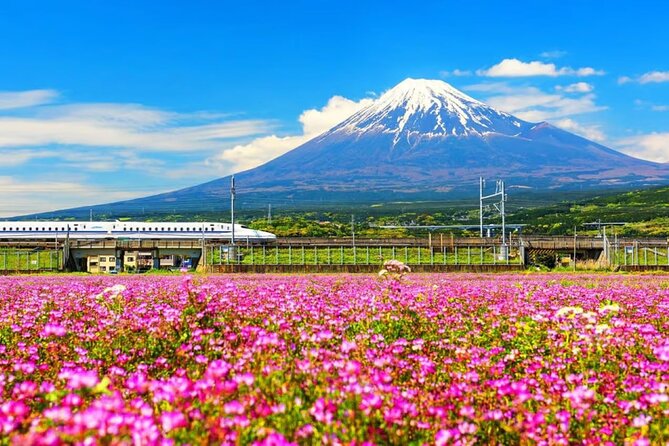
If you’ve ever tried to get to Mt. Fuji from Tokyo on your own, you already know the pain points: schedules, transfers, time buffers, and ending up “on the wrong bus” like it’s a hobby. This tour is designed to remove that friction. You meet at a designated spot, ride in an air-conditioned vehicle, and follow a set route that hits the main viewpoints around the Fuji area.
The value isn’t just convenience. It’s also the structure. You spend your limited vacation hours where the views are strongest and the walking is manageable, instead of burning time figuring logistics. The guide adds context at several stops, which makes the scenery feel less like random photo ops and more like a route with meaning.
And yes, it’s still a full day—about 10 to 11 hours including driving—but the pacing is built for sightseeing. A mobile ticket also means fewer paper headaches.
Mt. Fuji 5th Station: The High View Without the Summit Push
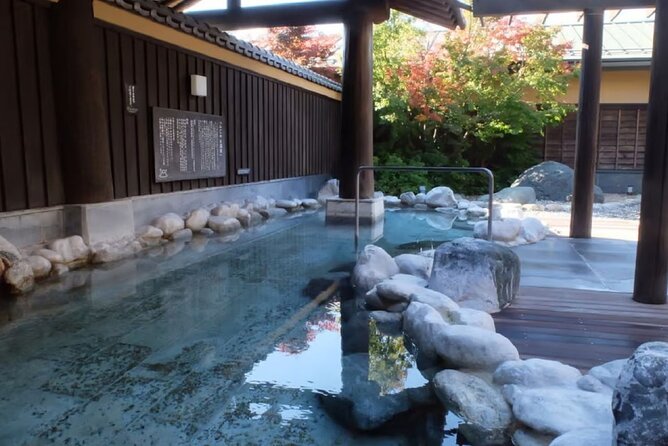
Your first big moment is Mt. Fuji 5th Station. You’ll stop for about 40 minutes, and the admission ticket is included. At roughly 2,300 meters (around 7,546 feet), this is one of the most popular “I’m really here” points on the mountain route.
Why this stop matters: it gives you altitude and atmosphere without committing to a full climb. If you’re traveling with limited time, don’t want to train for the mountain, or you’re visiting outside the main climbing season, this is a practical compromise.
What to expect on the ground: it’s a busy scenic hub, and conditions can change quickly with elevation. Wear layers you can remove or add fast, because even in good weather you can feel temperature swings.
You can also read our reviews of more tours and experiences in Tokyo
Arakurayama Sengen Park and Shrine: The Photo Angle That’s Done Right
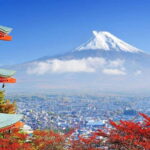
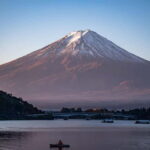
Next up is Arakurayama Sengen Park (and later, Arakurayama Sengen Shrine). This area is famous for panoramic Mt. Fuji views, especially from spots near Arakura Shrine.
The reason I like this pairing with Mt. Fuji 5th Station: it gives you different “faces” of the mountain. At the fifth station, you’re high and close to the vertical scale. At Arakurayama, you’re more positioned to frame Fuji alongside the surrounding geography.
You’ll have time for real wandering here—about an hour for the park stop, then later around two hours for the shrine side. That extra time is helpful because the best vantage points often require a bit of walking and choosing your viewpoint carefully.
Practical note: this is a sightseeing area, so aim for good footwear. It’s not a formal museum visit. You’ll want to move at a comfortable pace to get the view you actually want.
Lake Kawaguchi: Big Views, Real Walking Time
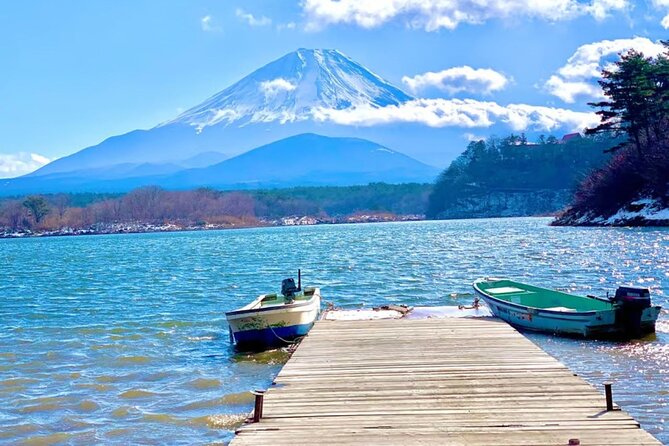
Now the day shifts from mountain height to Fuji Five Lakes. Lake Kawaguchi is one of the Fuji Five Lakes at the northern base of Mt. Fuji, and it’s a top pick for views.
You’ll spend about 2 hours 30 minutes here, and admission is free for this stop. That longer window is valuable. In a lot of one-lake tours, you get only a quick look, snap photos, and leave. Here, you can pace yourself: walk a bit, find your preferred shoreline angle, then settle in rather than rushing every five minutes.
Lake Kawaguchi is also where seasonal changes start to matter. Depending on the time of year, you may get flower fields and foliage-focused scenery.
Oishi Park and the Seasonal Stops: How Your Month Changes the Scenery
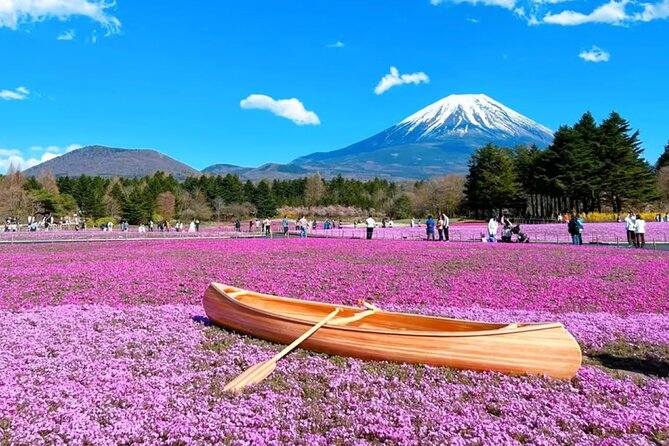
Oishi Park is along the northern shore of Lake Kawaguchi and is especially known for excellent Mt. Fuji views. You’ll have about 1 hour here, with admission included.
Then the tour moves into season-based experiences. There are two potential extras, and they can be the difference between a “pretty day” and a “wow, I get why people come back.”
Fuji Shibazakura Festival (optional, seasonal)
You may stop at the Fuji Shibazakura Festival for about 1 hour. Admission isn’t included, and it has a separate optional fee. This is the pink moss phlox season (when it’s running), and the visiting dates can vary by year—so treat it as a seasonal bonus rather than a guaranteed show.






Lake Kawaguchi Maple Corridor (autumn-focused)
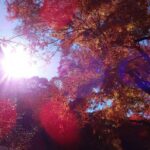
For a foliage stop, you may visit the Lake Kawaguchi Maple Corridor (Momiji Corridor). This is about 1 hour, and admission is included. Japanese maple trees turn red, orange, and yellow, and this spot is built for slow viewing and photos.
The main tip here: don’t plan your photos like you’re shooting a documentary with a drone. Decide your “must-have” angles early, then leave room for the kind of wandering that makes these places enjoyable.
Lake Yamanaka: Bigger, Calmer, and Worth the Second Lake
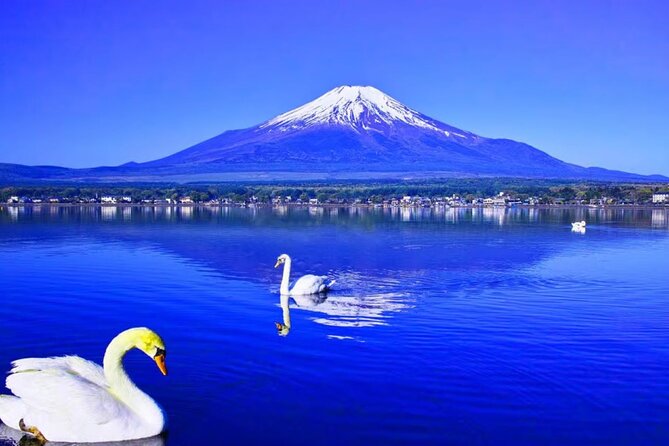
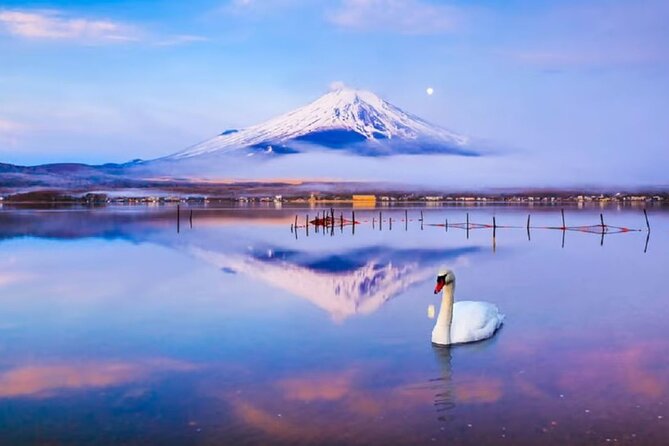
After Kawaguchi, you’ll head to Lake Yamanaka for about 1 hour 10 minutes. Admission is included. Lake Yamanaka is the largest of the Fuji Five Lakes and sits to the east of Mount Fuji, which changes the feeling from Kawaguchi.
I find this second lake stop important because it prevents the day from becoming one long line of similar shoreline scenes. Yamanaka gives you more space and a calmer pace, so your brain gets a new viewpoint instead of repeating the same visual theme.
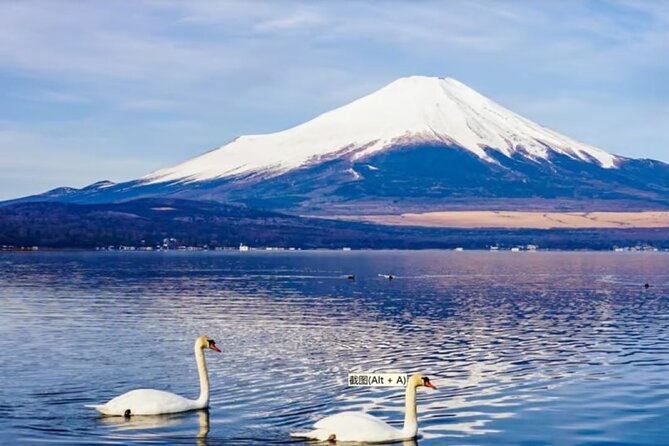
You’ll also have an optional add-on at Lake Yamanakako: a pleasure boat ride called Swan Lake. It’s about 20 minutes, and it’s not included in the price. If the weather is good and you’re not in a hurry, it’s one of those small upgrades that can make your lake time feel more like an experience and less like a walking circuit.
Awara Onsen: A Real Hot-Spring Stop, With Two Big Caveats
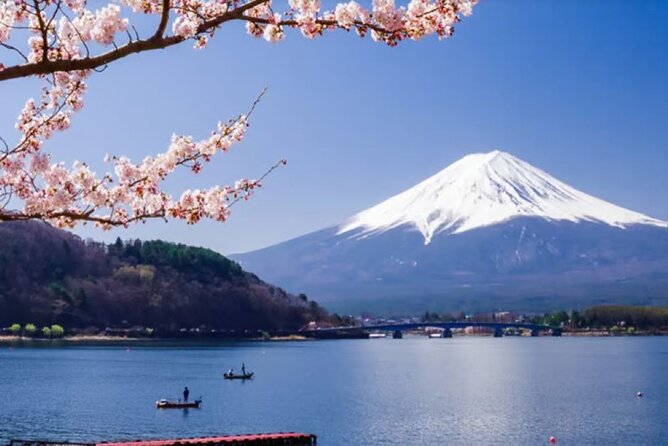
The day ends with a hot spring stop at Awara Onsen for about 20 minutes. The entry ticket isn’t included, and you should budget roughly 1,000 to 1,600 JPY per person.
This is the reset you’ll feel in your legs. By this point you’ve been walking viewpoints and parks, and a short onsen stop is an easy way to turn “tired sightseeing” into “I’m ready for dinner.” Even with the short duration, it helps.
Two practical caveats you should take seriously:
- Tattoos: If you have small tattoos, you’re advised to cover them with skin-color stickers to enter. If the tattoo is large, you may not be able to enter. If you’re unsure, it’s worth planning your coverage method before the day.
- Expect a ticket fee: The onsen stop itself is part of the route, but the onsen entry is not included.
Also, food and drinks aren’t included, so don’t plan to rely on the onsen stop for an easy meal. Bring water needs in mind and plan for dinner after you’re back.
What You’re Really Paying for (It’s Not Just “Transportation”)
At $115 per person, the tour can feel like a lot at first glance—until you map out what’s actually included.
Included costs cover driver and guide service fees, air-conditioned transportation, and pickup/drop-off from designated areas. Several admissions are also included, including:
- Mt. Fuji 5th Station
- Arakurayama Sengen Park
- Oishi Park
- Lake Kawaguchi Maple Corridor
- Lake Yamanaka
- Arakurayama Sengen Shrine
On top of that, the schedule is doing the work for you: you’re not spending your day coordinating buses and trains while trying to catch good light. You’re also not managing the timing between multiple lakes and viewpoints.
What costs extra (and how to plan):
- Onsen entry: about 1,000–1,600 JPY
- Fuji Shibazakura Festival: optional, around 1,300 JPY
- Swan Lake boat: optional, not included
- Food and drinks: not included
For me, this price becomes a “good value” when you want the most famous scenery without turning your trip into a logistics project. If you already know how to time buses and you’re comfortable doing it all yourself, you might compare costs. But if you want one day that runs on rails, this is a strong deal.
Weather: The Not-So-Secret Factor for Clear Mt. Fuji
This tour requires good weather. If it’s canceled due to poor weather, you’ll be offered a different date or a full refund.
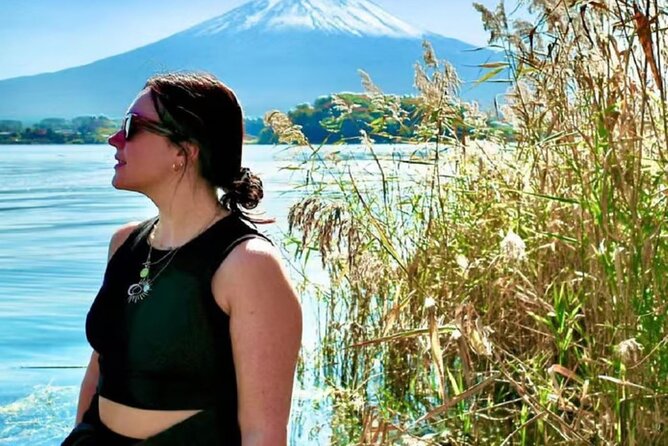
In practice, that means your best results come when the skies are clear. Mt. Fuji can hide when clouds roll in, and no itinerary can fix that. So if you’re choosing a date, aim for the days you expect better visibility rather than stacking your Fuji day on a rainy forecast.
Pack for changeable conditions too. Even with “good weather,” higher altitude can feel different.
Group Size and Pacing: Comfortable, But Still a Full Schedule
The maximum group size is 40. That’s large enough that you’ll likely have company, but small enough that you usually don’t feel lost in a crowd.
The pacing is tight in the best way: each stop has enough time for photos and short walks, and then you move on. The trade-off is that you won’t have hours to “live” at one location. If you love slow travel, you might want to treat this as a highlight day and plan a longer stay later if you want deeper exploring.
Who Should Book This Tour (and Who Might Not)
This tour is a great fit if you:
- want a structured day around Mt. Fuji viewpoints and two lakes
- prefer air-conditioned comfort over long, complicated transit days
- enjoy walking but want the route planned
- want an onsen stop at the end, with the option to cover tattoos with stickers
You may want to skip or at least think twice if:
- you need lots of free time at one spot
- you’re sensitive to weather uncertainty
- you have tattoos and don’t want to deal with possible entry restrictions
Tips to Make Your Fuji Day Feel Easier
A few small choices can make the difference between a good day and a great one:
- Bring layers: Mt. Fuji 5th Station is high, and conditions shift.
- Wear walking shoes: parks and shrine areas need comfortable footing.
- Decide your optional spend early: onsen entry, Shibazakura, and the Swan Lake boat add up. If you want one upgrade, pick the one that matches your season and mood.
- Have your sticker plan ready if needed: tattoo coverage is specifically mentioned for entry, so don’t leave that to chance.
And if you’re lucky with your guide, it can turn into a memorable day. The tour is led by guides such as Belle, who has been noted for enthusiasm and careful planning, and Laner, who has been described as attentive and patient—exactly the kind of energy that helps when the schedule is full.
Should You Book This Mt. Fuji to Lake Kawaguchi, Lake Yamanaka and Onsen Day Tour?
If your goal is to see the biggest Mount Fuji highlights from Tokyo in one day, this tour makes sense. You get a strong mix of high-altitude views, shrine-and-park scenery, and two different lakes, plus an onsen stop to close out the day.
Book it if you value convenience, clear planning, and “see a lot without thinking about it.” Don’t book it if your dream day involves slow exploration at one location, or if you’re not comfortable with the onsen entry rules and extra fees.
FAQ
How long is the Mt. Fuji to Lake Kawaguchi, Lake Yamanaka and Onsen Day Tour?
The total tour duration is about 10 to 11 hours, including transportation time.
What does the tour cost?
The price is $115.00 per person.
Is a mobile ticket provided?
Yes, the tour uses a mobile ticket.
Are pickup and drop-off included?
Yes. The tour includes pickup and drop-off from designated areas.
What is included in the ticket price?
Included items are driver service fee, guide service fee, air-conditioned transportation, and pickup and drop-off. Several admissions are also included across the itinerary.
What is not included?
Onsen ticket entry is not included (about 1,000–1,600 JPY). Food and drinks are also not included. The Fuji Shibazakura Festival and the Swan Lake pleasure boat are optional and not included.
How many people are in a group?
The maximum group size is 40 travelers.
Are tattoos allowed in the hot spring?
Small tattoos may be covered with skin color stickers to enter. If the tattoo is large, entry may not be possible.
Does the tour run in any weather?
The tour requires good weather. If it’s canceled due to poor weather, you’ll be offered a different date or a full refund.
When can I cancel for a full refund?
You can cancel up to 24 hours in advance for a full refund. If you cancel less than 24 hours before the start time, the amount paid is not refunded.