REVIEW · TOKYO
Mt. Fuji and Hakone 1 Day Bus Tour + Kimono Experience
Book on Viator →Operated by Odakyu Fuji Tour · Bookable on Viator
Fuji in one day, with kimono included. This Odakyu bus tour strings together Lake Kawaguchi, Hakone, and Owakudani into a smooth 11-hour hit of real Japan—without you juggling trains. I especially like the combo of a kimono dressing stop plus an Mt. Fuji-focused photo moment, including an indoor option for rainy days.
The second thing I like is the pacing. You get short, purposeful time blocks—shrine, viewpoints, and volcanic scenery—so you’re not stuck “waiting for the group,” and you’re still moving through the best highlights. One heads-up: Mt. Fuji may be cloudy or hidden, and there’s no refund just because you couldn’t see it from the base.
If you’re lucky, you may end up with a guide like Maki, who comes through as engaged and clearly tuned into what English-speaking visitors need. Just plan for a long day with limited breaks once the bus leaves Shinjuku.
In This Review
- Key highlights you’ll feel right away
- One-day Mt. Fuji + Hakone: how the route really works
- Fujisan Plaza and the kimono moment that’s built for photos
- Kawaguchi Asama Shrine: the quiet pause before Hakone gets intense
- Oishi Park: flower-season views with a simple photo goal
- Lunch at Tabi no Eki Kawaguchiko: eat local, on your own terms
- Owakudani Valley: volcanic steam, sulfur vents, and drama
- Owakudani to Hakone base: how the endpoint options change your day
- Returning to Shinjuku on the Odakyu Romancecar (or not)
- Price and value: why $104.34 can make sense
- Weather, Mt. Fuji visibility, and what to do with the disappointment risk
- Who this tour fits best
- Should you book? My take
- FAQ
- FAQ
- What time does the tour start?
- Where do I meet the group in Tokyo?
- How long is the tour?
- What’s included in the price?
- Is lunch included?
- Which stops are part of the itinerary?
- Will there be a restroom stop on the way to Fujisan Plaza?
- Can I choose where I end the tour?
- What if Mt. Fuji is not visible?
- What is the cancellation policy?
Key highlights you’ll feel right away
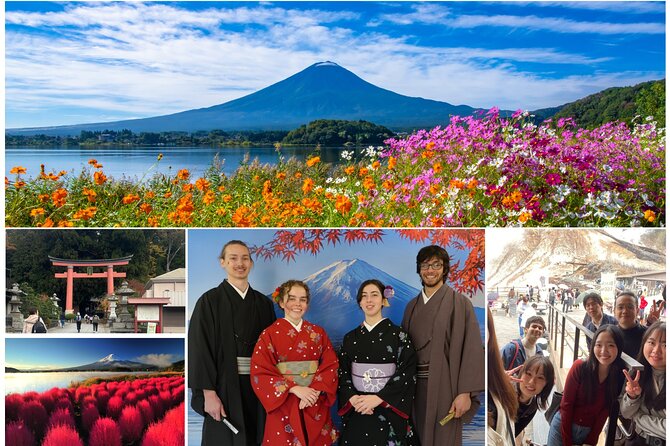
- Kimono dressing over your own clothes at Fujisan Plaza, with limited sizes and an easy, casual fit process
- Fuji photo time with a backup indoor setting if the weather turns
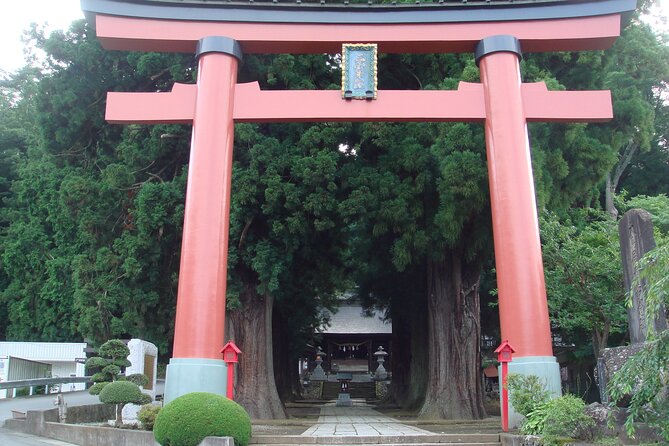
- Kawaguchi Asama Shrine and its red torii gate approach through cedar-lined calm
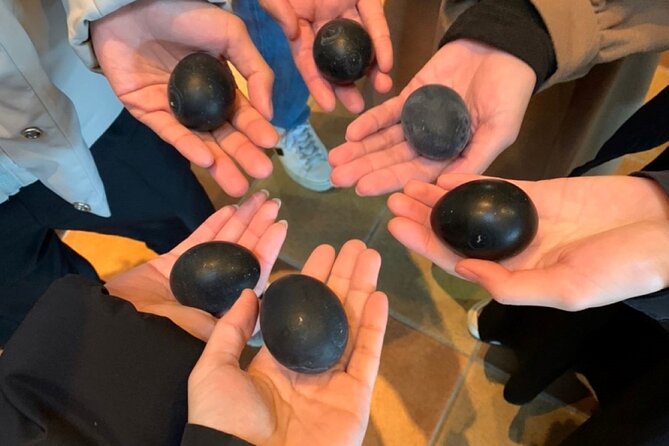
- Owakudani Valley with steaming vents and the volcanic “hands-on with sulfur” atmosphere
- Choice of ending point (Kawaguchiko Station, Hakone-Yumoto Station, or return to Shinjuku via Romancecar)
- Max 40 travelers and a professional English-speaking guide on an air-conditioned bus
One-day Mt. Fuji + Hakone: how the route really works
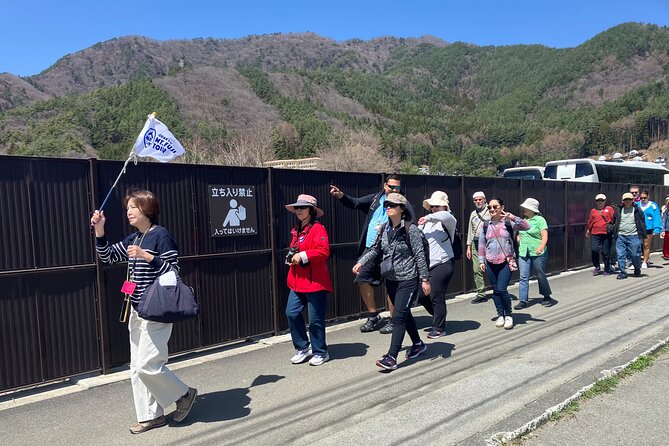
This is a bus tour built for momentum. You start in Shinjuku (8:20am) and head directly toward Lake Kawaguchi, then keep moving through Hakone’s signature stops. The big advantage is simple: you compress a lot of geography into one day while still having someone manage the timing and guiding in English.
The tour also keeps things realistic. Most sightseeing stops are short (roughly 20 to 50 minutes each), which means you’ll get views and key sights without burning the entire day in lines or transit between stations. It’s a practical way to see both sides of the Fuji-Hakone story—calm lake scenery and active volcanic terrain—without committing to a multi-day itinerary.
One operational detail matters for comfort: after you depart, the bus goes straight to Fujisan Plaza with no restroom stops along the way. The ride to that first stop is about 1.5 hours, so use the restroom before you gather at the meeting point.
You can also read our reviews of more tours and experiences in Tokyo



Fujisan Plaza and the kimono moment that’s built for photos
Fujisan Plaza is where the tour turns from sightseeing into an experience. You’ll choose a kimono from colorful designs, including antique-style looks, and wear it over your regular clothes. The outfit process is set up to be easy and comfortable for a quick on-tour window.
You also get that special Mt. Fuji backdrop photo time. The best part is the weather backup: the tour description notes that rainy days aren’t a problem because there’s an indoor photo setting. Even if the sky is gray, you still get a chance at the classic Fuji souvenir shot.
A few practical points so your kimono experience feels smooth:
- Wear clothes that work under a kimono layer. The guidance specifically says to avoid sleeveless tops, since the kimono is worn over your outfit.
- Kimono sizes are limited, so don’t assume there will be every size available if you’re traveling with kids.
- If children are joining, the booking information asks you to provide their height in the remarks. Do it so the dressing staff aren’t forced into guesswork.
At only 20 minutes, this isn’t a slow, ceremonial kimono makeover. Think of it as a fun cultural hit that fits into a busy day—enough to feel the tradition and get photos, without turning your afternoon into a waiting game.
Kawaguchi Asama Shrine: the quiet pause before Hakone gets intense
After the Fuji photo-and-kimono start, you head to Kawaguchi Asama Shrine for about 30 minutes. This shrine is tied to calming a major Mt. Fuji eruption, so it has a meaning beyond the postcard torii.
The approach is described as tranquil and cedar-lined, and the shrine is known for its impressive red torii gate. That matters because it gives you a different mood from the busier lake viewpoints. You’re not just looking at Fuji—you’re moving through a spiritual path that’s meant to slow your pace.
For me, the value of a stop like this on a one-day tour is that it gives contrast. After photo time and outfit time, the shrine is a reset: a short walk, a memorable red gate moment, and a break from the usual “stand here, take a picture, move on” feeling.
Oishi Park: flower-season views with a simple photo goal

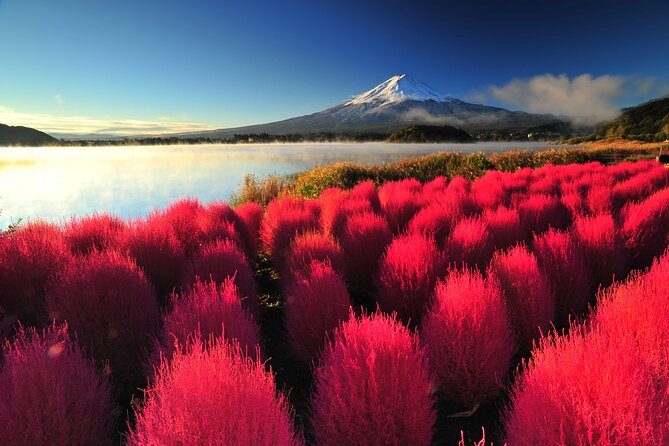
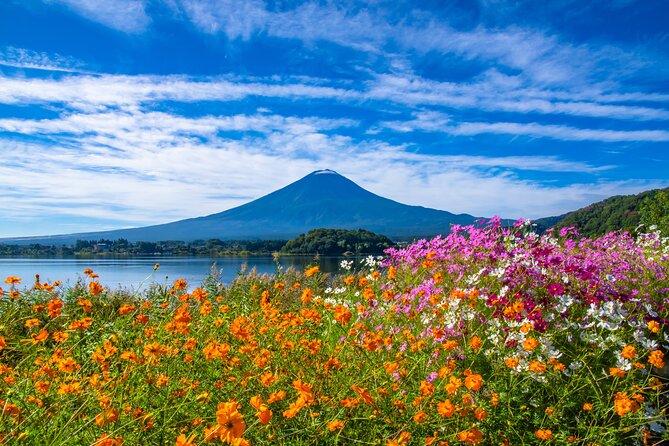
Next comes Oishi Park, another 30-minute highlight. This is a popular stop, especially for international visitors, because the views tend to deliver quickly: you get a panoramic-style look over the lake area with seasonal flowers framing the scenery.
What I like about Oishi Park for this tour is how efficient it is. You don’t need a long hike or complicated planning to get a strong view. The time is short enough to keep the schedule moving, but long enough for a couple of photo angles and a calm moment before the next transfer.
The trade-off is also obvious: you won’t have hours to explore every corner of the park. So if you’re the type who likes wandering trails, you may want to treat this as your “quick best-view stop” and then save longer Oishi Park time for a separate visit.
Lunch at Tabi no Eki Kawaguchiko: eat local, on your own terms
At Tabi no Eki Kawaguchiko Base, you get about 50 minutes for lunch. Lunch isn’t included, but the stop is designed for convenient eating: you can grab a meal at a roadside station restaurant using local ingredients, or choose something quicker from a bakery-style option.
Because lunch is flexible, it helps with allergies and diet choices, but only if you plan ahead. The information specifically notes that special accommodations may not be available for needs like vegan, gluten-free, halal, vegetarian, or food allergies. If you fall into any of those categories, it’s smart to bring a backup option.
In a one-day tour, your biggest lunch risk is timing. Give yourself a few minutes extra to find a seat and order, because the itinerary then moves on to Owakudani and you don’t want to rush through your meal and feel stressed.



Owakudani Valley: volcanic steam, sulfur vents, and drama
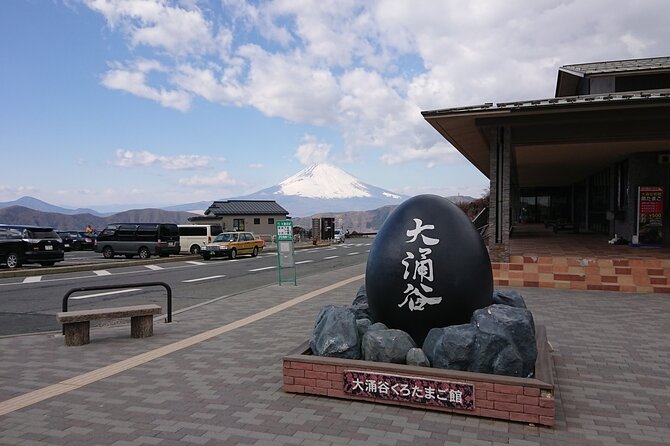
Now for the part that’s hard to fake: Owakudani Valley. You get around 30 minutes here, and the tour setting is all about feeling the volcano up close.
The description emphasizes steaming vents and bubbling hot-spring areas, plus sulfur-vent scenery. Even if Mt. Fuji is hiding, Owakudani can still deliver a “you are here” moment. It’s active geology instead of a static view, and that’s a big reason this stop feels memorable on a day trip.
The schedule also gives you a second shot at the Fuji look during this portion: the tour notes that you’ll have another chance to behold Mt. Fuji from the Owakudani area. That’s a clever design choice—two Fuji chances on one day.
The practical thing to remember is cold weather. The temperature around Lake Kawaguchi is often colder than Tokyo, and Owakudani can feel chilly, especially if wind and cloud cover roll in. The provided averages are:
- Aug: 29.9°C
- Sep: 27.3°C
- Oct: 20.4°C
Check the day’s forecast and bring layers. When you’re standing around for views, “comfortable in Tokyo” can turn into “cold after 10 minutes” fast.
Owakudani to Hakone base: how the endpoint options change your day
At Odawara Station (about 10 minutes), your tour branches depending on the plan you booked. You might end at Odawara, or you’ll connect to the Odakyu Romancecar for the return to Shinjuku.
Your endpoint options are:
- Disembark at Kawaguchiko Station
- Disembark at Hakone-Yumoto Station
- Return to Shinjuku via the Romancecar (with a reserved seat included)
This choice is more important than it sounds. If you want to continue exploring Hakone or stay overnight in the region, ending at Hakone-Yumoto can be the most useful. If you’d rather keep things simple and return to Tokyo the same day, the Romancecar option makes the finish feel controlled and comfortable.
Either way, your time in this tour is capped. That’s the point of a one-day design. You get a curated slice of Fuji and Hakone, and then you choose what to do with the rest of your day.
Returning to Shinjuku on the Odakyu Romancecar (or not)
If you chose the return plan, you’ll transfer at Odawara Station and board the Odakyu Romancecar with a reserved seat. The reserved seat detail is a real value point, because Japan day-travel schedules can be tight—having your place handled for you reduces stress.
Also, you’re riding an air-conditioned bus earlier in the day, so the Romancecar finish is essentially your “comfortable buffer.” After a full day of walking and standing, that matters.
If you don’t return to Shinjuku on the Romancecar, you avoid the long return segment and can shift your energy to onward travel. That’s ideal if your trip is built around Hakone as more than a photo stop.
Price and value: why $104.34 can make sense
At about $104.34 per person for an 11-hour day, this tour isn’t priced like a bargain. It’s priced like a structured day: transportation, a professional English-speaking guide, kimono dressing, and (if you pick the Tokyo return option) a reserved Romancecar seat are bundled.
Here’s how I think about value in plain terms:
- If you tried to DIY this, you’d spend time coordinating routes, transfers, and timing to fit Lake Kawaguchi + Hakone + Owakudani in one day. Time has a cost, even if the tickets are cheap.
- You also get guide context. Even when stops are short, having an English-speaking guide to point out what you’re looking at and how the schedule is meant to flow changes the experience.
- The kimono experience and photo moment are included. That’s not just a free souvenir; it’s an on-the-day activity with set support.
What’s not included is lunch, and that’s the main “out-of-pocket” item you should budget for. If your diet is restricted, you may want to plan extra for lunch so you don’t lose time hunting for options inside the short 50-minute window.
Weather, Mt. Fuji visibility, and what to do with the disappointment risk
The tour explicitly warns that Mt. Fuji may not be visible even from the base in certain weather conditions, and no refunds are issued for that. That’s the most important consideration for booking.
So here’s the practical way to think about it: decide whether this day is worth your time even if Fuji is gray. If you’d still enjoy:
- a shrine visit with the red torii and cedar approach,
- Oishi Park scenery with seasonal flowers,
- and Owakudani’s steam and vents,
then the day can still feel successful.
Also remember the rainy-day photo note. If the sky is bad, the indoor photo setup helps you still walk away with Fuji-themed pictures. That reduces the risk that the whole experience collapses when the forecast turns.
In Japan, weather is a variable you don’t control. Tours like this do what they can with timing and indoor alternatives; still, go in with flexible expectations.
Who this tour fits best
This is a strong match if you:
- want to see Mt. Fuji and Hakone in one day without planning transfers,
- like the idea of a guided day where time is managed for you,
- care about getting a kimono and a photo moment rather than just looking at sights,
- want an English guide on an air-conditioned vehicle.
It’s less ideal if you want long, slow exploration. The stops are short, and the schedule moves. If your travel style is “wander for hours,” you’ll probably want to pair this with a separate Hakone or Lake Kawaguchi day.
Also, the group size max is 40 travelers, which keeps it from feeling like a packed, chaotic bus circus. Still, it’s not a private tour. Expect to share space and move with the group pace.
Should you book? My take
Book this tour if you want a high-efficiency Fuji + Hakone day with real cultural flavor and a guided plan. The included kimono experience plus Fuji photo time (with indoor backup) makes it more than a simple sightseeing loop.
Skip it or rethink your expectations if Mt. Fuji is your one non-negotiable obsession. The tour’s own policy is clear: visibility can fail, and refunds won’t fix that. If Fuji is hidden, you’ll still have a shrine stop, scenic lakeside viewing, and volcanic Owakudani drama—but you should be okay with the possibility that the sky won’t cooperate.
FAQ
FAQ
What time does the tour start?
The tour start time is 8:20am.
Where do I meet the group in Tokyo?
You meet at the Odakyu Sightseeing Service Center – Shinjuku South, located outside the Odakyu Shinjuku Station South Gate.
How long is the tour?
The duration is about 11 hours.
What’s included in the price?
The tour includes an air-conditioned vehicle, a professional English-speaking tour guide, kimono dressing, and a reserved Odakyu Romancecar seat to Shinjuku if you choose the return-to-Shinjuku option.
Is lunch included?
No. Lunch is not included, but you’ll have free time to eat at a roadside rest area with local food options.
Which stops are part of the itinerary?
Key stops include Fujisan Plaza, Kawaguchi Asama Shrine, Tabi no Eki Kawaguchiko Base, Oishi Park, Owakudani Valley, and then Odawara Station or Shinjuku depending on your chosen endpoint.
Will there be a restroom stop on the way to Fujisan Plaza?
After departure, the bus heads directly to Fujisan Plaza, and the info says there are no restroom stops along the way (about 1.5 hours). Use the restroom before gathering.
Can I choose where I end the tour?
Yes. You can disembark at Kawaguchiko Station or Hakone-Yumoto Station, or return to Shinjuku by Romancecar depending on the plan you book.
What if Mt. Fuji is not visible?
Mt. Fuji may not be visible even from the base in certain weather conditions, and refunds will not be issued for that reason.
What is the cancellation policy?
Free cancellation is available up to 24 hours before the experience starts for a full refund.