REVIEW · TOKYO
Mount Fuji Full Day Customizable Private Tour with English Guide
Book on Viator →Operated by Al Hareem Tours · Bookable on Viator
Fuji changes with the weather, and so does this day. You get hotel pickup plus a private English-speaking driver, so you spend less time plotting trains and more time taking in views.
My favorite part is the slow-and-steady pacing you can control. You can choose when to linger for photos, then keep the day efficient without herding with a crowd. One thing to plan around: Mt. Fuji visibility is weather-dependent, and conditions can shift quickly, especially up at 5th Station.
In This Review
- Quick takeaways
- Why this private Mt. Fuji and Hakone-area day feels different from standard day trips
- Price and value for small groups (up to 3) and what to check before you book
- Hotel pickup, onboard comfort, and how the road trip actually works
- Kawaguchiko and Oishi Park: where Fuji views get their best framing
- Oshino Hakkai: the eight-pond detour that makes the day feel real
- Arakurayama Sengen Park and Chureito Pagoda: the hillside viewpoint sprint that’s worth it
- Kitaguchi Hongu Fuji Sengen Jinja: the volcanic-protection shrine stop people often underestimate
- Gotemba Premium Outlets and Mt. Fuji 5th Station: where you balance shopping with altitude reality
- Customization in real life: getting the pace right with an English-speaking driver
- A short word on weather and planning your day around it
- Should I book this private Mt. Fuji and Hakone-area tour?
- FAQ
- How long is the Mt. Fuji full day private tour?
- How many people can join a booking?
- Is hotel pickup included?
- Is there an English-speaking guide?
- What’s included in the private transport?
- What are the main stops during the day?
- Are admission tickets included for the stops?
- Does the tour require good weather?
- What if I need to cancel?
Quick takeaways
- Door-to-door Tokyo pickup saves time and stress, especially on a long full day.
- Fuji Five Lakes area stops hit the postcard viewpoints: Kawaguchiko, Oishi Park, and Oshino Hakkai.
- Shrines with real purpose come with setting and meaning, from volcanic-protection roots to famous hillside viewpoints.
- Small-group private format (up to 3) means more control of your pace and fewer photo-line battles.
- Comfort is included: air-conditioned vehicle, onboard Wi-Fi, and coffee/tea.
- Time-flexibility helps on mountain days—if the weather shifts, your driver can adjust how the hours feel.
Why this private Mt. Fuji and Hakone-area day feels different from standard day trips
This tour is built for people who want Japan’s big iconic moments without the usual chaos. You leave Tokyo with an air-conditioned private vehicle, and you’re not stuck coordinating trains or waiting for connection lines. Instead, you’re working with an English-speaking driver who controls the schedule so you can focus on the scenery and the stops that matter most to you.
What also works well is the mix of viewpoints and cultural stops. You’re not bouncing between attractions just to tick boxes. You move through the Fuji area step by step: lakeside first, then hillside shrine viewpoints, then into the higher-elevation experience at Mt. Fuji 5th Station. And yes, the overall day is marketed as Mt. Fuji plus Hakone-style scenery, which makes sense for travelers who want a full “mountain + relaxation” Japan memory in one go.
There’s also a practical side to the private format. Your day is not fixed in a rigid way where you lose time to other people’s slow decisions. If you want extra moments for photos or you need a short break, you’re not asking permission from a group manager.
You can also read our reviews of more guided tours in Tokyo
Price and value for small groups (up to 3) and what to check before you book

The price is $360 per group, up to 3 people. That matters because “private” can either be a bargain or a splurge depending on how you’re traveling. If you’re two or three, you’re effectively splitting the cost across fewer people than most shared tours—so your per-person number can look much better.
If you’re solo or just one adult, it’s worth running the math honestly. A $360 day is usually “worth it” when you value door-to-door convenience, an English-speaking driver, and a schedule you can pace comfortably. If you’re mainly chasing the cheapest way to see Mt. Fuji, a shared tour might be easier on your budget.
One more value check: this plan lists admission tickets as free at each stop shown. That can help keep your day from turning into a surprise add-up of small entrance fees. Even so, you should expect that mountain areas sometimes have local fees for vehicle access or on-the-ground costs for food and small extras.
Hotel pickup, onboard comfort, and how the road trip actually works
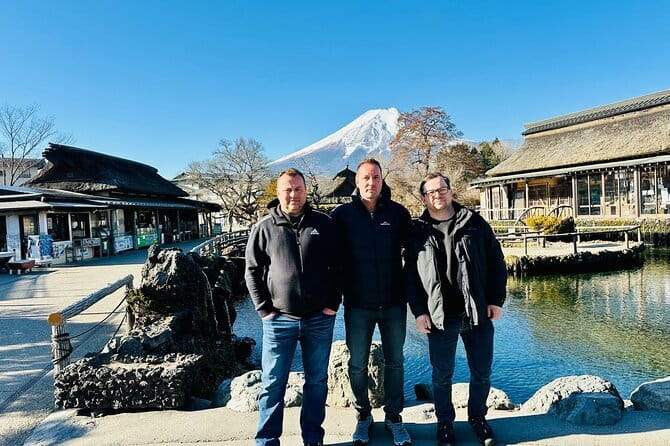
This is a full day (about 8 to 10 hours). That length is not just time on a calendar. It gives your driver room to handle real-world pacing—traffic, weather shifts, and the fact that some viewpoints are worth extra minutes.
Pickup is offered, so you start from your hotel instead of making it a logistics project. You also get a mobile ticket and onboard Wi-Fi, plus coffee and/or tea in the car. Those details sound small until you’re doing a long day outside the city. Having Wi-Fi can help with navigation or checking weather patterns in real time. The coffee/tea and AC are simply morale insurance on a long drive.
In the real world, getting to Fuji can come with traffic delays. The private driver model helps here. If you hit slow roads, you’re still moving as a unit, and your driver can keep your schedule feeling workable rather than forcing everyone into a rushed “see it and sprint” pattern.
Kawaguchiko and Oishi Park: where Fuji views get their best framing
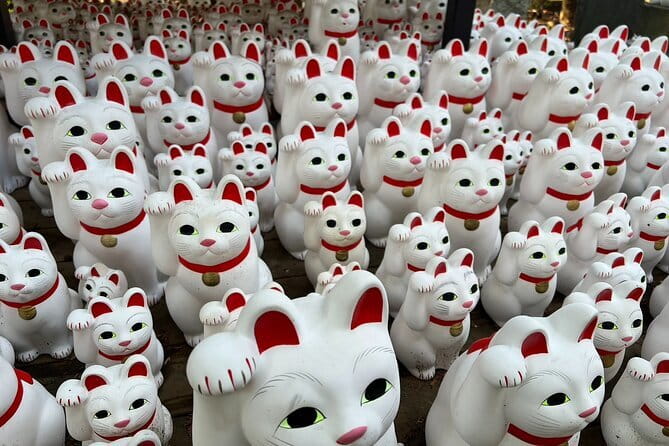
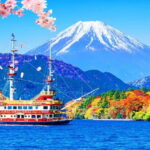
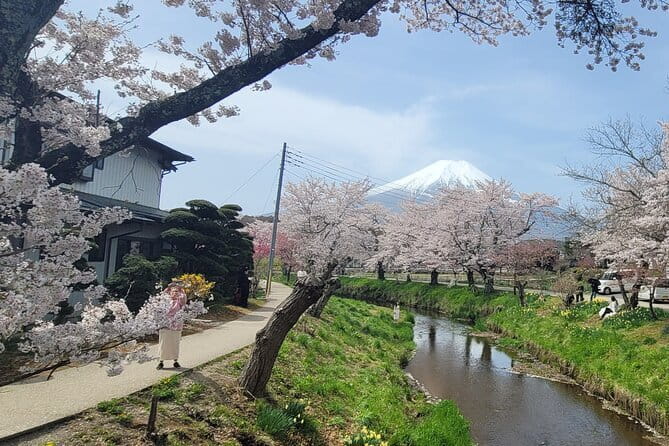
Your first major stop is Lake Kawaguchiko. This is a resort area, so you’ll notice the “vacation vibe” right away—lakeside hotels, windsurfing facilities, camp sites, and excursion boats. The practical takeaway: this is not a place that feels like a single scenic point. It’s an area you can stroll with some breathing room, and it’s easy to find the angles people come for.
You’re scheduled for about 1 hour here. With that kind of time, I treat Kawaguchiko like a warm-up. Arrive, take the first big photos, and then decide if you want to spend your next hour chasing a different viewpoint angle rather than duplicating the same shot.
Next is Oishi Park (about 2 hours). This park sits on the north shore of Kawaguchiko and is known for the view that includes both lake and Mt. Fuji in one frame. The promenade is also seasonal—flowers bloom along the lakeside walkway depending on the time of year. That’s a nice way to get variety without spending extra money on paid attractions.
A small practical note: build in time to snack. At Oishi Park, it’s common to find ice cream and simple treats, and after time outside in mountain air, that’s a good reset.
Oshino Hakkai: the eight-pond detour that makes the day feel real

Oshino Hakkai is scheduled for about 1 hour. It’s a set of eight ponds in the Fuji Five Lakes area, and the ponds sit on the site of a former sixth lake that dried out. That detail matters because it turns the stop from “pretty water” into something you can connect to the landscape’s history and geology.
This is also a good break from the heavier viewpoint circuit. If you’ve already spent time at Kawaguchiko and Oishi Park, Oshino Hakkai gives you a closer, calmer feel—less about big wide mountain framing and more about the textures of water, reflections, and the walking paths around the ponds.
Because the stop is only 1 hour, you’ll get value by moving at a steady pace: stop for photos where the pond views align, then keep walking. The goal is not to cover every corner in a stampede, but to feel like you actually experienced the site rather than just glanced at it.
You can also read our reviews of more private tours in Tokyo

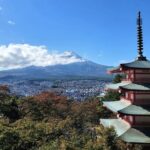
Arakurayama Sengen Park and Chureito Pagoda: the hillside viewpoint sprint that’s worth it
After Oshino Hakkai, you head to Arakurayama Sengen Park for about 1 hour. This area is tied to Arakura Sengen Shrine, whose origins trace back to the 9th century. It’s dedicated to the Shinto goddess Konohanasakuya-hime, a key name if you like understanding what you’re looking at instead of just snapping pictures.
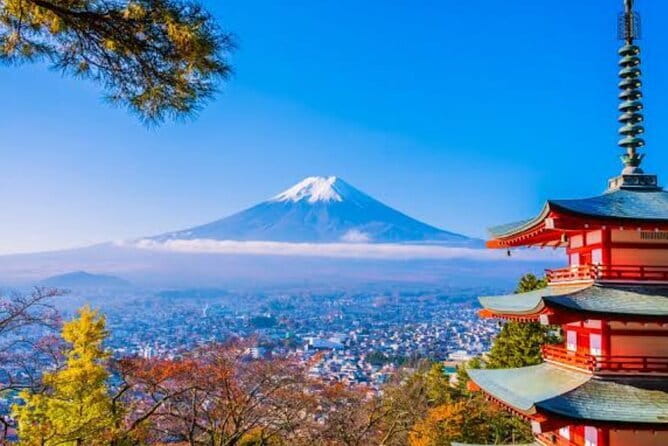
Then comes Chureito Pagoda, scheduled for about 2 hours. The pagoda is a five-storied structure on the mountainside overlooking Fujiyoshida City, with Mount Fuji off in the distance. It’s part of the Arakura Sengen Shrine area, so you’re not just walking up to a photo spot—you’re working within a shrine complex context.
This is one of those stops where timing matters. Even on a private tour, viewpoints can draw attention. Your best move is to use your private setup wisely: take a few minutes to find the best angle, then linger long enough to notice how the scenery changes as you shift position. Two hours sounds long, but it gives you breathing space so you’re not constantly rushing.
If your goal is photography, this is where I’d spend the extra attention in the day. Between Arakurayama and Chureito, you’re essentially getting a “framed Fuji” experience—mountain, city, and shrine architecture working together in your view.
Kitaguchi Hongu Fuji Sengen Jinja: the volcanic-protection shrine stop people often underestimate
This shrine stop is scheduled for about 1 hour: Kitaguchi Hongu Fuji Sengen Jinja. The important detail here is why it exists. It was originally built over 1000 years ago for protection from volcanic eruptions, and it has grown into the region’s most important shrine.
It’s also described as the head shrine of over 1300 Sengen and Asama shrines across Japan. That’s the kind of fact that turns this from a quick roadside stop into something meaningful. You’re seeing a place that historically served as spiritual infrastructure for communities living with a volcanic giant nearby.
In a private day format, you can actually slow down here. Don’t treat it like a photo obligation. Take time to read the shrine context, then look around at how the area is positioned relative to the mountain. The shrine’s purpose makes the views feel less random and more connected.
Gotemba Premium Outlets and Mt. Fuji 5th Station: where you balance shopping with altitude reality
The day includes Gotemba Premium Outlets for about 1 hour. This is a shopping break near Mt. Fuji with over 200 stores. I like this slot because it gives you a flexible option. If you want a souvenir run, snacks, or simple rest time indoors, this is where you can do it.
If you’re not shopping, it can still work as a mental reset after the outdoor walking stops. One hour is just enough time to grab something, check prices, and move on without losing the feel of the day.
Then you go to Mt. Fuji 5th Station for about 1 hour. This is at an altitude of 2,300 meters above sea level and is the entrance area and popular starting point for climbers. In practice, think of it as the highest “tourist accessible” feeling stop where the mountain becomes more serious—colder, higher, and more about the experience of being near the climb zone.
The provided plan lists admission tickets as free at this stop, but mountain areas sometimes bring local vehicle-access fees. One family reported that entering the area by vehicle cost them about 2,800 yen. My advice: treat this as a budget line item just in case your route has a vehicle-area charge.
Also, plan your expectations. At 5th Station you’re trading some comfort for altitude. If you’re sensitive to cold or height, dress like it’s brisk and take the 1 hour as the priority. The goal is not to “do everything,” it’s to be there and take it in.
Customization in real life: getting the pace right with an English-speaking driver
The tour is described as customizable, and the private format makes customization practical instead of theoretical. Your driver handles logistics and pacing, so you can spend more time where you feel engaged and less time where you don’t.
In the supplied guide experiences, driver names like Tahseen, Ali, Moon, Riaz, Umer, Rana, and Talal show up with consistent themes: arriving on time (and sometimes early), helping adjust timing, and staying patient when plans shift. That matters because on a long day, “flexible” is not just a nice word. It’s what keeps you from losing your whole schedule when weather or traffic changes your original plan.
If you want a smoother day, communicate your priorities at the start. Tell your driver what matters most to you: Kawaguchiko lake time, Oishi Park photos, the shrines, or getting up to 5th Station. If you’re hoping to add small extras like a lake boat ride or cycling near Kawaguchiko, you’ll have the best shot by asking early when time is still open.
A short word on weather and planning your day around it
This tour requires good weather. If Mt. Fuji isn’t visible, the day can still be meaningful—especially the shrine and lakeside segments—but your “wow factor” depends on visibility. Your best strategy is to schedule with flexibility when possible so you’re not stuck on the one day your forecast turns bad.
The good news: the tour is set up to respond to conditions. If it needs a weather-based change, you’ll be offered a different date or a full refund. That reduces the risk of “wasted” planning days.
Should I book this private Mt. Fuji and Hakone-area tour?
Book it if you want door-to-door convenience, a schedule you can pace, and you care about comfort as much as sightseeing. This is especially good for couples, small friend groups, and families who would rather spend a day with one dependable English-speaking driver than fight Tokyo-to-Fuji transport connections.
I’d hesitate if you’re traveling solo and cost is your top concern, because $360 per group can sting when you don’t split it. I’d also think twice if you’re relying on a guaranteed Mt. Fuji sighting, because weather is the real gatekeeper here.
If you do book, go in with a simple plan: prioritize the stops that match your interests (lakeside views vs. shrine culture vs. 5th Station altitude), and let your driver adjust the pacing. That’s where this private format earns its keep.
FAQ
How long is the Mt. Fuji full day private tour?
It runs about 8 to 10 hours.
How many people can join a booking?
It’s for up to 3 people per group.
Is hotel pickup included?
Pickup is offered, with hotel pickup and drop-off as part of the experience.
Is there an English-speaking guide?
Yes. The driver is English-speaking.
What’s included in the private transport?
You get an air-conditioned vehicle, onboard Wi-Fi, and coffee and/or tea.
What are the main stops during the day?
The itinerary includes Lake Kawaguchiko, Oishi Park, Oshino Hakkai, Arakurayama Sengen Park, Chureito Pagoda, Kitaguchi Hongu Fuji Sengen Jinja, Gotemba Premium Outlets, and Mt. Fuji 5th Station.
Are admission tickets included for the stops?
The itinerary lists admission tickets for the listed stops as free.
Does the tour require good weather?
Yes. It requires good weather, and if it’s canceled due to poor weather, you’ll be offered a different date or a full refund.
What if I need to cancel?
Cancellation is free up to 24 hours in advance for a full refund.