REVIEW · TOKYO
Gotokuji and Setagaya Walking Tour: Home of the Lucky Cat Statue
Book on Viator →Operated by Trip Designer Inc. · Bookable on Viator
Lucky cats, but not the tourist kind. This half-day tour threads through Gotokuji, Shoinjinja, and Setagaya Castle Ruins Park with a guide who connects the maneki-neko story to the neighborhood itself. I especially like the 3.5-hour pace and the chance to grab a drink up to ¥800 during the shopping-street stop. One thing to plan for: the route includes mountain paths, so wear shoes that can handle steady walking.
You meet at Gotokuji Station (1 Chome-43 Gotokuji) at 10:00 am and finish near Shoin-jinja-mae Station (4-chōme-21-16 Wakabayashi). Since it’s a private tour/activity, it’s easier to ask questions and keep the day from turning into a noisy group shuffle. The shrines and temple grounds you visit are free to enter, so your money goes mostly to the guide and the time-saving, story-focused route.
I like that the itinerary mixes famous-name stops with smaller, local-feeling moments. You’ll see Setagaya Hachimangu, Gotokuji Temple, and Shoinjinja Shrine, plus time for the lucky cat sights lined up around the area. If you want big Tokyo views and mega-museums, this is a different style: slow, local, and shrine-and-shop street friendly.
In This Review
- Key highlights worth your attention
- Why Gotokuji and its lucky cat story feels like Tokyo’s real side street
- The route, stop by stop: what you’ll see and why each part matters
- Stop 1: Setagaya Hachimangu and the shrine grounds
- Stop 2: Gotokuji Temple and the lucky cat focus
- Stop 3: Shoinjinja Shrine and the Yoshida Shoin connection
- The Sengenjacha landmark moment
- Tokyu Setagaya Line stop: transition back into local Tokyo
- The drink stop at Shoinjinja shopping street: more than a freebie
- What the guide actually changes: from facts to direction
- Value check: is $84.70 worth it?
- Timing and walking reality (this is the part people should plan for)
- Who this tour suits best
- Should you book this Gotokuji and Setagaya walking tour?
- FAQ
- How long is the Gotokuji and Setagaya walking tour?
- Where does the tour start and end?
- What time does the tour begin?
- Is the drink included in the price?
- Are the shrines and temple stops paid?
- Is lunch included?
- Do I need to arrange transportation to the meeting point?
- Can I extend the tour if I want more time?
- Is hotel pickup included?
Key highlights worth your attention
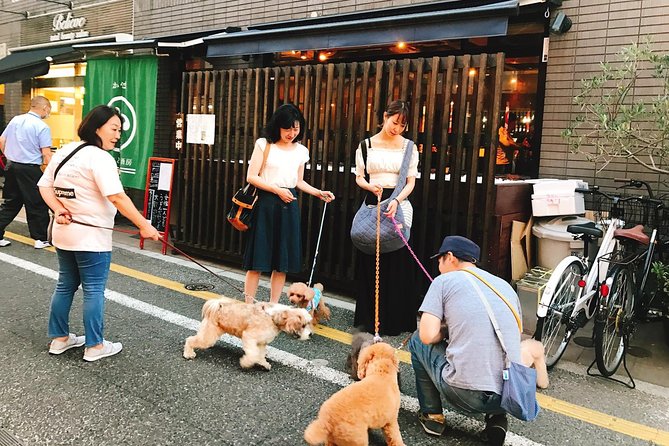
- Lucky cat origin context: You’re not just hunting statues. You learn how the story connects to the temples and shrines here.
- Shoinjinja shopping street drink stop: One included coffee or tea drink, up to ¥800, helps break up the walk in a very practical way.
- Setagaya Castle Ruins Park and neighborhood atmosphere: You get a suburban Tokyo feel, with parks and local lanes instead of crowds.
- Free-entry temples and shrines: Setagaya Hachimangu, Gotokuji Temple, and Shoinjinja Shrine have free admission, so the value is mostly in guidance and pacing.
- Local transit taste after the tour: There’s a stop that points you toward the Tokyu Setagaya Line for getting around like a regular.
Why Gotokuji and its lucky cat story feels like Tokyo’s real side street
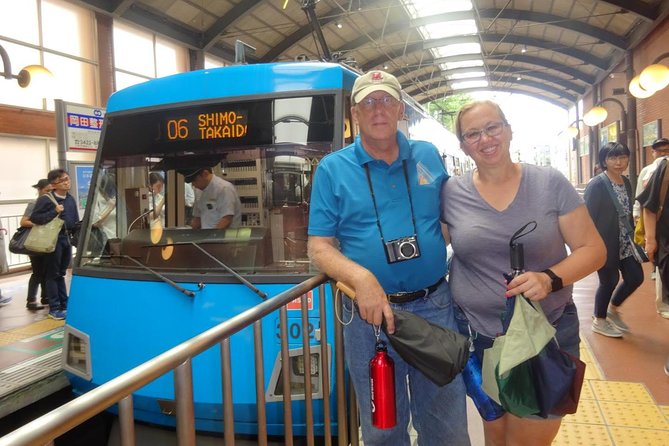
Gotokuji is known for lucky cats, but the fun isn’t only spotting them. The tour is built around the idea that the cats have a place in local religious life and neighborhood identity, not just a souvenir-shop gimmick. That’s why the walk matters: you move between shrines and the surrounding areas where the story makes sense.
I also like how the day doesn’t try to cram in the whole capital. With about 3 hours 30 minutes on your feet, you get enough time to pay attention—when to look, what details connect, and where to stand so you can actually enjoy the statues rather than rushing past them.
And if you’ve been to Tokyo before and felt like everything went straight from station A to big-ticket attraction B, this tour gives you a steadier feel. It’s suburban, shrine-centered, and grounded in everyday routines.
You can also read our reviews of more walking tours in Tokyo


The route, stop by stop: what you’ll see and why each part matters
Stop 1: Setagaya Hachimangu and the shrine grounds
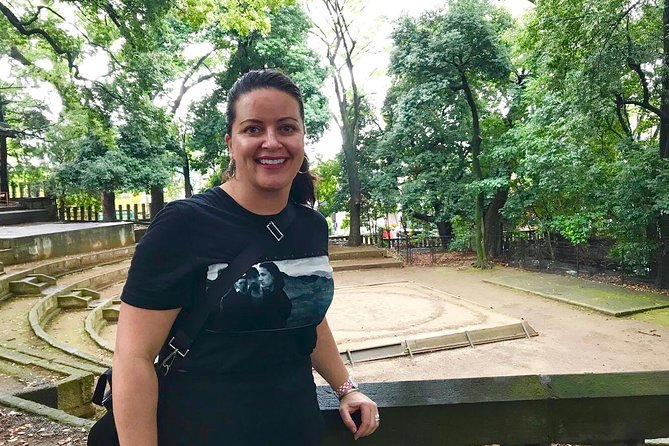
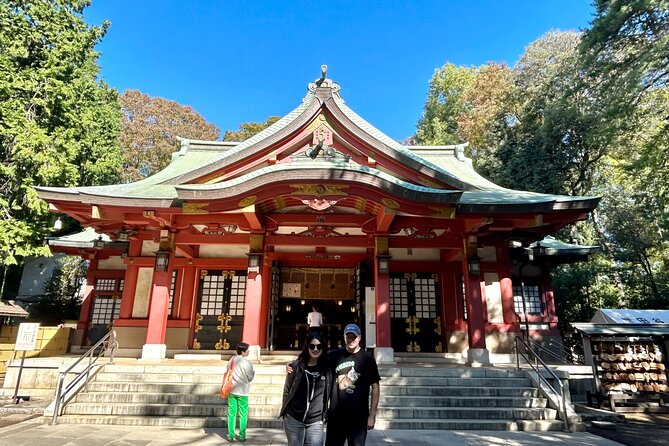
You start at Setagaya Hachimangu for about 20 minutes with free entry. This shrine is one of the larger ones in Setagaya Ward, and it’s known for seasonal events, including a matsuri setup with a dohyo (sumo ring) in the grounds. Even if you’re not there during that specific festival period, it’s a strong introduction to how Setagaya lives through shrine culture.
Practical tip: since this is a short stop, keep your eyes moving—scan the grounds first, then slow down. Your guide will likely point out what to notice so the place doesn’t blur into a background texture.
Stop 2: Gotokuji Temple and the lucky cat focus
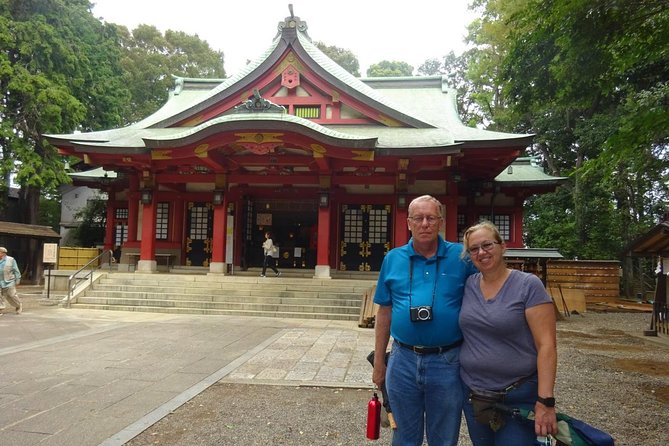
Next comes Gotokuji Temple for about 35 minutes (also free entry). This is where the tour’s main theme clicks into place. You’ll learn about the temple beginnings connected to the Kotokuin hermitage and the historical figures tied to Setagaya Castle’s era, including Kira Masatada (1480) and later shifts in sect affiliation.
Here’s the key value: the guide connects that history to why you see so many lucky cats. You’re shown the meaning behind the statues instead of treating them like random decoration.
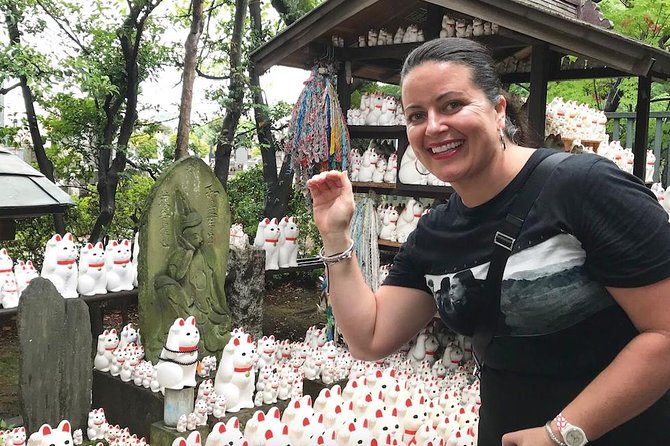
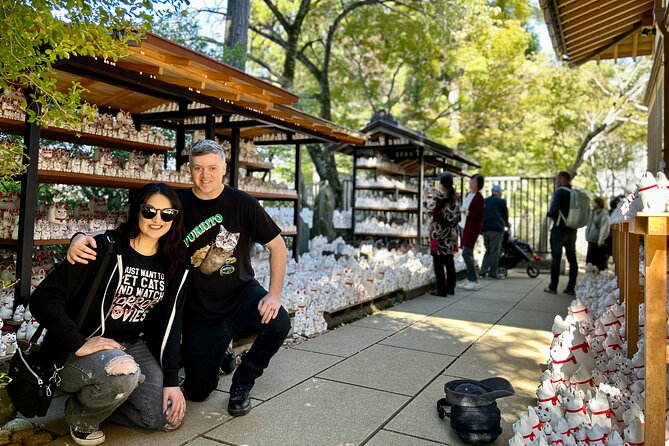
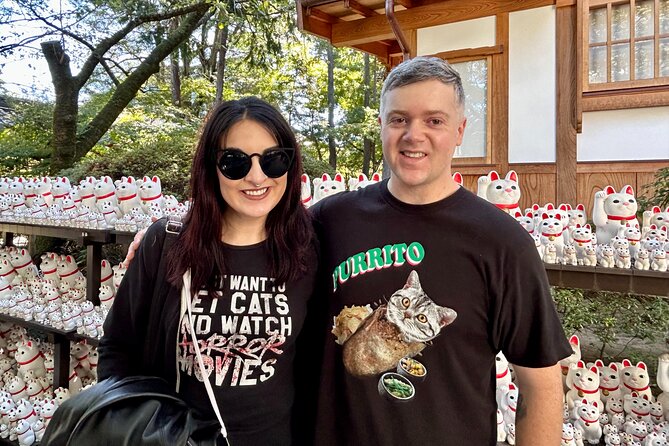
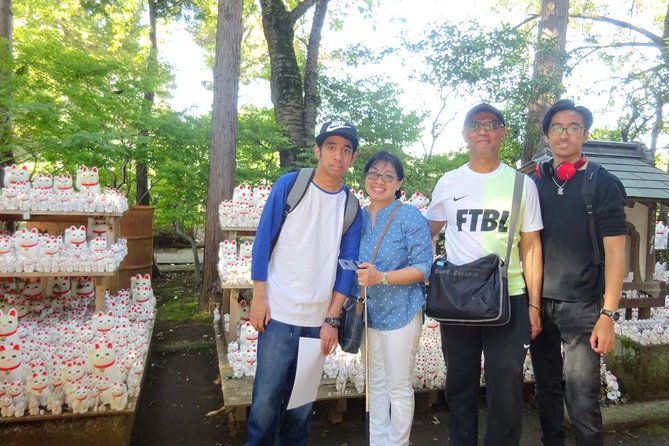
What you should expect visually: hundreds of cat figures lined up around the temple area, and time to understand why this place became famous for maneki-neko. If you like details, this stop is the one you’ll remember the most.
Stop 3: Shoinjinja Shrine and the Yoshida Shoin connection
After Gotokuji, you move to Shoinjinja Shrine for about 25 minutes, again with free admission. The shrine is tied to Yoshida Shoin, with the shrine founded in 1882. The precincts also include tombs associated with Shoka Village school children connected to Shoin, plus a building reproduction mentioned in the shrine description.
This stop balances the lucky cats with something more grounded in local education and historical reverence. It’s not just cats; it’s the shrine’s role as a meeting point for story, memory, and faith.
If you’re hoping for a purely photo-focused outing, you’ll still get lots to shoot—but you’ll be happiest if you don’t mind listening for a bit and then letting the scene sink in.






The Sengenjacha landmark moment
There’s also a landmark stop tied to Sengenjacha in Setagaya. The tour uses this as a short context point, helping you connect what you’re seeing back to the area’s everyday identity.
I like these small stops because they keep the day from becoming only “temple, temple, temple.” They add a human sense of place.
Tokyu Setagaya Line stop: transition back into local Tokyo
Near the end, the itinerary includes time around the Tokyu Setagaya Line, about 10 minutes, with the tour using it as a way to move forward. This is practical Tokyo: after a shrine-heavy walk, you get an easy transition to using local transit with people who live nearby.
Even if you don’t ride it right away, it helps you understand how the area links to the rest of Tokyo without feeling like you’re hopping between tourist corridors.
The drink stop at Shoinjinja shopping street: more than a freebie
One included coffee or tea drink (up to ¥800) is part of the Shoinjinja shopping street segment. It’s not just a small perk; it’s a smart way to keep energy up during a walking tour with mountain paths.
Shoinjinja shopping street is also where locals gather, which helps you feel the Setagaya rhythm. You’re given a built-in moment to rest, then continue with better focus. If you’re the type who forgets to eat or hydrate on active tours, this inclusion is genuinely helpful.
And yes, you’ll likely end up wanting to browse small shops after you’ve had your tea or coffee. That’s not guaranteed, but the atmosphere sets you up for it.
What the guide actually changes: from facts to direction
A walking tour lives or dies on the guide’s ability to turn sights into understanding. The experience here is set up so you’re guided through entry rituals and context at shrines, plus the history behind the lucky cat tradition.
In the tour feedback, different guides get called out by name for being kind, fun, and great at keeping the group engaged. Yumi is singled out for showing how to enter shrines with purity and prayer rituals. Mitsuko stands out for going beyond the cat temple to cover multiple shrines and explain neighborhood life. Emiko gets credit for knowledge plus being helpful in navigating the area.
Even without your guide name being the one you get, the pattern is clear: you’re not left alone with a map and a vague theme. You’re led through how to read the place.
Value check: is $84.70 worth it?
At $84.70 per person, you’re paying for: a professional guide, about 3.5 hours of route planning, and an included drink up to ¥800. Since temple and shrine admissions are listed as free for the main stops, your cost isn’t mostly going to entry fees.
That means the value comes down to your travel style:
- If you enjoy structured walking tours with story time and you like understanding the meaning behind sights, this feels like good value.
- If you only want to wander freely and don’t care about origins or rituals, you could potentially do this area on your own. But you’d miss the part that makes Gotokuji click.
My advice: treat the price as paying for translation and direction, not paying for paid attractions.
Timing and walking reality (this is the part people should plan for)
Start time is 10:00 am, and the tour ends at Shoin-jinja-mae Station. You’re on foot for most of the time, including mountain paths. That’s a real detail, not a “some walking involved” warning.
Bring:
- Shoes easy to walk in (the tour explicitly asks for this)
- Comfortable layers (Tokyo weather can swing, and you’ll be outside between stops)
Also note: the tour says the duration can be extended at ¥5,000 per group per hour, payable in cash. If you love shopping street wandering and want extra shrine time, that’s an option—not a hidden demand.
Who this tour suits best
This is ideal for you if:
- You want a suburban Tokyo experience rather than a mega-attraction day
- Lucky cats are interesting, but you also care about the story behind them
- You like walking tours with a guide who can explain how to behave at shrines
- You enjoy eating and exploring afterward with local recommendations (you’ll get advice on where to eat and what to see)
It may be less ideal if:
- You want minimal walking or step-free, flat routes only
- You’re looking for something like a museum-heavy day
- You prefer self-guided sightseeing with no rituals or guided context
Should you book this Gotokuji and Setagaya walking tour?
I’d book it if your Tokyo trip includes space for off-the-grid neighborhoods and you want your lucky cat visit to feel meaningful. The included drink, free-entry stops, and strong guide focus make it a practical half-day, not just a themed photo walk.
I’d think twice only if your walking ability is limited, because the route includes mountain paths and you’ll be moving between multiple shrine areas. If that’s not an issue, this tour is a smart way to see Setagaya with local context instead of just collecting cat statues.
FAQ
How long is the Gotokuji and Setagaya walking tour?
It runs for about 3 hours 30 minutes.
Where does the tour start and end?
It starts at Gotokuji Station (1 Chome-43 Gotokuji, Setagaya City, Tokyo) and ends at Shoin-jinja-mae Station (4-chōme-21-16 Wakabayashi, Setagaya City, Tokyo).
What time does the tour begin?
The start time is 10:00 am.
Is the drink included in the price?
Yes. One coffee and/or tea drink is included, up to ¥800, at the Shoinjinja shopping street.
Are the shrines and temple stops paid?
The listed stops at Setagaya Hachimangu, Gotokuji Temple, and Shoinjinja Shrine show free admission.
Is lunch included?
No. Lunch is not included.
Do I need to arrange transportation to the meeting point?
The tour does not include transportation to or from attractions. You’ll meet at Gotokuji Station.
Can I extend the tour if I want more time?
Yes. The tour duration can be extended at a rate of ¥5,000 per group, per hour, payable in cash.
Is hotel pickup included?
No. Hotel pickup and drop-off are available for an extra fee of ¥5,000 per group (for hotels in the Tokyo & Yokohama area).