REVIEW · TOKYO
Explore Maidreamin Akihabara Walking Tour
Book on Viator →Operated by Pasuno Travel · Bookable on Viator
Neon Tokyo feels real here. This Akihabara walk is a fast, practical way to sort the good shops from the noise, then end at Maidreamin for the classic maid cafe twist. You get a guided route that makes the area make sense fast, even if you’re new to anime and gaming.
I especially like the shop-focused pacing: Radio Kaikan, retro game stops, card collecting, and then Don Quijote without wasting time wandering in circles. I also like that the experience can feel personal—guides like Suno are repeatedly described as friendly, patient, and able to adjust to what your group wants to see.
The main consideration: Maidreamin’s entry isn’t included, so plan for an extra expense at the end of the tour. Also, Akihabara can be loud and crowded, so if you hate busy places, keep your expectations realistic for a walking tour in the Electric Town area.
In This Review
- Key highlights you should care about
- Akihabara Electric Town, in 3 Hours That Actually Works
- Meeting up and getting your bearings fast
- Stop 1: Akihabara Radio Kaikan for that big, vertical pop-culture vibe
- Stop 2: ONODEN for cosplay clothes and anime-style fashion
- Stop 3: HEY (Hirose Entertainment Yard) Taito for retro games and crane games
- Stop 4: 福福トレカ秋葉原店 for Pokémon and Yu-Gi-Oh rarity
- Stop 5: Don Quijote Akihabara for the chaotic convenience store experience
- Stop 6: Maidreamin Akihabara Head Store for the maid cafe payoff
- Price and value: what $32.84 really buys you
- How long it lasts and how to pace your own shopping
- Who this Akihabara tour suits best
- Should you book the Maidreamin Akihabara Walking Tour?
- FAQ
- How long is the Maidreamin Akihabara Walking Tour?
- How much does the tour cost?
- Is the tour private?
- What kind of ticket do I get?
- Are admissions included for all stops?
- Where does the tour start and end?
- How far in advance should I book?
- Are service animals allowed?
- What’s the cancellation policy?
Key highlights you should care about
- Private group format so you’re not stuck matching someone else’s interests
- Suno-style guidance that people describe as friendly and informative
- Free admission stops for several key Akihabara landmarks
- Rare Pokémon and Yu-Gi-Oh cards with eye-popping prices you can actually see in person
- Arcade time at HEY (Hirose Entertainment Yard) Taito, including crane games
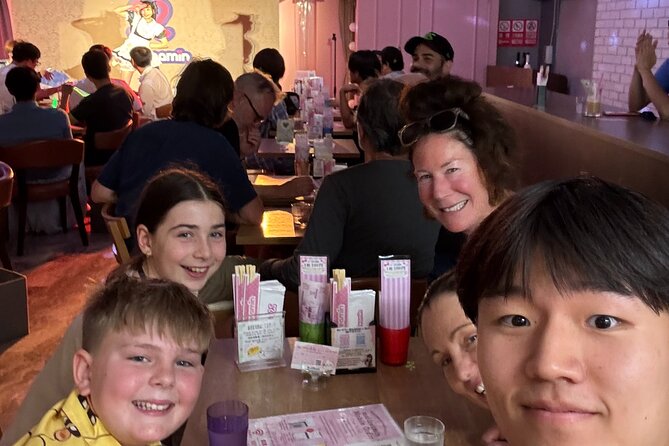
- Maid cafe payoff at Maidreamin Akihabara Head Store to cap the night off right
Akihabara Electric Town, in 3 Hours That Actually Works
Akihabara is the kind of place where it’s easy to get lost in your own excitement. One minute you’re walking past anime billboards the size of buildings, and the next you’re staring at shelves of figures, trading cards, and games stacked like a museum display. This tour helps you move through that chaos in a tight, logical loop.
The time window is about 3 hours, with a mix of shop browsing and entertainment stops. That matters because Akihabara can easily turn into an all-day spending spree. Here, you get a strong hit of the area’s culture without needing to commit your whole day.
You’ll start and end back at Akihabara Electric Town, so you don’t have to worry about finishing somewhere inconvenient. And because the tour is private (only your group), you can keep a steadier pace and ask questions without feeling rushed.
You can also read our reviews of more walking tours in Tokyo



Meeting up and getting your bearings fast

Starting at Akihabara Electric Town is smart. It’s a recognizable hub, and it keeps you close to public transportation—useful because you might want to hop back out after the tour for extra browsing. The tour is also listed as being easy to join for most people, and service animals are allowed.
In practice, the value here is simple: you don’t just get a list of stores. You get someone to help you read the area. Akihabara has lots of niche corners, and a guide helps you focus on the spots that match what you’re actually into.
If your group has kids or you’re traveling with friends who have different tastes (anime figures vs. arcades vs. cards), the tour’s structure helps. The name Suno comes up a lot for being friendly and attentive, and that kind of calm guidance can make a busy place feel manageable.
Stop 1: Akihabara Radio Kaikan for that big, vertical pop-culture vibe
Your first major landmark is Akihabara Radio Kaikan, a ten-story tower right by Akihabara Station. It’s basically built for wandering: many floors, lots of themed retail, and the kind of layout that can be hard to “learn” on your own quickly.
The stop is around 45 minutes, and admission here is listed as free. For me, this is one of the best anchors in the area because it sets the tone. You get a broad look at what Akihabara sells, then you can focus on the narrower interests that pull you in next.
A downside to keep in mind: Radio Kaikan can feel busy because it’s a central stop. If you’re someone who gets overwhelmed by crowds, you’ll want to keep your eyes open for quieter moments and use the time to spot what you want to revisit later.
Stop 2: ONODEN for cosplay clothes and anime-style fashion

Next up is ONODEN, a smaller stop focused on anime-themed clothing and cosplay items. This is the kind of shop that’s easy to miss if you’re only chasing the most obvious “big stores.” Here, you get a quick hit—about 15 minutes—without forcing your schedule to stretch.
Admission is listed as free. That makes this stop easy to include even if your group is more into games or cards. If someone in your party is into costumes, accessories, or character-inspired fashion, this is where they’ll likely feel like they found something specific.
The practical consideration: cosplay shopping often involves sizing and personal taste. Even if you don’t buy anything, it’s worth taking a careful look so you know what you’ll be comfortable wearing (and what you won’t) before the maid cafe stop, where clothing expectations can feel more social and performance-based.
Stop 3: HEY (Hirose Entertainment Yard) Taito for retro games and crane games

Then you hit HEY (Hirose Entertainment Yard) Taito. This one is a treat if you like games, because it mixes old-school and newer titles in one stop. It’s about 40 minutes, with free admission listed for the stop.
You’ll also see crane games here. That’s fun even if you don’t plan to spend a lot—just watching the setup and trying one or two rounds can be part of the experience. If you do play, budget for it like you would any arcade game.
This is also a stop where your group can split for a moment (within reason) depending on interests: retro collectors might look one way, while people who want newer releases head another. A guide helps you keep moving together, so you don’t waste time regrouping.






Stop 4: 福福トレカ秋葉原店 for Pokémon and Yu-Gi-Oh rarity

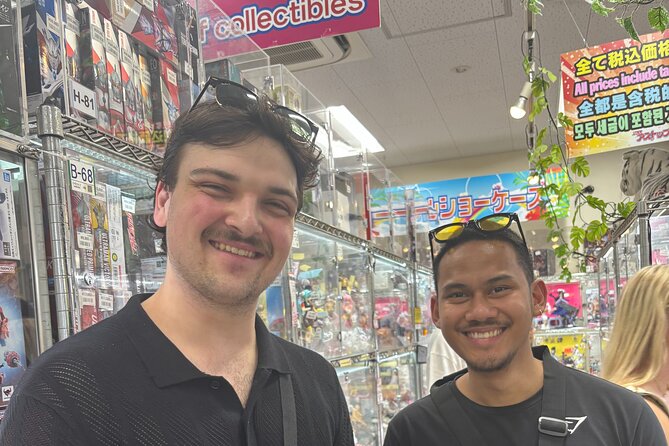
If your idea of a good time includes rare paper collectibles, this stop is the “wait, what?” moment. 福福トレカ秋葉原店 is known for incredible rarity in Pokémon and Yu-Gi-Oh cards, including cards valued around 6 million yen (which is close to $40,000 USD).
The stop is short—about 10 minutes—but it’s worth it because it changes how you see the collector culture around Akihabara. You get a real sense of the market scale, not just the idea of it.
Possible drawback: if you’re not into trading cards, you might treat this as a quick photo-and-look stop. I’d still recommend going with an open mind, because seeing the prices in person makes the collector world feel real fast.
Stop 5: Don Quijote Akihabara for the chaotic convenience store experience

No Akihabara walk feels complete without Don Quijote Akihabara, the famous multi-story “Donki” on Chuo Dori. This stop is listed at about 10 minutes, and admission is listed as free.
Think of Donki as part department store, part tourist magnet, part late-night browsing habit. You’ll see a huge range of everyday items, snacks, and practical shopping options all under one roof. It’s a good change of pace after specialty shops.
Why it’s useful: even if you don’t buy anime merch or cards, you can grab things you forgot—snacks, small essentials, and souvenirs—without changing your route. The area is convenient, and Donki is the kind of place where it’s easy to find something that feels “Tokyo enough” without hunting.
The downside is the same as most big Donki locations: it can be crowded and busy, and aisles can feel tight. If your group needs quiet time, keep this stop quick and intentional.
Stop 6: Maidreamin Akihabara Head Store for the maid cafe payoff

The final stop is Maidreamin Akihabara Head Store, and it’s the heart of the experience for anyone interested in Japan’s “kawaii” culture. The stop is listed as about 1 hour, but here’s the key detail: admission isn’t included.
This is where the tour shifts from browsing to performance. A lot of people end up laughing and leaning into the moment, and that fits the maid cafe vibe: it’s part eating, part role-play entertainment, and part social interaction.
Practical advice: treat this as an add-on experience with its own cost, not something included in the $32.84 tour price. If you’re strict on budget, check your options early so the end doesn’t surprise you.
Also, not every person loves gimmicks. If your group wants quiet sightseeing, a maid cafe stop could feel like a cultural “reset” rather than a highlight. But if you can handle quirky theater energy, this is the stop that tends to turn a normal shopping walk into a memory.
Price and value: what $32.84 really buys you
At $32.84 per person, this tour price is surprisingly low for a structured, private Akihabara experience. The big value is that most stops have admission listed as free (Radio Kaikan, ONODEN, HEY Taito, 福福トレカ, Don Quijote). That means you’re mostly paying for time, guidance, and smooth movement.
The only major exception is the maid cafe: Maidreamin’s admission isn’t included. So think of the tour as the guided “route and context,” plus you pay the maid cafe cost separately if you want that final stop.
Where this pricing makes sense:
- You want someone to help you sort Akihabara fast
- You’d rather spend your energy shopping and playing than figuring out where to go
- You like the idea of a private format without paying private-tour prices that feel extreme
Where it might feel less ideal:
- If you only want one thing (like arcades only), the other stops may feel like filler
- If you strongly dislike crowds and street-level entertainment, the route is still in the middle of it
How long it lasts and how to pace your own shopping
With about 3 hours total, you should plan your expectations like this: you’ll see a lot, but you won’t be able to “deep research” every store. It’s a great first pass through Akihabara. It’s also a good way to identify what you want to come back for after.
If you’re a collector, this tour format helps you compare quickly. One recurring theme is that the guide (often named Suno) can point you toward shops where you might actually find what you’re looking for—sometimes at better pricing than you’d expect. That kind of guidance can turn a walk into a hunt that pays off.
If you’re traveling with friends who aren’t all in on anime and games, keep it simple: pick one must-do per person. Then let the guide help you hit those priorities within the time limit. That way, nobody feels like they dragged through shopping they don’t care about.
Who this Akihabara tour suits best
This experience is a strong match if:
- You’re into anime, games, cosplay, or collectibles
- You want a private guide so you can ask questions and move at your group pace
- You’re curious about the maid cafe culture and want a guided, not awkward, first visit
- Your group includes different interests (figures vs. cards vs. arcades)
It might not fit as well if:
- Your group only wants museums or quiet historic stops (Akihabara is not that)
- You dislike performance-based dining and social entertainment
- You want a long, unstructured shopping day with zero schedule pressure
One more note: the route starts and ends at the same meeting point, which makes it easier to plan your next step—like heading back to your hotel or staying out longer after the tour.
Should you book the Maidreamin Akihabara Walking Tour?
I’d book it if you want an efficient, friendly way to experience Akihabara Electric Town without spending hours figuring out where to go. The low base price, the free admission at most stops, and the focus on real highlights make it feel like value rather than just a “walk around” label.
I’d hesitate if your budget can’t stretch for the extra maid cafe cost, or if your group prefers quiet sightseeing over busy pop-culture retail. Also be honest with yourself: if you’re not interested in at least one of the tour themes (games, cosplay, cards, or maid cafes), you may not get enough out of the whole route.
If you do book, pick your priorities before you meet the guide. With a guide like Suno described as accommodating and friendly, you’ll get more out of the time you spend inside Akihabara’s colorful chaos.
FAQ
How long is the Maidreamin Akihabara Walking Tour?
It lasts about 3 hours (approx.).
How much does the tour cost?
The price is $32.84 per person.
Is the tour private?
Yes. It’s private, and only your group participates.
What kind of ticket do I get?
You’ll receive a mobile ticket.
Are admissions included for all stops?
Admission is listed as free for the earlier stops, while the Maidreamin Akihabara Head Store admission is not included.
Where does the tour start and end?
It starts at Akihabara Electric Town, Tokyo, Japan, and ends back at the meeting point.
How far in advance should I book?
On average, it’s booked 15 days in advance.
Are service animals allowed?
Yes, service animals are allowed.
What’s the cancellation policy?
You can cancel for a full refund up to 24 hours in advance. If you cancel less than 24 hours before the experience start time, it isn’t refunded.