REVIEW · TOKYO
Experience all of Japanese culture and Japanese food experience classes “origami, udon, Japanese food, green tea, calligraphy” in 4 hours
Book on Viator →Operated by homecoming TAKA,Tokyo · Bookable on Viator
Some tours teach Japan. This one lets you live it. In Taka and Keiko’s home you’ll learn hands-on crafts like origami and you’ll cook with your own hands, from noodle making to a lunch built around sushi and gyoza. The best part is the real hospitality: you’re treated like family, not like a ticket number. One thing to consider: this is a home visit in a residential area, so the schedule is tight and it helps to arrive on time and bring a good appetite.
Over about 4 hours, you’ll move through origami, making udon noodles from scratch, hands-on Japanese food (sushi, gyoza, dumplings, and tempura), then finish with matcha plus Japanese sweets. You also get a keepsake—Keiko writes your name in calligraphy on colored paper. Drinks including sake, beer, shochu, and soft drinks are free, and meals can be adapted for vegetarians and vegans.
In This Review
- Key highlights you should care about
- The real draw: a Tokyo home visit with food, art, and talk
- Getting to homecoming TAKA in Omori (and why the walk matters)
- Origami crane time: starting with the simplest Japanese craft
- Making udon noodles from scratch (hands on, no shortcuts)
- Sushi and gyoza lunch, plus tempura and small plates
- What makes the lunch menu feel authentic
- The drinks factor
- Matcha and Japanese sweets: the calm after the kitchen
- Calligraphy souvenir: your name on colored paper
- Price and value: what $92.50 gets you in real terms
- Who this experience suits best (and who might not love it)
- A practical plan for your day in Tokyo
- Should you book homecoming TAKA in Omori?
- FAQ
- What is the duration of the experience?
- Where is the meeting point?
- Is transport included?
- What food and drinks are included?
- What activities are included during the class?
- Do vegetarians or vegans have an option?
- What souvenir do I take home?
- Is this a private tour?
- How does the tour ticket work?
- What is the cancellation policy?
Key highlights you should care about
- A private home experience in Omori, not a crowded restaurant class
- Udon noodles from scratch, including a memorable hands-on step with the dough
- A full Japanese lunch centered on sushi and gyoza, plus small plates and tempura
- Matcha with sweets after you eat, like a real finish to a home meal
- Calligraphy keepsake: your name on colored paper to take home
- Materials made in Japan and free drinks with the meal
The real draw: a Tokyo home visit with food, art, and talk
If you’re tired of “walk-by” sightseeing, this is a good change of pace. You start at JR Omori Station, but the real event is the shift from the station world into a quiet neighborhood and then into someone’s living space. The experience is built around daily Japanese life: folding paper, rolling dough, making food, and sitting down to talk.
I like that the program has balance. You get creative practice (origami), tactile cooking (udon), a proper lunch flow (sushi, gyoza, and more), and a traditional finish (matcha and calligraphy). It’s not just cooking, and it’s not just a craft table either.
The other big advantage is the host chemistry. Taka and Keiko run the show, and the tone stays warm. People keep bringing up how quickly conversations start and how naturally the home feels welcoming. If your travel style is chatty, curious, and you like learning how people actually live, this format fits.
You can also read our reviews of more food & drink experiences in Tokyo



Getting to homecoming TAKA in Omori (and why the walk matters)
You meet at the central exit of JR Omori Station at 10:30 am. Look for someone with a bag carrying the homecoming TAKA logo. It’s about an 8-minute walk to the house, and on the way you pass a shrine and move through a quiet residential area.
That walk isn’t just a route. It gives you a taste of what Omori feels like outside the main tourist tracks—calmer streets, normal life, and a sense that you’re going somewhere local. If you time it right and arrive a few minutes early, you also start the class relaxed instead of rushed.
Because it’s a private tour, only your group participates. That matters here: the hosts can pace the experience for your pace, and the schedule won’t feel like it’s being squeezed by constant turnover.
Origami crane time: starting with the simplest Japanese craft
You kick things off with origami, folding the classic paper crane. It sounds basic, but it’s a smart opener. Paper folding teaches patience and attention—two things you’ll use again later when you handle dough, roll dumpling shapes, or try to write carefully in calligraphy.
Keiko and Taka guide you through it, and you’re not stuck figuring it out alone. This is the kind of activity that works across ages because it’s low-stakes and visual. Even if your hands aren’t “crafty,” you can still follow the steps and end with something you recognize.
A practical note: paper crafts can get messy if you’re rushing, so slow down and let the folding sequence do its job. You’ll be in better shape for the cooking phase right after.
Making udon noodles from scratch (hands on, no shortcuts)
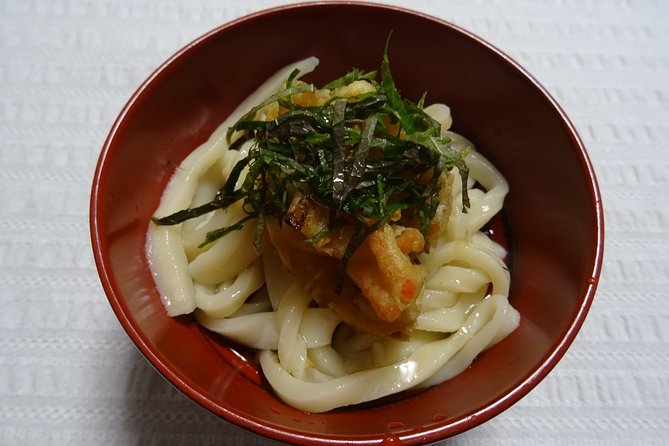
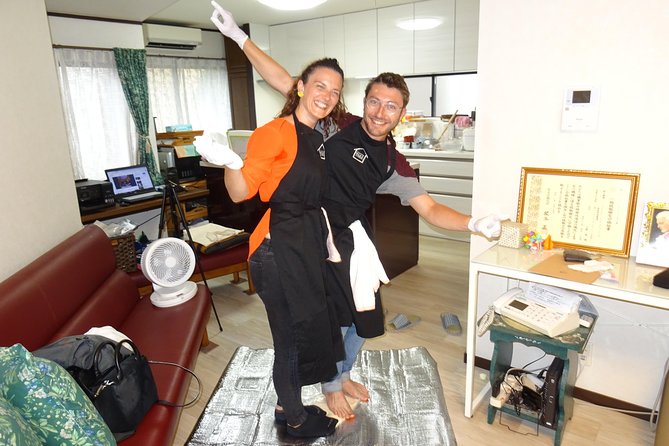
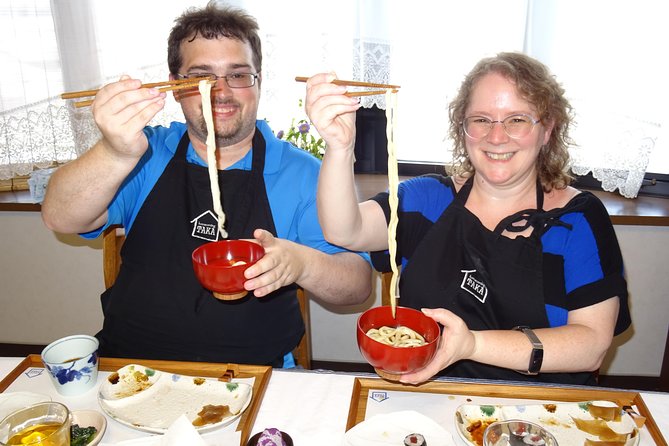
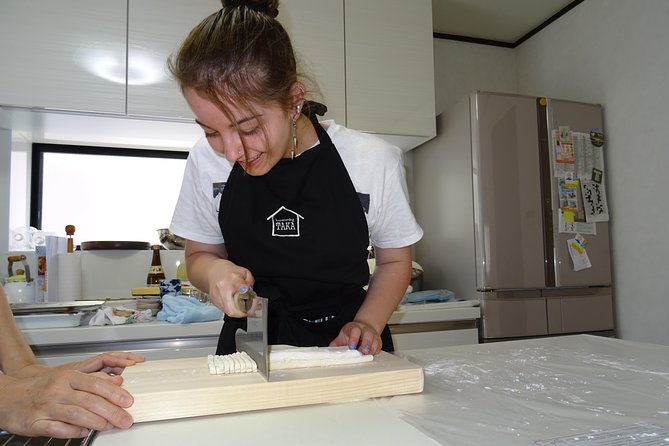
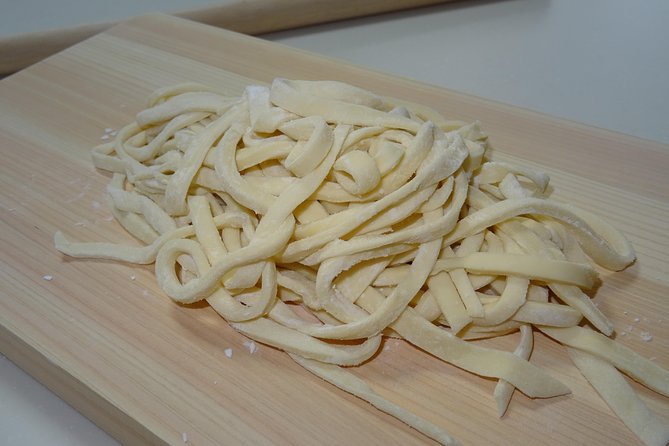
Next comes the part that most people remember: making udon noodles from materials to finished noodles. You’ll work step-by-step, and the experience includes a fun, very physical moment—you step on the material as part of the process.
That single detail tells you the class isn’t pretending cooking is just a demonstration. You’re doing it. You learn how dough changes under pressure, how it becomes workable, and how you end up with noodles that look and feel like they came from a real kitchen.
Why this is valuable: udon is comforting food, but in most cities it’s ordered, not made. Here you see the bridge between ingredients and the texture you taste later. Even if you’re not going to make udon every week at home, you’ll walk away understanding what affects chew and thickness.
Also, you’re not doing it in a giant classroom. It’s in someone’s home setting, so the pace feels more personal and less mechanical. You can ask questions as you go, and you’re likely to get more than one explanation of what to watch for.
Sushi and gyoza lunch, plus tempura and small plates
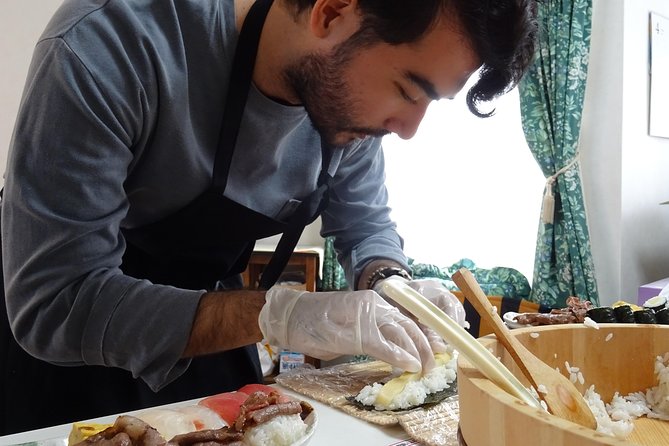
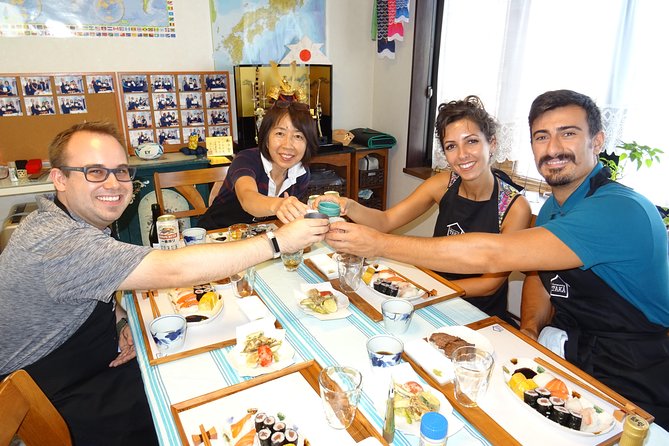
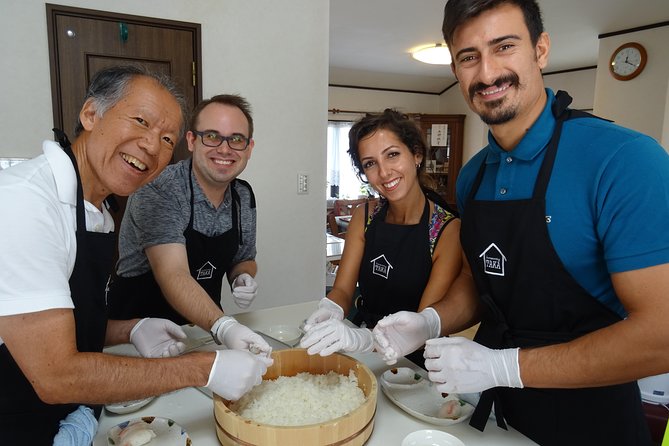
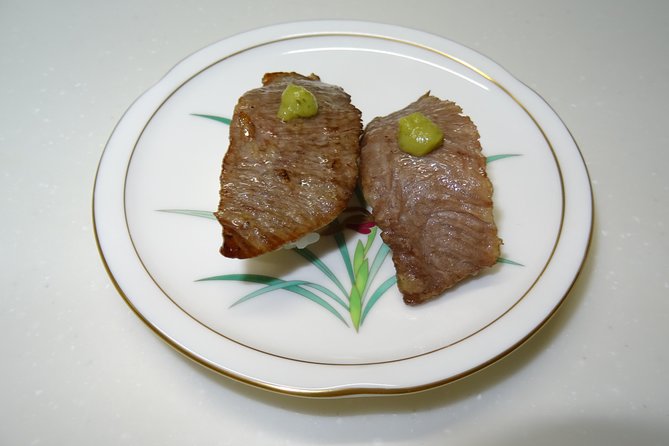
Then you shift into the lunch menu. The main menu is sushi and gyoza, and you’ll make those together while the wife serves some Japanese small plates. The class is structured so the cooking and the eating stay connected—like you’re building lunch as you go, then sitting down for the payoff.
You’ll also experience tempura, and the overall spread is meant to feel like a real Japanese home meal rather than a single dish lesson. People consistently mention that the food is delicious and that the table feels cozy, not formal.
You can also read our reviews of more tours and experiences in Tokyo



What makes the lunch menu feel authentic
- Sushi and gyoza give you variety: you practice shaping and assembling, not only frying.
- Tempura adds a different cooking technique so you taste more than one kind of skill.
- Small plates round out the meal so lunch feels like an actual Japanese meal, not just a “sample menu.”
The drinks factor
Drinks are included. You’ll have sake, beer, shochu, and soft drinks for free. That’s a real value boost because you’re paying for both a meal and the classic adult extras many classes treat as add-ons.
If you don’t drink alcohol, the soft drinks are part of the included lineup too, and the experience doesn’t turn into a party. It stays focused on cooking and conversation, with the drinks simply making the meal more relaxed.
Matcha and Japanese sweets: the calm after the kitchen
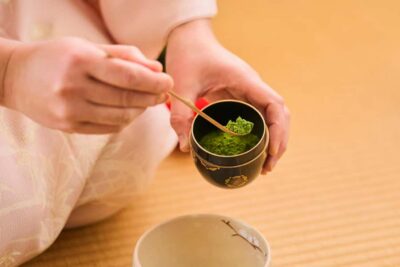
After lunch, you move into matcha green tea and Japanese sweets. This part works as a palate reset and as a culture lesson, because tea in Japan is about rhythm. You slow down, taste something gently bitter and sweet at the same time, and you talk while everyone catches their breath.
If you’ve had matcha before only as a powder mixed into a drink, you’ll notice the difference in attention here. You’re tasting it as part of a sequence—eat, then tea, then sweets. It feels more like dessert and tea time at home than a standalone tasting station.
In a home environment, this segment also becomes more conversational. People tend to ask practical questions at the tea stage because the pressure of cooking is gone. If you’re the type who wants to learn the why behind flavors, matcha time is a good moment to do it.
Calligraphy souvenir: your name on colored paper
The last step is souvenir calligraphy. Keiko writes your name in calligraphy on a piece of colored paper, and you take it home.
This is a small thing that lands big. When you’re traveling, most photos end up in a phone album. A physical keepsake from a specific moment gives the whole experience a durable anchor. It’s also a nice final punctuation after food—quiet, reflective, and personal.
Two practical tips if you care about how it looks:
- Think about the exact spelling of your name before the class ends.
- Be ready for the moment to be quick. This isn’t a long calligraphy workshop; it’s a keepsake, so it happens efficiently.
Price and value: what $92.50 gets you in real terms
At $92.50 per person for about 4 hours, the value is strong for three reasons tied to how the class is actually built.
First, you get a full set of hands-on activities. It’s not just “watch a cook.” You’re doing origami, making udon noodles, making sushi and gyoza, and participating in tempura and tea. That’s a lot of active time packed into a short session.
Second, lunch and included drinks are part of the price. Many food experiences separate the cooking instruction fee from the meal cost. Here, lunch is included, and drinks like sake, beer, shochu, and soft drinks are free.
Third, you leave with a souvenir—your name written in calligraphy—and the class provides items like an apron. You also get materials made in Japan.
A couple of considerations to keep your expectations realistic:
- Transfer isn’t included, so factor in getting yourself to Omori Station.
- It’s a private tour, but it’s still a home setting. Plan for a schedule that runs with the hosts’ timing.
Who this experience suits best (and who might not love it)
This class fits well if you want Japan in a human scale. It’s great for people who like cooking, enjoy learning through doing, and don’t mind that the experience is in a real home with normal household flow.
It also tends to work for families. In the experience record, the hosts have taught groups including kids and teens, so it’s not limited to adults who want a lecture. If your group includes young learners, the origami and udon steps can be a highlight.
You might want to choose a different type of tour if you prefer big landmarks, long walking routes, or very formal restaurant-style cooking demonstrations. This one is about interaction and technique, not sightseeing.
And if you’re sensitive to spending time in someone’s home, pick the version that feels comfortable for you: a home visit is warm and personal, but it’s still inside a private residence.
A practical plan for your day in Tokyo
This experience starts at 10:30 am and lasts about 4 hours. That timing is useful because it gives you the morning, clears your early afternoon, and keeps you from losing an entire day to just food.
If you’re also doing bigger Tokyo sights, I’d treat this as your “local Japan” anchor. After you cook and eat, you’ll have context for what you see later—especially the focus on seasonal habits, careful technique, and the way meals work as a social event.
Also, if you’re traveling around Tokyo, build buffer time around the walk from Omori Station. Meeting promptly matters, because the class steps flow one after another: origami to udon to lunch to tea to calligraphy.
Should you book homecoming TAKA in Omori?
Book it if you want a true home-style Japanese day—hands-on cooking, real cultural crafts, and a memorable keepsake—without the feeling of a typical tourist production. The price works out well because the meal and drinks are included, and the itinerary isn’t shallow: you’ll actively make noodles, sushi, gyoza, and tempura, then finish with matcha and calligraphy.
Don’t book it if you strongly prefer large-scale sightseeing over quiet neighborhood experiences, or if you need a highly structured “restaurant-only” environment. This is personal by design.
My best decision tip: if this sounds like your vibe, book early. The experience is booked on average more than 100 days in advance, which usually means the host calendar fills up.
If you want Japan that feels like a friend invited you over, homecoming TAKA is exactly that.
FAQ
What is the duration of the experience?
It runs for about 4 hours.
Where is the meeting point?
Meet at the central exit of JR Omori Station at 10:30 am. You should look for someone with a bag with the homecoming TAKA logo.
Is transport included?
No, transfer is not included.
What food and drinks are included?
Lunch is included, and drinks are free, including sake, beer, shochu, and soft drinks. You’ll also have matcha with Japanese sweets after the meal.
What activities are included during the class?
You’ll do origami, make udon noodles, make Japanese food including sushi and gyoza (with additional dishes such as dumplings and tempura), taste matcha, and finish with calligraphy.
Do vegetarians or vegans have an option?
Yes. Vegetarians and vegans can enjoy all dishes with different ingredients.
What souvenir do I take home?
Keiko writes your name in calligraphy on a colored paper for you to take home.
Is this a private tour?
Yes, it’s private. Only your group participates.
How does the tour ticket work?
You get a mobile ticket.
What is the cancellation policy?
Free cancellation is available. You can cancel up to 24 hours in advance of the experience start time for a full refund.