REVIEW · TOKYO
Unique Afternoon Live Sumo training tour in Tokyo
Book on Viator →Operated by NexSpark Co., Ltd. · Bookable on Viator
Sumo training is louder than you expect. Watching Nakamura-beya Sumo Stable do real keiko (practice) feels like stepping into Japan’s oldest sports rhythm, not a staged performance. I love that this is close-up and disciplined, with the stomps and clashes happening right in front of you, and I also love the practical extras: multilingual audio, free Wi‑Fi, charging points, and a photo you can take home.
One thing to plan for: the first stretch can feel slower. The early warm-up may seem uneventful for about the first 20–30 minutes, then the intensity ramps up once the practice gets fully underway.
In This Review
- Key highlights you’ll care about
- Nakamura-beya Sumo Stable: what you’re really seeing
- Keiko practice flow during the 1 hour 30 minutes
- Seating and viewing: plan for the floor and the close view
- Language help that actually helps you follow the action
- The souvenir system: your sumo photo and the “leave with something” factor
- Price and value: why $137.71 can make sense in Tokyo
- Timing, meeting point, and how to arrive ready
- Who should book this, and who might think twice
- Should you book this sumo keiko tour?
- FAQ
- How long is the Unique Afternoon Live Sumo training tour?
- Where does the tour meet?
- Is admission included?
- What languages are available for the audio guide?
- Do I get a photo with the sumo wrestlers?
- Is pick-up or drop-off provided?
- Can I cancel for a full refund?
Key highlights you’ll care about
- Small group, maximum 10 people for a less rushed, more personal feel
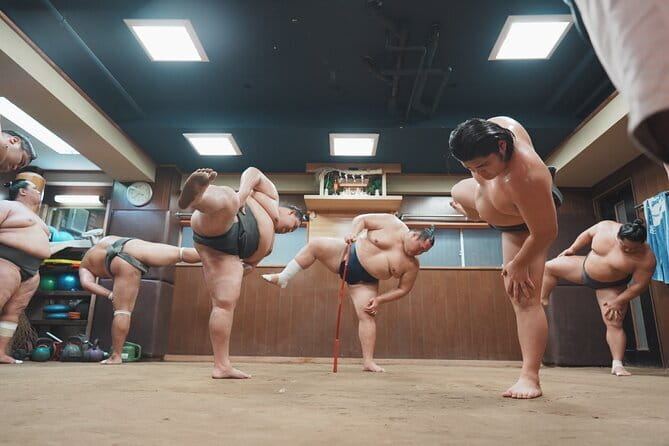
- Nakamura-beya Sumo Stable training session you can watch up close
- Free Wi‑Fi and charging points so you can stay powered and online
- Photo souvenir with the wrestlers (a real keepsake, not a generic group shot)
- Audio guidance in multiple languages, plus explanations in English, Japanese, and Korean
Nakamura-beya Sumo Stable: what you’re really seeing
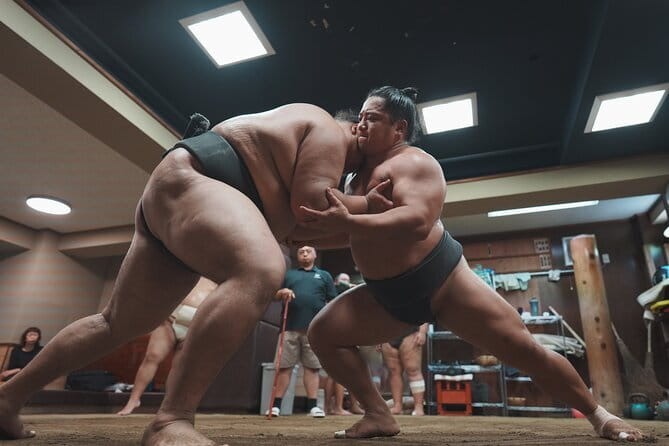
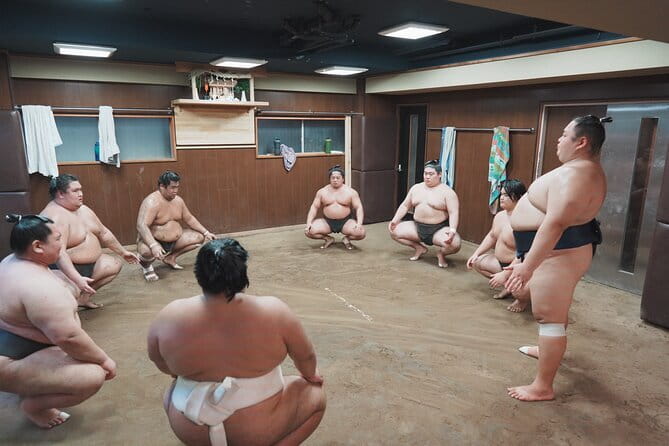
This tour gives you a front-row view of professional sumo training at Nakamura-beya Sumo Stable. That matters, because sumo is not just about one dramatic match moment. The real story is in the routines that happen before power is unleashed—how wrestlers warm up, sharpen timing, and keep their discipline in place when the day is long.
In this setting, you’ll notice how physical the practice is. Even if you’ve watched sumo on TV, it’s different when the stomps land close enough to make you feel it. The tour frames it as traditional keiko, and that’s the right mindset: you’re watching a craft being trained, not a circus act.
Another thing I like is the “translation help without over-selling.” You get a sumo keiko explanation pamphlet and an audio guide in multiple languages, so you can follow what you’re seeing even if your Japanese is limited. And on top of that, the guide can speak English, Japanese, and Korean, which is a nice safety net if something needs clarifying on the spot.
You can also read our reviews of more tours and experiences in Tokyo.



Keiko practice flow during the 1 hour 30 minutes
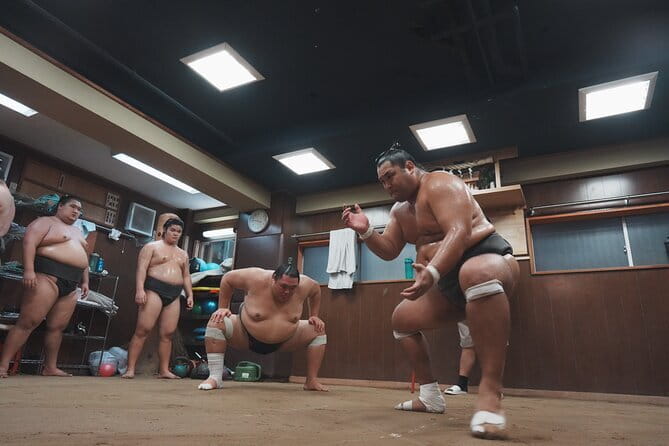
The total time is about 1 hour 30 minutes, and it tends to feel like a lesson that gradually gets more intense. Here’s the practical expectation you should keep in your head.
First comes the warm-up. This part is real training, but it can read as “not much is happening” if you only want the big grappling moments. The good news is that warm-ups aren’t filler; they’re how wrestlers get minds and bodies synced.
Then the action starts. Once the practice moves into the more serious rounds, the pace shifts quickly. It’s the part where clashes and wrestling bursts feel sudden and exciting, especially when you see wrestlers engage in what looks like rapid back-and-forth sequences. If you’re traveling with teens or older kids who don’t want to sit through something slow, you should still give this one a chance. The payoff usually hits after that initial warm-up window.
One more timing note that can catch people off guard: the practice is usually in the afternoon, but sometimes it’s done in the morning. That doesn’t change the overall experience, but it can change your plans in Tokyo. When you book, confirm the exact time shown for your date.
Seating and viewing: plan for the floor and the close view
This is small-group viewing, and the seating setup is simple. There are chair-type seats for 8 to 10 people. Everyone else sits on the floor.
So, you’ll want to think about your comfort level. If you’re fine sitting on the ground for about an hour or so, you’re good. If you need a chair, go in knowing chairs are limited. In a group of up to 10, it’s unlikely every person will get a chair, so decide based on your own body needs rather than hoping.
The upside of floor seating is that it can be very close. You’re not watching from far away like a stadium. You’re watching the wrestlers work in a tight space, which is exactly why the experience feels authentic instead of like a performance you’re standing outside to observe.
Language help that actually helps you follow the action
Wrestling is visual, but understanding the purpose behind each drill makes it more rewarding. This tour tackles language barriers in a practical way.
You’ll have an audio guide with 10 languages listed for the tour materials, and the overall description also mentions 11 languages to choose from. Since those details come from different parts of the program info, the smartest move is to check which languages you can select when you book.
Also, the live guide can speak English, Japanese, and Korean. That’s useful because sometimes you’ll hear a question from another group member, or the guide will point out a detail you wouldn’t guess from body language alone. It turns the practice from just impressive motion into something you can interpret.
You’ll also receive a sumo keiko explanation pamphlet. I like having something physical because you can glance down during quieter moments without fumbling with a phone.
The souvenir system: your sumo photo and the “leave with something” factor
Most tours end with photos you took yourself. This one adds a clear keepsake: you’ll go home with a photo with the sumo wrestlers.
That changes the feel of the experience. You’re not only watching; you’re getting one tangible memory tied directly to the stable visit. It’s especially satisfying for families, because kids and teens get a moment they can show later, and it doesn’t rely on everyone finding the perfect angle with a smartphone while people are moving.
The tour also includes free Wi‑Fi and charging service. That’s more useful than it sounds. After you’ve walked around Tokyo (often using maps, messaging, and translations), having charging and Wi‑Fi at the meeting point makes your day smoother. It also helps you quickly share that photo moment once you have it.




Price and value: why $137.71 can make sense in Tokyo

At $137.71 per person, this isn’t a bargain-basement activity. But in Tokyo pricing, it sits in the “worth it if you’re getting the right kind of experience” category.
Here’s what you’re really paying for:
- Access to real stable practice time, not just a sumo-themed show
- A small-group format (maximum 10)
- Guidance that includes an audio guide plus a keiko explanation pamphlet
- A provided photo souvenir
- Practical add-ons: free Wi‑Fi and charging points
If you’re a first-timer, you may appreciate that this gets you beyond the usual sumo surface stops. If you’re a frequent Tokyo visitor, you might value the fact that it’s a local, grounded experience tied to a working stable rhythm.
Also, the tour is commonly booked ahead (on average, about 25 days in advance). That’s a hint you should plan early if you want a specific afternoon slot. Small-group tours can fill up because the viewing setup is limited.
Timing, meeting point, and how to arrive ready

The meeting point is at Nakamura-beya Sumo Stable, 1-chōme-18-7 Ryōgoku, Sumida City, Tokyo 130-0026, Japan. The tour ends back at the same meeting point.
Two practical points:
- Pick-up and drop-off are not included, so you’ll need to handle your own transit to the stable area.
- The tour notes that it’s near public transportation, which is exactly what you want in Tokyo. Aim to arrive early enough to calm your nerves and get oriented.
Because the practice time can sometimes be morning instead of afternoon, I’d treat your booking confirmation like the single source of truth for your schedule. Tokyo has a way of making people lose track when they’re hopping neighborhoods.
Wear comfortable shoes and keep your phone charged. Even with charging points available, you don’t want to arrive already at 2%.
Who should book this, and who might think twice
This tour is a great fit if you want:
- Authentic sumo practice (real keiko) rather than a staged presentation
- A short, concentrated experience at about 1.5 hours
- Clear help following what you’re watching, through audio guidance and a pamphlet
- A family-friendly format that can still feel exciting once the action starts
It’s also a smart choice for repeat Tokyo visitors who are tired of the same museum routine. A stable practice gives you a different kind of cultural access.
Who might hesitate? If you strongly dislike any chance of sitting through a slower warm-up phase, you may find the first part underwhelming. The good news is the intensity ramps up later, but your tolerance for that warm-up matters. If you know you need instant action, plan to bring patience—and maybe a snack somewhere nearby before you go.
Should you book this sumo keiko tour?
I’d book it if you want a real slice of Japanese sumo culture and you like experiences with clear structure. The biggest selling point is simple: you get to watch training at a real stable, with explanations that help you understand what you’re seeing, plus a sumo photo souvenir and practical perks like Wi‑Fi and charging.
Skip it only if you hate the idea of sitting on the floor for part of the group, or if you’re sure you only want the most dramatic wrestling moments right away. Otherwise, this one is a memorable Tokyo “only in Japan” hour-and-a-half.
If you book, do yourself a favor: confirm the exact time for your date (afternoon versus occasional morning), and consider choosing footwear and seating comfort based on your needs.
FAQ
How long is the Unique Afternoon Live Sumo training tour?
It runs for about 1 hour 30 minutes (approx.).
Where does the tour meet?
The meeting point is Nakamura-beya Sumo Stable, 1-chōme-18-7 Ryōgoku, Sumida City, Tokyo 130-0026, Japan.
Is admission included?
Yes, the admission ticket is included.
What languages are available for the audio guide?
The tour info lists an audio guide with 10 languages, and it also mentions 11 language options. The guide can speak English, Japanese, and Korean.
Do I get a photo with the sumo wrestlers?
Yes, the tour includes a photo with the sumo wrestlers.
Is pick-up or drop-off provided?
No. Pick-up and drop-off are not included.
Can I cancel for a full refund?
Yes. You can cancel up to 24 hours in advance for a full refund.