REVIEW · TOKYO
Barrier-Free Private Mt. Fuji Tour for Wheelchair Users
Book on Viator →Operated by Trip Designer Inc. · Bookable on Viator
Fuji feels close on this accessible day trip. This is a private, wheelchair-friendly Mt. Fuji outing that still feels special because you choose how to handle the mountain views—via the car-accessible 5th Station, and/or scenic time around Lake Kawaguchiko. I also like the hotel pick-up and English-speaking guide that helps the day run smoothly without you worrying about logistics. One thing to plan for: Mt. Fuji is weather-dependent, and if clouds roll in you may spend more time enjoying the lakes, springs, and art than the mountain peak.
The guide can really shape the tone of the day. I’m especially encouraged by stories from guides like Keita and Rie, who focus on what you can see and do at your pace, not a forced checklist. Even on a cloudy day, the experience still works because the route is built around multiple high-payoff stops, not just one photo moment.
In This Review
- Key things to know before you go
- A wheelchair-friendly Fuji day from Tokyo Station
- Two ways to get Mt. Fuji views: 5th Station and Lake Kawaguchiko
- Oishi Park flowers and a kimono-art museum visit
- Oshino Hakkai springs: the short stop that hits hard
- What a private format changes for wheelchair users
- Price and timing: does it feel like good value?
- The weather reality: planning for clouds without losing the day
- Should you book this Barrier-Free Mt. Fuji tour?
- FAQ
- Wheelchair-accessible transport is included?
- Is this a private tour or a shared group?
- Where does the tour start and end?
- How long is the tour?
- Is Mt. Fuji 5th Station included?
- Can I choose between a viewpoint and a lake cruise?
- Is lunch included?
- Are the museum entry fees included?
- Do I need to bring a ticket?
- What happens if the weather is bad?
- Is the guide English-speaking?
Key things to know before you go
- Private door-to-door pickup from Tokyo Station: starts at 8:00 am and returns to the same meeting point.
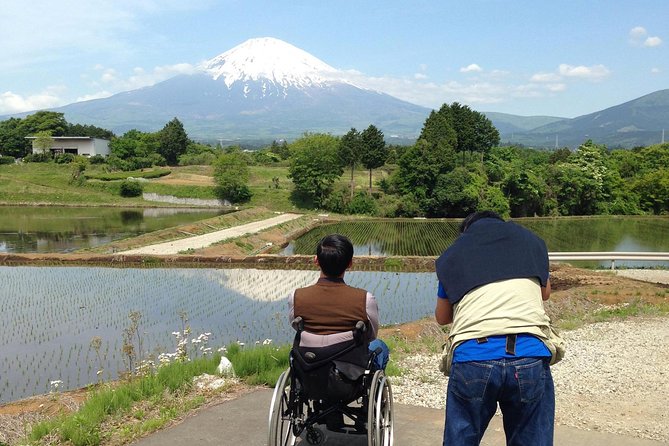
- Choose your Fuji-view style: Mt. Fuji Subaru Line 5th Station, plus Lake Kawaguchiko/Oishi Park; boat cruise is optional.
- Wheelchair-friendly transport: includes a wheelchair-friendly car and a guide who adjusts the plan to you.
- Museum time with a real cultural focus: Kubota Itchiku Art Museum (kimono artistry) or Music Forest Museum.
- Oshino Hakkai is the calm payoff: famous blue springs and a short, scenic village stop.
A wheelchair-friendly Fuji day from Tokyo Station
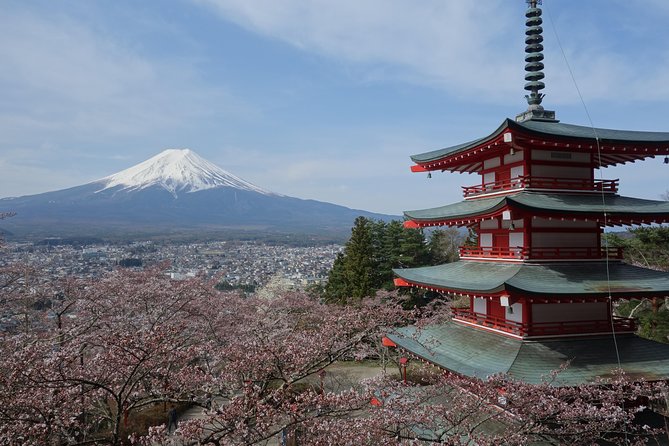
This tour is designed as a true private experience, not a bus tour that waits for the slowest rider. Your group size is up to 6, so the driver and English-speaking guide can shape timing around accessibility needs and comfort levels. You also get hotel pick-up and drop-off from Tokyo, which matters on a day this long, especially if you’re managing transfers or want to avoid street-level navigation.
Timing is straightforward: it runs about 11 to 12 hours and starts at 8:00 am. The meeting point is Tokyo Station (1 Chome-9 Marunouchi, Chiyoda City). It ends back at the meeting point, which is a small detail that reduces stress when you’re tired and the day is already long.
The practical win here is that you’re not “trying to fit” Mt. Fuji into a wheelchair routine. Instead, the day is structured around wheelchair-accessible transport and stops where you can actually enjoy being out of Tokyo for the day.
You can also read our reviews of more private tours in Tokyo

Two ways to get Mt. Fuji views: 5th Station and Lake Kawaguchiko
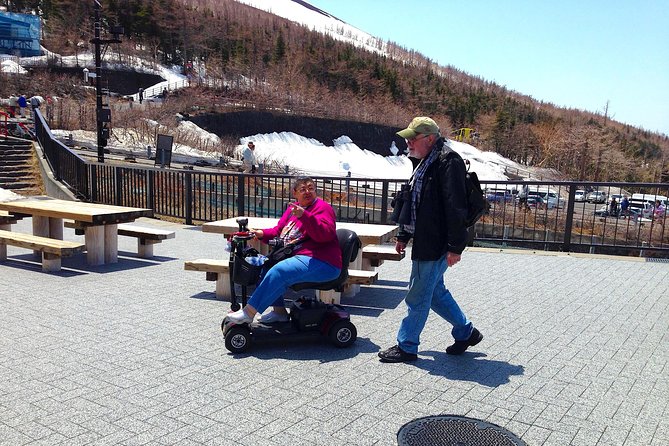
The heart of the route is giving you high-probability views without requiring a steep climb. First stop is Mt. Fuji Subaru Line 5th Station. This is the highest point you can reach by car. It’s a clever compromise for many wheelchair users who still want the feeling of being up on the mountain, without the full trek to the summit. Admission there is free and the stop is about 1 hour.
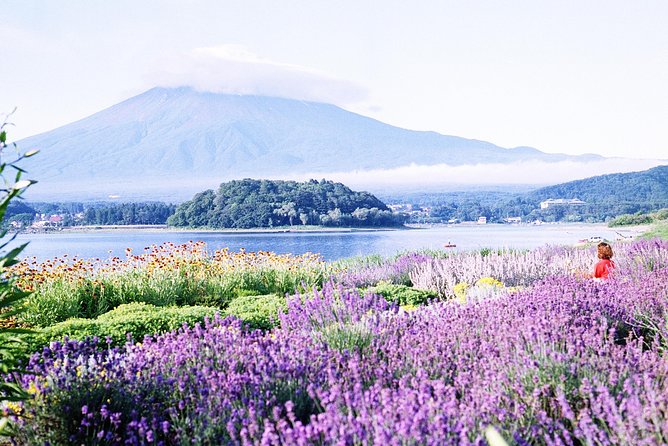
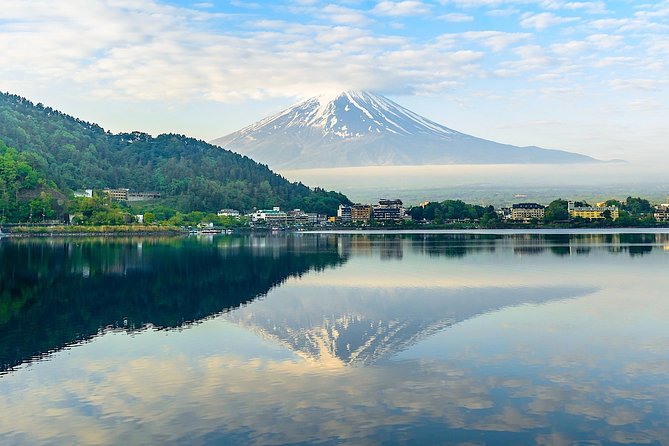
From there, the tour shifts toward the Fuji Five Lakes region with Lake Kawaguchiko as your key scenic area. You’ll spend time around the sparkling lake and head toward Oishi Park, where flower fields spread along the lakeshore. Both Lake Kawaguchiko and Oishi Park are about views and atmosphere: you get a calm, open setting where the camera can earn its keep without fighting stairs.
There’s also an optional boat cruise on Lake Kawaguchiko. If you pick it, you’ll need the additional ticket cost (listed as 1,000 yen per person). This is often a smart option if the day is cloudy; the lake and shoreline still feel scenic even when the mountain peak disappears behind the clouds.
One more idea to keep in mind: the tour notes alternative scenic choices for viewpoints, including the possibility of Arakura Fuji Sengen as part of the plan. If that’s important to you, ask your guide to balance it with what feels comfortable for your day.
Oishi Park flowers and a kimono-art museum visit
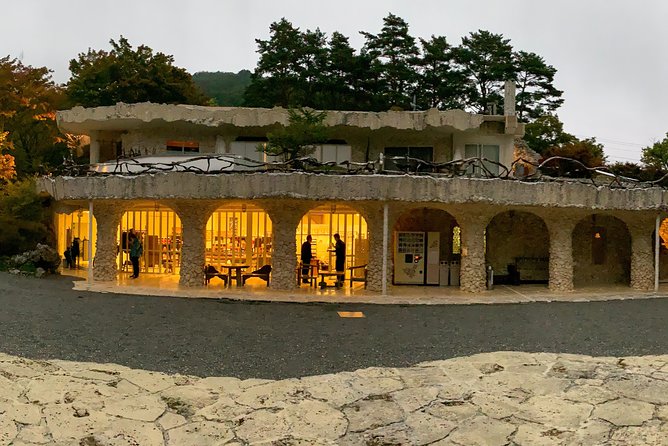
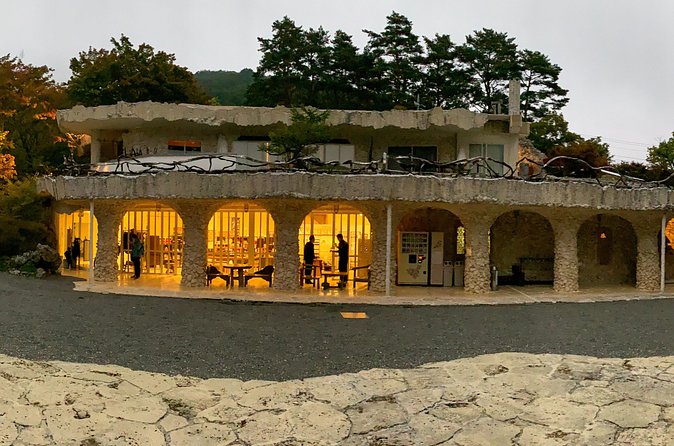
After your lakeside time, the tour moves into a very Japanese, very different kind of culture stop: a museum dedicated to art and heritage. The main featured option is the Kubota Itchiku Art Museum.
This museum is specifically tied to Kubota Itchiku’s revival of the Tsujigahana dyeing technique. Tsujigahana is a fabric dyeing style that originally flourished in the Muromachi period, then fell out of favor. Kubota Itchiku worked to bring it back, and the result is the museum’s focus: kimono art you can’t really rush. Your museum time is about 1 hour, and the admission fee is 1,300 yen per person (not included).
If kimono art isn’t your top interest, there’s an alternative listed: Music Forest Museum. It’s also part of the museum choice set, with admission noted as 1,800 yen per person (not included). Either way, the point is the same: you get a break from “just sightseeing” and a slower pace that works well after a big travel morning.
Lunch happens during this mid-day stretch. The tour includes a stop for lunch at a traditional Japanese restaurant that’s wheelchair-friendly, but food and drinks are not included in the price. I like this setup because you can choose what you feel up to eating on that day—no surprise meal costs baked into the tour price.
Oshino Hakkai springs: the short stop that hits hard
Next comes Oshino Hakkai, a small area known for eight springs with striking blue water. It’s a place people associate with purification and pilgrimages, so it feels less like a random scenic pull-off and more like a living tradition.
Your time here is about 40 minutes, and admission is listed as free. This stop can be a great “reset” if you’ve had a few hours already in the car and on the move. It’s also one of those experiences where, even if Mt. Fuji itself is hidden by clouds, the place still has its own identity.
Think of Oshino Hakkai as the day’s quiet anchor: a chance to slow down, take in the water and village vibe, and not just hunt for mountain photos.
What a private format changes for wheelchair users
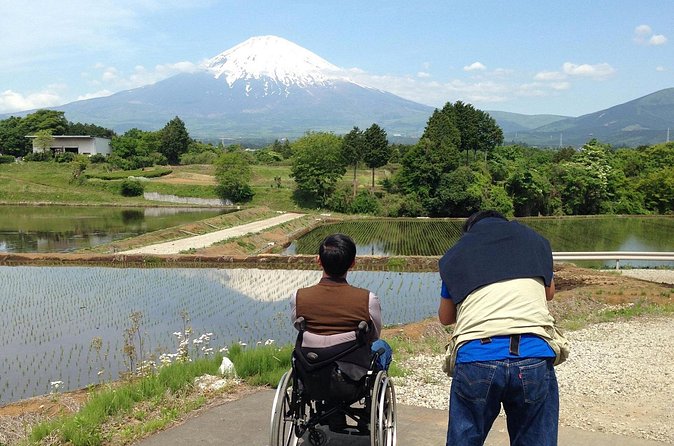
A private wheelchair-accessible tour sounds like a basic selling point, but the real value is how it affects decision-making during the day. You’re not trapped in a schedule that assumes everyone can walk quickly from A to B.
Here’s what that means in practice:
- Your English-speaking guide can explain what’s worth your time, rather than you guessing at viewpoints or waiting for signage.
- The day has multiple target stops (5th Station, lake/flowers, museum, springs). If one part doesn’t deliver perfect views, the overall day still feels complete.
- Your driver uses an air-conditioned vehicle and a wheelchair-friendly car. That matters on a long day in Japan, where weather can shift fast.
The guidance style seems especially important, based on experiences shared with guides like Keita and Rie. The themes in those stories are considerate pacing and customization—meaning the plan shifts based on what you can comfortably do and what you want to prioritize.
If you’re a full-time wheelchair user (or someone traveling with someone who is), that “customize to you” approach is often more valuable than a rigid, one-size itinerary.






Price and timing: does it feel like good value?
The price is listed as $1,439.87 per group (up to 6). At first glance, that can feel steep. But for a private full-day outing with hotel pick-up/drop-off, a wheelchair-friendly car, and an English-speaking guide, it starts to make more sense—especially when you compare it to the cost of multiple accessible taxis plus guided interpretation plus a car service for long distances.
Also, the structure helps you avoid expensive mistakes. You’re paying for a route designed around accessible priorities rather than trying to piece it together yourself with uncertain timings and transfers.
A few budget notes so there are no surprises:
- Itchiku Kubota Art Museum admission is 1,300 yen per person (not included).
- Music Forest Museum admission is 1,800 yen per person (if you choose it, not included).
- If you want the boat cruise, it’s an extra 1,000 yen per person.
- Lunch and drinks are not included, even though you’ll visit a wheelchair-friendly traditional Japanese restaurant.
- Mt. Fuji 5th Station and Oshino Hakkai are listed with free admission.
In plain terms: the base price buys you transportation, guide support, and the accessibility framework. Your main additional costs are museum admission and optional boat time.
As for scheduling, this tour is typically booked about 53 days in advance on average. If your travel dates are fixed—especially if you care about flower timing around Oishi Park—book early so you have the best chance of matching your preferred stops.
The weather reality: planning for clouds without losing the day
The tour explicitly depends on good weather. If conditions are poor, you’ll either be offered a different date or a full refund, which is important for something as view-driven as Mt. Fuji.
But the route is built so you don’t waste the day if you can’t see the peak clearly. The 5th Station gives you the “been up” feeling even when clouds sit low. Lake Kawaguchiko and Oishi Park still offer atmosphere, reflections, and photo chances. Oshino Hakkai adds a completely separate kind of beauty. And the museum gives you a reason to enjoy the day even if the sky doesn’t cooperate.
So my advice: treat visibility as a bonus, not the entire goal. If you go in with that mindset, the day feels fuller.
Should you book this Barrier-Free Mt. Fuji tour?
Book it if you want a private, wheelchair-friendly Mt. Fuji day that doesn’t force you into a long climb just to feel the mountain. This is especially worth considering if you value an English-speaking guide, want Tokyo pick-up, and like the idea of mixing mountain views with museum culture and spring scenery.
Consider a different approach if your top goal is a perfect, summit-level Mt. Fuji photo every time. Clouds are common enough that you should plan for a day where Fuji might be partly hidden. Still, even then, the route has enough variety—station, lake, flowers, springs, and kimono art—to make it feel like more than a consolation trip.
FAQ
Wheelchair-accessible transport is included?
Yes. The tour includes a wheelchair-friendly car and private transportation, plus pickup and drop-off from Tokyo.
Is this a private tour or a shared group?
It’s private. Only your group participates, with a group size of up to 6.
Where does the tour start and end?
It starts at Tokyo Station (1 Chome-9 Marunouchi, Chiyoda City, Tokyo) at 8:00 am and ends back at the meeting point.
How long is the tour?
It runs about 11 to 12 hours.
Is Mt. Fuji 5th Station included?
Yes. Stop 1 is Mt. Fuji Subaru Line 5th Station, and admission is listed as free.
Can I choose between a viewpoint and a lake cruise?
You can choose scenic options around the Fuji area. The boat cruise on Lake Kawaguchiko is optional and costs extra if you select it.
Is lunch included?
Lunch is part of the day, with a stop at a wheelchair-friendly traditional Japanese restaurant, but food and drinks are not included in the tour price.
Are the museum entry fees included?
No. Museum admission is not included. Kubota Itchiku Art Museum is listed as 1,300 yen per person, and Music Forest Museum is listed as 1,800 yen per person.
Do I need to bring a ticket?
You’ll use a mobile ticket.
What happens if the weather is bad?
The experience requires good weather. If it’s canceled due to poor weather, you’ll be offered a different date or a full refund.
Is the guide English-speaking?
Yes. The tour includes an English-speaking guide.