REVIEW · TOKYO
4 Hours Shibuya – Shinjuku Night Tour
Book on Viator →Operated by Japan Magic Tours · Bookable on Viator
Night Tokyo feels like a moving maze. This private Shibuya–Shinjuku night tour turns that chaos into a doable route, with a guide helping you spot key monuments, cross the big intersections, and then duck into the narrow bar streets that make this part of Tokyo feel so distinct. It’s designed for a private pace, so you’re not just herded from one photo spot to the next.
I love the easy meeting at Hachiko, which makes the whole experience feel less stressful right away. I also love the food-and-alley focus, including a dedicated stop at Toritake for chicken skewers and time in Shibuya’s lantern-lit drinking lane (Nonbei Yokocho). Guides like Aissam, Sam, Chihiro, Jay, Jenny, and El Hani show up in the feedback again and again for making the walk feel fun, not frantic.
The main catch is that the 4 hours can feel full-on at night: you’ll be walking through crowds, and while Toritake is part of the route, dinner isn’t included, so you’ll likely spend extra there and elsewhere.
In This Review
- Key highlights
- Entering Shibuya–Shinjuku after dark (without losing your mind)
- Meeting at Hachiko: the fastest way to start strong
- Shibuya’s icons and alley scenes: from crossroads to drink streets
- Dogenzaka Love Hotel Hill: the neon side quest that makes Tokyo weird (and fun)
- Toritake chicken skewers: a meal stop that turns a walk into an experience
- Shinjuku’s layers: Kabukicho, Golden Gai, and Memory Lane
- Godzilla Square, 3D cat billboard, and the fun photo moments
- How the private pace works (and why that matters in Tokyo)
- Price and value: what $98.83 gets you at night
- Small guide superpowers: photos, Suica help, and friendly troubleshooting
- Practical tips so this tour feels easy
- Who should book this Shibuya–Shinjuku night tour?
- Should you book this tour?
- FAQ
- How long is the Shibuya–Shinjuku night tour?
- What time does the tour start?
- Where is the meeting point?
- Where does the tour end?
- Is this a private tour?
- Is dinner included in the price?
- What’s included in the tour price?
- Do I need a printed ticket?
- FAQ
- What is the cancellation policy?
- Can the guide help with dietary requirements?
Key highlights
- Hachiko start point: simple to find, with a quick orientation so you don’t waste your first night getting lost.
- 4 hours, private pacing: you can slow down, stop for photos, or move quicker depending on your group.
- Nonbei Yokocho: lantern-lit side streets with small izakayas and a real after-dark vibe.
- Toritake stop: a solid 1-hour break centered on chicken skewers and other dishes.
- Dogenzaka Love Hotel Hill: a quick hit of neon Tokyo at the edge of Shibuya’s shopping energy.
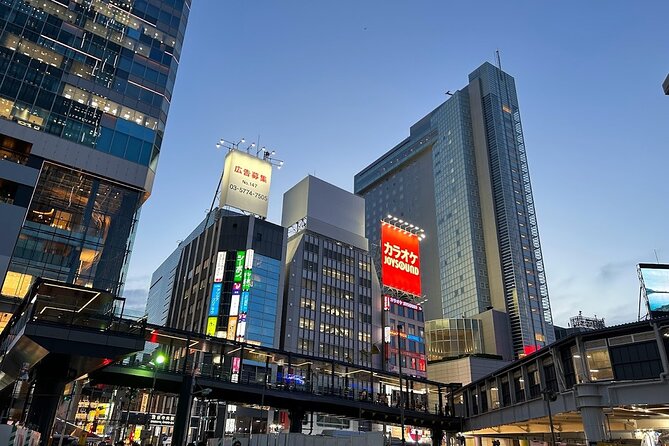
- Shinjuku classics in one sweep: Kabukicho, Golden Gai, Godzilla Square, Omoide Yokocho, plus a 3D cat billboard moment near Shinjuku Station.
Entering Shibuya–Shinjuku after dark (without losing your mind)
Tokyo at night is loud. It’s bright too. The streets in Shibuya and Shinjuku don’t come with labels, and that’s the whole problem this tour helps solve.
This is a 4-hour private walking experience that starts at 6:00 pm, which is perfect timing. You catch the transition from late afternoon bustle to full-on nightlife, when alley signs glow and streets start feeling more like neighborhoods than just sights. Instead of trying to build your own map, you follow a guide who breaks the area into chunks you can actually remember.
You can also read our reviews of more evening experiences in Tokyo


Meeting at Hachiko: the fastest way to start strong
The meeting point is at the Hachiko Statue by Shibuya. That matters more than it sounds. In a city where directions can get messy fast, meeting at a landmark people recognize instantly helps you start relaxed instead of scanning for your group text.
From there, the tour is set up to get you oriented quickly: you’ll learn what you’re looking at as you move through the main Shibuya highlights. One standout in the feedback is how often guides are praised for meeting on time and then getting people “up and running” right away—especially helpful if it’s your first night in Tokyo.
Tip for you: if you arrive early, don’t just hang around. Take 10 minutes to orient yourself to the station side you’re on, then wait where the guide expects to find you. It keeps stress low when the crowd ramps up.
Shibuya’s icons and alley scenes: from crossroads to drink streets
This route is built to show you two sides of Shibuya.
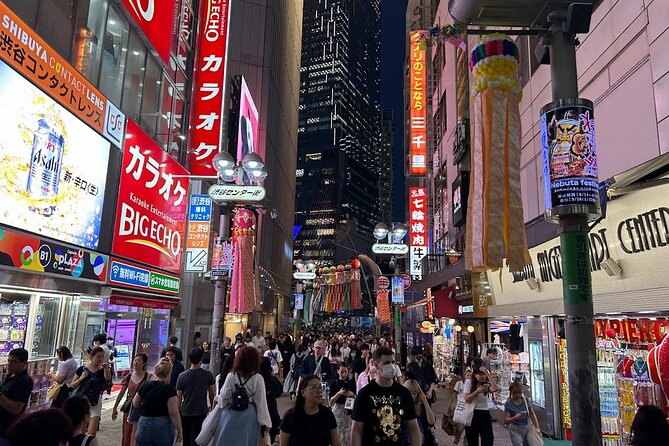
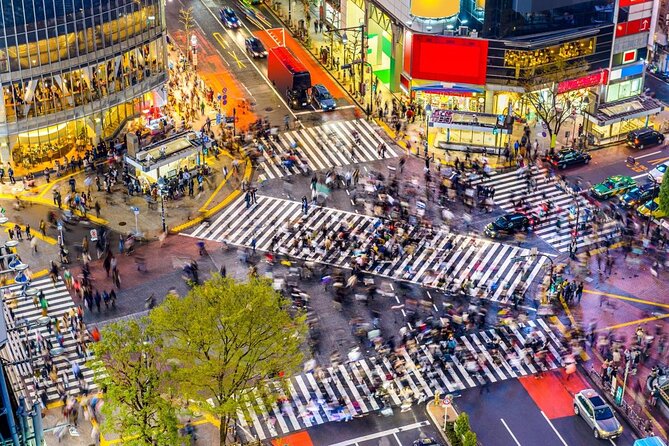
First, you get the big-photo world: the Shibuya area around the famous scramble-style intersection. It’s chaos in the best way, and with a guide you don’t just stand there wondering where to go next. You learn how the streets connect and where you can see the flow of people without feeling stuck.
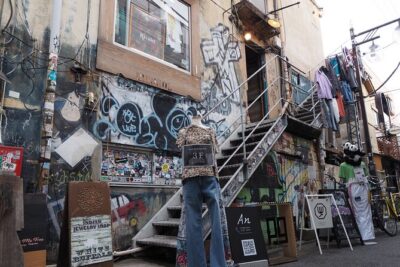
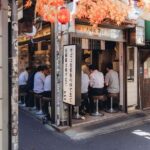
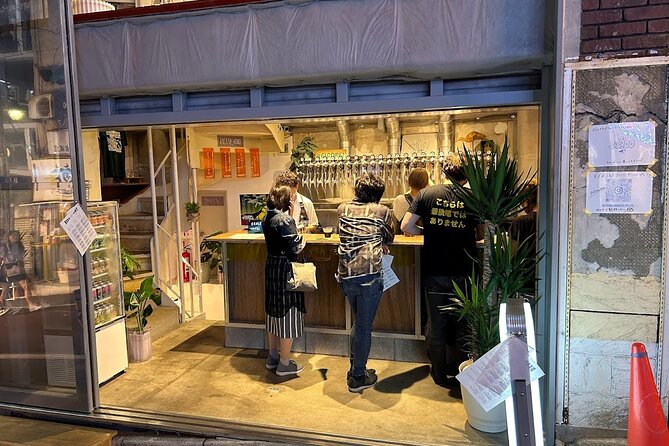
Then you shift to quieter, more human-scaled streets. One of the most memorable stops is Shibuya Nonbei Yokocho. It’s described as a narrow, lantern-lit drinking alley, lined with small izakayas and restaurants. This is where Shibuya stops feeling like a mall-and-scramble loop and starts feeling like a real nighttime neighborhood.
You’ll also see the route pass by or include major Shibuya landmarks along the way, then transition toward Dogenzaka.
Dogenzaka Love Hotel Hill: the neon side quest that makes Tokyo weird (and fun)
Next up is Dogenzaka, often associated with Love Hotel Hill. The whole area is known for its concentration of love hotels, which means you’ll notice more neon, more visual weirdness, and more of that Tokyo-style showmanship than you’ll see in calmer districts.
This stop is shorter—about 20 minutes—but it works as a palate cleanser. After the big streets and crowded intersections, Love Hotel Hill gives you something visual and distinct without requiring a long time commitment. It’s also a good place to grab photos because the signage and lighting look great at night.
If your group prefers only “classic tourist” sights, this might feel offbeat. If you like Tokyo for what it is—surprising and a little dramatic—this is exactly the kind of stop that makes the night tour worth it.
Toritake chicken skewers: a meal stop that turns a walk into an experience
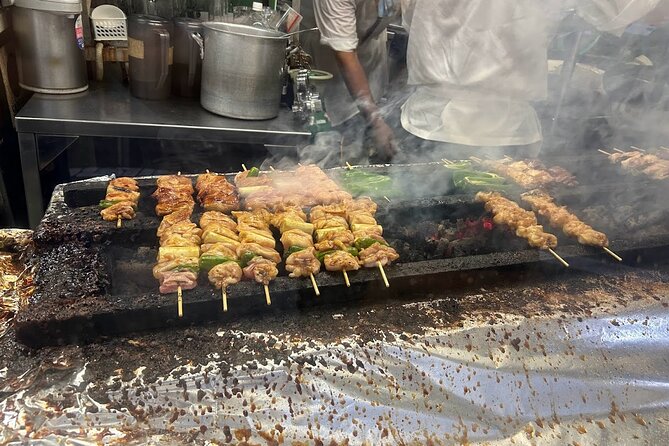
A highlight in the itinerary is Toritake, a Japanese restaurant focused on chicken skewers and other dishes. The stop is set for about 1 hour, which is long enough to feel like a real break, not just a quick bite.
Two practical things to know for you:
- Dinner isn’t included in the tour price, so this is where you should expect to pay.
- The route includes Toritake as a focused stop, so even if you normally skip restaurant meals on walking tours, this one is meant to be part of the experience.
The feedback also praises Toritake for being worth lining up for. Translation: if you want the best chance at a smooth meal timing, aim to arrive ready when the group does and don’t treat this stop like a casual stroll.
Also, if you’re picky or have dietary needs, the guidance here can matter. One of the guides (Chihiro) is specifically praised for accommodating dietary requirements for a ramen dinner element, so it’s worth telling your guide anything important before you order.






Shinjuku’s layers: Kabukicho, Golden Gai, and Memory Lane
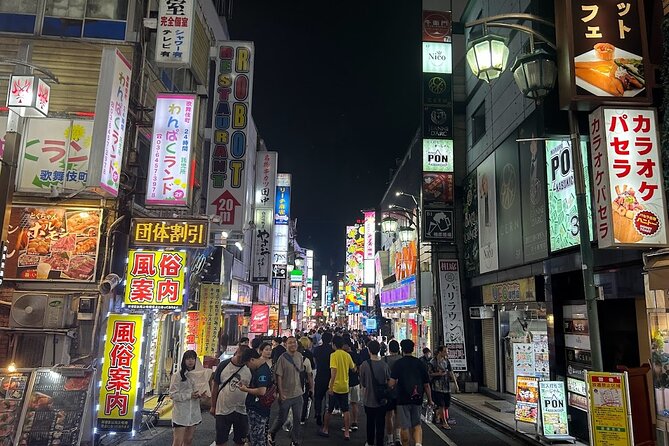
Then you head into Shinjuku. This is where Tokyo stops being orderly and starts being theatrical.
The route is set up to include several of Shinjuku’s famous nightlife areas:
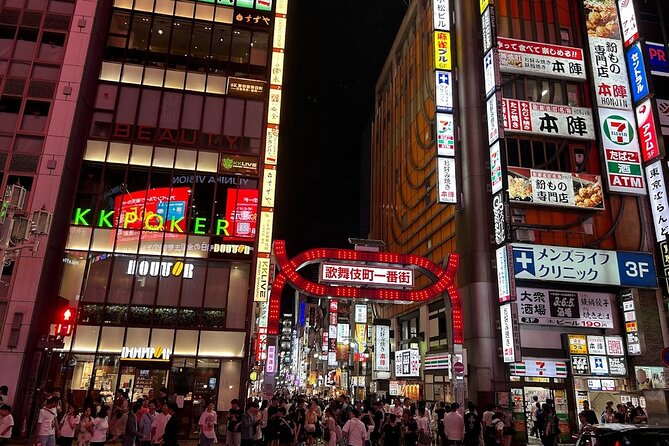
- Kabukicho: the big neon zone that signals you’ve arrived in full nightlife Tokyo.
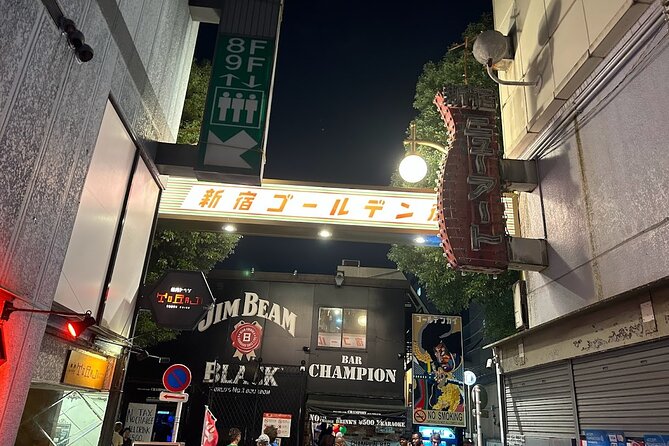
- Golden Gai: narrow alleys known for tiny bar spaces packed into small streets.
- Omoide Yokocho (Memory Lane): another famous alley-style dining and drinking area with vintage signage vibes.
There’s a reason these places fit a walking tour well: they’re dense, confusing on your own, and easy to miss if you’re not sure where the entrances are. With a guide, you get the layout in your head fast, and you can spend time actually looking at the signs, not just trying to find them.
A note on pace: these alley neighborhoods can involve standing, slow walking, and frequent photo stops. If you like hanging out in small spaces and browsing menus, you’ll enjoy this part. If you hate crowds, I’d still consider it—but go into it expecting that Shinjuku at night is not quiet.
Godzilla Square, 3D cat billboard, and the fun photo moments
Shinjuku also gives you iconic landmarks sprinkled between the alley parts.
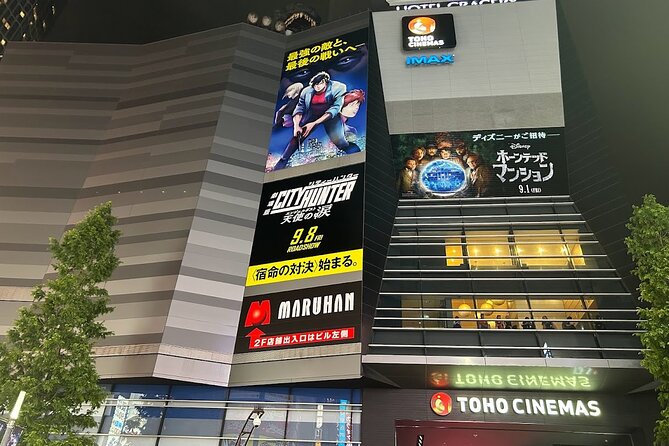
In the itinerary, you’ll see Godzilla Square and a 3D cat billboard near the Shinjuku Station east exit. These aren’t just random add-ons. They help you anchor the night in recognizable points, so your photos and your memories connect to specific places.
It’s also a nice rhythm change. After Golden Gai and Memory Lane, a big, open landmark like Godzilla Square gives your feet a break and gives your eyes somewhere to rest.
How the private pace works (and why that matters in Tokyo)
Even though this is a walking tour, it’s framed as go-at-your-own-pace. That’s a real advantage in Tokyo at night. Crowds move in waves, lines form, and sometimes you want a minute more at a viewpoint.
Because it’s private, the guide can adjust:
- where you linger for photos
- how quickly you move between neighborhoods
- whether you spend more time in alley areas or on main streets
In the feedback, guides are praised for tailoring the itinerary to interests. One review specifically notes going off script if you’re open to it, including stops that aren’t always guaranteed in a standard route.
For example, an itinerary version included Miyashita Park’s Meta VR station and a rooftop drink moment at Parco, with robots serving an Asahi lemon sour beer. That’s not something I’d count on every night, but it’s a clear signal of what some guides can do if timing and interest line up.
Price and value: what $98.83 gets you at night
The price is $98.83 per person for roughly 4 hours and includes all fees and taxes plus the guide’s fee.
What you should treat as not included:
- Dinner
- Private transportation
- Your transportation
Value-wise, the question is: does having a guide for a 4-hour Shibuya–Shinjuku night walk save you time and stress? In this case, yes, because the route focuses on places that are hard to navigate without local context—especially the alley networks around Golden Gai and Memory Lane.
Also, you start at 6:00 pm and get a structured night plan. That reduces the “what should we do next” fatigue that hits most first-time Tokyo visits.
If you’re the type who likes planning every detail, you might find parts of this tour overlap with what you can find online. If you want a smoother first night with less guesswork, the guide-led route is the point.
Small guide superpowers: photos, Suica help, and friendly troubleshooting
A strong theme in the feedback is that guides help you make Tokyo moments—not just watch them from the sidewalk.
Some examples from the reported experience:
- Aissam is praised for making the walk interesting and helping capture scenic parts with an action camera.
- Sam is praised for helping set up a digital Suica on phones, which is gold on day one.
- Jenny is praised for taking great photos during the tour.
- Aissam is praised for speaking multiple languages and adjusting the route to what the group wants.
- Jay is praised for staying in touch via WhatsApp ahead of the tour.
Even if none of these things matter to you personally, they’re a sign that the guide experience is interactive. You’re not just following a script. You’re being helped.
Practical tips so this tour feels easy
Here’s how to get the best night out of it:
- Wear comfortable walking shoes. Shinjuku and Shibuya at night involve a lot of steps and standing.
- Bring a fully charged phone or camera. You’ll likely want photos at Hachiko, Shibuya’s big sights, and Shinjuku icons like Godzilla Square.
- Have some extra cash or card ready for food, since dinner isn’t included.
- If you have dietary restrictions, tell your guide ahead of time. One guide (Chihiro) is specifically noted for accommodating dietary requirements for a ramen dinner element.
One more logistics detail: the tour is listed as starting at the Hachiko Statue area in Shibuya and ending around Shinjuku Station, with guidance to help you catch the train toward your hotel. The end-point details include both Shinjuku Station and train help references, so ask your guide to confirm the exact final drop-off point and direction to your nearest station.
Who should book this Shibuya–Shinjuku night tour?
This tour is a great fit if:
- you want a first-night orientation to two of Tokyo’s most confusing districts
- you like nightlife alley streets more than only big sightseeing blocks
- you want help finding places like Golden Gai without spending your night mapping them
- your group values a guide who can adjust the pacing
It’s also a good idea if your Tokyo trip is short. 4 hours is a realistic chunk of time when jet lag, shopping plans, or a tight itinerary are in play.
If you hate crowds, or you only want quiet cultural sites, this might feel like the wrong vibe. But if you want Tokyo after dark with someone explaining what you’re seeing, it’s hard to beat.
Should you book this tour?
If you want an easy, structured way to experience Shibuya and Shinjuku at night, I’d book it. The strongest reason is simple: the route targets places that are fun but tricky on your own—especially the alley neighborhoods—and it does it with a private guide at a time (6:00 pm) when the streets actually come alive.
I’d hesitate only if you expect dinner to be included, or if you’re strongly against walking through busy nighttime areas.
FAQ
How long is the Shibuya–Shinjuku night tour?
The tour lasts about 4 hours.
What time does the tour start?
It starts at 6:00 pm.
Where is the meeting point?
The meeting point is the Hachiko Statue area in Shibuya (the details list 2 Chome-1 Dogenzaka, Shibuya, Tokyo).
Where does the tour end?
The tour ends around Shinjuku Station (the details list 3-chōme-38-1 Shinjuku, Shinjuku City, Tokyo) and the guide can help you catch the train toward your hotel.
Is this a private tour?
Yes. It’s private, and only your group participates.
Is dinner included in the price?
No. Dinner is not included.
What’s included in the tour price?
Included are all fees and taxes and the guide’s fee.
Do I need a printed ticket?
No. The tour uses a mobile ticket.
FAQ
What is the cancellation policy?
You can cancel for a full refund up to 24 hours before the experience starts.
Can the guide help with dietary requirements?
There is an example in the provided information where a guide accommodated dietary requirements for a dinner element at a ramen place. If you have dietary needs, it’s smart to tell your guide in advance.