REVIEW · TOKYO
Tokyo Tours in Spanish (Asakusa – Skytree Tower- Akihabara)
Book on GetYourGuide →Operated by Tours Tokyo By Betokyo · Bookable on GetYourGuide
Three Tokyo worlds in one day. I like that a Spanish guide handles the explanations and keeps the photo stops on track, and I also like that the tour runs a full 8 hours so you are not sprinting between highlights. The only drawback to plan for is simple: it is a walking tour, so you’ll want comfortable shoes.
I also like the small group setup (limited to 10), which makes questions easy and the pace more human. And because the tour typically starts in your hotel lobby or a nearby meeting point, you skip the awkward early scramble of figuring out where to be.
In This Review
- Key highlights worth caring about
- Starting in your hotel lobby (or a simple meeting point)
- Asakusa: traditional Tokyo without the navigation headache
- Skytree Tower area: a photo and viewpoint decision made easy
- Akihabara in 8 hours: electronics, subculture, and shopping time
- Price and value: what $103 really covers
- Guides who make Tokyo make sense (Spanish and practical tips)
- Walking day reality: how to pack and pace it
- Who should book this Asakusa–Skytree–Akihabara Spanish tour
- Should you book? My straightforward take
- FAQ
- Is the tour guided in Spanish?
- Where does the tour start?
- How long is the tour?
- How big is the group?
- Is local transportation included?
- Are entrance fees included for temples or viewpoints?
- Is food and drink included?
- What are the cancellation terms?
- Can I reserve and pay later?
Key highlights worth caring about
- Spanish throughout with real guidance, not just a translated script
- Hotel-lobby start or meeting point to reduce first-day stress
- Small group of up to 10 for better questions and pacing
- Local transportation used to travel between neighborhoods (transit cost not included)
- 8 hours with possible extension at no extra charge
- You choose viewpoint/temple entrances since fees are not included
Starting in your hotel lobby (or a simple meeting point)
This tour is built for people who want Tokyo to feel navigable from day one. It starts in the hotel lobby when the group is set up that way, and if not, you meet at a designated point. Either way, you are not hunting for a random station entrance while jet-lagged and half-reading signs.
Then there’s the key rhythm: you ride local transportation with your guide to get between neighborhoods. The tickets themselves are not included, so you’ll want to budget for that. But the upside is big—your guide knows the practical flow of how to get from one area to the next without turning the trip into a logistics puzzle.
It is also helpful that the tour is set up as an easy-to-follow day plan. You get an experienced guide, you get structure, and you get enough time to stop, look, ask, and photograph without feeling like you are always falling behind.
You can also read our reviews of more tours and experiences in Tokyo.



Asakusa: traditional Tokyo without the navigation headache
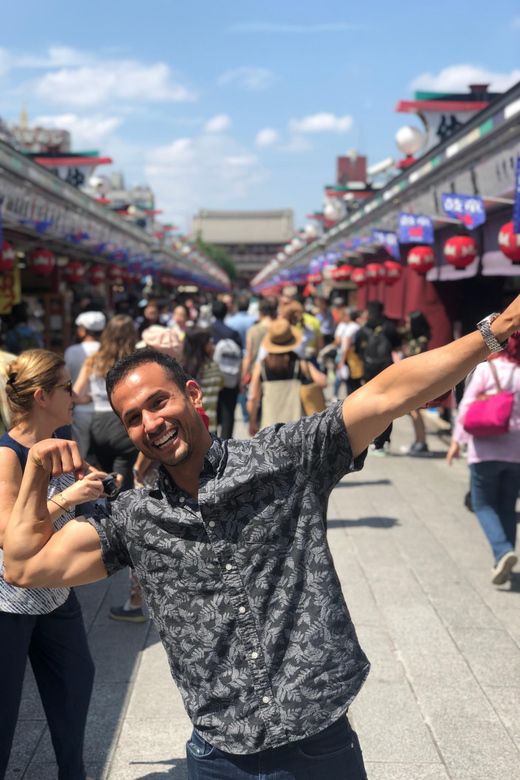
Asakusa is one of those areas where Tokyo feels older and slower. Think classic atmosphere, streets that reward strolling, and a sense that you’re walking through a real neighborhood rather than a theme park. On this tour, you do not just pass through—you get an explanation of what you are seeing and why it matters.
This is where having a Spanish guide really pays off. The guide helps you find and understand what you’re looking at, which is especially useful in a place like Asakusa where details matter: signage, customs, and the way people move through the area. Even if your Japanese is limited (or nonexistent), you can keep your attention on the experience, not the directions app.
You’ll also want to keep expectations realistic about time. The tour is 8 hours total across multiple highlights, so you won’t linger for hours at a single stop. Instead, the value comes from smart pacing: a quick but meaningful introduction to the area, plus the freedom to take photos and ask questions.
One practical consideration: entrance fees to temples and viewpoints are not included. If you want to go in somewhere specific, you’ll pay that separately. If you’re more photo-focused than checklist-focused, you can still enjoy Asakusa without committing to every ticketed moment.
Skytree Tower area: a photo and viewpoint decision made easy
Skytree Tower is modern Tokyo turned up loud and tall. Even before you decide whether to go up, the area gives you a strong sense of scale—this is the kind of place where photos actually explain why people talk about Tokyo the way they do.
Your guide’s job here is to give context and help you make the right choice for your day. Since viewpoint entrance fees are not included, you can decide based on your budget and your energy level. If you want the big panoramic experience, plan on paying the ticket. If you’d rather spend that money on other things in the day, you can still enjoy being in the Skytree zone and capturing the tower from street-level perspectives.
Another thing I like about how this kind of stop fits into the full tour: it breaks the day up. Asakusa gives you traditional Tokyo. Akihabara gives you pop-culture intensity. Skytree is a midpoint that feels like the skyline chapter—clean, graphic, and great for photos.
If you’re the type who gets overwhelmed by choices, having a guide helps. You can ask, see what’s possible around the tower area, and then decide without standing there comparing options alone.
Akihabara in 8 hours: electronics, subculture, and shopping time
Akihabara is the part of the day where Tokyo’s pop culture becomes hard to ignore. Even if you’re not a hardcore collector, you’ll still feel the neighborhood’s pull: electronics, themed shops, and lots of visual stimulation packed into a relatively compact area.
On this tour, Akihabara is not treated like a quick photo pull-and-go. People have enjoyed stopping for Instagram-style photo spots and having time for shopping, which makes sense here—Akihabara is built for browsing. Since food and drink are not included, it’s also a good neighborhood to handle your own snack breaks without worrying about changing the tour schedule.
If you like to mix sightseeing with practical finds—small souvenirs, tech accessories, or gifts—this stop is often where your day becomes personal. And because it’s a Spanish tour with a small group limit of 10, you can ask your guide what’s worth your time based on your interests. You’re not stuck following a rigid script that assumes everyone wants the same things.
The main drawback is the same as everywhere on this route: you are walking. Akihabara can tempt you to slow down for every storefront. That’s fun, but keep an eye on your shoes and your pace so you don’t run out of energy before the day ends.
Price and value: what $103 really covers
At $103 per person for an 8-hour guided tour, you’re paying for three things: time, guidance, and reduced stress. You’re not paying for all the add-ons—local transit costs and entrance fees are not included, and food and drink are on you.
So how is it still good value?
- You’re getting a guide who explains what you’re seeing and helps you understand the culture, not just point at landmarks.
- You’re getting a small group experience (limited to 10), which usually means less waiting and fewer awkward bottlenecks.
- You’re getting a structured day that connects three very different Tokyo areas without requiring you to figure out everything yourself.
If you already know Tokyo transit systems well, speak Japanese confidently, and don’t mind navigating alone, you could DIY this route for less money. But many first-timers and many language-limited visitors end up spending time and energy just trying to stay oriented. This tour buys you that mental bandwidth back.
There’s also a subtle value point: the tour starts from the hotel lobby when possible, which reduces wasted morning time. When you’re paying for guided time, every minute that doesn’t require guesswork matters.




Guides who make Tokyo make sense (Spanish and practical tips)
The biggest compliment this tour receives is not a single sight. It’s the guidance style. People consistently highlight guides as friendly and helpful, and that the explanations make Tokyo easier to navigate and understand.
Names that have shown up in Spanish-guide praise include Ana, Beto, and Huit. The theme is the same: clear explanations, a warm approach, and practical tips for getting the most from the rest of your trip in Japan. That practical layer matters. Tokyo is amazing, but it can also be confusing at first. When your guide shares how to think about neighborhoods and what to prioritize, you come away with more than photos—you come away with a better plan for future days.
Also, your guides have 15+ years living in Japan, which shows in the tone. It’s not just academic facts. It’s what to notice, how people actually live and move, and how to interpret the scenes you’re seeing.
If you’ve ever felt frustrated on a tour because the guide talks at you but doesn’t help you translate what you’re experiencing, this is the opposite. The promise here is guidance that keeps you from getting lost, and helps you understand what you’re seeing as you go.
Walking day reality: how to pack and pace it
Because this is a walking tour (for people of all ages, but still on foot), the practical part matters. The tour organizers explicitly ask for comfortable shoes, and I agree. Even if you enjoy walking, Tokyo foot travel adds up fast, especially when you stop for photos and browsing.
Also remember what’s not included:
- Food and drink: plan your own snack breaks.
- Entrance fees for viewpoints or temples: decide ahead of time if you want paid entry during the day.
- Local transportation costs: the guide will use local transit, but you pay those fares.
My practical advice is simple: go in with a realistic energy budget. If you’re carrying a heavy bag or expecting to change outfits mid-day, rethink it. This tour works best when you pack light and keep moving.
Who should book this Asakusa–Skytree–Akihabara Spanish tour
I’d point you toward this tour if:
- you want a Spanish-guided day and you’d rather spend time learning than translating on the fly
- you’re seeing classic Tokyo, skyline Tokyo, and pop-culture Tokyo in one route
- you prefer a small group over a huge bus-and-headphones setup
- you want structure that helps you avoid getting lost in a massive city
It might not be the best fit if your ideal day is totally unstructured and you hate walking. You can still enjoy parts of the route, but the tour’s value comes from following the pacing, stops, and explanations.
Should you book? My straightforward take
Yes, you should book this tour if you want Tokyo to feel approachable on your first visit. The mix—Asakusa, Skytree Tower, and Akihabara—is a smart way to see how Tokyo swings between tradition, skyline modernity, and subculture intensity. And the Spanish guide element is the difference between wandering and understanding.
If you’re budget-conscious, plan for the add-ons you’ll likely choose: local transit fares, plus any viewpoint or temple entrances you decide to pay for. If you’re okay with that, the $103 price feels like you’re buying a day of guidance and cultural context, not just access to landmarks.
One more decision tip: if you’re traveling with friends who have different interests—history, views, shopping—this route gives each person something to latch onto, and the guide can help keep everyone on track.
FAQ
Is the tour guided in Spanish?
Yes. The tour includes a live guide who speaks Spanish throughout.
Where does the tour start?
Tours typically meet either at a meeting point or at your hotel lobby, depending on the group setup.
How long is the tour?
The duration is 8 hours.
How big is the group?
It is a small group, limited to 10 participants.
Is local transportation included?
The tour uses local transportation, but the transit cost is not included.
Are entrance fees included for temples or viewpoints?
No. Entrance fees to viewpoints or temples are not included.
Is food and drink included?
No. Food and drink are not included.
What are the cancellation terms?
You can cancel up to 24 hours in advance for a full refund.
Can I reserve and pay later?
Yes. There is a reserve now & pay later option to keep plans flexible.